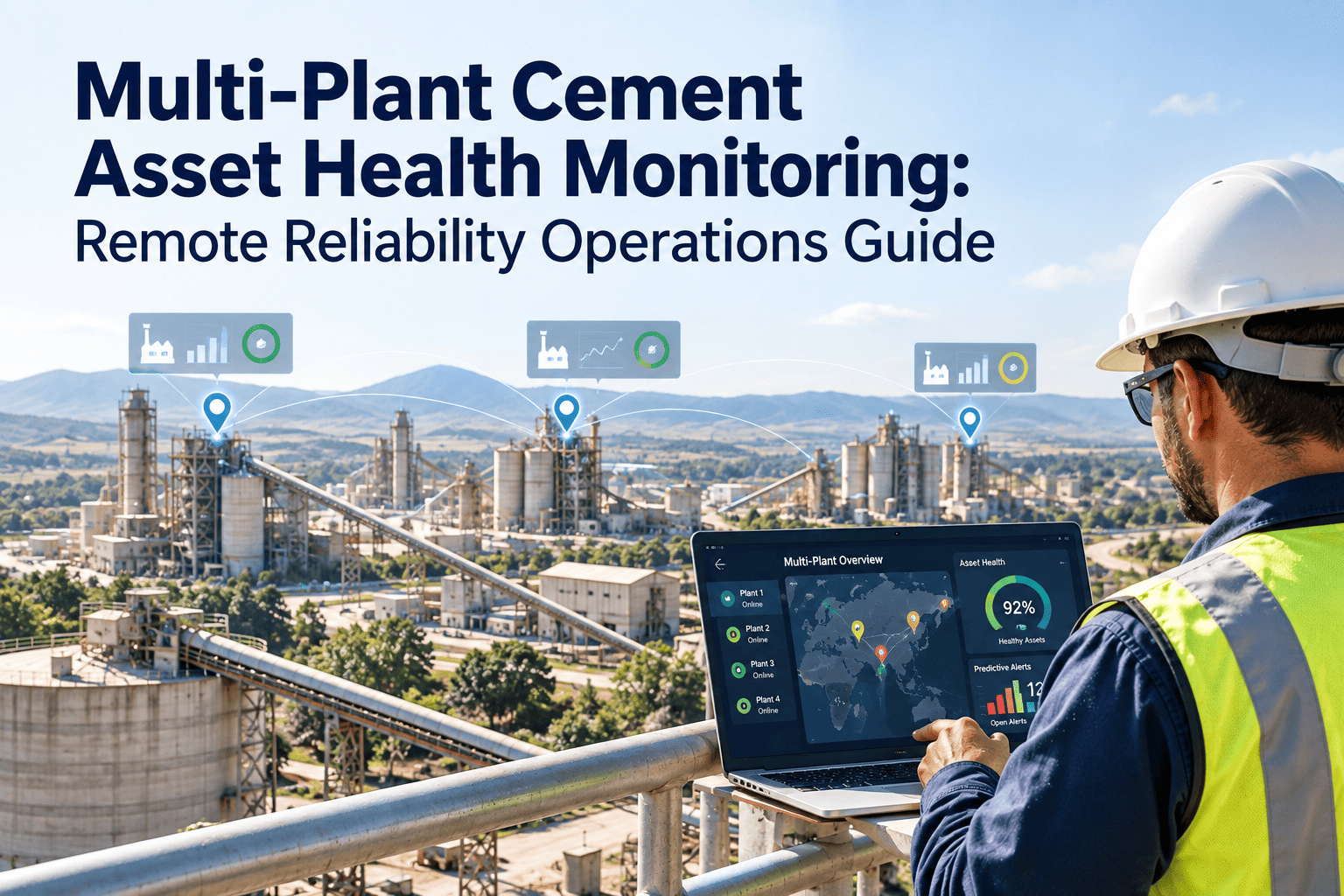
A cement plant is large, dense with steel and concrete, and often far from reliable networks. Technicians climb preheater towers, walk kiln galleries, enter mill basements, and drive to limestone quarries where coverage drops to nothing. If a maintenance app needs a live connection for every tap, the work moves back to paper and memory. Offline-capable mobile maintenance keeps inspections, work orders, and readings flowing wherever the crew stands. Here is how to choose and run it, including how Oxmaint maintenance management software fits.
Offline Mobile Maintenance Software for Remote Cement Plants
Capture work where the signal ends. Sync when it returns. Keep every inspection, reading, and work order in one record.
Where connectivity breaks in a cement operation
Dead zones are not random. They follow the physical layout of the plant, which means you can map them and plan the mobile workflow around them.
What goes wrong with paper and always-online tools
The workaround reality
- Inspection notes written on paper and typed later
- Readings remembered and entered at the end of the shift
- Work orders closed hours after the job finished
- Photos left in personal phone galleries
- Missed rounds hidden until an audit or a failure
The offline-capable result
- Findings recorded at the asset, at the moment of inspection
- Readings stored with the right time and user
- Work orders completed in the field with labor and parts
- Photos attached directly to the asset or work order
- Round completion visible to supervisors after sync
The cost of delayed entry is not only admin time. It is lost detail, wrong timestamps, and failure trends that nobody can trust.
Offline capability checklist for buyers
Not every mobile app that works offline works well offline. Test each item below with real devices in your real dead zones, not in a demo room.
| Capability | Why it matters in a cement plant | How to test it |
|---|---|---|
| Offline inspections | Rounds cover kilns, mills, crushers, and fans with poor coverage | Run a full round in airplane mode |
| Offline work orders | Repairs happen deep in the plant | Open, update, and close an order with no network |
| Asset and history lookup | Technicians need prior failures and manuals at the machine | Search an asset offline and view its history |
| Photo and file capture | Evidence of wear, leaks, and damage supports decisions | Attach several photos offline and sync them |
| Meter and reading entry | Running hours and process readings feed PM triggers | Enter readings offline and confirm they update later |
| Safe sync behavior | Records must not duplicate or overwrite colleagues' work | Edit the same order from two devices and compare |
| Device and data security | Phones hold plant data and may be lost | Review login, lock, and remote access controls |
The lifecycle of an offline work order
Follow one corrective job from request to closure to see where offline support does real work.
- Request raised. An operator reports abnormal noise at a kiln support roller, adding a photo and location from the field.
- Order planned. The planner assigns the task, parts, and safety steps while still on the network.
- Job downloaded. The technician's device holds the order, asset history, and checklist before leaving coverage.
- Work done offline. Findings, labor hours, parts used, and photos are recorded at the machine.
- Sync on return. Entries upload when coverage returns, and the planner sees the finished record.
- History updated. The failure, cause, and repair now count in reliability analysis.
Give your crews a tool that works at the machine
Run inspections and work orders from mobile devices without depending on signal strength.
Preparing the crew and the data for the field
Offline success depends less on the app than on preparation. A device with an empty cache is no better than a clipboard.
Before the shift
- Sync devices at a known strong coverage point
- Confirm assigned rounds and open work orders are downloaded
- Check battery and carry a charger or power bank
- Verify the asset list for the areas to be visited
During the shift
- Record findings at the asset, not afterward
- Attach photos for any defect or unusual condition
- Close completed tasks immediately
- Flag urgent defects so they are first to sync
After the shift
- Return to coverage and confirm sync finished
- Resolve any entries the system flags
- Review the next shift's open items
- Report any device or sync problems
Maintenance work that benefits most from offline mobile
Handling sync conflicts and data quality
Two people may edit the same order while offline. A good process prevents this from corrupting history.
How Oxmaint supports field execution
Oxmaint brings mobile workflows into the same system that holds assets, schedules, and history. Confirm offline behavior for your own devices and sites during a trial.
Designing an inspection round that works offline
A round built for paper rarely works well on a phone. Design it for gloved hands, glare, noise, and interruptions, then test it on the route itself.
Keep it short
- Group points by physical route, not by system
- Limit each round to what one person can finish in a shift segment
- Use pass or fail and numeric fields before free text
- Make photo capture optional unless a defect is found
Make it clear
- Name points the way operators call them on site
- Show acceptable ranges for temperature, pressure, and current
- Include a reference photo for hard-to-find points
- Add safety reminders where hazards exist
Make it actionable
- Let a failed point raise a work request immediately
- Record the severity so planners can prioritize
- Link points to the asset record and its history
- Review skipped points at the end of each round
Choosing devices for a dusty, hot, noisy plant
Cement environments are hard on electronics. Dust, heat near the kiln, vibration, and drops punish ordinary phones, so device choice affects adoption as much as software features.
| Factor | What to check | Why it matters |
|---|---|---|
| Dust and water protection | Ingress protection rating suited to cement dust and washdown | Fine dust damages ports, speakers, and screens |
| Temperature tolerance | Operating range near kilns, coolers, and in summer sun | Hot devices shut down or lose battery capacity |
| Battery life | Full-shift use with screen, camera, and wireless on | A dead device ends the round |
| Screen visibility | Brightness and glove-friendly touch | Outdoor glare and gloves cause entry errors |
| Camera and barcode reading | Quality in poor light and quick asset tag scanning | Fast identification reduces wrong-asset entries |
| Hazardous area suitability | Certification where coal or alternative fuel dust and gases are present | Ignition risk requires approved equipment in classified zones |
Pilot two or three device types with the actual crew. The device people carry willingly is the one that produces complete records.
Security, access, and audit trail on shared devices
Plant data on a phone deserves the same care as data on a desktop. Offline storage adds a few points worth settling before rollout.
Turning field entries into reliability insight
The goal of capturing data offline is not neat records. It is better decisions about what fails, why, and when to act.
- Consistent failure coding. Technicians choose a failure mode and cause from a short list at the machine, while details are fresh.
- Trendable readings. Bearing temperature, motor current, and vibration readings from rounds build a history for each asset.
- Defects before failures. Findings raised on rounds become planned work instead of emergency repairs.
- Repeat problem detection. Grouped history shows the same fan, gearbox, or conveyor returning to the list.
- Better PM tasks. Intervals and task steps are adjusted using real findings rather than habit.
Objections you will hear, and honest answers
Measuring whether field execution improves
| Measure | What to look at | Signal of progress |
|---|---|---|
| Round completion rate | Share of scheduled rounds finished and synced | Fewer missed or late rounds |
| Work order closure delay | Time between job end and record closed | Records closed the same shift |
| Data completeness | Orders with cause, labor, and parts filled in | Fewer blank failure records |
| PM compliance | Scheduled tasks done on time | Steady improvement month over month |
| Repeat defects found | Defects caught on rounds before failure | More planned work, less emergency work |
A practical rollout for a remote or multi-area plant
Questions to put to any vendor during a trial
- Which screens and actions work fully offline, and which need a connection?
- How much data is stored on the device, and how is the download scoped to a user or area?
- How does the app show that a record is waiting to sync and when it finished?
- What happens to a failed upload, and how does the user retry it?
- How are photos, documents, and manuals handled when coverage is weak?
- Can an administrator see which devices have not synced recently?
- How quickly can a lost or retired device be blocked from plant data?
Write the answers into your selection scorecard. Vendors that answer clearly usually run clearer projects.
Offline mobile maintenance questions
Will offline mode work in a quarry with no signal?
It should, if the device stores your work and syncs later. Test a full shift offline before rollout.
What data should be on the device before leaving coverage?
Assigned orders, rounds, asset records, and checklists. Book a demo to review your setup.
What happens if two technicians edit the same job?
Assign a single owner per job and check conflicts after sync. Use comments for extra notes.
Do we need rugged devices?
Often yes, for dust, vibration, and drops. Choose by environment, battery life, and screen visibility.
Can we start with one area first?
Yes, and it is the safest path. You can sign up and pilot one section.
Keep maintenance moving past the last bar of signal
Bring inspections, work orders, and readings into one system your crews can use anywhere on site.