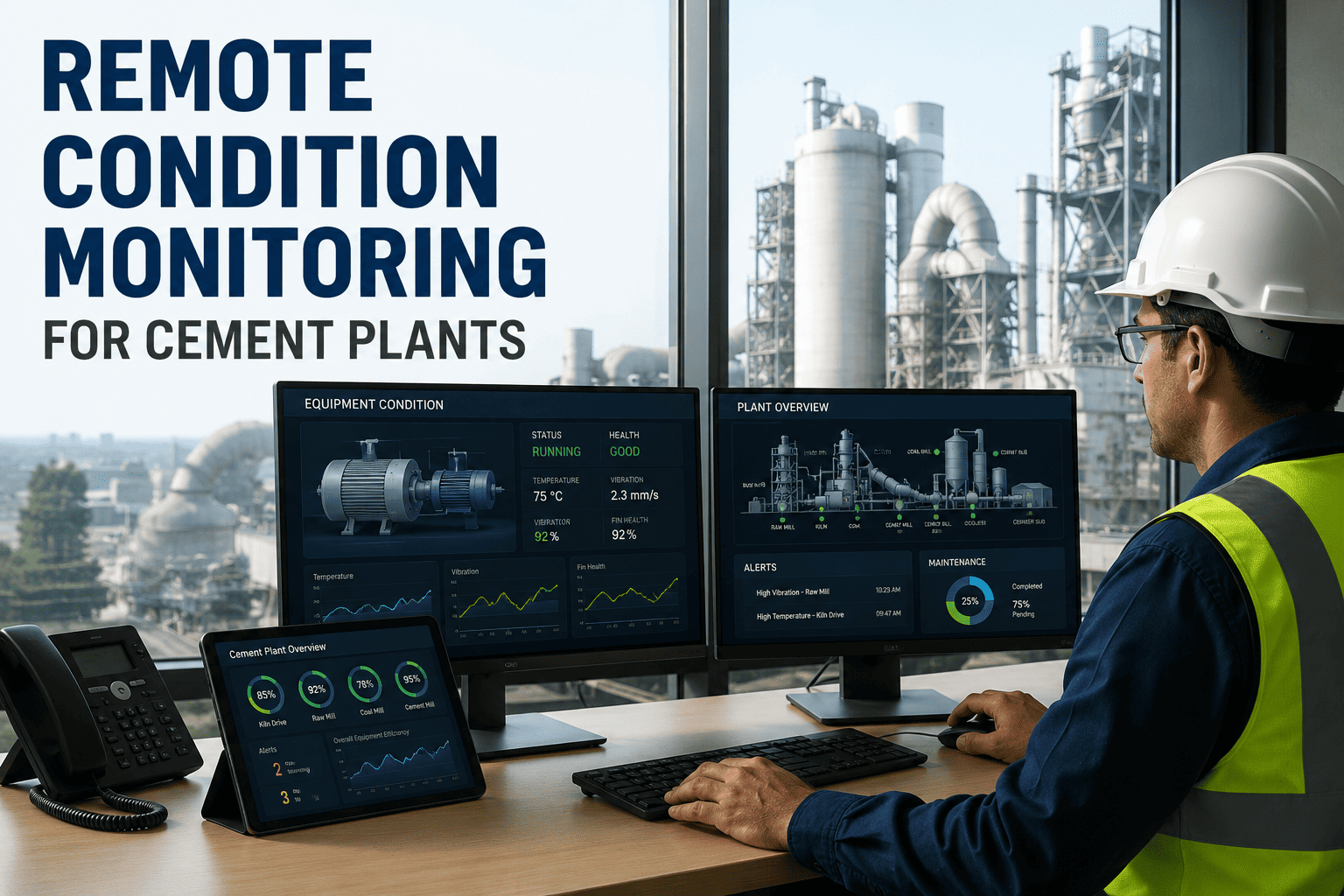
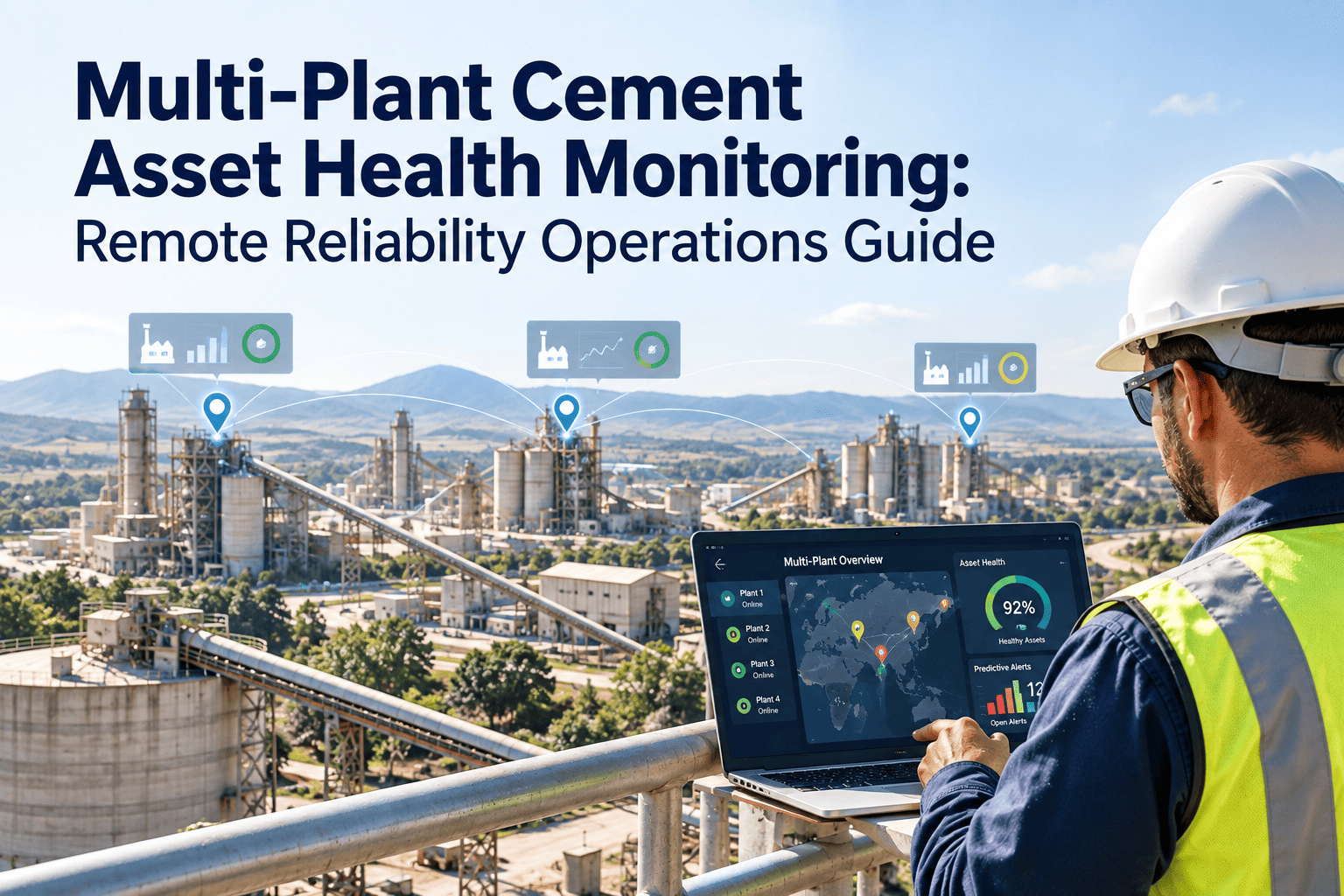
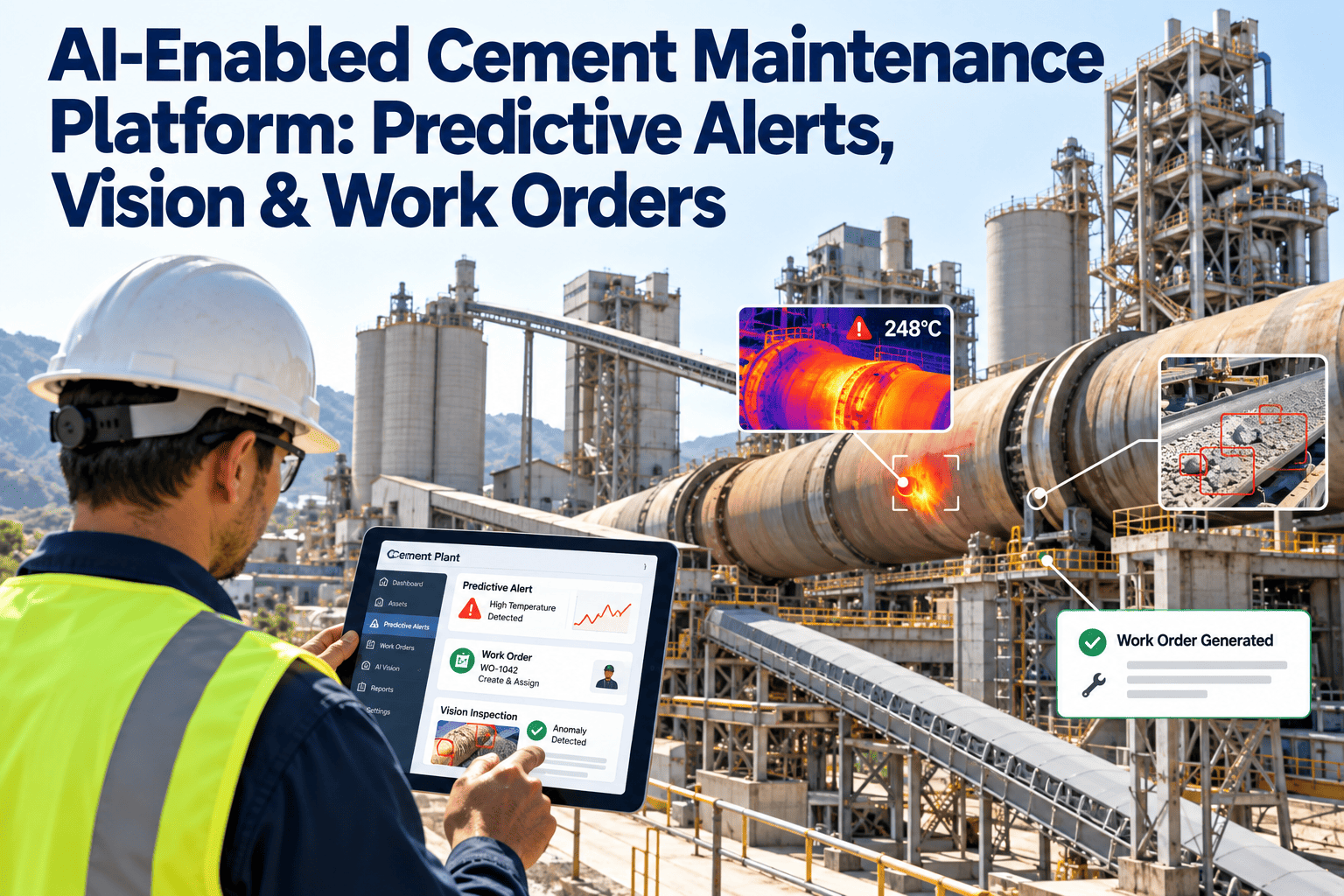
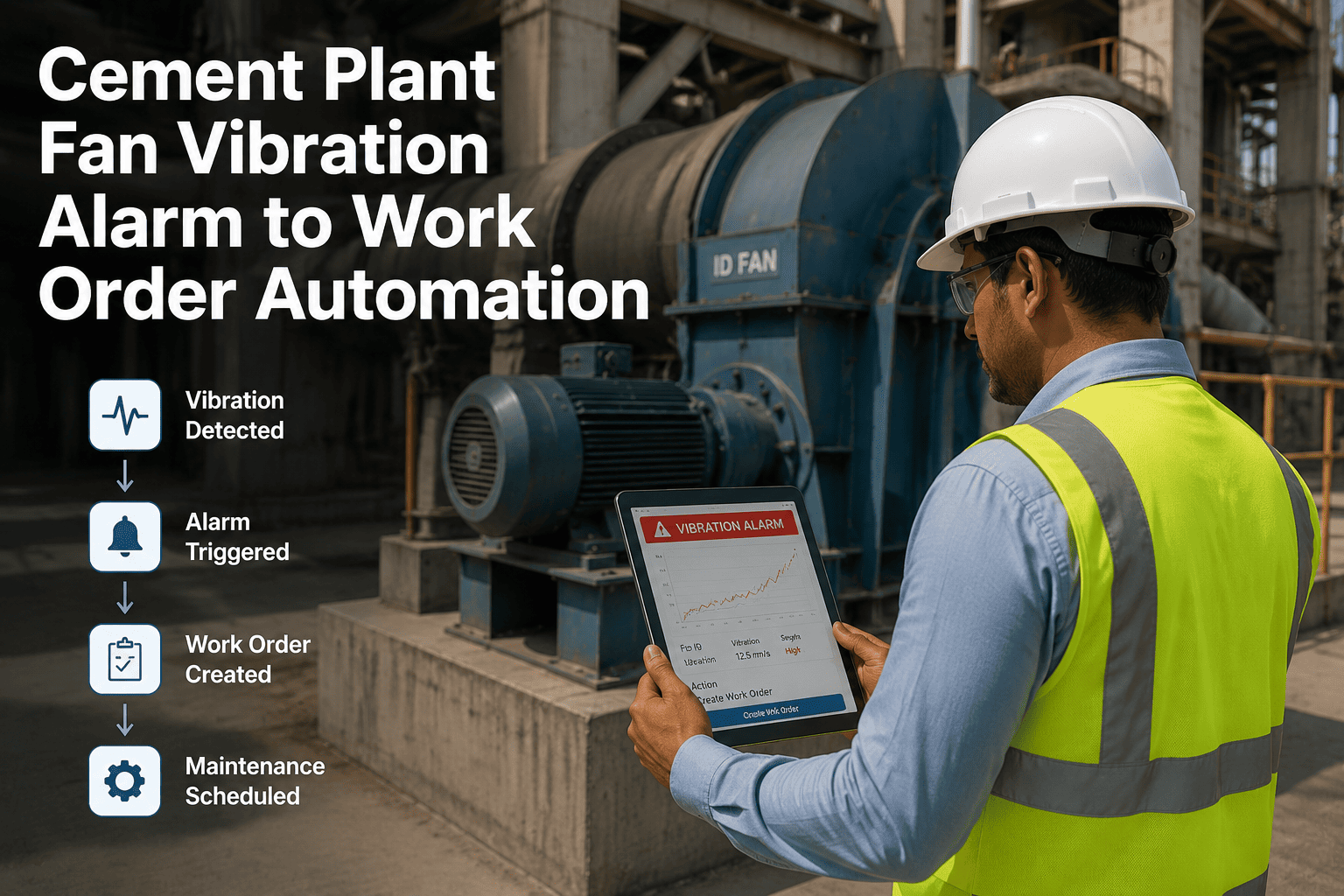
Most cement plant maintenance teams still find out an asset is failing the same way they did twenty years ago — a technician walks the route, takes a reading, writes it down, and someone reviews it later if at all. Remote condition monitoring closes that gap by feeding live sensor data from kilns, mills, fans, and crushers straight into the maintenance system, so a vibration spike or temperature rise triggers a work order the moment it happens, not days later on the next scheduled round. OxMaint connects directly to your plant's IoT sensors and turns that stream of data into action. Start a free trial or book a demo to see live sensor data flowing into work orders.
Why Remote Monitoring Changes the Maintenance Model
From Manual Rounds to Continuous Visibility
Manual vibration round
Weekly or monthly
Continuous sensor feed
Real time, 24/7
Reading-to-review delay
Days to weeks
Sensor-to-work-order delay
Minutes
Record format
Paper or spreadsheet
Record format
Logged against asset history
What Remote Monitoring Watches For
01
Vibration
Bearing and gearbox degradation on kilns, mills, fans, and crushers, tracked against each asset's own baseline rather than a generic threshold.
02
Temperature
Bearing housings, motor windings, and process temperatures monitored continuously to catch lubrication or cooling failures early.
03
Motor Current
Load trends that reveal overload, mechanical drag, or developing wear on the equipment a motor drives.
04
Pressure and Flow
Lubrication systems, compressed air lines, and pump discharge pressure tracked for drift that signals filter blockage or wear.
Turn Sensor Data Into a Work Order, Automatically
OxMaint connects to your existing IoT sensors and SCADA infrastructure, so a threshold breach doesn't just raise an alarm — it creates a tracked, assigned work order in the same system your team already uses.
From Sensor Alert to Closed Work Order
| Step |
What Happens |
Outcome |
| 1. Sensor reading exceeds baseline |
Vibration, temperature, or current crosses the asset-specific alert threshold |
Anomaly is flagged in real time |
| 2. Work order auto-generated |
OxMaint creates a work order referencing the specific sensor and reading |
No manual data entry or delay |
| 3. Technician assigned |
The work order routes to the right team based on asset and failure type |
Inspection scheduled before failure progresses |
| 4. Finding logged and closed |
Inspection result, repair action, and parts used are recorded against the asset |
Full history builds for future trend analysis |
Expert Review
"The value of remote monitoring isn't the sensor — plants have had sensors for years. The value is closing the loop between the reading and the response. A dashboard that nobody checks until something breaks is the same as not having sensors at all. The plants getting real results are the ones where an alert automatically becomes a work order someone is accountable for."
— Maintenance Technology Advisor, Cement and Heavy Industry
Frequently Asked Questions
Does OxMaint require new sensors, or can it use what's already installed?
OxMaint connects to existing IoT sensors, SCADA, and PLC infrastructure rather than requiring a full hardware replacement.
Book a demo to review your current sensor setup and integration path.
Which cement plant assets benefit most from remote condition monitoring?
Kilns, raw mills, ID fans, and crushers typically see the highest return, since their failures cause the longest production stoppages and the clearest vibration or temperature warning signs.
How fast does an alert turn into a work order in OxMaint?
Work orders are generated automatically within minutes of a threshold breach, with the triggering sensor reading attached, so the maintenance team isn't waiting on a manual review cycle.
Start a free trial to see this in action.
Can alert thresholds be set differently for each asset?
Yes. Each asset's baseline and alert threshold is configured individually, since a normal vibration level on one crusher may be an early warning sign on another.
Does remote monitoring replace manual inspection rounds entirely?
Not entirely. Continuous sensor data covers the assets and failure modes it's built for, while manual inspection still catches visual issues like leaks, corrosion, or loose fittings that sensors don't see.
See Your Plant's Asset Health in Real Time
Connect your existing sensors to OxMaint and stop waiting for the next manual round to find out an asset is degrading. Alerts become work orders automatically, with full history tracked per asset.