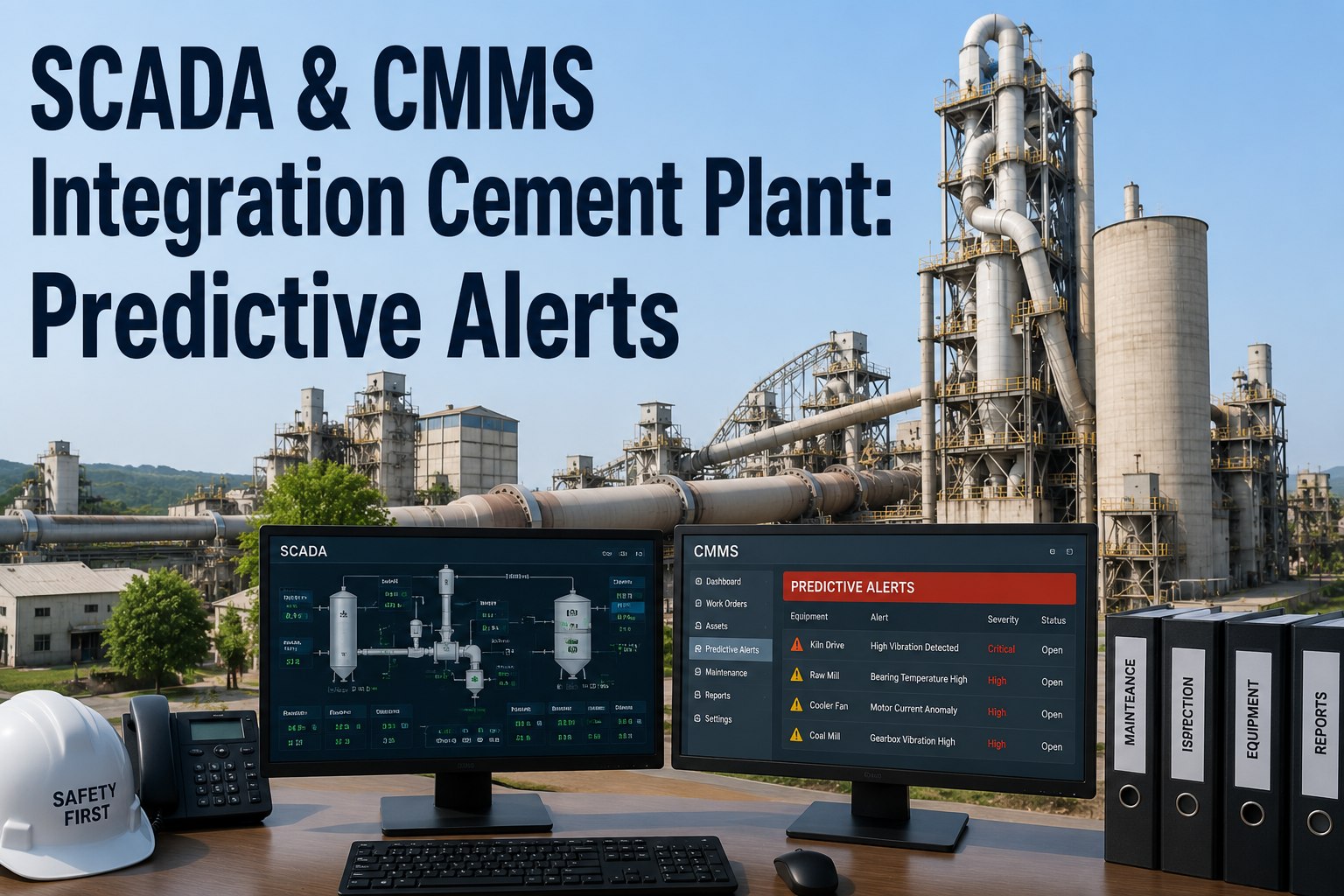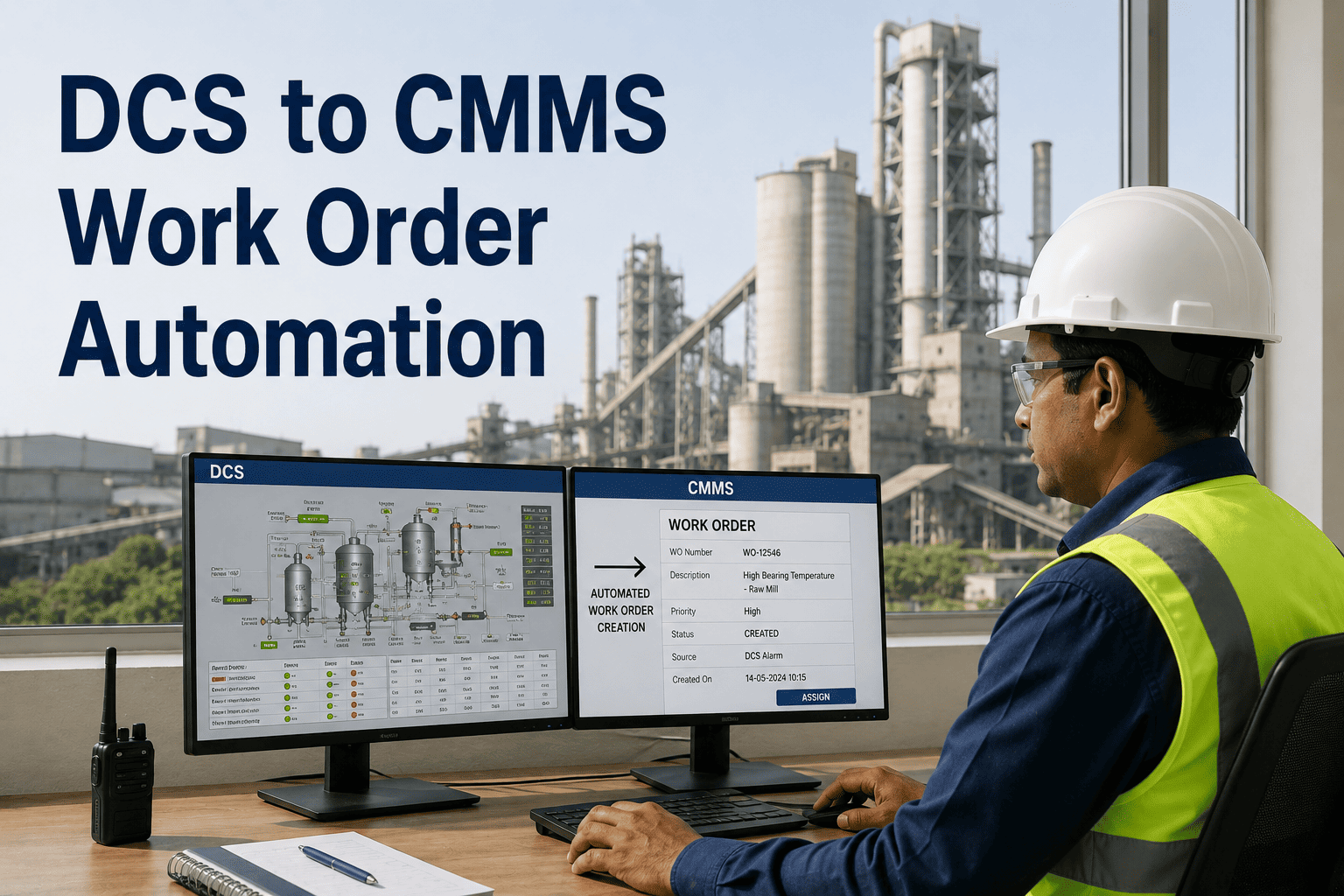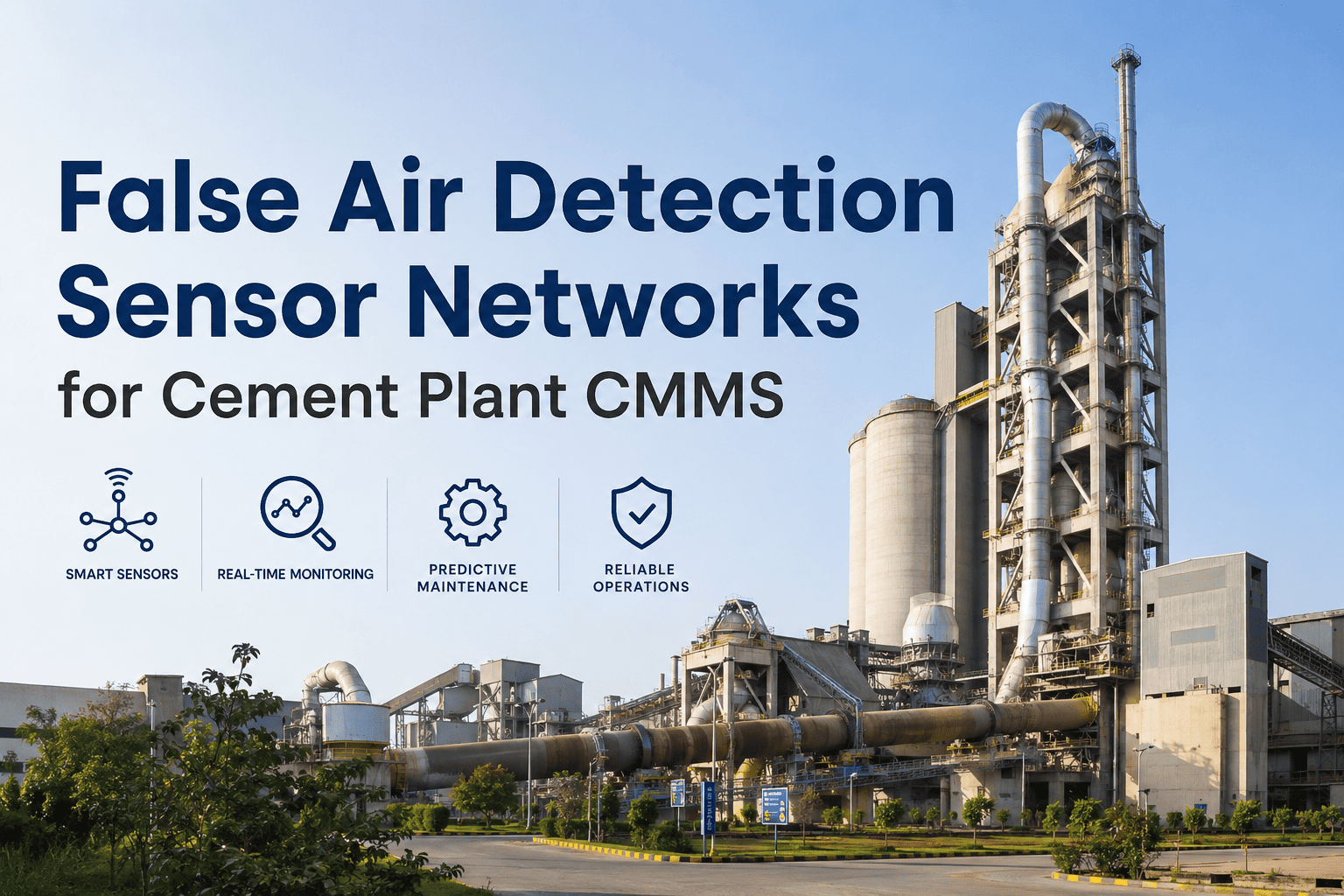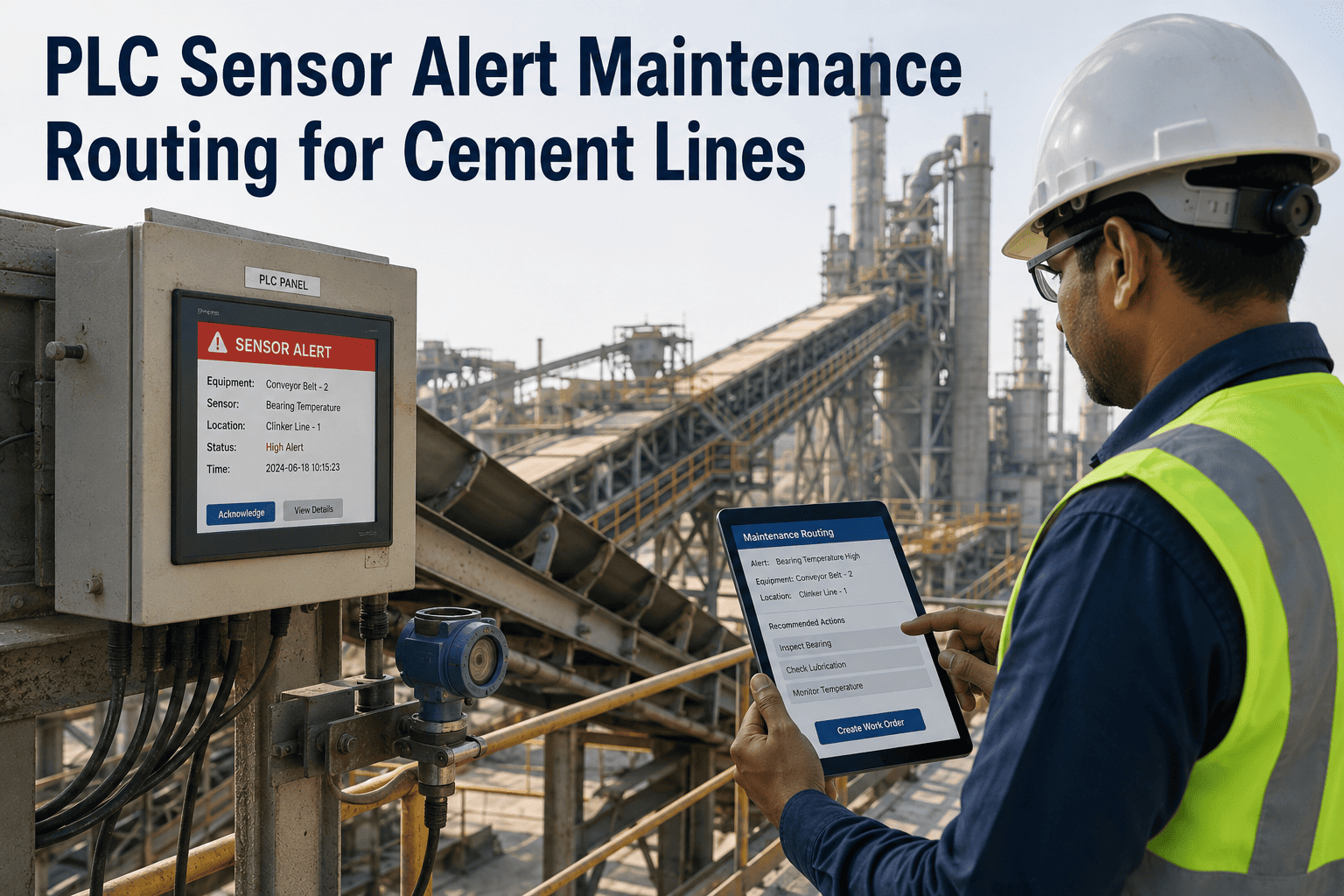
Your kiln drive gearbox already has vibration probes feeding the PLC. Your raw mill already has motor current sensors. Your crusher already has bearing temperature transmitters. None of that changes — what changes is whether those readings ever reach the maintenance team before a failure, instead of after. PLC sensor alert routing takes signals already flowing through your control system and turns the ones that matter into work orders assigned to the right crew, automatically. Sign Up Free on OxMaint to connect your existing PLC sensor data to maintenance routing.
Not every asset benefits equally from sensor-driven routing. The equipment that causes the longest production stoppages when it fails — and gives the clearest early warning signs through vibration, temperature, or current draw — sees the highest return on connecting PLC data to maintenance workflows.
A persistent shell temperature gradient signals refractory wear long before a section dislodges — routing this to maintenance early avoids a multi-day shell repair.
Vibration signature shifts catch gear mesh faults and roller bearing degradation weeks before the noise becomes audible on the floor.
Crushers run under constant impact loading — bearing wear and rotor imbalance routed early prevent a sudden jaw or rotor failure mid-campaign.
An ID fan trip stops the kiln immediately — routing early bearing wear signals to maintenance protects against the single point of failure it represents.
Grate plate wear shows up in airflow and temperature differential before visual inspection would catch it, protecting clinker quality and energy recovery.
Belt slippage and idler bearing wear are lower-cost failures individually, but routing them prevents the material flow disruptions that cascade into upstream stoppages.
Vibration, temperature, current, and pressure values stream continuously from field instrumentation.
Each asset's normal operating range is established, with warning and alarm bands set against that specific baseline.
A breach is scored against replacement cost, production impact, and safety consequence — not treated as a flat alarm.
A prioritized work order assigns to the correct craft with the triggering reading, asset history, and parts list attached.
Routing without prioritization just creates a different kind of noise. Each sensor breach is classified into a response tier so technicians see a ranked action list instead of a flat stream of alarms.
Trip-level breach on a single point of failure asset — ID fan bearing, kiln drive — routed to the on-shift crew within seconds.
High-alarm deviation on a critical but non-trip asset, scheduled into the next available maintenance window with parts pre-checked.
Early-trend deviation that warrants a closer look during the next scheduled inspection round rather than an immediate dispatch.
Minor deviation logged for pattern tracking — no action yet, but contributes to the asset's developing health trend.
How far in advance a sensor reading warns of a developing failure depends on the failure mode itself. Bearing wear and gear mesh faults give weeks of warning through vibration; a sudden electrical fault gives almost none. Knowing this difference shapes which assets benefit most from continuous routing versus periodic review.
Connecting existing PLC data to maintenance routing does not require a plant shutdown or a phased equipment swap — the rollout follows existing data flows rather than interrupting them.
Kilns, mills, ID fans, and crushers run under normal load while their healthy operating ranges are captured — typically four to six weeks of data collection.
Warning and alarm bands are set per asset, and routing rules assign each tier to the correct craft and response window.
A sensor anomaly is tested through to a pre-populated work order and technician notification before scaling further.
Conveyors and secondary equipment get added once the highest-impact assets are fully routed and validated.
No. OxMaint connects to PLC, SCADA, and IoT sensor infrastructure you already have running, using standard protocols like OPC-UA and Modbus. The integration adds the routing and work order layer on top of existing data rather than requiring new hardware. Sign up free to map your current sensor inventory.
Equipment runs under normal load first to capture a baseline, and warning and alarm bands are set relative to that specific asset's behavior rather than a generic OEM setpoint. A vibration level that is normal on one crusher may be an early warning sign on another, so thresholds are configured individually.
Once thresholds and routing rules are configured, qualifying breaches generate a work order within minutes, with the triggering reading attached so the maintenance team is not waiting on a manual review cycle. Book a demo to see this routing live.
Kilns, raw mills, ID fans, and crushers typically deliver the highest return, since their failures cause the longest stoppages and their vibration or temperature signatures give the clearest early warning. Most plants start there and expand to conveyors and secondary equipment afterward.
Yes. Routing rules can account for time-of-day windows and known operating conditions, so a threshold that matters during a high-throughput campaign can route differently than the same reading during a planned low-load period.