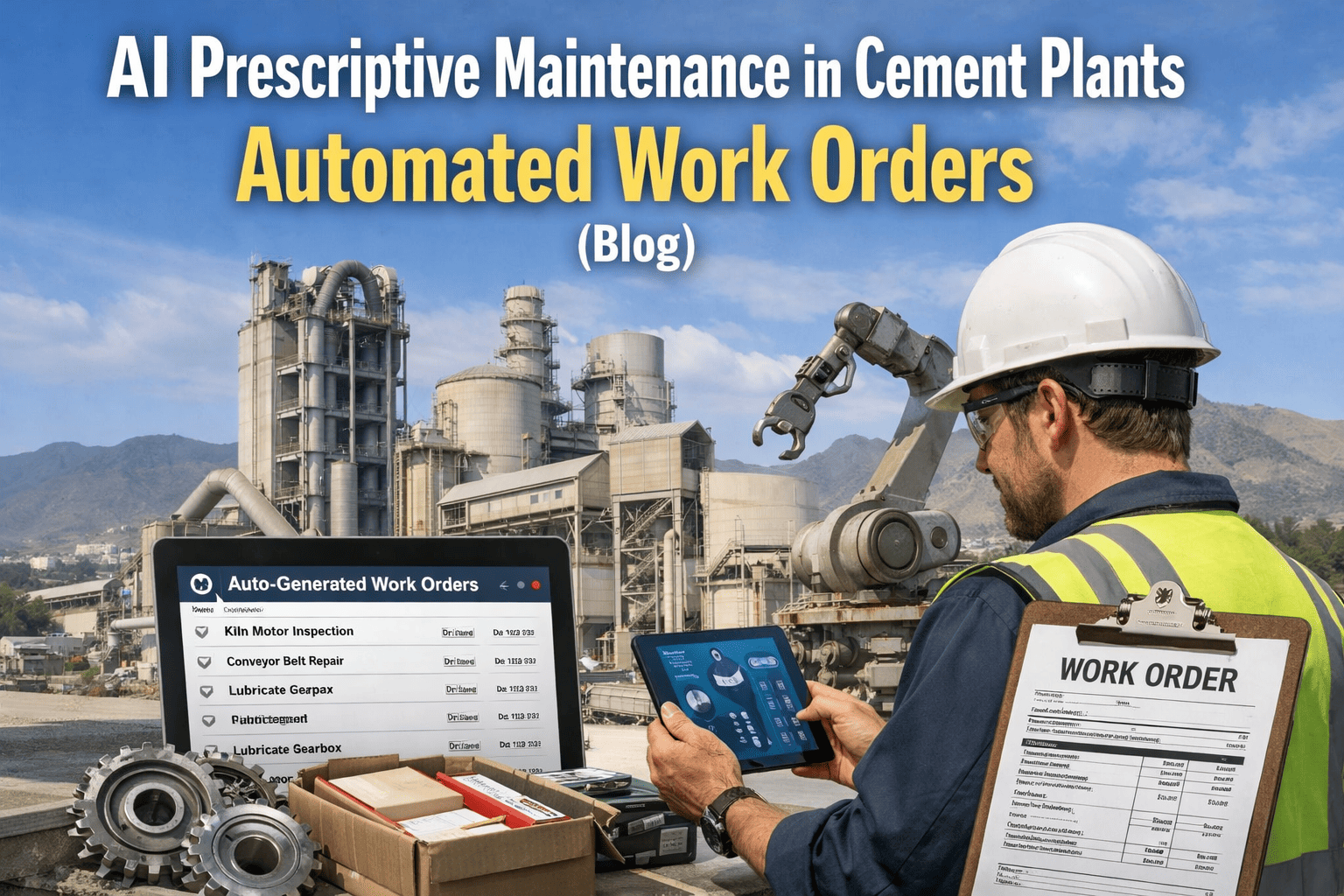
A single unexpected kiln or mill trip in a cement plant can cost $250k–$1.2M in lost production and emergency repairs. AI prescriptive maintenance doesn't just predict failure — it auto-generates work orders, schedules the right technician, and pre-orders spare parts before the alarm sounds. Cement producers using prescriptive workflows cut unplanned downtime by up to 55% and boost OEE within 90 days.
PRESCRIPTIVE AI · CEMENT PLANTS
From Predictive Alerts to Prescriptive Actions: Auto-Generated Work Orders for Cement Assets
Oxmaint connects real-time vibration, temperature, and process data to automated CMMS workflows — so your team stops reacting and starts preventing failures.
52%
Fewer unplanned cement stoppages with prescriptive AI
$1.4M
Avg annual savings per cement line
4-6x
Faster MTTR reduction
100%
Auditable work order automation
TRUE COST OF REACTIVE MAINTENANCE
What One Cement Mill Breakdown Really Costs
Emergency Repair & Parts
Overnight shipping + contractor premiums
$85K – $280K
Lost Clinker Production
8–24hrs downtime at full capacity
$210K – $900K
Penalties & Logistics
Customer claims, logistics re-routing
$60K – $400K
$500K – $1.8M
total impact per forced outage
60% of cement plants experience a critical failure every 90 days → Prescriptive AI prevents 7/10 events
30-45%
Maintenance cost drop after switching from calendar-based to AI-prescriptive work orders
45-60%
Reduction in forced outages (kiln, mill, crusher)
200-500%
ROI documented by cement plants using automated CBM
ASSET PRIORITY MATRIX
Cement Assets That Deliver Fastest Prescriptive ROI
PRIORITY 1
Kiln Main Drive & Shell
Thermal distortion, roller alignment issues detected 3 weeks early → auto work order prevents catastrophic shell cracking.
Savings per avoided kiln shut: $450k – $1.6M
PRIORITY 2
Vertical Roller Mills / Ball Mills
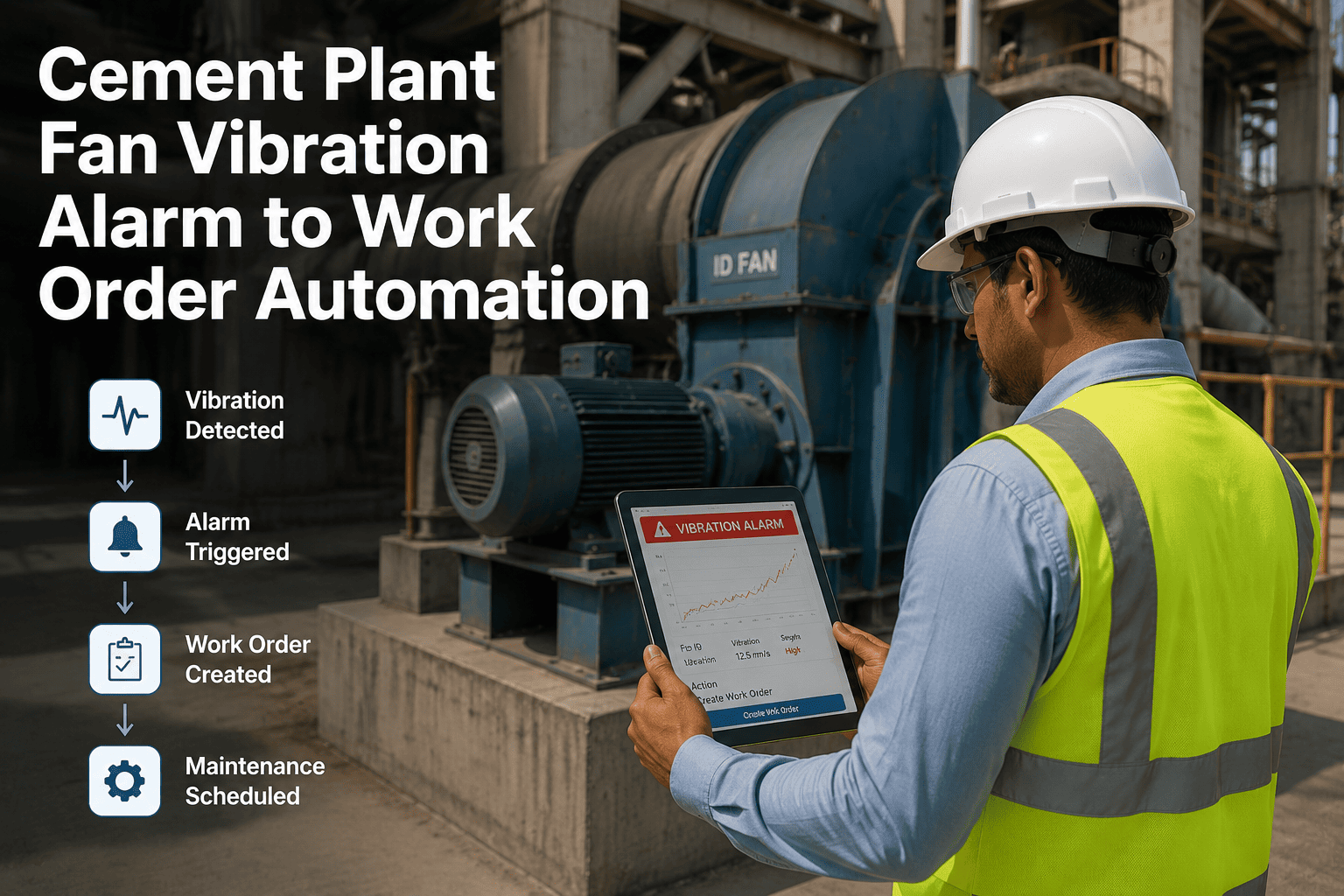
Gearbox vibration & bearing temp triggers generate work orders, pre-order replacement bearings before unplanned stop.
Payback: 1 prevented mill failure = full CMMS annual cost
PRIORITY 3
Belt Conveyors & Crushers
Idler failures & belt misalignment auto-create work orders, eliminate unplanned material flow interruption.
Typical ROI window: 60–90 days
Stop losing millions to unplanned cement stoppages
Oxmaint connects directly to your existing sensors, SCADA, and PLCs — no rip-and-replace. Within 2 weeks your top critical assets will auto-generate prescriptive work orders.
12-MONTH PRESCRIPTIVE JOURNEY
From Condition Data to Autonomous Work Orders
Integrate vibration, temp, oil sensors for kiln, mills, fans. Define condition-based rules → auto work orders. Expected: Eliminate 30% of unnecessary calendar PMs.
AI detects mill bearing degradation → system creates work order + schedules technician + reserves parts. Result: 1 prevented major failure typically covers full platform investment.
Expand to crushers, packing plant, auxiliary equipment. Parts inventory reduced 25-35% based on actual degradation data. MTTR falls by 40%.
Full autonomous maintenance loop: AI recommends actions, work orders auto-created, cost avoidance documented. Annual savings $850K – $2.4M.
PRESCRIPTIVE WORKFLOWS
Auto Work Order Generation
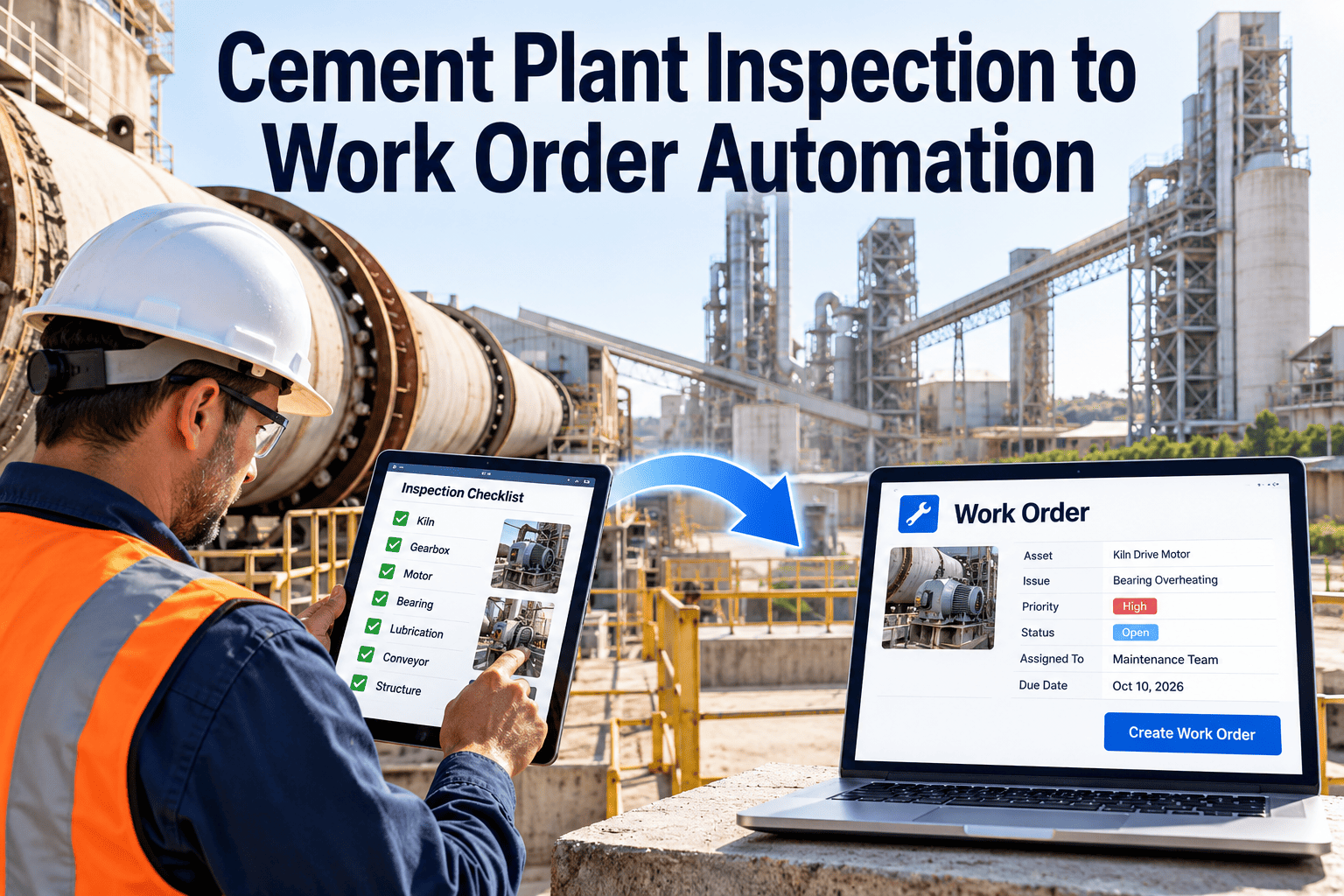
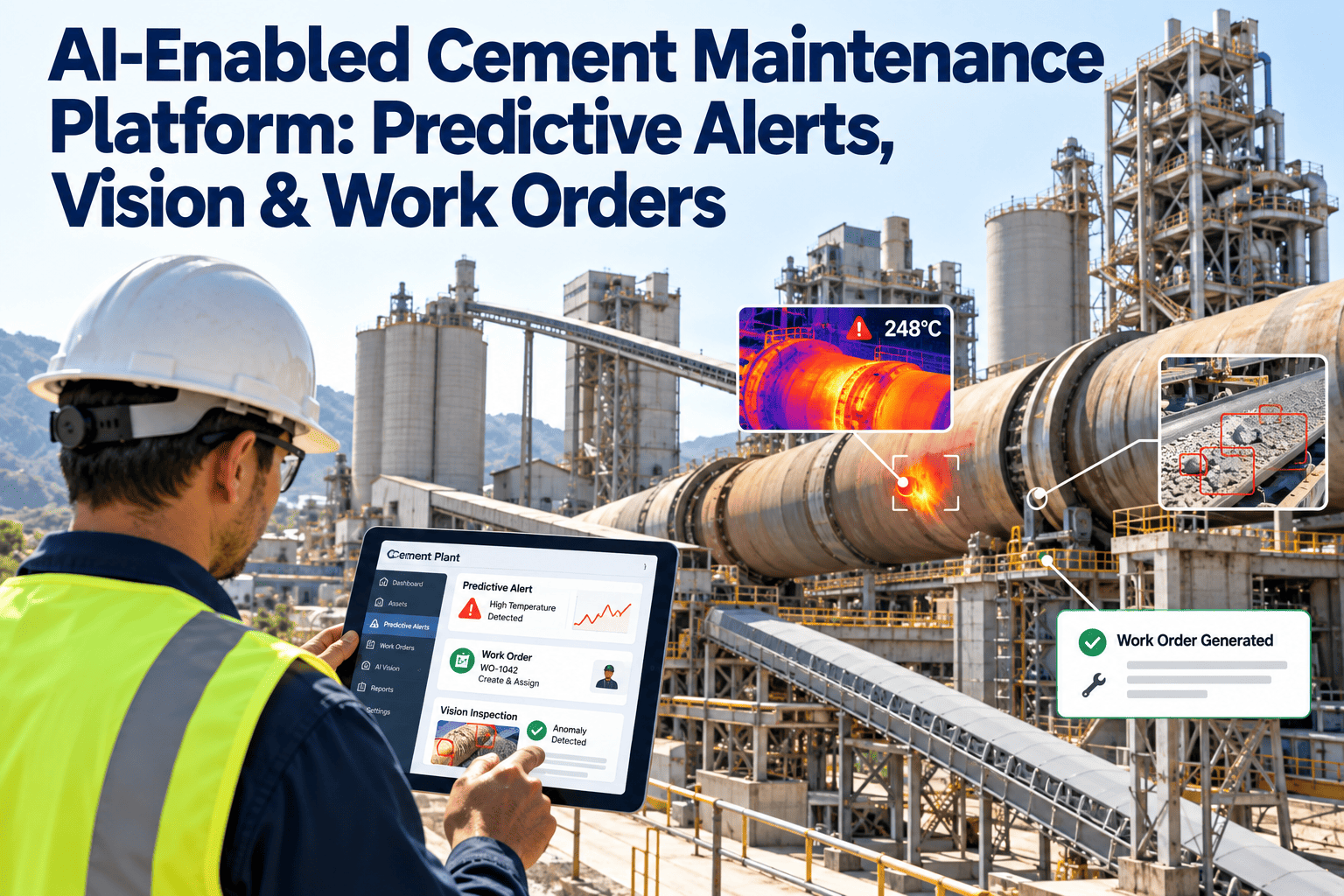
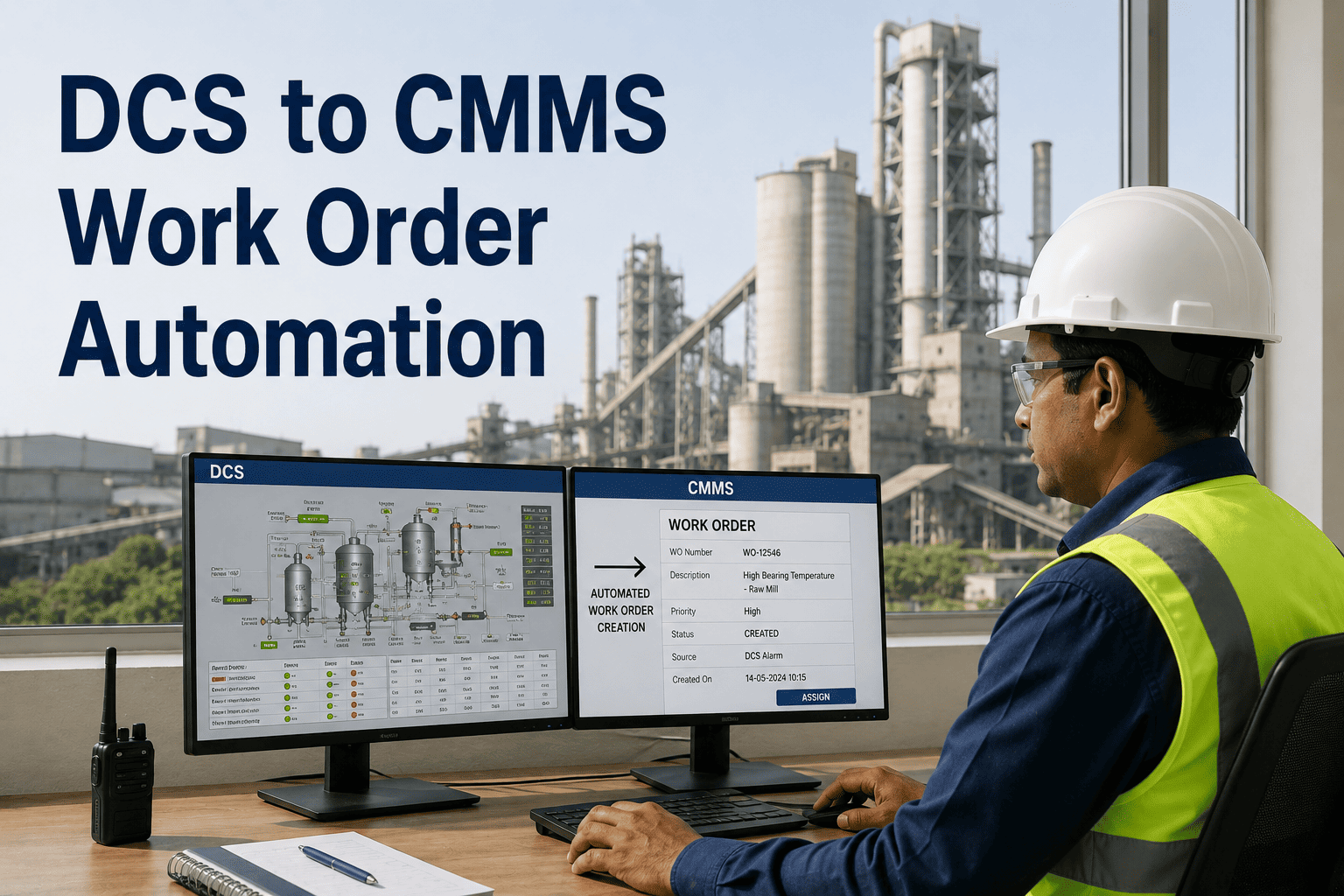
Rule-based or AI-triggered: when vibration > threshold or temp trend reaches limit → work order created, assigned, scheduled within CMMS.
SMART PARTS ORDERING
Pre-failure Parts Reservation
System automatically checks inventory, generates PO requisition, or reserves stock for the upcoming repair. No emergency expediting costs.
DIGITAL TWIN INTEGRATION
Condition Scoring Dashboard
Live RAG status (red-amber-green) for every cement asset, with direct link to recommended actions and auto-generated WO drafts.
COST AVOIDANCE TRACKING
Documented ROI Per Asset
Every prevented outage is assigned a dollar value: lost generation + repair savings. Real-time reports for leadership.
CASE STUDY SNAPSHOT
India-based Cement Major
After deploying Oxmaint prescriptive workflows on 6 kilns and 12 ball mills, unplanned stoppages dropped by 58% in 8 months.
? Annual savings: $2.1M | ?️ MTBF increased 47%
MIDDLE EAST PLANT
Auto work orders saved $890k in first year
Integrated with existing DCS, automatically generated 140+ prescriptive work orders, prevented 3 major gearbox failures.
✔️ 100% audit trail | ✔️ 92% technician adoption
$150k–$400k
Average savings per avoided crusher or conveyor failure
3-5x
ROI multiplier when prescriptive actions include parts pre-ordering
+25%
Improvement in maintenance planner efficiency using auto-generated work orders
IMPLEMENTATION BLUEPRINT
How to Start Prescriptive Maintenance in 4 Steps
- Connect existing data sources – SCADA, PLC, vibration sensors, thermography reports. No new hardware needed.
- Define condition thresholds per asset – Set vibration, temp, oil debris limits that auto-trigger work orders.
- Auto-generate work orders & parts reservation – System creates work order, assigns team, pre-orders spares.
- Monitor cost avoidance dashboard – Track prevented failure savings in real time, present board-ready ROI.
✅ 68% of cement plants achieve positive ROI in first 6 months
COMMON QUESTIONS
What Cement Teams Ask About Prescriptive AI
How is prescriptive maintenance different from predictive in a cement plant?
Predictive tells you a failure might happen; prescriptive automatically generates a work order, schedules the technician, and orders parts. Oxmaint closes the loop so you don’t just see alerts — you act on them instantly.
Book a demo to see prescriptive workflows.
Do we need new sensors to start automated work orders?
No. Most cement plants have PLC, DCS, or existing vibration/temp systems. Oxmaint integrates via standard APIs. You can start auto-generating work orders from existing data within days.
What’s the typical payback period for a cement plant using prescriptive CMMS?
Can we integrate Oxmaint with our existing ERP/CMMS?
Yes. Oxmaint provides REST APIs and webhooks to sync work orders, assets, and parts data with SAP, Oracle, or any maintenance system you already use. No rip and replace.
Your cement plant is already paying for failures that prescriptive AI could prevent
Start your free trial today. Deploy on 5 critical assets within a week — see auto-generated work orders and cost avoidance dashboards live.