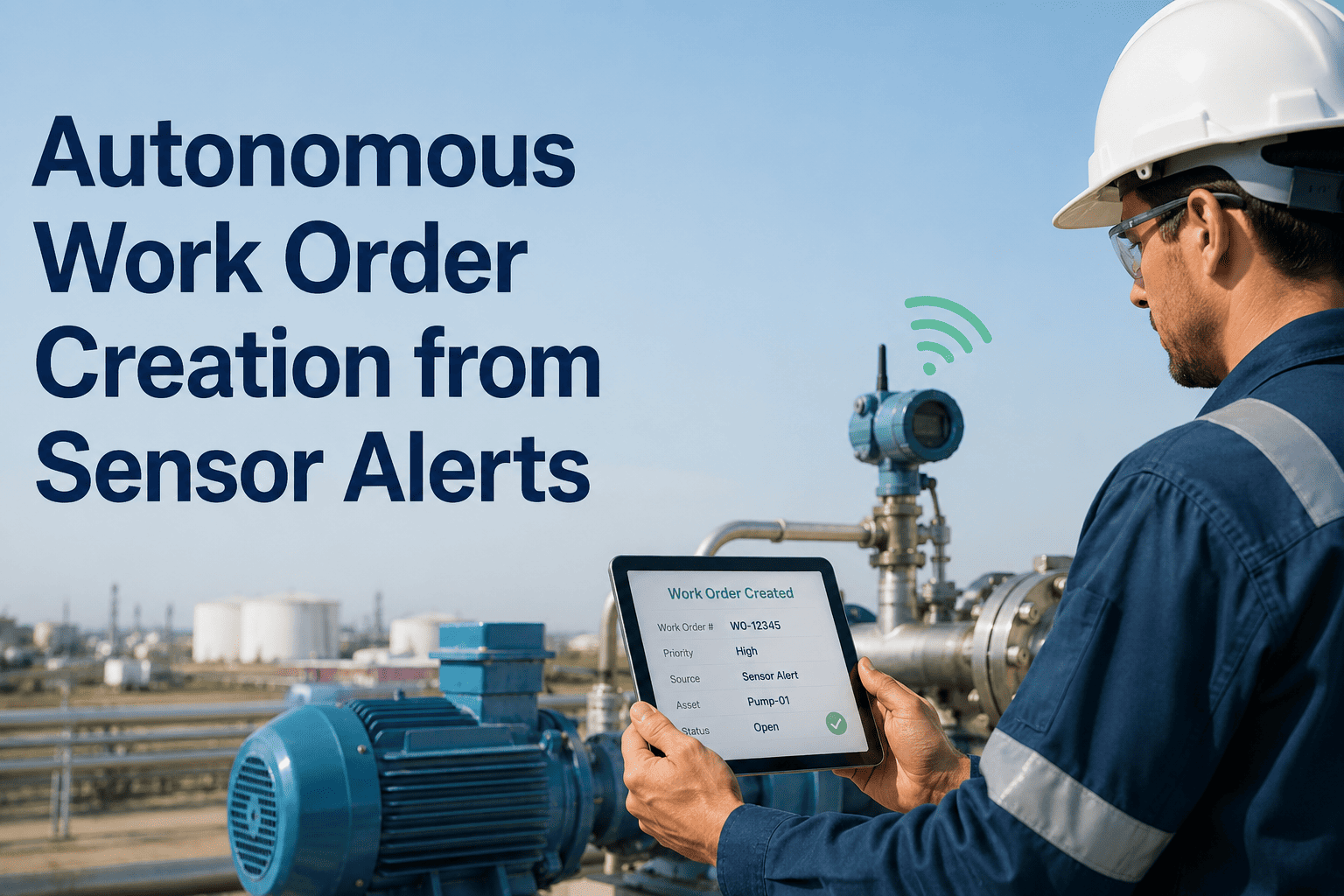
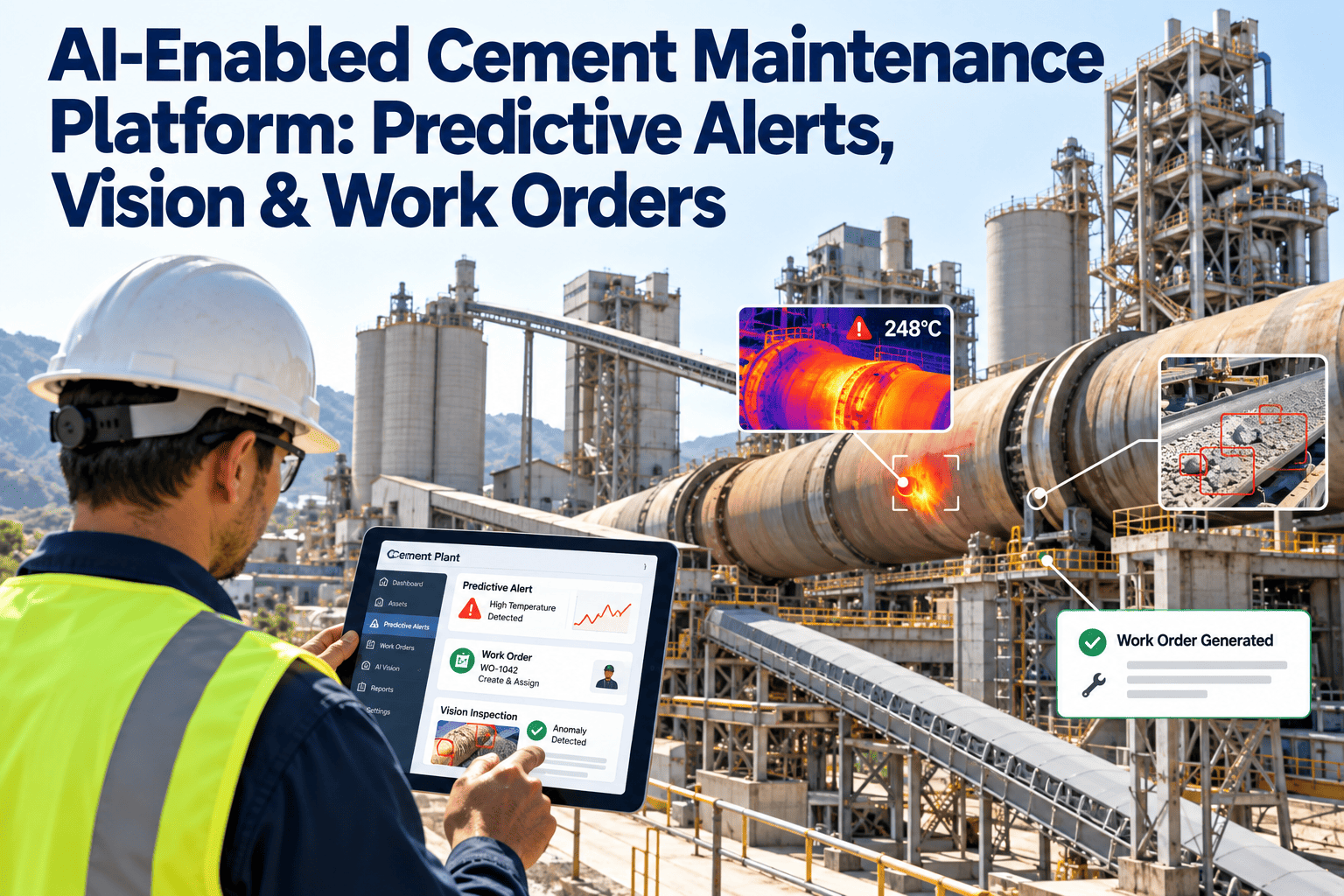
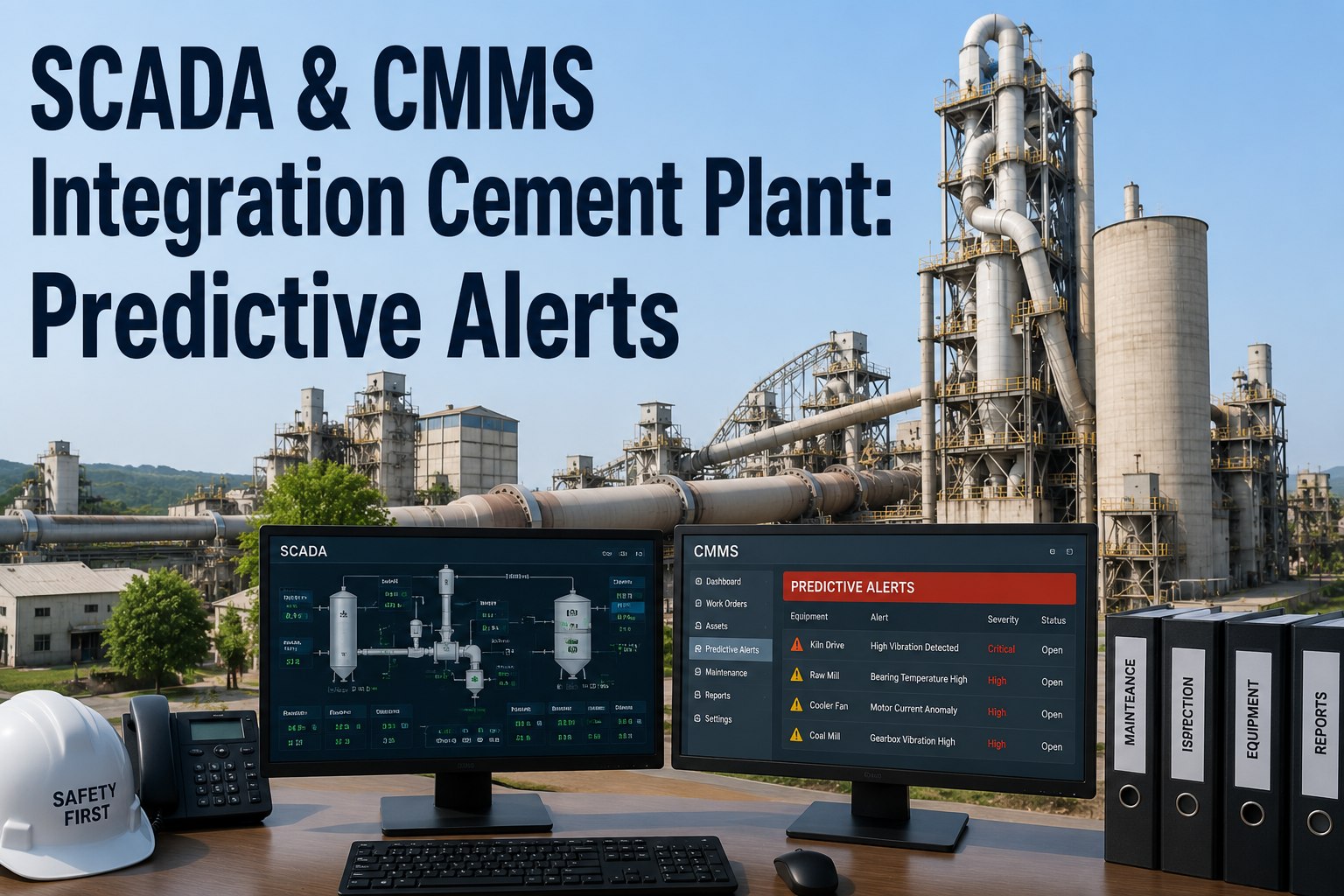
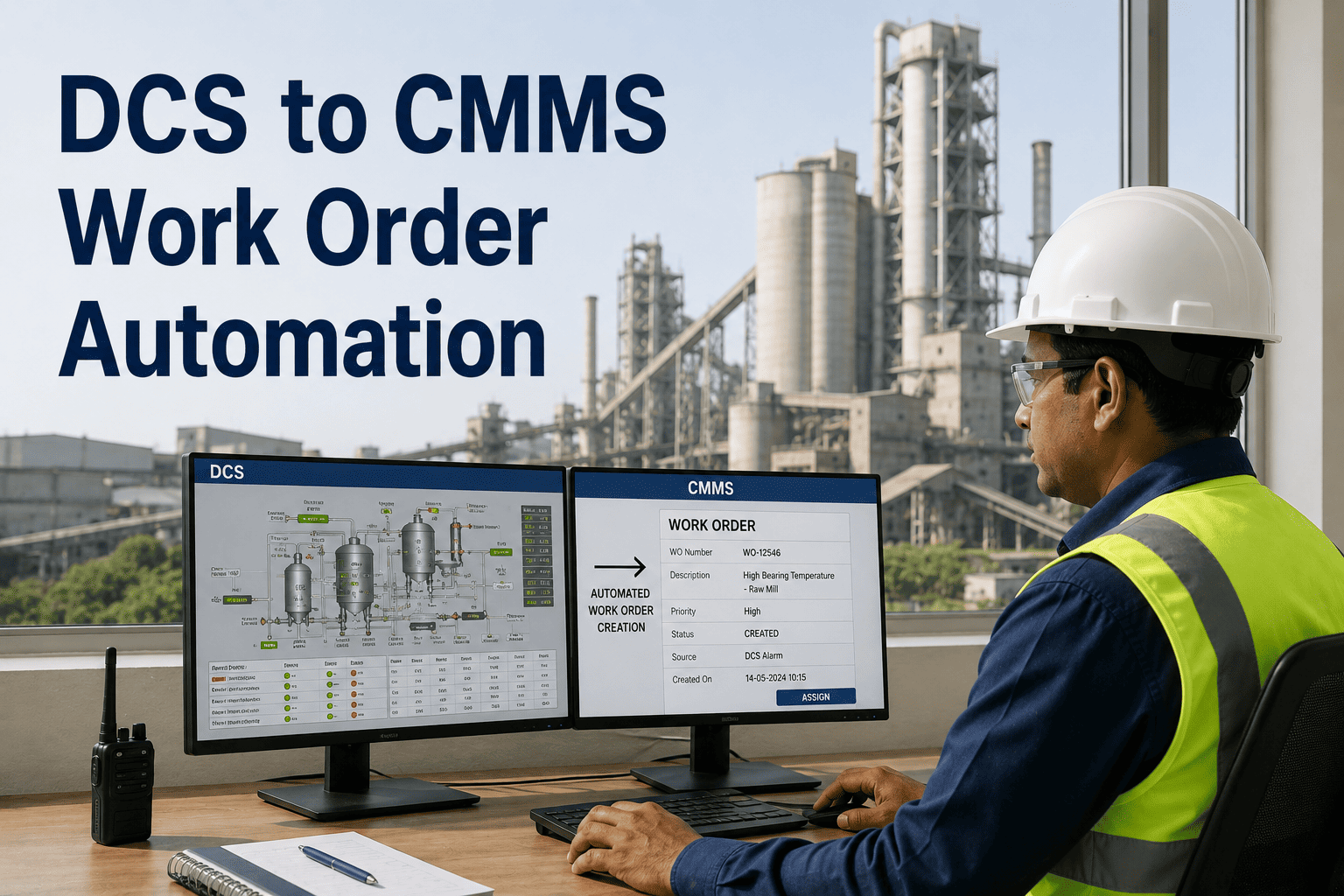
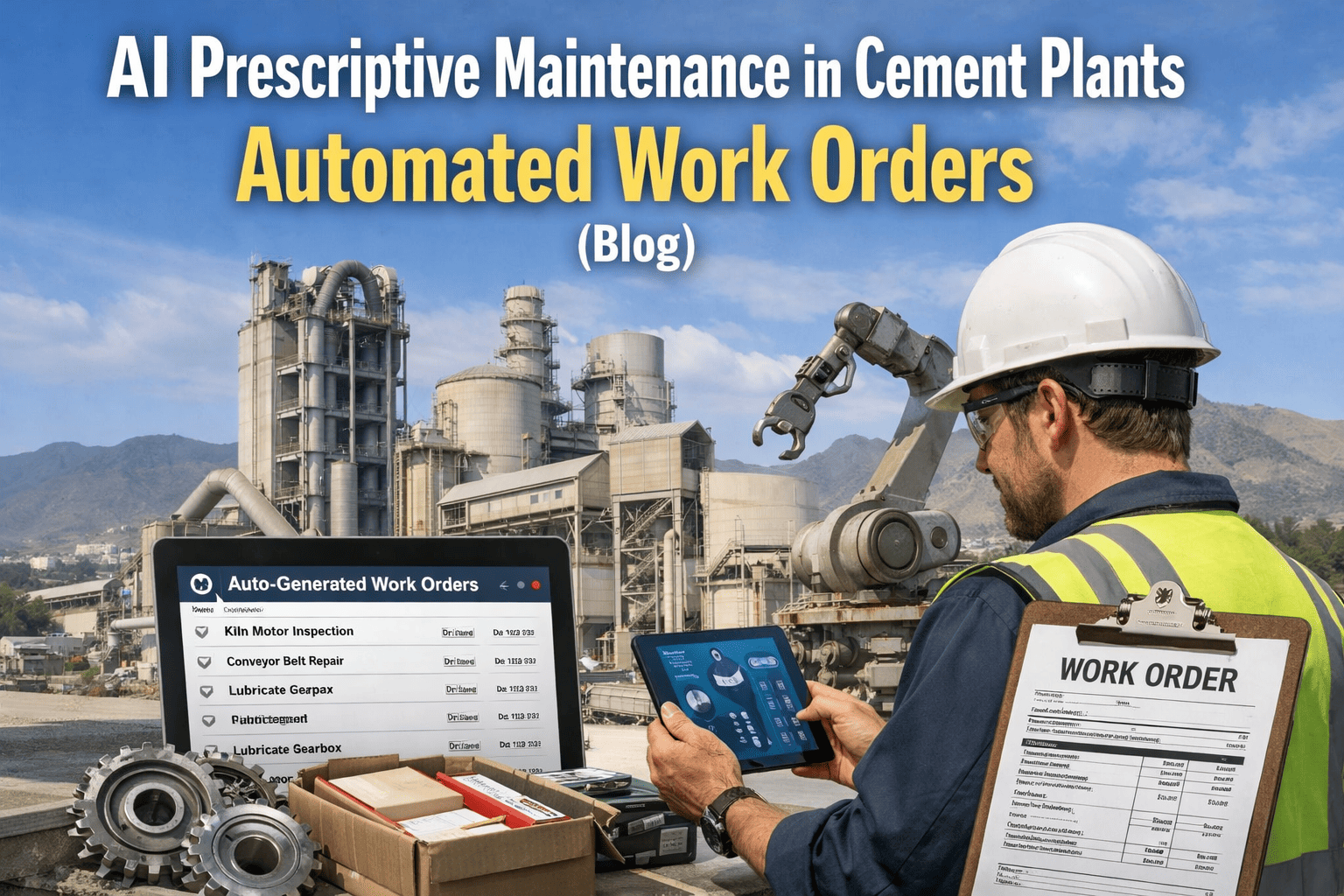
At 3:15 AM, a vibration sensor on a raw mill gearbox crossed its alarm threshold. No one was watching a screen. Within ninety seconds, a prioritized work order existed in OxMaint with the asset name, the defect pattern, the recommended spare part, and a technician already assigned. That ninety-second gap is the entire difference between a $14,000 planned repair and a $310,000 catastrophic failure. See how autonomous work orders run inside OxMaint before your next sensor crosses a line nobody is monitoring.
Sensor-to-Work-Order Automation
Your Sensors Already Know. Now Your Work Orders Will Too.
73% of critical cement equipment failures show measurable anomaly signals 4 to 8 weeks before breakdown. OxMaint turns that signal into an assigned, prioritized work order automatically — closing the gap between detection and action.
4-8 wks
Advance warning before failure
90 sec
Alert to assigned work order
73%
Failures with early signals
The Problem With Watching Dashboards
Predictive Data Only Helps If Something Acts On It
Plants that bought sensors but never connected them to a work order system end up with the worst version of predictive maintenance: a dashboard full of warnings that nobody is responsible for closing. A bearing trending toward failure for three weeks shows up as a yellow line on a chart — until someone happens to look, decides it matters, opens the CMMS, types up a job, finds a planner, and assigns a technician. Each of those steps adds delay, and delay is exactly what a 4-to-8-week warning window was supposed to remove.
Without Integration
Sensor data sits in a separate dashboard. A specialist must notice the trend, interpret it, and manually create a work order days or weeks later — if at all.
With OxMaint
Every anomaly crossing a configured threshold becomes a prioritized work order within minutes, with asset history, defect description, and parts attached automatically.
How The Pipeline Works
From Raw Vibration Reading to Technician Dispatch — Five Stages, Zero Manual Entry
Sensor Layer
Continuous Telemetry Capture
Vibration, temperature, motor current, and oil-condition sensors stream readings via OPC-UA, MODBUS, or wireless IoT gateways — no proprietary hardware lock-in, working alongside whatever instrumentation your plant already has installed.
Threshold Engine
Baseline Comparison
Every reading is checked against machine-specific baselines and degradation signatures rather than one-size-fits-all alarm limits, so a kiln support roller and a packaging conveyor are judged against their own normal operating ranges.
Pattern Detection
Failure Mode Matching
When a reading crosses its threshold or trends toward a known degradation curve, the system matches the pattern to a specific failure mode — bearing wear, misalignment, refractory hot spot — rather than firing a generic alarm.
Work Order Generation
Auto-Filled Job Card
A work order is created automatically with the asset, the defect description, the sensor reading that triggered it, recommended spare parts, and a priority level set by asset criticality — no blank form for a planner to fill in from memory.
Dispatch
Technician Assignment
The work order routes to a technician with the matching skill set, who receives it on the mobile app with asset history and QR-coded equipment access — ready to act before the shift planning meeting even happens.
Stop Reading Dashboards. Start Receiving Work Orders.
Connect your existing vibration, thermal, and current sensors to OxMaint and let the platform turn every meaningful anomaly into an assigned job — with the asset history and parts list already attached.
What Gets Attached Automatically
Every Auto-Generated Work Order Carries Context a Manual Ticket Never Has
A technician opening a manually written work order usually gets a one-line description and has to dig for everything else. An autonomously generated work order in OxMaint arrives already loaded with the information that determines how fast the job gets done correctly the first time.
Sensor Evidence
The exact reading and trend chart that triggered the alert, so the technician knows what to verify on arrival.
Asset History
Prior failures, repair dates, and maintenance notes for that specific machine pulled from its digital twin record.
Recommended Parts
Spare parts matched to the detected failure mode, checked against current stock before the technician leaves the shop.
Priority Score
A ranking based on asset criticality and failure probability, so the job lands in the queue where it actually belongs.
Where This Matters Most
Asset Classes Where Autonomous Work Orders Pay Off Fastest
Frequently Asked Questions
Autonomous Work Order Generation, Explained
Do we need new sensors, or can OxMaint use what we already have?
OxMaint connects to existing instrumentation through OPC-UA, MODBUS, and direct IoT inputs, so most plants start with the sensors already installed. Wireless vibration, thermal, and current sensors can be retrofitted onto older assets without rewiring.
Book a demo to review your current sensor coverage.
How accurate are the auto-generated work orders right after go-live?
Basic anomaly detection works from day one using pre-trained models built on cement plant failure data. Accuracy for specific failure modes improves over the first 30 to 60 days as the system learns your plant's own operating baselines and load patterns.
What happens if a sensor reading is a false alarm?
Technicians can close a false-positive work order with a note, and that feedback tightens the threshold for that specific asset going forward. The system is designed to get more precise the longer it runs against your real equipment, not less.
Can this run alongside our existing PM schedule?
Yes. Calendar-based PM tasks and sensor-triggered work orders run in the same queue, ranked by the same priority logic, so planners see one backlog instead of two separate systems competing for attention.
Start a free trial to see both running together.
Does this work for older, brownfield equipment without rebuilding the control system?
Yes. Wireless retrofit sensors and standard industrial protocols mean most integrations complete without production interruption or any change to existing control systems, regardless of how old the underlying equipment is.
Let the Next Anomaly Write Its Own Work Order
Connect your sensor network to OxMaint and turn every meaningful signal into a prioritized, assigned job before the failure window closes.