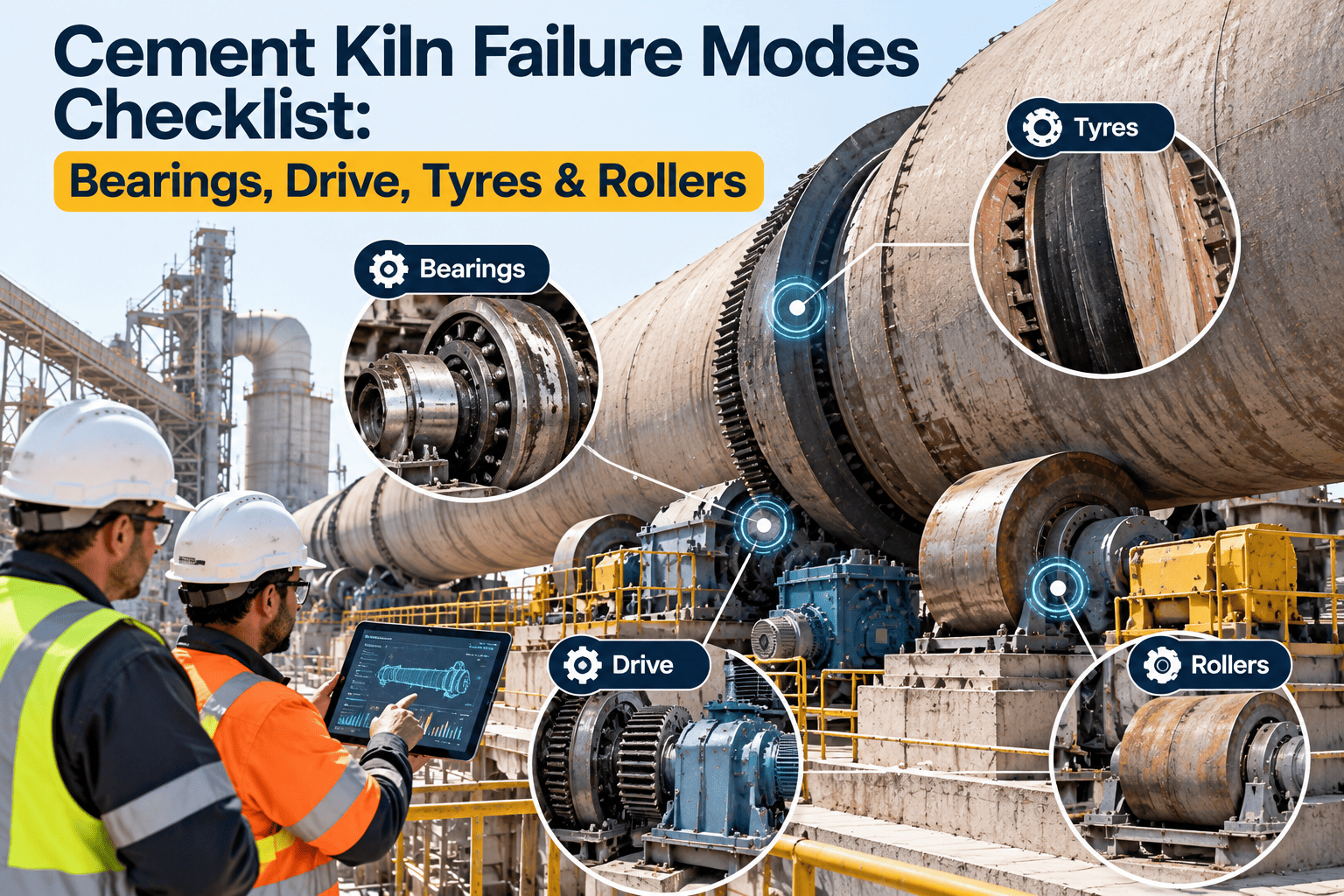
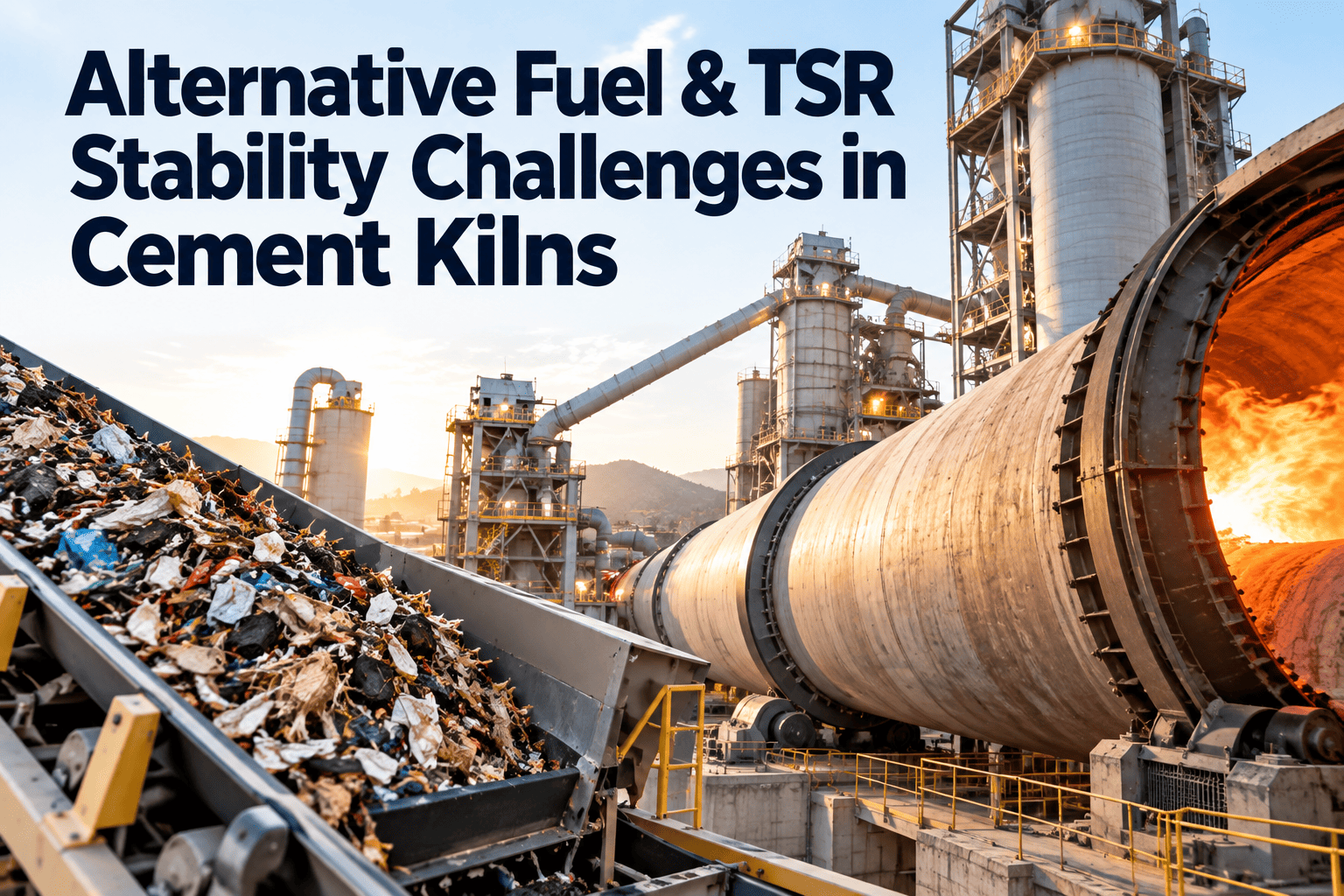
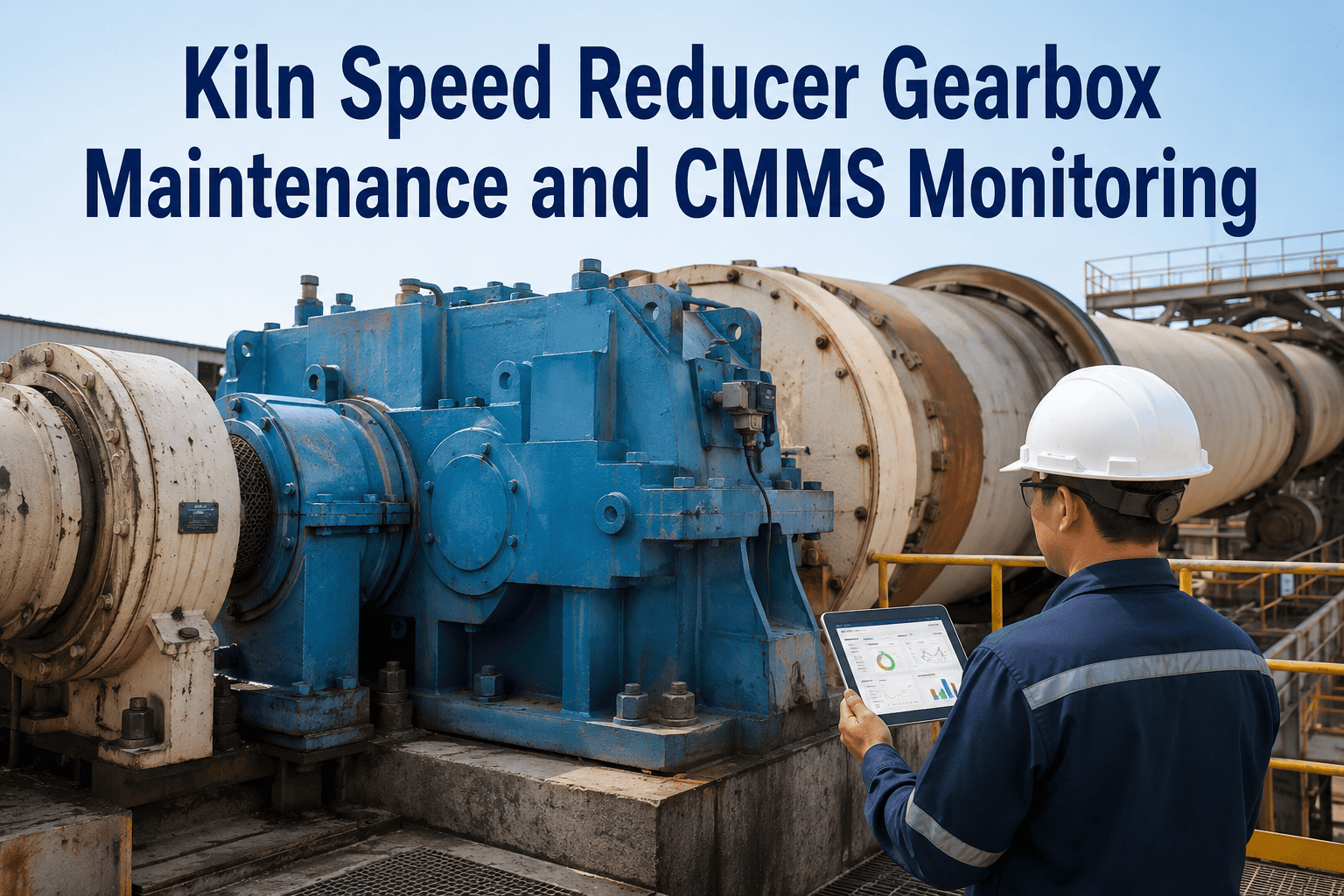
The cement kiln is the heart of every integrated cement plant — and its unplanned downtime is the single most expensive maintenance event in the industry. A 5,000 TPD kiln line stopped for 24 hours represents not just lost production but refractory thermal shock, drive system stress, and clinker quality disruption that can take days to recover from. The paradox is that most kiln failures are predictable: tyre migration, shell deformation, roller alignment deviation, and burner tip erosion all give measurable warning signals weeks before they become stoppages. The difference between a plant that catches these signals and one that reacts to them is a structured, documented preventive maintenance programme that runs consistently across shifts, across months, and across planned and unplanned shutdowns. OxMaint's Preventive Maintenance Scheduling module creates mobile PM checklists for kiln drives, shell monitoring, riding ring and roller inspection, burner system checks, and kiln safety items — scheduled automatically and completed on mobile devices with the full audit trail that proves your programme runs as designed. Book a demo to see cement kiln PM workflows in OxMaint.
Checklist · Preventive Maintenance · Cement Kiln Reliability · OxMaint PM Scheduling
Preventive Maintenance Checklist for Cement Kilns
Kiln drive, shell ovality, riding ring and roller, burner system, refractory, and safety item PM checklists — scheduled automatically in OxMaint and completed on mobile devices with photo evidence and instant corrective work order creation.
$500K+
Estimated cost per unplanned kiln shutdown of 48+ hours — lost production, refractory damage, restart fuel
72–96 hrs
Typical kiln restart time after cold shutdown — thermal soak cycle before normal production rate
8 systems
Critical kiln subsystems requiring scheduled PM: drive, shell, tyre, roller, burner, seal, refractory, cooling
Daily to annual
Range of PM intervals for kiln components — daily lubrication to annual refractory and mechanical surveys
Kiln PM Schedule Overview — Interval and Responsible Team
Daily
Drive lubrication oil level and temperature
Tyre and roller contact surface visual check
Burner flame visual — shape, length, colour
Kiln shell temperature scan (infrared pyrometer)
Kiln inlet and outlet seal smoke check
Weekly
Tyre migration measurement and record
Roller axial float measurement
Drive pinion and ring gear lubrication check
Thrust roller contact and wear visual check
Kiln shell ovality indicator trend review
Monthly
Roller bearing temperature and vibration check
Full shell scan with hotspot identification
Burner tip condition and cooling air check
Drive gearbox oil analysis sample
Inlet and outlet seal wear and gap measurement
Annual Shutdown
Full refractory inspection and thickness survey
Tyre and riding ring wear measurement survey
Roller resurfacing and alignment check
Drive coupling and pinion tooth wear survey
Shell circularity and ovality measurement survey
Daily Kiln PM Checklist
Every Shift — Operator and Mechanical Technician
Kiln shell temperature scan completed — infrared scanner or handheld pyrometer readings taken at all shell sections including tyre zones, mid-shell, and kiln inlet cone; scan readings compared to previous shift baseline; any hotspot above 350°C surface temperature flagged as potential refractory failure zone and reported to shift manager immediately; scan readings recorded per shell position in OxMaint daily PM record
Record: Shell temperature readings by position, hotspot flag · Role: Process Operator / Mechanical Technician
Kiln drive oil level and temperature confirmed — main drive gearbox oil level checked at sight glass and confirmed within operating range; oil temperature at gearbox outlet confirmed below maximum operating limit (typically 75°C); any oil level drop since previous shift triggers immediate investigation for leakage before shift continues; readings recorded in OxMaint daily PM form with time of check
Record: Oil level status, oil temperature reading · Role: Mechanical Technician
Tyre and roller contact visual check — each tyre and riding ring surface checked for visible cracking, spalling, or abnormal wear pattern development; roller surface contact width confirmed uniform across full face; any widening of tyre-roller contact band indicates tyre migration or roller misalignment and triggers weekly measurement to be brought forward to same shift; observation noted in OxMaint with photo if abnormality present
Record: Contact condition per station, photo if abnormal · Role: Mechanical Technician
Burner flame visual assessment — flame shape, length, and colour observed from kiln front view and compared to baseline operating parameters; irregular flame (off-centre, overly short, excessive luminosity) indicates burner nozzle wear or fuel-to-air ratio deviation; observations recorded in OxMaint daily PM record; any concern reported to process engineer before next shift; burner cooling air supply confirmed audible at nozzle
Record: Flame condition assessment, cooling air confirmation · Role: Process Operator
Kiln inlet and outlet seals checked for smoke leakage — seal contact areas inspected for gas or dust escape that indicates seal wear or seal spring failure; any visible smoke at kiln ends triggers work order for seal inspection at next available maintenance window; active leakage from inlet seal is a higher priority as it draws in false air affecting kiln thermal profile; leakage presence or absence recorded in OxMaint
Record: Seal condition per end, leakage flag · Role: Mechanical Technician
Weekly Tyre and Roller Measurement Checklist
Every 7 Days — Measured and Recorded Against Baseline
Tyre migration measured at each riding ring station — axial position of each tyre on its supporting pad measured using dial gauge or reference mark method; measurement compared to previous week and to baseline zero position; migration above 10 mm per week indicates insufficient grip pad friction and triggers inspection of grip pads and tyre lubrication; migration values recorded per station in OxMaint weekly PM record with trend comparison to previous four weeks
Record: Migration measurement per station, trend vs 4-week baseline · Role: Mechanical Technician
Roller axial float measured and compared to operating range — each support roller pair measured for axial float using contact dial gauge at roller journal end; axial float within operating band (typically 5–15 mm depending on design) confirms correct thrust loading; float outside range triggers review of roller skew setting; measurements recorded per roller pair in OxMaint with roller station identifier and previous week comparison
Record: Axial float per roller pair, range status · Role: Mechanical Technician
Thrust roller contact confirmed within normal range — thrust roller contact with tyre face observed during kiln rotation; contact width measured or estimated and compared to previous week; any increase in contact width or contact on only part of thrust roller face indicates kiln axis thrust loading change; contact condition recorded with photo in OxMaint; significant change triggers kiln specialist review before next weekly check
Record: Thrust roller contact condition, photo · Role: Mechanical Technician
Ring gear and pinion spray lubrication system confirmed operational — spray nozzles cleared and confirmed delivering lubrication to gear tooth flanks during kiln rotation; lubrication reservoir level confirmed and topped up if required; any blocked nozzle cleaned and confirmed operational before inspection closes; spray timing and pattern confirmed matching gear rotation speed; system status recorded in OxMaint weekly PM record
Record: Spray system operational confirmation, reservoir level · Role: Mechanical Technician
OxMaint schedules every kiln PM — from daily shell scans to annual refractory surveys — automatically against your kiln asset. Mobile checklists are assigned to the right team with the right interval, and all readings feed a continuous performance history that shows you exactly where your kiln reliability is trending before a failure happens.
Annual Shutdown Inspection Checklist
During Planned Kiln Stop — Full Mechanical and Refractory Survey
Refractory thickness survey — kiln interior inspected using refractory hammer test and ultrasonic thickness gauge at defined measurement positions; all positions measured against minimum acceptable thickness; coating condition in burning zone assessed; any brick showing below-minimum thickness or cracking identified for replacement before kiln restart; complete survey results recorded in OxMaint with position map and thickness values
Record: Thickness values per position, replacement zone identification · Role: Refractory Specialist + Mechanical Team
Tyre and riding ring wear survey — tyre contact face width and profile measured at multiple circumferential positions; riding ring groove depth measured using profile gauge; tyre-to-shell pad clearance measured at four positions and compared to design clearance; tyre ovality calculated from diameter measurements at 0°, 90°, 180°, 270°; all measurements recorded in OxMaint annual shutdown report and compared to previous annual survey for wear rate calculation
Record: Full measurement set per tyre station, wear rate vs previous year · Role: Mechanical Specialist
Shell circularity and ovality survey — kiln shell diameter measured at defined axial positions using internal template or external diameter tape; ovality index calculated per position; any position showing ovality above 0.5% of nominal diameter flagged for engineering review before kiln restarts; shell hotspot zones from daily pyrometer records correlated with ovality measurements to identify refractory failure causation pattern; results in OxMaint
Record: Diameter measurements per position, ovality calculation · Role: Mechanical Specialist
Drive pinion and ring gear tooth wear survey — ring gear tooth profile measured using gear tooth gauge at minimum 12 positions around circumference; pinion tooth wear measured at same interval; backlash measured at 4 positions and compared to manufacturer specification; gear mesh pattern assessed by bluing; any measurement outside acceptable range triggers gearbox specialist review before restart; complete gear survey report attached to OxMaint annual shutdown work order
Record: Tooth wear measurements, backlash values, gear survey report · Role: Drive Specialist
Kiln Failure Mode Early Warning Indicators — What PM Catches Before Breakdown
Refractory
Shell temperature above 350°C in localised zone
Brick failure, shell deformation, emergency shutdown
Daily shell scan catches this 12–72 hrs before visible failure
Tyre / Riding Ring
Tyre migration rate above 10 mm/week
Tyre derailment, shell damage, unplanned stop
Weekly migration measurement gives 3–4 weeks of warning
Roller Bearing
Temperature rise above 80°C or abnormal vibration onset
Bearing seizure, shaft damage, emergency stop
Monthly bearing check identifies deterioration weeks in advance
Drive Gearbox
Oil contamination, metal particles in oil sample
Gear tooth failure, gearbox replacement
Monthly oil sample catches gear wear 60–90 days before failure
Burner
Flame shape deviation, burner tip discolouration
Poor clinker quality, coating loss, refractory attack
Daily flame visual identifies nozzle wear before quality impact
Inlet / Outlet Seal
Smoke leakage visible at kiln ends
False air ingress, thermal profile disruption, heat loss
Daily seal check allows planned replacement at next window
Frequently Asked Questions
How frequently should kiln shell temperature scanning be performed?
Daily scanning is the industry standard for continuous kiln operation. A full shell scan — covering all axial positions from inlet to outlet — should be completed once per shift with readings logged against position. Automated scanning systems that provide continuous monitoring are preferred for high-output kilns; for plants without automated systems, a handheld pyrometer scan logged in OxMaint per shift is the minimum acceptable standard.
OxMaint's daily PM checklists include shell scan logging with hotspot flagging built in.
What is tyre migration and why does it matter for kiln PM?
Tyre migration is the axial movement of the kiln tyre relative to its support pads over time. It is caused by the combination of kiln slope, thermal expansion differential between tyre and shell, and inadequate grip pad friction. Uncontrolled migration leads to tyre derailment, which is a catastrophic failure mode. Weekly migration measurement recorded in OxMaint and trended over 4-week rolling periods is the only way to detect acceleration before it becomes a crisis.
Book a demo to see tyre migration trend tracking in OxMaint.
How does OxMaint handle kiln PM across multiple shifts and multiple days?
OxMaint PM schedules are assigned to asset and interval — daily PM tasks are automatically created for each shift, weekly tasks for the assigned day, and monthly tasks for the scheduled date. Shift supervisors see open PM tasks for their shift in the OxMaint dashboard, and task completion is tracked with timestamp and operator identity. Missed tasks are flagged automatically so nothing slips between shifts without visibility.
What should trigger an unplanned kiln stop for maintenance inspection?
The most common trigger indicators are: shell temperature above 350°C in a localised zone, tyre migration rate above 15 mm per week, visible smoke from kiln end seals with rate increasing between shifts, roller bearing temperature above alarm level, or abnormal drive current signature. Any of these detected during routine PM in OxMaint automatically generates an urgent corrective work order routed to the maintenance engineer and plant manager.
Can OxMaint store kiln annual shutdown reports and refractory survey data?
Yes. OxMaint annual shutdown work orders support document and photo attachments, so full refractory survey reports, shell circularity measurement sheets, and gear wear survey data can all be stored against the kiln asset record. Comparing this year's survey data with previous years is possible through the asset maintenance history, supporting decisions on refractory replacement zones and tyre/roller resurfacing intervals.
Start a free trial to build your kiln asset history in OxMaint.
OXMAINT PREVENTIVE MAINTENANCE SCHEDULING · CEMENT KILN
Daily Shell Scans. Weekly Tyre Measurements. Annual Surveys. All Scheduled. All Documented. All in OxMaint.
OxMaint automates your entire cement kiln PM programme — from daily operator checks to annual shutdown surveys — with mobile checklists, measurement trend tracking, and automatic corrective work order creation that gives your team the early warning they need to prevent the kiln stoppages that cost the most.