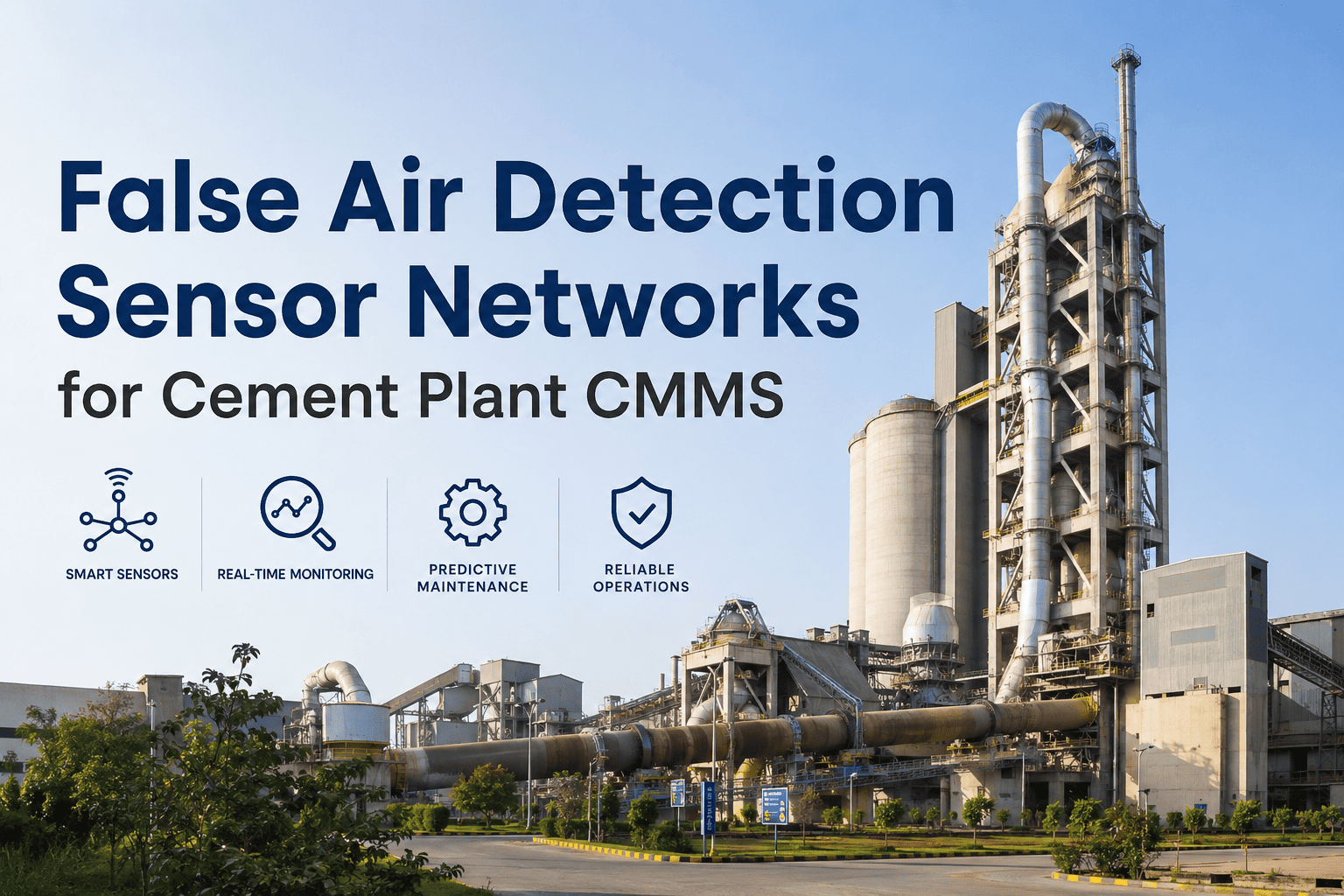
A cement plant in Arizona struggled with IoT connectivity across their 2-mile quarry-to-plant operation. WiFi coverage gaps left mobile crushers and conveyor transfer points without monitoring. Cellular IoT worked inconsistently—public network congestion caused data delays during peak hours, and coverage inside metal buildings was unreliable. After deploying a private 5G network covering their entire operation, sensor data from 400+ devices now flows with sub-10ms latency and 99.99% reliability. Their kiln shell scanner transmits thermal images in real-time, mobile equipment stays connected throughout the quarry, and predictive maintenance through Oxmaint CMMS receives uninterrupted data streams from every monitored asset.
Cement plants present extreme connectivity challenges: sprawling outdoor operations spanning quarries to dispatch, harsh RF environments inside metal structures and rotating equipment, and mission-critical monitoring requirements that can't tolerate network congestion or coverage gaps. Private 5G networks deliver ultra-reliable, low-latency connectivity purpose-built for industrial IoT at scale. Unlike WiFi or public cellular, private 5G provides dedicated spectrum, guaranteed bandwidth, and coverage designed around your specific facility layout. This article explores how private 5G networks enable industrial IoT in cement plants and integration with predictive maintenance systems. Book a demo to see how Oxmaint integrates with industrial connectivity infrastructure.
Private 5G Network for Cement Plant Industrial IoT
Ultra-reliable, low-latency connectivity for mission-critical equipment monitoring across your entire operation.
Cement Plant Connectivity Challenges
Traditional wireless technologies struggle with cement plant requirements.
Sprawling Operations
Cement plants span quarries, crushing, milling, kilns, and dispatch across miles of territory. WiFi coverage requires hundreds of access points with complex handoff management.
Harsh RF Environment
Metal buildings, rotating equipment, and dense concrete structures create RF dead zones. Signal reflection and absorption make consistent coverage difficult.
Real-Time Requirements
Kiln monitoring, safety systems, and process control need guaranteed low-latency data delivery. Network congestion or delays compromise equipment protection.
Mobile Assets
Haul trucks, mobile crushers, and loaders move throughout the operation. Seamless connectivity handoff between coverage zones is essential.
Connectivity Comparison
How private 5G compares to alternative industrial wireless technologies for cement plant IoT.
| Capability | Private 5G | Industrial WiFi | Public Cellular | LoRaWAN |
|---|---|---|---|---|
| Latency | <10ms | 10-50ms | 30-100ms | 1-10 sec |
| Reliability | 99.99% | 99.9% | Variable | 99% |
| Coverage Range | 1-5 km per cell | 50-100m | Operator dependent | 5-15 km |
| Bandwidth | 1+ Gbps | 100-500 Mbps | Shared | 50 kbps |
| Spectrum | Dedicated | Unlicensed | Shared | Unlicensed |
| Mobile Handoff | Seamless | Complex | Carrier managed | N/A |
| Device Density | 1M+ devices/km² | 200 devices/AP | Limited | Thousands |
Connect Your IoT Infrastructure to Oxmaint
Whether WiFi, cellular, or 5G—Oxmaint integrates with your connectivity infrastructure for seamless equipment monitoring.
Private 5G Architecture
A private 5G network for cement plants consists of dedicated infrastructure under your control.
Radio Access Network
5G base stations (gNodeB) deployed across your facility. Indoor small cells cover buildings; outdoor macro cells cover quarries and yards.
5G Core Network
On-premises or cloud-hosted core network processing. Handles authentication, session management, and data routing for all connected devices.
Edge Computing
Local edge servers process time-sensitive data on-site. Critical monitoring analytics run locally while bulk data syncs to cloud platforms.
Platform Integration
5G network connects to Oxmaint CMMS and other enterprise systems. Sensor data flows through secure APIs to maintenance and analytics platforms.
Coverage Zones
Private 5G provides tailored coverage across all cement plant operational areas.
Quarry Operations
Macro cells cover open-pit areas. Haul truck monitoring, crusher sensors, and mobile equipment connectivity throughout extraction zones.
Processing Plant
Indoor small cells cover mills, kilns, and packaging. High device density with vibration, thermal, and power sensors on rotating equipment.
Kiln Area
Dedicated coverage for kiln shell scanners, drive monitoring, and preheater sensors. Ultra-low latency for critical thermal monitoring.
Yards & Dispatch
Outdoor coverage for storage areas, truck loading, and dispatch operations. Mobile device connectivity for logistics coordination.
Cement Plant Use Cases
Private 5G enables IoT applications that weren't practical with previous connectivity options. Oxmaint supports all connectivity types for equipment monitoring.
Kiln Shell Thermal Imaging
High-resolution thermal cameras stream continuous shell temperature data. Real-time hot spot detection requires guaranteed low-latency transmission.
Mobile Equipment Monitoring
Haul trucks, loaders, and mobile crushers maintain connectivity while moving throughout operations. Seamless handoff between cells enables continuous monitoring.
Dense Sensor Networks
Hundreds of vibration, thermal, and power sensors per building. 5G supports device densities impossible with WiFi or LoRaWAN.
Video Analytics
AI-powered video analysis for safety monitoring, conveyor inspection, and process observation. High-bandwidth streams from multiple cameras simultaneously.
Safety Systems
Emergency shutdown systems, gas detection, and worker safety devices require guaranteed connectivity. Private 5G provides dedicated capacity for critical systems.
Process Control Integration
Wireless sensors feeding process control systems. Low-latency connectivity enables closed-loop control applications previously requiring wired connections.
Future-Proof Your IoT Connectivity
Oxmaint integrates with private 5G networks to deliver ultra-reliable equipment monitoring across your cement plant.
Implementation Considerations
Key factors for planning a private 5G deployment in cement plant environments.
Spectrum Strategy
CBRS (Citizens Broadband Radio Service) provides accessible spectrum for private LTE/5G in the US. Evaluate licensed vs. shared spectrum options for your region.
Coverage Planning
RF surveys identify coverage requirements across quarry, plant, and dispatch areas. Factor in building materials, equipment interference, and future expansion.
Device Ecosystem
Verify sensor and gateway compatibility with private 5G. Some industrial IoT devices require cellular modules; others connect through 5G-enabled gateways.
Integration Architecture
Plan data flows from 5G network to enterprise systems. Edge computing handles time-sensitive processing; cloud integration enables advanced analytics.
Oxmaint Integration
Oxmaint CMMS integrates with private 5G networks for comprehensive equipment monitoring.
Real-Time Data Ingestion
5G low-latency connectivity ensures sensor data reaches Oxmaint AI models without delays. Predictive maintenance operates on current equipment conditions.
Device Management
Oxmaint tracks 5G-connected sensors alongside traditional devices. Unified device dashboard monitors health across all connectivity types.
Network Monitoring
Monitor 5G network health alongside equipment health. Connectivity issues are flagged before they create monitoring gaps.
Mobile Workforce
Technicians use Oxmaint mobile app over 5G throughout the facility. Work orders, equipment data, and procedures available everywhere.
Frequently Asked Questions
Ready for Next-Generation Industrial Connectivity?
See how Oxmaint integrates with private 5G and other connectivity infrastructure for comprehensive cement plant equipment monitoring.