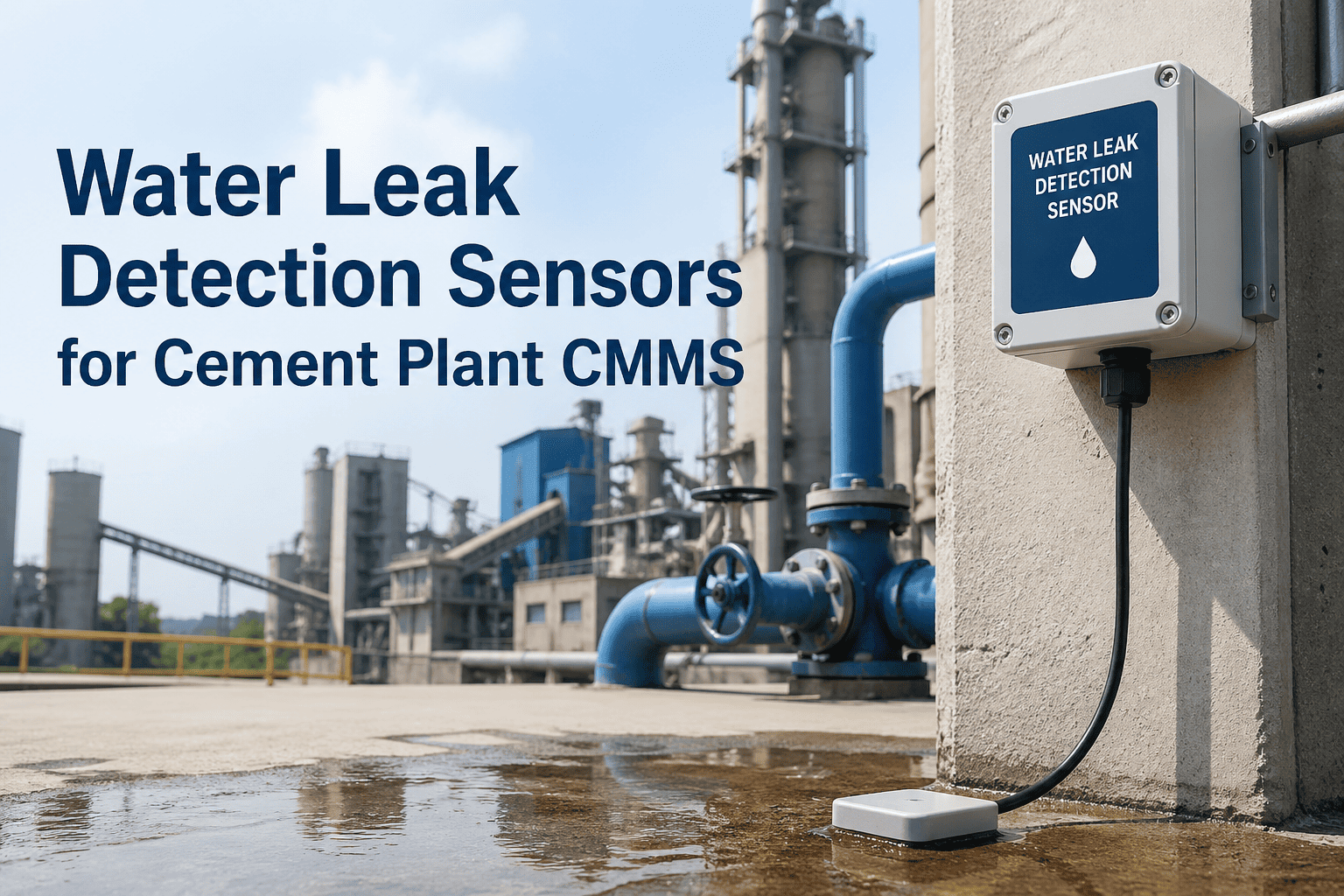
Water management and cooling system maintenance for cement plants is a CMMS program that schedules and documents cooling tower PM, chemical dosing, blow-down cycle management, make-up water metering, and effluent quality checks — generating the timestamped logs and discharge compliance reports required by EPA Clean Water Act permits, EU Water Framework Directive provisions, and equivalent frameworks across Australia, Germany, the UK, and the GCC.
Why Water System Failures Cost More Than Just Downtime
Cooling water failure to kiln bearings or clinker cooler systems halts production within hours. A single unplanned cooling failure at a 5,000 TPD kiln line costs $180,000–$400,000. Without automated PM triggers, pump failures are discovered after the damage is done.
Blowdown and process water must comply with pH, temperature, TDS, and TSS limits under NPDES or equivalent permits. Unmonitored pH drift or chemical over-dosing triggers EPA enforcement and fines that remain on the plant's regulatory record for 5+ years.
Cooling towers without documented biocide schedules and drift eliminator inspections face Legionella risk notifications. Scale and biofilm accumulation reduces heat transfer efficiency by 10–25% — costs that accumulate invisibly without tracked water chemistry data.
Plants consuming 200–500 L/tonne face escalating water charges in water-stressed regions. Without metered recycling records, plants cannot demonstrate efficiency to regulators or ESG auditors — blocking access to sustainability-linked financing.
Your Cooling System Is One Pump Failure Away from a Kiln Shutdown
Oxmaint prevents unplanned water system failures with automated PM scheduling, water quality alerts, and discharge compliance documentation — built for cement operations. Book a demo to see water system maintenance configured for your plant.
The Oxmaint Water Management Solution
Oxmaint manages the maintenance, inspection, chemical dosing, and documentation layer across every water system in your plant — from raw water intake through cooling circuits, recycling loops, and final discharge — the layer most cement plants manage in disconnected spreadsheets and shift notes.
Drift eliminator, fill media, basin clean-out, fan blade, and blowdown valve PM — all scheduled on calendar or runtime triggers. Photo evidence at each PM feeds the asset history for regulatory audit.
pH, TDS, temperature, turbidity, and biocide residual readings logged against permit-defined ranges per point. Out-of-range results auto-generate corrective work orders — eliminating the gap between a quality event and corrective response.
Biocide, scale inhibitor, and pH adjustment batches registered with supplier certificates and dosing records per asset. Actual volumes dosed versus target are tracked — creating a defensible chemical treatment audit trail for permit inspections.
Daily make-up and recycled water volumes logged per circuit — generating water efficiency ratios for NGER, EPA, and ETS reporting. Consumption drift triggers alerts before a leak or blowdown fault escalates to a compliance event.
Complete effluent monitoring history exportable in under 15 minutes — pH logs, TSS records, chemical certificates, and corrective actions. Formatted for NPDES annual reports, EU IED returns, and equivalent regional authority submissions.
Kiln bearing cooling, clinker cooler pumps, raw mill gearbox cooling, and aftercooler circuits managed under structured PM — with seal inspection, heat exchanger fouling checks, and runtime-based predictive replacement to prevent kiln-stopping failures.
Implementation Roadmap: Oxmaint Water Management Deployment
Oxmaint deploys in four structured phases — from asset registry to full regulatory documentation readiness — each delivering operational value before the next begins.
Every water asset registered: cooling towers (per cell), make-up meters, blowdown valves, dosing skids, recirculation pumps, effluent monitoring points, and intake screens. Hierarchy structured per kiln line and utility zone. Permit discharge limits attached to each record. QR tags assigned for mobile access. A 3-kiln plant with 4 towers and 6 discharge points completes in 8–10 days.
Maintenance intervals loaded per permit condition: daily quality checks, weekly biocide dosing, monthly basin inspections, quarterly pump seal assessments, and annual Legionella risk assessment workflows. Templates include permit acceptance ranges, auto-escalation routing, and chemical certificate reference fields. Historical water logs migrated from spreadsheets.
Day 18: first automated quality work orders dispatched via mobile. pH out of tolerance on Cooling Tower 2 flagged within 4 minutes — corrective dosing work order generated and escalated to the compliance lead before shift end. First documented corrective action trail for a water quality event that previously would have been noted on a shift log and filed without follow-up.
Discharge compliance export validated against current permit monitoring requirements. First monthly water quality report reviewed by the compliance team. Water consumption and recycling KPIs live on the plant dashboard — feeding ESG reporting data without manual extraction from operator logs. Plant fully audit-ready for all active monitoring points.
Water System KPI Benchmarks: Cement Plant Baseline vs Target
From 58% Monitoring Compliance to 100% — In 5 Weeks
Oxmaint eliminates the gaps between water quality readings, corrective actions, and regulatory documentation — giving your compliance team real-time visibility before the regulator arrives. Book a demo and see your plant's water system configured live.
Results: Oxmaint-Deployed Cement Plant Water Programs
Regional Compliance Coverage: Water Management Regulatory Frameworks
| Region | Applicable Regulatory Frameworks | Oxmaint Documentation Output |
|---|---|---|
| USA & Canada | EPA Clean Water Act NPDES discharge limits (temperature, pH, TSS, TDS); 40 CFR Part 122 stormwater and process water requirements; EPA Effluent Guidelines for cement; RCRA groundwater protection. Canada: CEPA water quality guidelines; provincial discharge permits (Ontario MECP, BC ENV, Alberta AEP) | Timestamped NPDES discharge monitoring reports; SWPPP maintenance logs; exceedance corrective action documentation; chemical treatment certificates; EPA regional office and state authority submission packages |
| Australia | NGER Act water consumption reporting for Designated Large Facilities; state EPA Environment Protection Licence discharge conditions (NSW EPA, EPA Victoria, EPA SA); National Water Initiative accounting framework; Safeguard Mechanism water intensity reporting; Cooling Tower Code of Practice (Legionella) — mandatory in all states | NGER water consumption and recycling records; state EPA EPL compliance monitoring logs; Cooling Tower Risk Management Plan maintenance evidence; Safeguard Mechanism water reporting data; annual compliance reports for state EPA submission |
| United Kingdom | EA Environmental Permit water discharge conditions; Water Industry Act 1991 trade effluent consent; Environment Act 2021 water quality provisions; L8 HSE ACoP for Legionella in cooling systems; UK ETS water intensity monitoring; EA Water Abstraction Licence compliance | EA Environmental Permit discharge monitoring records; L8 ACoP Legionella risk assessment maintenance evidence; trade effluent monitoring logs; EA audit response packages; HSE-compliant cooling tower management documentation |
| Germany | WHG Federal Water Act requirements for industrial water use and discharge; AbwV wastewater ordinance discharge limits for cement; EU Water Framework Directive national implementation; DGUV cooling system hygiene standards; 4th BImSchV water cooling reporting requirements | WHG discharge monitoring records; AbwV-aligned wastewater quality logs; cooling system hygiene maintenance evidence per DGUV; EU WFD compliance documentation; LANUV/LfU compliance submission packages; CSRD water use reporting exports |
| Saudi Arabia & UAE | SASO industrial water quality standards; PME industrial discharge limits; UAE Federal Law No. 24 water resource protection provisions; Abu Dhabi EAD and Dubai EPDA water permit conditions; GCC Water Reuse Standards GSO 2483; Vision 2030 industrial water efficiency KPIs | PME and UAE EPA discharge monitoring documentation; GSO-aligned water quality records; GCC water reuse compliance evidence; Estidama Pearl water consumption reporting; Ministry of Environment permit compliance packages; Vision 2030 sustainability reporting data |
Oxmaint vs Competitors: Water Management for Cement Plants
Cement plant water compliance requires permit-condition-aware monitoring schedules, chemical treatment audit trails, and multi-framework discharge documentation — capabilities most general CMMS platforms do not natively provide. Book a demo to compare Oxmaint against your current platform.
| Capability | Oxmaint | MaintainX | UpKeep | Fiix (Rockwell) | Limble CMMS | IBM Maximo | Hippo (Eptura) |
|---|---|---|---|---|---|---|---|
| Permit-linked water quality acceptance ranges per discharge point | Yes — per permit | No dedicated module | No dedicated module | Partial — custom config | No dedicated module | Possible — custom dev needed | No dedicated module |
| Automated out-of-range discharge corrective work order | Yes — instant | Manual trigger only | Manual trigger only | Configurable | Manual trigger only | Configurable — complex setup | Manual trigger only |
| Chemical dosing audit trail with supplier certificate linking | Yes — full trail | No | No | Partial — asset docs only | No | Possible — requires report config | No |
| Legionella / Cooling Tower Code of Practice PM workflow | Yes — template built-in | Generic checklist only | Generic checklist only | Generic checklist only | Generic checklist only | Configurable — no template | Generic checklist only |
| Make-up water and recycling ratio tracking dashboard | Yes — real-time | No | No | No | No | Possible — heavy customization | No |
| NPDES / EU WFD / NGER compliance export (formatted) | Yes — 5 regions | No | No | No | No | Partial — US only standard | No |
| ESG water intensity reporting data export | Yes — automated | No | No | No | No | Partial — requires BI config | No |
| Deployment timeline for 3-kiln cement plant | 4 to 5 weeks | 5 to 8 weeks | 5 to 10 weeks | 12 to 24 weeks | 4 to 7 weeks | 16 to 52 weeks | 6 to 12 weeks |
Built for Cement. Not Adapted for It.
Unlike generic CMMS platforms requiring months of customization, Oxmaint deploys with cement plant water management templates pre-configured — cooling tower PM schedules, discharge monitoring work orders, and chemical audit trails ready on Day 1. Book a demo to compare against your current platform.
Data Security and Compliance You Can Rely On
Oxmaint protects your plant's water quality records and regulatory documentation with enterprise-grade security controls — meeting the requirements of the most stringent industrial compliance programs.
Frequently Asked Questions
Continue Reading
Zero Discharge Violations. 30% Less Water. Audit-Ready in Minutes.
Water quality monitoring, cooling tower PM scheduling, chemical treatment audit trails, and multi-region compliance exports — deployed at your cement plant in 4 to 5 weeks without replacing existing SCADA or DCS infrastructure. SOC 2 Type II compliant. No configuration consulting fees.