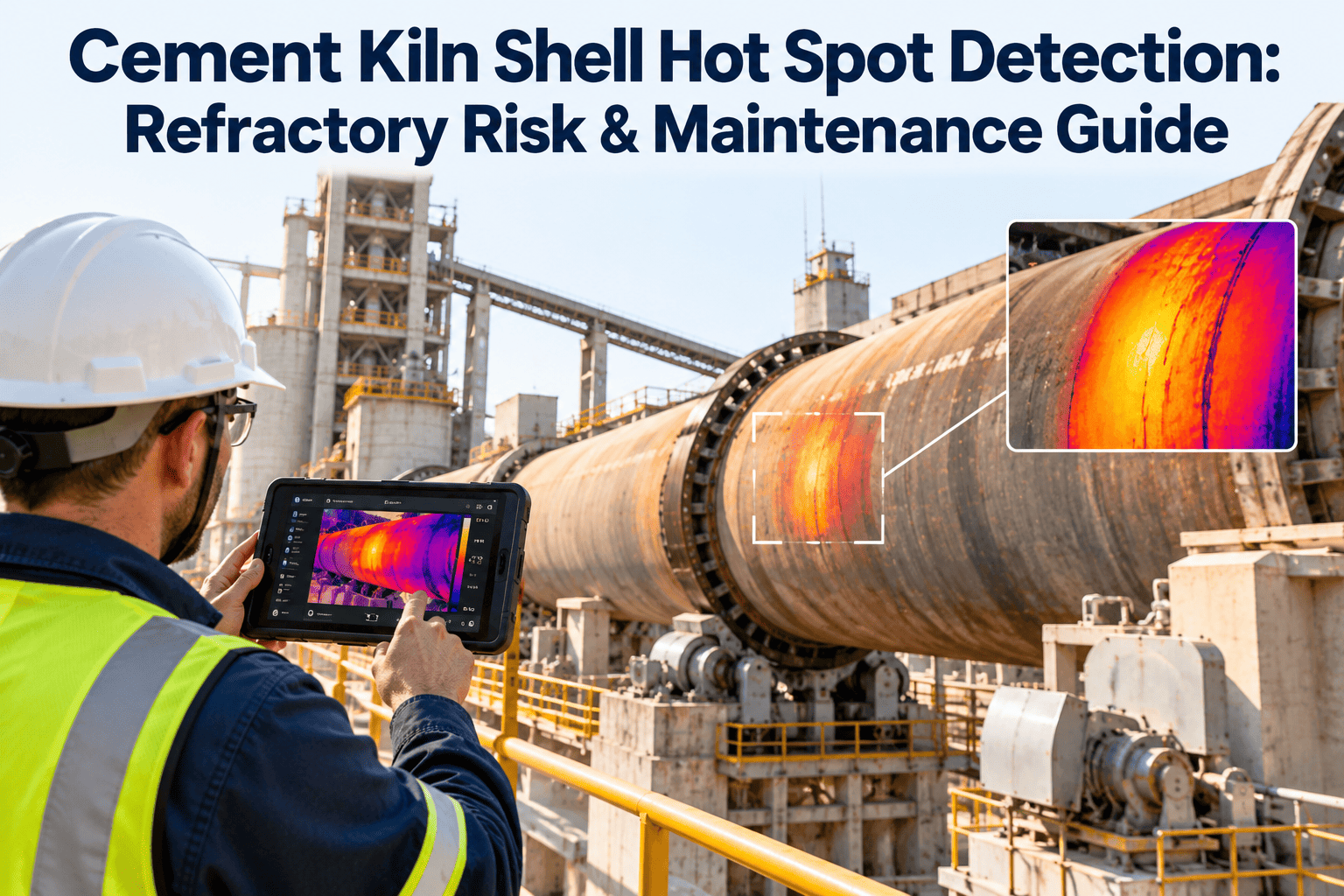
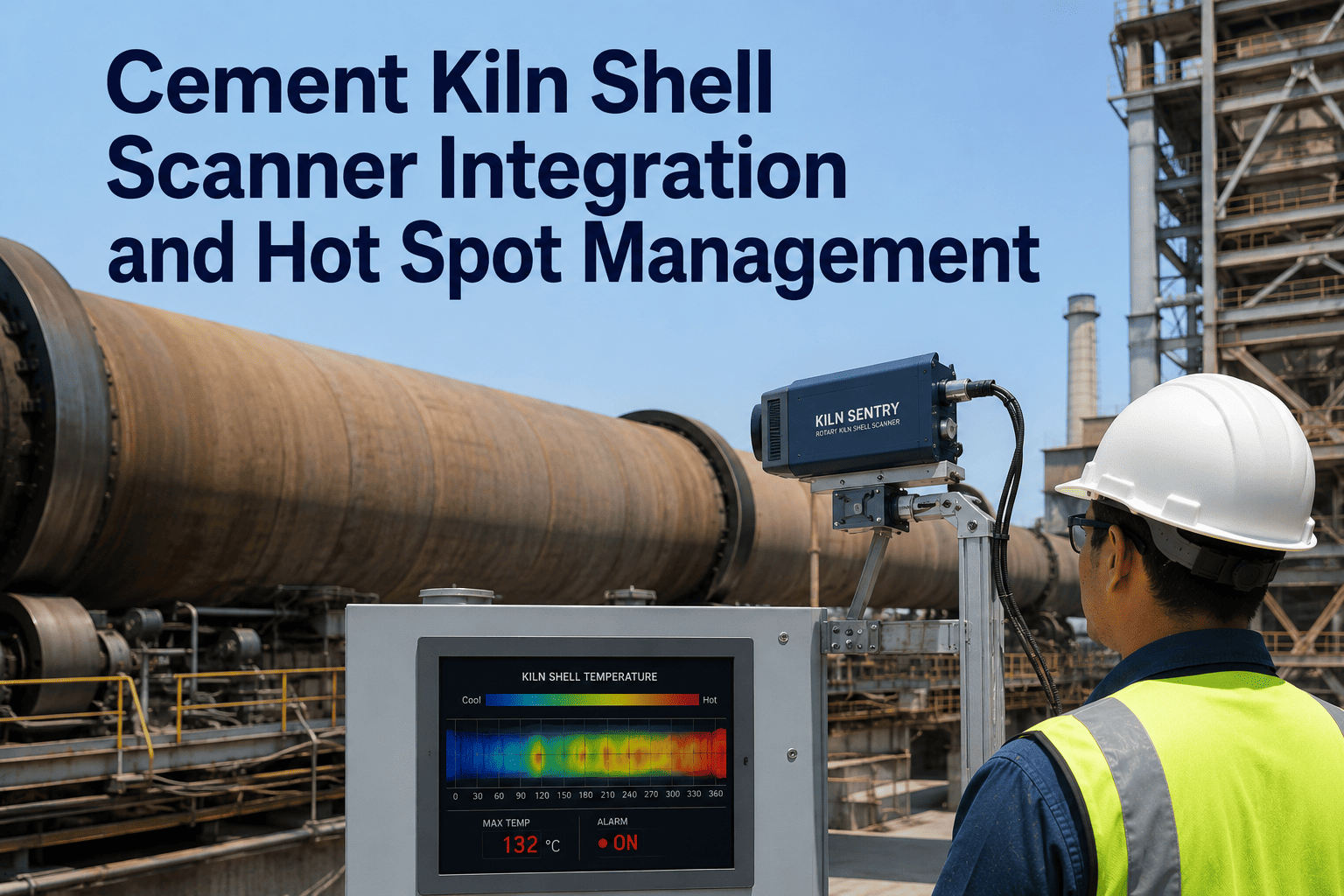
A cement plant in Turkey prevented a $1.8 million refractory replacement when their IoT sensor network detected a developing hot spot 23 days before visible shell deformation occurred. The thermal imaging sensors identified a 47°C temperature anomaly in Zone 3, triggering an automated alert that enabled maintenance teams to apply targeted refractory repairs during a scheduled outage rather than facing emergency shutdown. Cement kilns operate at temperatures exceeding 1450°C with shell rotation speeds creating continuous mechanical stress—conditions where undetected anomalies escalate from minor deviations to catastrophic failures within weeks. Real-time sensor monitoring transforms kiln maintenance from reactive firefighting into predictive intervention, catching refractory degradation, bearing wear, and shell distortion while repairs remain economically viable. Sign up for Oxmaint to integrate your kiln sensors with predictive maintenance workflows.
73%
Of Kiln Failures Detectable 2-4 Weeks Early
$2.4M
Average Cost of Unplanned Kiln Shutdown
45%
Reduction in Emergency Maintenance
24/7
Continuous Condition Monitoring
Kiln Sensor Types and Monitoring Parameters
Industrial IoT sensors monitor six critical parameter categories that together provide complete visibility into kiln health. Each sensor type captures specific degradation signatures that indicate developing problems before they cause production impact.
Infrared pyrometers and thermal cameras continuously scan the rotating shell surface, detecting hot spots that indicate refractory degradation or coating loss before visible damage occurs.
Measurement Range200-450°C
Scan FrequencyContinuous
Resolution±1°C
Triaxial accelerometers mounted on support rollers, girth gear, and drive components detect bearing defects, alignment issues, and mechanical wear patterns through frequency analysis.
Frequency Range0.5-10,000 Hz
Sample Rate25.6 kHz
Sensitivity100 mV/g
Displacement sensors track axial kiln movement and roller contact position, identifying thrust bearing wear and tire migration that precede costly mechanical failures.
Measurement Range±50mm
Accuracy±0.1mm
Update Rate10 Hz
Current, temperature, and vibration sensors on main drive motors and gearboxes detect electrical faults, overload conditions, and mechanical degradation in the drive train.
Current Accuracy±0.5%
Temp Range-40 to 150°C
CommunicationModbus/OPC-UA
Oxygen, CO, and NOx analyzers in the preheater and kiln inlet monitor combustion efficiency and detect process upsets that indicate equipment or operational problems.
O2 Range0-25%
Response TimeLess than 10 sec
Accuracy±0.1%
Laser displacement and proximity sensors measure shell ovality and tire clearance, detecting structural deformation that indicates support roller misalignment or bearing problems.
MeasurementRadial displacement
Resolution0.01mm
EnvironmentIP67 rated
Real-Time Dashboard Monitoring
Oxmaint consolidates sensor data into actionable maintenance intelligence
Trend Analysis
Historical trending identifies gradual degradation patterns across campaigns
Threshold Alerts
Configurable alarms trigger when parameters exceed safe operating limits
Maintenance Scheduling
Auto-generated work orders aligned with kiln outage windows
Compliance Reports
Audit-ready documentation of all monitoring and maintenance activities
Connect your kiln sensors to predictive maintenance. Oxmaint integrates with existing sensor networks, DCS systems, and historian databases to transform raw data into maintenance action—detecting anomalies weeks before failures occur.
Hot Spot Detection and Response Workflow
When thermal sensors identify developing hot spots, a structured response workflow ensures appropriate action before refractory damage escalates. Book a demo to see how Oxmaint automates hot spot response protocols.
1
Detection
Thermal scanner identifies temperature anomaly exceeding baseline by 25°C+
2
Classification
AI algorithms classify severity and predict progression rate based on pattern matching
3
Alert
Automated notifications sent to maintenance team with location and severity data
4
Work Order
CMMS generates inspection task with recommended actions and parts requirements
5
Resolution
Repair completed and verified through post-maintenance thermal scan confirmation
Alert Threshold Configuration
Effective kiln monitoring requires properly configured alert thresholds that distinguish between normal operating variation and developing problems. Sign up for Oxmaint to configure custom thresholds for your specific kiln operating parameters.
Shell temperature anomalies indicate refractory degradation, coating loss, or process upsets requiring immediate attention.
Threshold Levels
Warning: 25°C above zone baseline
Critical: 50°C above baseline or 380°C absolute
Emergency: 420°C absolute (shell damage risk)
Vibration signature changes indicate bearing wear, gear mesh problems, or alignment issues developing in rotating components.
Threshold Levels
Warning: 4.5 mm/s velocity overall
Critical: 7.1 mm/s velocity overall
Bearing defect frequencies: Any detection
Axial movement beyond normal limits indicates thrust bearing wear or roller station problems requiring investigation.
Threshold Levels
Warning: 15mm from centerline
Critical: 25mm from centerline
Rate: Movement exceeding 2mm/day
Universal Protocol Support
Connect to any industrial sensor network through Modbus, OPC-UA, MQTT, or REST APIs. Integrate with existing DCS, SCADA, and historian systems without replacing infrastructure.
Modbus TCP/RTU
OPC-UA
MQTT
Edge Computing Gateway
Process sensor data locally for real-time alerting while synchronizing with cloud analytics. Maintain monitoring during network outages with local buffering and store-forward.
Local Processing
Offline Capable
Predictive Analytics Engine
AI algorithms trained on kiln failure patterns identify developing problems from multi-sensor data correlation, predicting failures 2-4 weeks before critical thresholds.
Machine Learning
Pattern Detection
Real-Time Monitoring Impact
73%
Reduction in Unplanned Kiln Stops
45%
Lower Emergency Maintenance Costs
18%
Extended Refractory Campaign Life
$1.2M
Average Annual Savings Per Kiln
Frequently Asked Questions
What sensors are most critical for kiln condition monitoring?
Shell temperature sensors provide the highest-value data for preventing refractory failures, which represent the most expensive kiln maintenance events. Vibration sensors on support rollers and girth gear are second priority for detecting mechanical issues. Together, these two sensor types catch 73% of developing failures with sufficient lead time for planned intervention.
Can Oxmaint integrate with our existing kiln monitoring systems?
Yes. Oxmaint connects to any industrial sensor network through standard protocols including Modbus, OPC-UA, and MQTT. The platform also integrates with existing DCS, SCADA, and historian systems to consolidate data without replacing infrastructure.
Book a demo to discuss your specific integration requirements.
How much lead time does real-time monitoring provide before failures?
With properly configured thresholds, kiln sensor monitoring typically provides 2-4 weeks of warning before problems reach critical levels. Refractory hot spots can be detected 3-6 weeks before shell damage occurs. Mechanical issues like bearing degradation show detectable signatures 4-8 weeks before failure.
What is the typical implementation timeline for kiln monitoring integration?
For plants with existing sensor infrastructure, Oxmaint integration typically completes in 2-4 weeks including protocol configuration, threshold setup, and alert workflow configuration.
Sign up for Oxmaint to begin a technical assessment of your current monitoring infrastructure.
Transform Kiln Data Into Maintenance Intelligence
Your kiln sensors generate thousands of data points every hour. Oxmaint transforms that data into actionable maintenance insights—detecting anomalies, predicting failures, and generating work orders before problems impact production.