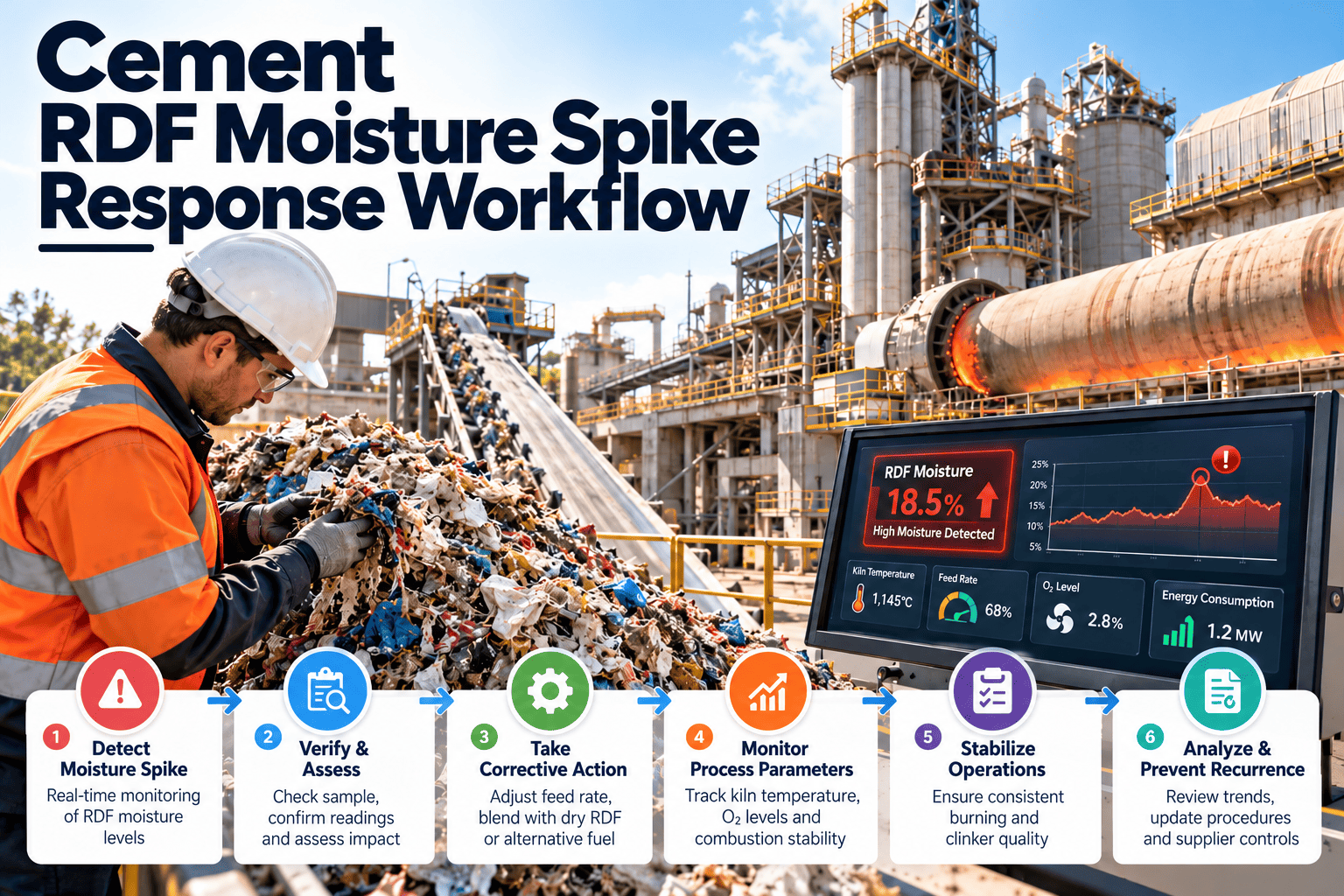
A single rain-soaked delivery of refuse-derived fuel can push moisture content from a manageable 15% to over 35% within hours, and most cement plants have no structured response when that happens — operators just "run it anyway" until conveyors jam, reclaimers stall, or the kiln feed destabilizes. A documented moisture spike response workflow turns a guessing game into a repeatable five-step action plan that protects combustion stability and avoids unplanned downtime. Start free on OxMaint to trigger this workflow automatically from every moisture alert, or book a demo to see it running on a live AFR line.
Alternative Fuels · Response Workflow
RDF Moisture Spike Maintenance Response Workflow
A staged response checklist for the moment moisture readings cross threshold — before it reaches the kiln feed system.
15%Target RDF Moisture Ceiling
35%+Recorded Spike After Rain Exposure
5 StagesIn a Structured Response Workflow
<30 minTarget Time to First Corrective Action
Why Moisture Spikes Cascade Into Maintenance Failures
Wet RDF does not just burn poorly — it physically misbehaves. Damp fuel clumps and bridges in storage bunkers, overloads belt conveyor motors as load weight increases, and causes reclaimer claws to slip rather than draw fuel evenly. Left unmanaged for even a single shift, a moisture spike can progress from a sensor alert to a jammed conveyor to a full feed system stoppage.
1
Moisture Sensor Crosses Threshold
2
Fuel Clumps & Bridges in Bunker
3
Conveyor Motor Amperage Rises
4
Reclaimer Slip & Uneven Draw
5
Feed Stoppage / Kiln Instability
The 5-Stage Response Workflow
Stage 1
Detect & Confirm
Moisture sensor reading cross-checked against manual grab-sample test
Delivery batch traced back to source supplier and weather conditions logged
Affected bunker section isolated from active feed line if reading exceeds 25%
Stage 2
Contain
Wet batch segregated to a dedicated bay — not blended into dry stock
Conveyor feed rate reduced to prevent motor overload on affected line
Reclaimer claw torque monitored for slip or stall signs
Stage 3
Inspect Mechanical Stress Points
Conveyor belt tension and tracking checked after sustained high-load running
Drive motor amperage trend reviewed against rated load
Chute and hopper walls inspected for buildup or bridging residue
Stage 4
Blend & Recover
Wet fuel gradually blended with dry stock at controlled ratio to restore feed consistency
Calorific value and feed rate adjusted in coordination with kiln operations
Moisture readings logged every 30 minutes until stabilized below threshold
Stage 5
Document & Prevent Recurrence
Incident logged against the asset record with root cause and corrective action
Supplier batch flagged if moisture issue traces to storage or transport handling
Covered storage or tarping reviewed if recurring weather exposure is the cause
Trigger This Workflow Automatically From Every Moisture Alert
OxMaint converts moisture threshold breaches into a guided five-stage work order sequence — no missed steps, no manual tracking, full audit trail per batch.
Daily & Weekly Monitoring Checklist
Daily — Every Shift
Moisture sensor readings logged at bunker inlet and reclaimer outlet
Conveyor motor amperage compared against baseline load
Visual check for fuel bridging at hopper transition points
Weather forecast reviewed for incoming rain affecting open storage
Weekly
Reclaimer claw torque test performed under standard load
Bunker drainage and roof covering inspected for leaks
Supplier moisture certificates cross-checked against incoming deliveries
Conveyor belt tracking and tension verified after any high-moisture run
Moisture Level vs. Required Action
Frequently Asked Questions
What moisture level in RDF requires immediate maintenance response?
Most cement plants set the watch threshold at 15-20% moisture, with anything above 25% treated as a critical event requiring the full response workflow. At that level, fuel bridging in bunkers and conveyor motor overload become likely rather than possible. Plants tracking this consistently in a digital log catch the trend before equipment stress becomes visible. You can set these thresholds directly inside
OxMaint's inspection module so alerts fire automatically.
How does wet RDF damage conveyor and reclaimer equipment?
Wet fuel is heavier and stickier, which increases the load conveyor motors must pull and causes fuel to clump rather than flow evenly off the belt. Reclaimer claws designed for a specific fuel density begin to slip rather than draw fuel cleanly, leading to uneven wear on drive components over repeated cycles. Sustained operation under these conditions accelerates motor and bearing wear well beyond rated service life. Logging amperage trends per shift makes this wear pattern visible before failure.
Should wet RDF batches be blended with dry fuel immediately?
No — immediate blending without first containing and assessing the batch risks spreading high-moisture fuel across the entire dry stock pile, which can drag the whole inventory above threshold. The correct sequence is to isolate the wet batch first, confirm the moisture reading, then blend gradually at a controlled ratio while monitoring feed consistency. This staged approach is what the five-stage response workflow above is built around. Document the blend ratio used so future batches can reference what worked.
Can covered storage fully eliminate RDF moisture spikes?
Covered or tarped storage significantly reduces rain-driven moisture spikes but does not eliminate the risk entirely, since fuel can arrive pre-wet from the supplier or absorb ambient humidity during long storage periods. Plants that pair covered storage with supplier moisture certification and inbound spot-checks see the most consistent results. The response workflow remains necessary as a backstop even with good storage infrastructure.
Book a demo to see how plants track both storage condition and inbound fuel quality together.
How can OxMaint automate the moisture spike workflow?
OxMaint lets you configure moisture thresholds per bunker or fuel line so that a sensor reading above your defined limit automatically generates a staged work order matching the five response stages above. Each stage is assigned, timestamped, and tracked through to closure, with the full incident history attached to the asset record for trend analysis. This removes reliance on a single operator remembering every step under pressure.
Sign up free to configure your first moisture alert workflow today.
Stop Reacting to Moisture Spikes — Start Managing Them
Configure threshold-based alerts, staged response work orders, and full batch traceability in under a week.