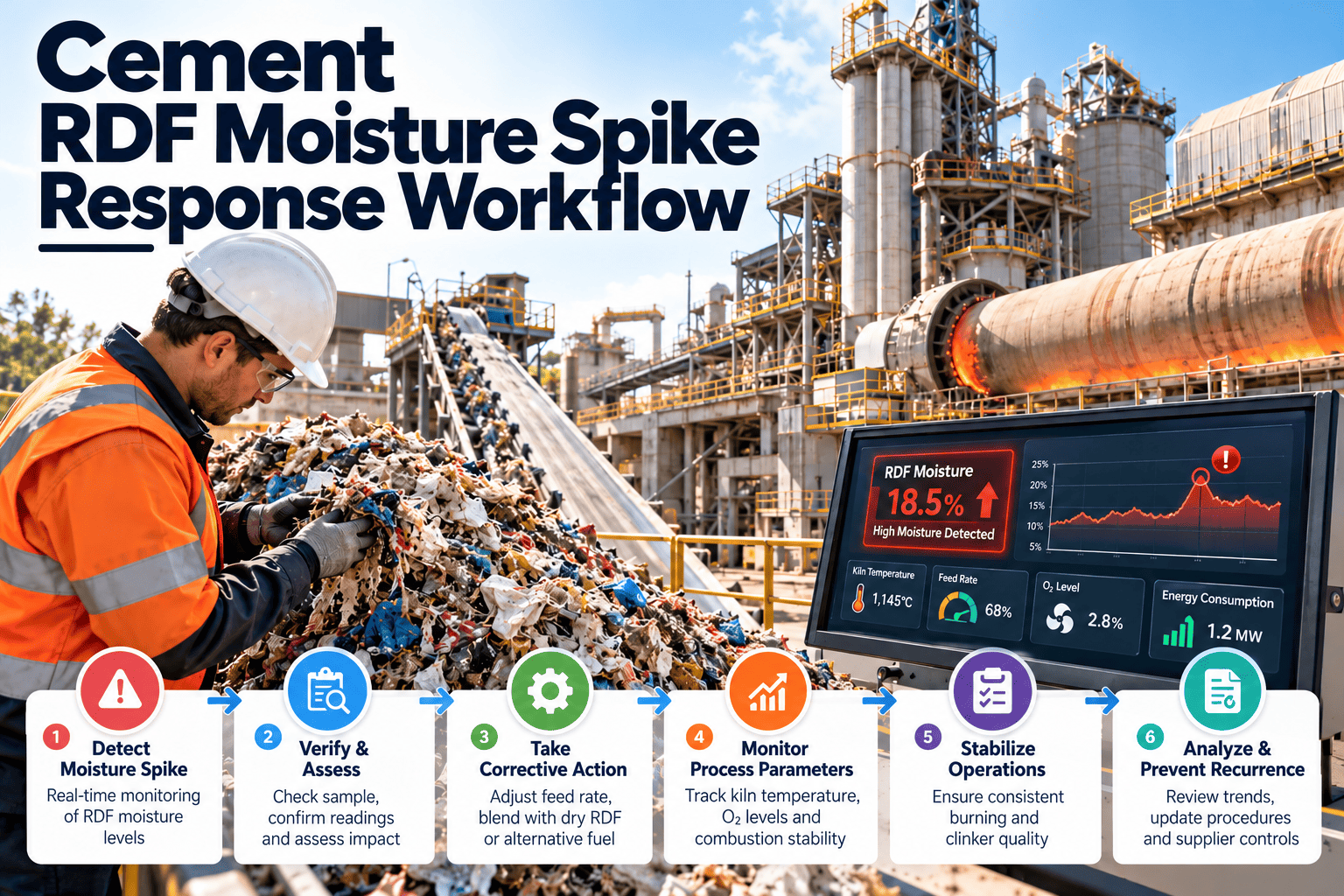
Refuse-derived fuel changes from one delivery to the next, and moisture is one of the biggest reasons. A wet batch lowers the heat each tonne delivers, bridges in bunkers, and can foul feeders and conveying lines before the calciner shows any change. This checklist shows how teams can detect a spike, verify it, protect equipment, and record what happened in Oxmaint maintenance management software.
Cement RDF Moisture Spike Response Workflow
A practical response sequence for alternative fuel teams in cement plants, from first warning to close-out, with equipment checks and escalation rules for wet RDF.
RDF Moisture Spike Response Checklist
Work through the sections in order during a confirmed spike, and use the shift items as routine rounds when no spike is active.
Detection and verification
Receiving and storage
Extraction, metering, and airlocks
Conveying line and firing point
Close-out and records
Inspection sign-off
Why Moisture Swings Matter in a Cement Kiln System
Process effects
- Part of the fuel energy goes to evaporating water instead of heating meal.
- Calciner outlet temperature can fall, which affects calcination.
- Flame behaviour and combustion can become less stable.
- Operators may raise primary fuel to compensate, which adds cost.
Equipment effects
- Wet, sticky material bridges in bunkers and hoppers.
- Feeders and screws load up and trip on torque.
- Rotary airlocks and chutes plug.
- Conveying lines and screens can blind or choke.
Where Moisture Comes From
- 1
Source material
Household and commercial waste contains organics, paper, and textiles that hold water, and moisture content shifts with weather and collection routes.
- 2
Weather and storage
Rain on open piles, leaking roofs, or damp trailers raise the moisture of a delivery after it leaves the processing site.
- 3
Processing variation
Shredding, screening, and drying at the supplier site change the final moisture, and any upset there reaches your plant a day or two later.
- 4
Plant handling
Mixing wet and dry batches, long storage, or condensation in covered bunkers can create local wet zones.
The Response Workflow in Six Stages
Notes on each stage
- Detection works best when two signals agree, such as an analyser reading and a rising feeder torque.
- Verification should not be skipped. A faulty sensor can look like a moisture event.
- Containment depends on the layout. Some plants can divert to a separate bunker, others must slow intake.
- Adjustment decisions belong to the process team and must follow approved limits.
Response Levels and Who Acts
| Level | Typical signs | Maintenance action | Escalate to |
|---|---|---|---|
| Normal | Readings in the agreed band | Routine rounds | No escalation |
| Watch | Upward trend, minor feeder load rise | Extra visual check of feeders and chutes | Shift supervisor |
| Spike | Confirmed wet batch, torque alarms, bridging | Inspect and clear equipment, raise work orders | Alternative fuel lead and process engineer |
| Critical | Repeated blockages, unstable calciner temperature | Support controlled reduction or stop of fuel feed | Plant management and production lead |
Standardise the Spike Response Across Shifts
Put each stage into a checklist with owners and times, so every shift responds the same way.
Equipment Checks Along the RDF Path
Receiving and storage
- Bunker walls and floors for caking
- Walking floor or extraction devices
- Roof, doors, and drains for leaks
Extraction and metering
- Screw or belt loading and torque
- Weighing system zero and calibration
- Wear on screws, liners, and gates
Airlocks and conveying
- Rotary airlock clearance and sticking
- Pipe and chute for build-up
- Blower and filter condition
Firing point
- Feed point and burner entry
- Calciner temperature trend
- Build-up near the injection zone
Before and After a Formal Response Workflow
Without a workflow
- Operators react differently on each shift
- Blockages are cleared but not recorded
- Supplier issues are discussed from memory
- Same wet batch causes repeat trouble
With a workflow
- Clear signs, levels, and owners
- Every blockage becomes a work order with a cause
- Delivery, moisture reading, and equipment event linked
- Supplier discussions backed by records
Measurement Options for Moisture
- Laboratory sampling: Reliable reference, but results arrive after the material is already in the plant.
- Online near-infrared analysers: Give continuous readings, and need calibration against lab results and regular lens cleaning.
- Indirect indicators: Feeder torque, weight change, and calciner temperature trends hint at moisture, but are not a direct measure.
- Visual checks: Quick and useful, but subjective, so they should supplement and not replace measurement.
Maintaining the measurement itself
- Schedule analyser cleaning, alignment, and calibration as recurring tasks.
- Compare online readings with lab samples at a regular interval and log differences.
- Treat a drifting sensor as a maintenance finding, not an operator problem.
Shift Timeline During a Confirmed Spike
Feeder and Airlock Troubleshooting During a Wet Batch
| Symptom | Likely link to moisture | First response | Follow-up |
|---|---|---|---|
| Rising screw feeder torque | Sticky material packing the screw and trough | Reduce load if allowed, then inspect for build-up | Check liner wear and clearances at the next stop |
| Airlock tripping or jamming | Wet fibres wrapping or packing the rotor | Isolate safely, clear, and inspect rotor tips | Review clearances and seal condition |
| Bridging in the bunker or hopper | Wet material forming arches and rat-holes | Use approved clearing methods, never enter unsafely | Inspect walls, liners, and extraction devices |
| Weighing signal unstable | Build-up on belts, hoppers, or load cells | Clean contact points and verify the zero | Schedule calibration check |
| Conveying line pressure rise | Damp material sticking in pipe bends | Reduce feed and inspect line | Record location and cleaning method used |
| Calciner temperature dips after feed change | Extra evaporation load from wet fuel | Inform the control room immediately | Log the delivery and moisture reading together |
Safety Points During Moisture Events
Before clearing a blockage
- Isolate and lock out the equipment, then confirm zero energy.
- Use the site procedure for confined spaces and bunkers.
- Wear dust protection and suitable gloves and eye protection.
- Keep communication open with the control room.
Fire and gas awareness
- Wet and decaying material can produce heat and gas in storage.
- Watch for odour, steam, or hot spots in the bunker area.
- Know the location of detection, suppression, and emergency stops.
- Report any heating event to the supervisor straight away.
Supplier Feedback: Turning Events Into Evidence
Supplier discussions go better when the plant can show what arrived, when, and what happened afterward. Keep the evidence simple and consistent.
- 1
Delivery details
Record supplier, date, time, vehicle, and source if known.
- 2
Sample and reading
Link the lab or analyser result to the delivery record.
- 3
Plant impact
Note feeder events, blockages, and any process change that followed.
- 4
Agreed action
Record what the supplier committed to and the date for review.
Seasonal and Site Factors to Plan For
- Rainy periods: Expect more wet deliveries and more leakage from storage. Increase inspection of roofs, doors, and drains beforehand.
- Cold weather: Moisture can freeze and form lumps that jam extraction and feeders when it thaws.
- Hot weather: Stored material can heat up. Watch bunker temperature and odour.
- Delivery peaks: Busy periods push storage and mixing beyond normal practice, which raises the risk of wet pockets.
- Shutdown restarts: Material that has sat in lines and hoppers can be damp. Check and clear before restart.
Handover Notes Worth Writing at Every Shift Change
Moisture Response Roles Across the Plant
| Role | Main responsibility | Records to keep |
|---|---|---|
| Alternative fuel operator | Spots early signs at receiving, storage, and feeders | Observations, sample tags, and delivery details |
| Control room operator | Watches calciner temperature and feed signals and applies approved adjustments | Setpoint changes and the time of each action |
| Maintenance technician | Inspects and clears equipment, repairs wear damage, and checks instruments | Work orders, photos, parts used, and findings |
| Process engineer | Reviews effect on calcination and fuel substitution rate | Analysis notes and recommended limits |
| Supervisor | Decides level changes and escalates to management | Level log and handover notes |
| Procurement or fuel manager | Raises supplier feedback and tracks agreed actions | Supplier communications and review dates |
Why role clarity matters
- Operators know when to act and when to call for help.
- Maintenance is not asked to guess whether a blockage is a fuel issue or a mechanical issue.
- Supplier conversations rest on records, not recollection.
- Reviews can focus on fixing the cause instead of debating who did what.
Questions for the Monthly Review
Preventive Actions That Reduce Spike Impact
KPIs for RDF Moisture Response
Signs a wet batch is still in the system
Training Operators on Moisture Warning Signs
What to capture after every drill or event
How Oxmaint Supports the Workflow
- Inspection checklists for bunkers, feeders, airlocks, and conveying lines on mobile devices.
- Work orders raised from a blockage or alarm, with cause and photo attached.
- Preventive maintenance for analysers, weighing systems, and wear parts.
- Asset history that links repeat events to specific equipment.
- Inventory tracking for screws, liners, airlock parts, and filters.
- Dashboards and reports that show repeat failures, response times, and overdue tasks.
Frequently Asked Questions
What counts as a moisture spike?
A reading or trend outside the band your plant has agreed with process and fuel teams for stable operation.
Who decides to change firing rate?
The process and control room team, following approved limits. Maintenance supports with equipment status and findings.
Can maintenance prevent moisture issues?
Not the source, but it can reduce impact by keeping storage, feeders, and sensors reliable. Schedule those tasks in Oxmaint.
How should blockages be recorded?
As a work order with location, likely cause, photos, and the related fuel delivery for later review.
Can this workflow be built into a CMMS?
Yes, as a checklist with levels and owners. Book a demo to see how.
Be Ready Before the Next Wet Batch Arrives
Give every shift the same signs, steps, and records, and learn from each moisture event.