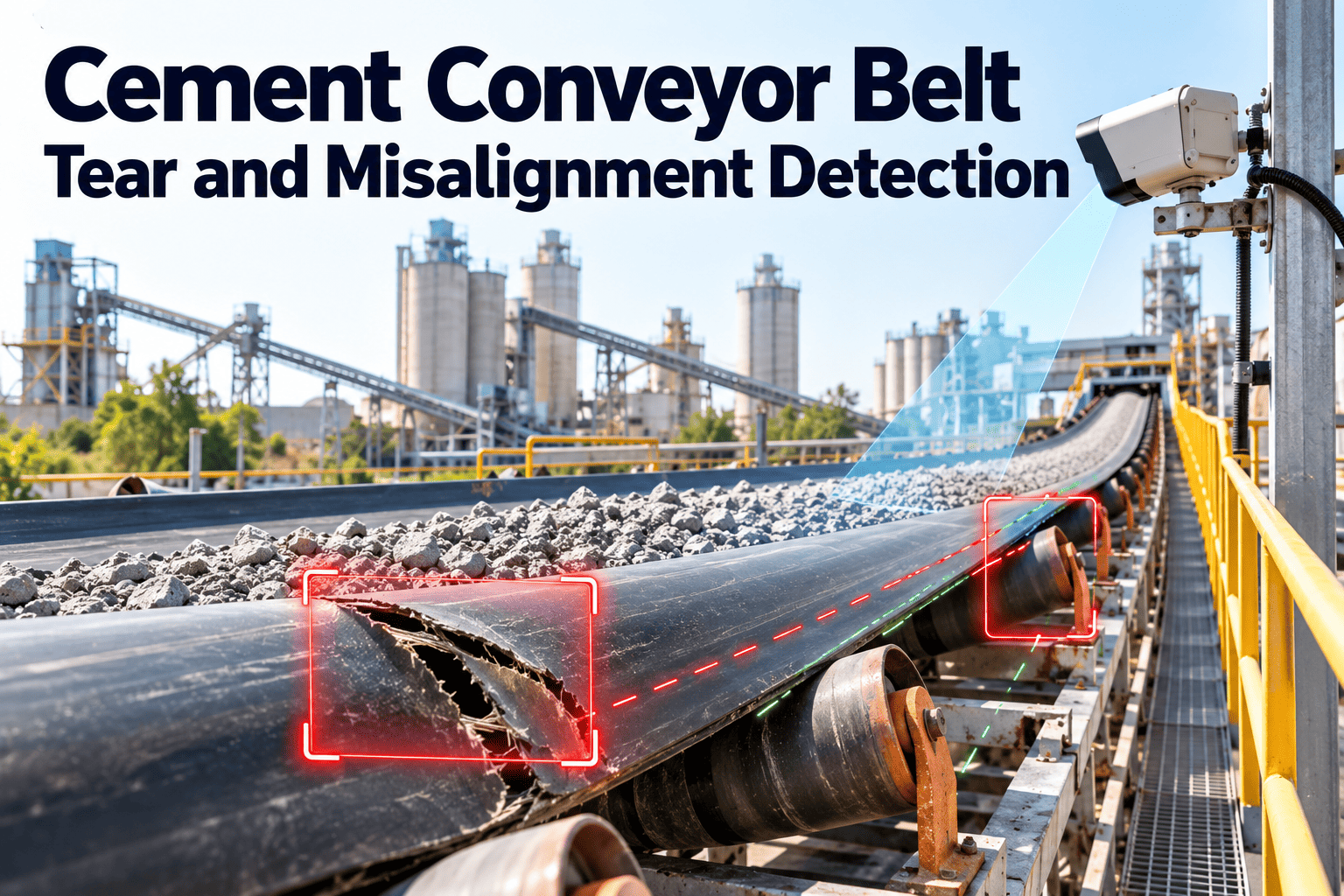
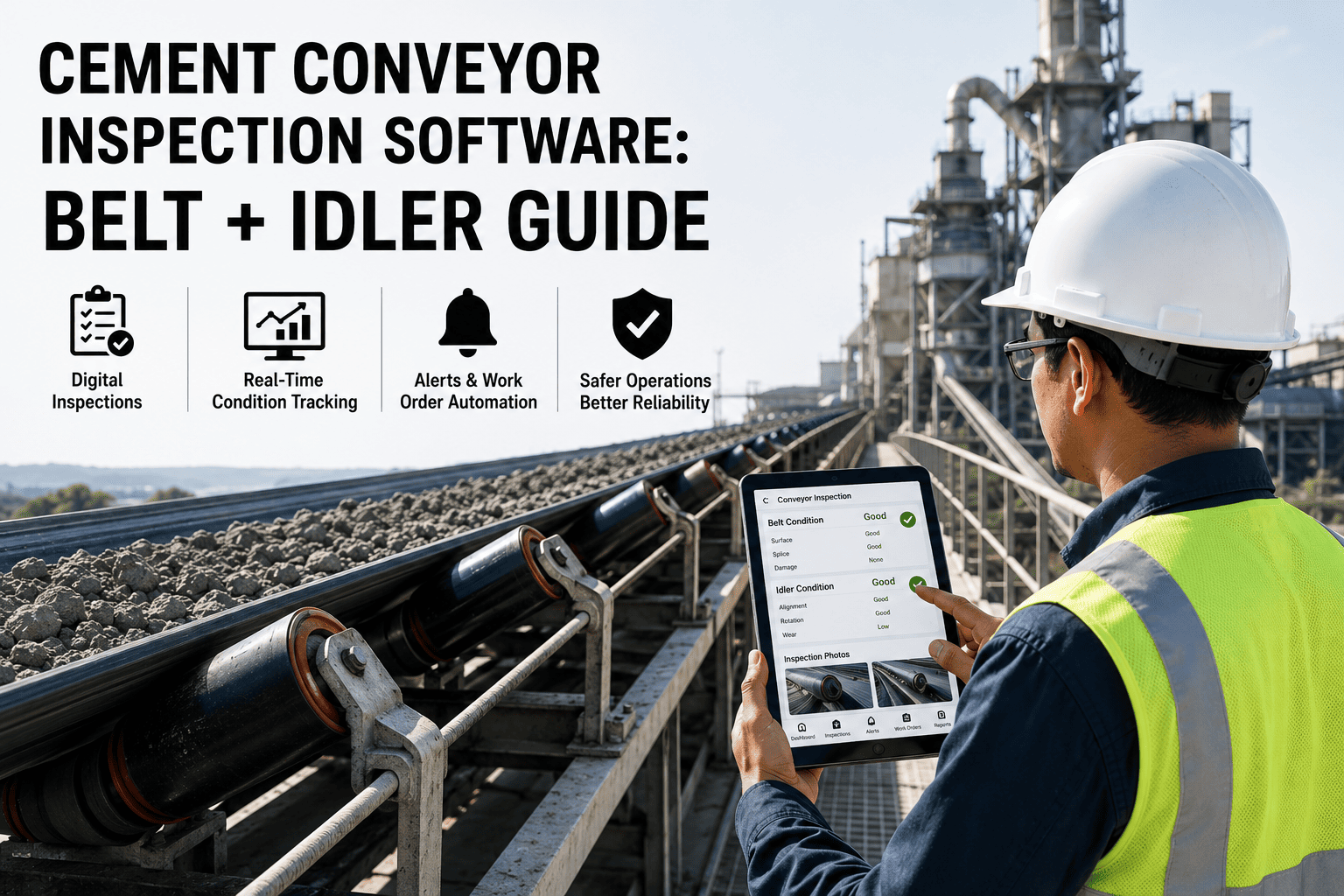
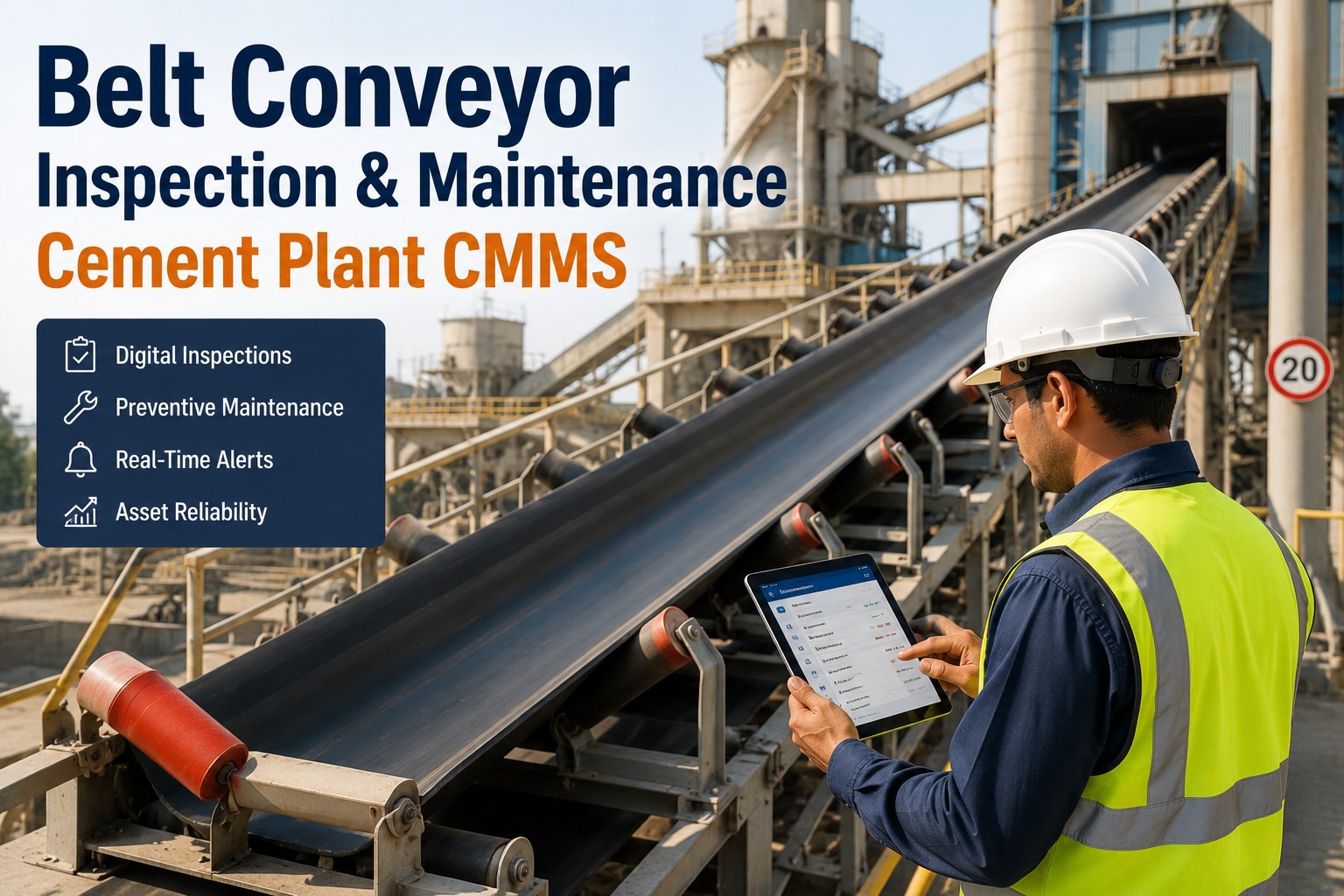
A cement plant in Egypt lost $1.8 million in a single year from conveyor belt failures—splices separating, belts misaligning, and idlers seizing without warning across their 12km of conveyors. Manual inspections every two weeks caught only 23% of developing issues before failure. After deploying robotic conveyor inspection systems with continuous monitoring and CMMS integration, they now detect 94% of problems early enough to schedule repairs during planned maintenance windows. Sign up for Oxmaint to connect robotic inspection data to your conveyor maintenance workflows.
Robotic Conveyor Belt Inspection in Cement Plants
Cement plant conveyors operate in brutal conditions—abrasive clinker, extreme temperatures, and continuous duty cycles that destroy belts and components. Robotic inspection systems monitor belt health continuously, detecting splice wear, tracking drift, and idler failures before they cause costly breakdowns.
Manual Inspection Limitations
Walking kilometers of conveyors in dusty, dangerous environments catches obvious damage—but misses the gradual degradation that causes sudden failures.
- Inspections too infrequent to catch developing issues
- Dangerous access to elevated and enclosed conveyors
- Subjective assessments vary between inspectors
- No continuous data for trend analysis
Robotic Inspection Systems
Automated inspection robots patrol conveyor routes continuously, capturing objective data that feeds directly to CMMS for trend analysis and work order generation. Book a demo to see the integration.
- Continuous monitoring catches issues early
- Safe access to hazardous areas
- Consistent, objective measurements
- Trend data predicts failures before they occur
Robotic Inspection Systems
Different conveyor inspection challenges require different robot types. Sign up for Oxmaint to integrate any inspection robot with your maintenance workflows.
Belt Surface Crawlers
Magnetic-wheeled robots that ride directly on the conveyor belt, scanning the surface for damage, splice condition, and belt thickness as they travel the full conveyor length.
Technical Specifications
Conveyor Inspection Drones
UAVs that fly along conveyor routes capturing thermal and visual imagery of belt surfaces, structures, idlers, and transfer points—accessing elevated sections without scaffolding.
Technical Specifications
Fixed Monitoring Sensors
Permanently installed sensors at critical points—splice detectors, belt scales, tracking monitors, and vibration sensors on idlers—providing continuous real-time data.
Technical Specifications
Quadruped Patrol Robots
Four-legged robots that walk alongside conveyors, climbing stairs and navigating rough terrain to inspect idlers, pulleys, and support structures with thermal and visual sensors.
Technical Specifications
Conveyor Inspection Coverage
Robotic systems provide systematic coverage of all conveyor zones. Sign up for Oxmaint to track inspection status across your conveyor network.
Defect Detection & CMMS Response
Robotic inspections identify issues and automatically trigger appropriate maintenance responses through connected maintenance workflows.
Inspection Finding to Work Order
Automated CMMS Integration| Finding Type | Detection Method | Severity | CMMS Response |
|---|---|---|---|
| Splice Separation Starting | Belt crawler surface scan | Critical | Emergency work order |
| Idler Bearing Hot Spot | Thermal drone scan | High | Priority replacement |
| Belt Tracking Drift | Fixed alignment sensors | Medium | Adjustment scheduled |
| Surface Wear Pattern | Belt crawler thickness | Medium | Monitoring increased |
| Minor Edge Fraying | Visual inspection drone | Low | Next PM inclusion |
Before vs. After Robotic Inspection
Manual Inspection
BeforeRobotic Inspection
AfterImplementation Checklist
Frequently Asked Questions
Keep Every Meter of Conveyor Monitored
Robotic inspection covers your entire conveyor network continuously. Oxmaint turns findings into maintenance action before failures stop production.