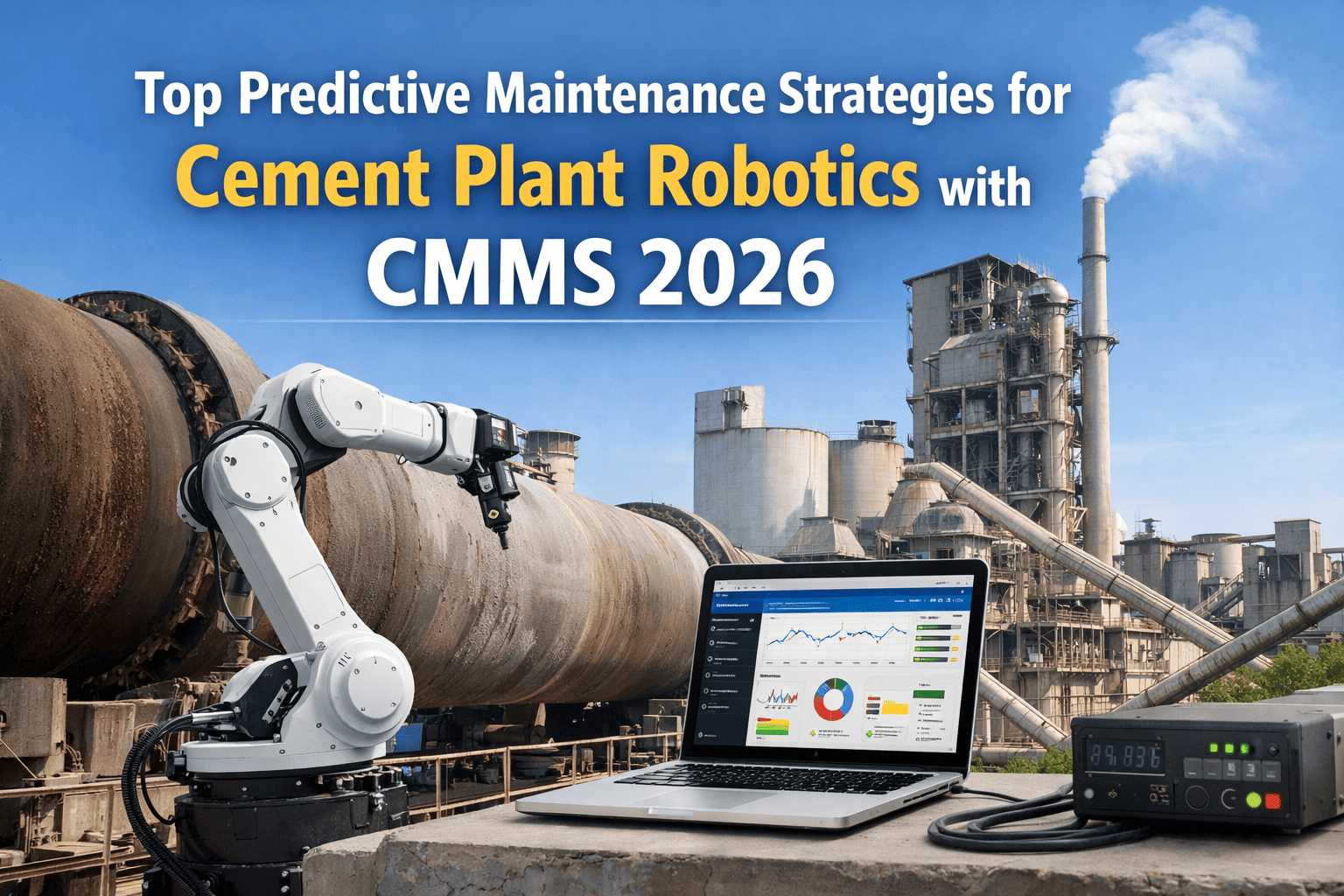
Robots and drones have changed what's possible inside a kiln, preheater, or silo — inspections that once meant scaffolding, confined space entry, and a full cooldown can now happen in hours with a crawler or quadruped unit. But the robot is only half the equation. The real maintenance value comes from what happens to the findings afterward: are they logged against the asset, turned into a repair plan, and tracked through to closure, or do they sit in a report that nobody revisits until the next outage? OxMaint connects robotic inspection schedules and findings directly into the maintenance workflow your team already runs. Book a demo to see findings flow straight into work orders, or start a free trial today.
Where Robotic Inspection Replaces Risky Manual Entry
Kiln Barrel and Refractory
Thermal crawlers map surface temperature across the burning and transition zones during cooldown, identifying lining thin spots without scaffolding or full confined space protocol.
Preheater Towers
Drones cover multi-story preheater structures in a fraction of the time a working-at-height inspection would require, capturing visual and thermal data across every level.
Silos and Confined Storage
Quadruped or crawler units enter silo interiors to check for buildup, structural wear, and blockage risk without the entry permit and standby crew a manual inspection requires.
Production Floor Patrol Routes
Quadruped robots run fixed patrol routes across grated platforms and stairs near rotating equipment, capturing thermal and visual data continuously during normal operation.
Stop Losing Inspection Findings to Disconnected Reports
OxMaint links every robotic inspection finding to the specific asset, so thermal anomalies, wear measurements, and visual defects build a condition history instead of disappearing into a one-off PDF.
Classifying Findings by Downtime Risk
| Finding Severity |
Example |
Response Window |
| Critical |
Refractory hotspot exceeding safe temperature gradient, structural crack |
Immediate work order, asset isolated if needed |
| High |
Liner wear approaching replacement threshold, grate wear pattern |
Scheduled for next available outage window |
| Moderate |
Early-stage wear, minor buildup, isolated corrosion spot |
Logged and monitored across the next inspection cycle |
| Informational |
Normal wear within expected range, no action needed |
Recorded to asset history for trend tracking |
Running an Inspection Program, Not Just an Inspection Event
1
Schedule by Asset Risk, Not Just Calendar Date
High-consequence assets like the kiln barrel and preheater get tighter inspection intervals, while lower-risk zones can run on a longer cycle.
2
Log Findings Against the Asset
Thermal data, wear measurements, and visual defects are recorded directly to the asset record, not as a standalone report disconnected from maintenance history.
3
Generate the Repair Work Order
Findings above the response threshold automatically create a work order with severity, location, and recommended action attached.
4
Track Trends Across Inspection Cycles
Comparing findings across cycles shows wear rate and progression, turning a single inspection into a predictive maintenance input.
Expert Review
"The shift to robotic inspection gets sold as a safety story, and it is one, but plants that only measure it that way miss half the value. The bigger win is consistency — a robot runs the same route and captures the same data every single time, which means findings are actually comparable across cycles. That comparability is what turns inspection from a compliance task into a real maintenance planning tool."
— Maintenance Planning Specialist, Cement Industry
Frequently Asked Questions
Can OxMaint track both robotic and manual inspection findings on the same asset?
Yes. A single asset record holds findings from robot, drone, and manual inspections together, so the maintenance team sees a complete condition history rather than separate, disconnected logs.
Start a free trial to set this up.
How does OxMaint decide which findings need an immediate work order?
Findings are classified by severity at the time of logging, and anything above the critical or high threshold automatically generates a prioritized work order rather than waiting for manual review.
Can robotic inspection schedules be tied to outage and shutdown planning?
Yes. Inspection cycles for assets like the kiln barrel or preheater can be aligned with planned cooldown windows so findings inform the shutdown work scope directly.
Book a demo to see shutdown alignment in practice.
Does OxMaint support comparing wear measurements across inspection cycles?
Yes. Wear measurements and thermal readings are stored against the asset over time, allowing the team to track progression rate and plan replacement timing instead of reacting to a single snapshot.
What happens to findings that don't require immediate action?
Moderate and informational findings are still logged to the asset history, building the trend data needed to catch a slow-developing issue before it becomes a critical one.
Connect Robotic Inspection Data to Real Maintenance Action
OxMaint turns robot and drone inspection findings into scheduled work, tracked repairs, and a comparable history across every cycle — so the inspection program actually drives downtime reduction.