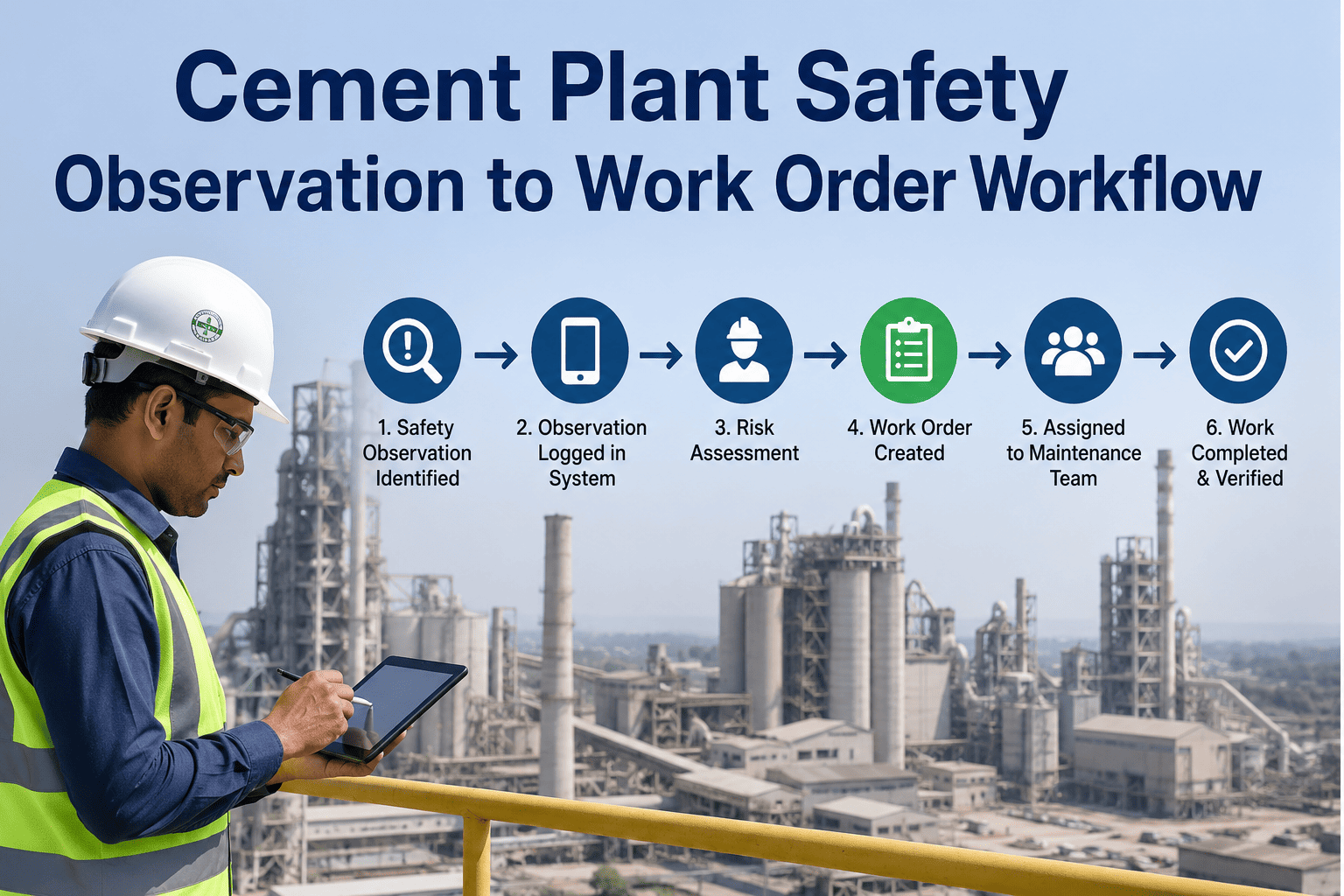
A kiln major shutdown compresses weeks of planning into days of execution — and every hour of overrun costs a cement plant between $80,000 and $200,000 in lost production. The margin for clearance errors, miscommunicated isolation status, and permit handover failures is zero. Most shutdown safety failures are not failures of intent — they are failures of visibility. The supervisor approving re-energization cannot see that a second crew is still inside the preheater. The isolation board is updated manually and lags the actual field status by two hours. OxMaint's safety clearance management system gives kiln shutdown coordinators a real-time, structured view of every isolation point, permit status, and job completion state — so re-energization decisions are made on verified data, not radio calls. Start managing kiln shutdown safety clearances with OxMaint.
The Anatomy of a Kiln Shutdown — Where Clearances Break Down
Each shutdown phase creates specific clearance risks. OxMaint manages them all in sequence.
LOTO/LOTOTO Clearance Tracking Built for Cement Plant Scale
A kiln major shutdown may involve 60 to 120 individual isolation points across the kiln system, preheater tower, clinker cooler, and raw mill. Tracking this manually on a paper board creates a dangerous information lag — the board shows what was isolated an hour ago, not what is isolated now.
OxMaint's LOTO management module creates a digital isolation register that updates in real time as technicians confirm each step from the field. Every lock has an owner. Every isolation point has a confirmed state. The re-energization sequence is blocked until every lock has been digitally released by the person who placed it.
Know Exactly Who Has a Lock on Every Isolation Point. Right Now.
OxMaint turns your kiln shutdown isolation board from a whiteboard that lags reality into a live digital register that updates from the field in real time.
Shift Handover — The Highest-Risk Moment in a Kiln Shutdown
More incidents occur in the first two hours of a shift than any other window. The cause is almost always incomplete handover of safety clearance status.
Shutdown Safety KPIs OxMaint Tracks Automatically
Frequently Asked Questions
How does OxMaint prevent re-energization before all personnel have exited?
OxMaint's re-energization sequence requires every personal lock placed during the shutdown to be digitally released by the individual who placed it before the startup clearance step becomes available to supervisors. If a lock remains active — because a technician is still inside or has not yet confirmed exit — the system blocks the re-energization action entirely. This is a structural enforcement, not a reminder. Book a demo to see the LOTO sequence management in action.
Can OxMaint manage clearances for a planned major kiln shutdown with 100+ work orders?
Yes. OxMaint's shutdown planning module handles high-volume concurrent work scenarios, grouping work orders by area and isolation zone so supervisors can track clearance status at zone level rather than individual job level. The permit dashboard scales to display all active and pending permits simultaneously, with filter options by area, permit type, crew, and status. Start your free trial to configure your shutdown structure.
How does OxMaint handle shift handover of safety clearances during a kiln shutdown?
OxMaint's shift handover module requires the outgoing shift supervisor to formally transfer permit ownership for every active permit, with mandatory status notes for permits in non-standard states. The incoming supervisor reviews and accepts the handover in the system — a timestamped action that documents who took responsibility for each clearance at what time. This creates accountability for the highest-risk window in any shutdown.
What happens if a technician loses their mobile device during a shutdown — can their lock still be managed?
Supervisor override protocols allow designated shutdown coordinators to release an individual lock on behalf of a technician when that technician has been physically verified as clear of the hazardous area. Every override is logged with the coordinator's identity, timestamp, and reason — maintaining the audit trail even when exceptions occur. The override requires two-step confirmation and is flagged in the shutdown report. Book a demo to see how exception workflows are handled.
Does OxMaint produce a shutdown safety report that can be submitted to plant management after each shutdown?
Yes. OxMaint automatically compiles a post-shutdown safety report covering all permits issued, isolation events, shift handovers, permit overruns, near-miss records, and clearance-to-startup timeline. The report is exportable in PDF format and can be configured to include or exclude specific data categories based on your plant's reporting requirements. Most plants have this report generated within minutes of kiln startup.
Every Kiln Shutdown Is a Race Against Time and Risk — Win Both.
OxMaint gives your shutdown team real-time clearance visibility, structured LOTO tracking, and documented handovers — so you restart faster and safer, every time.