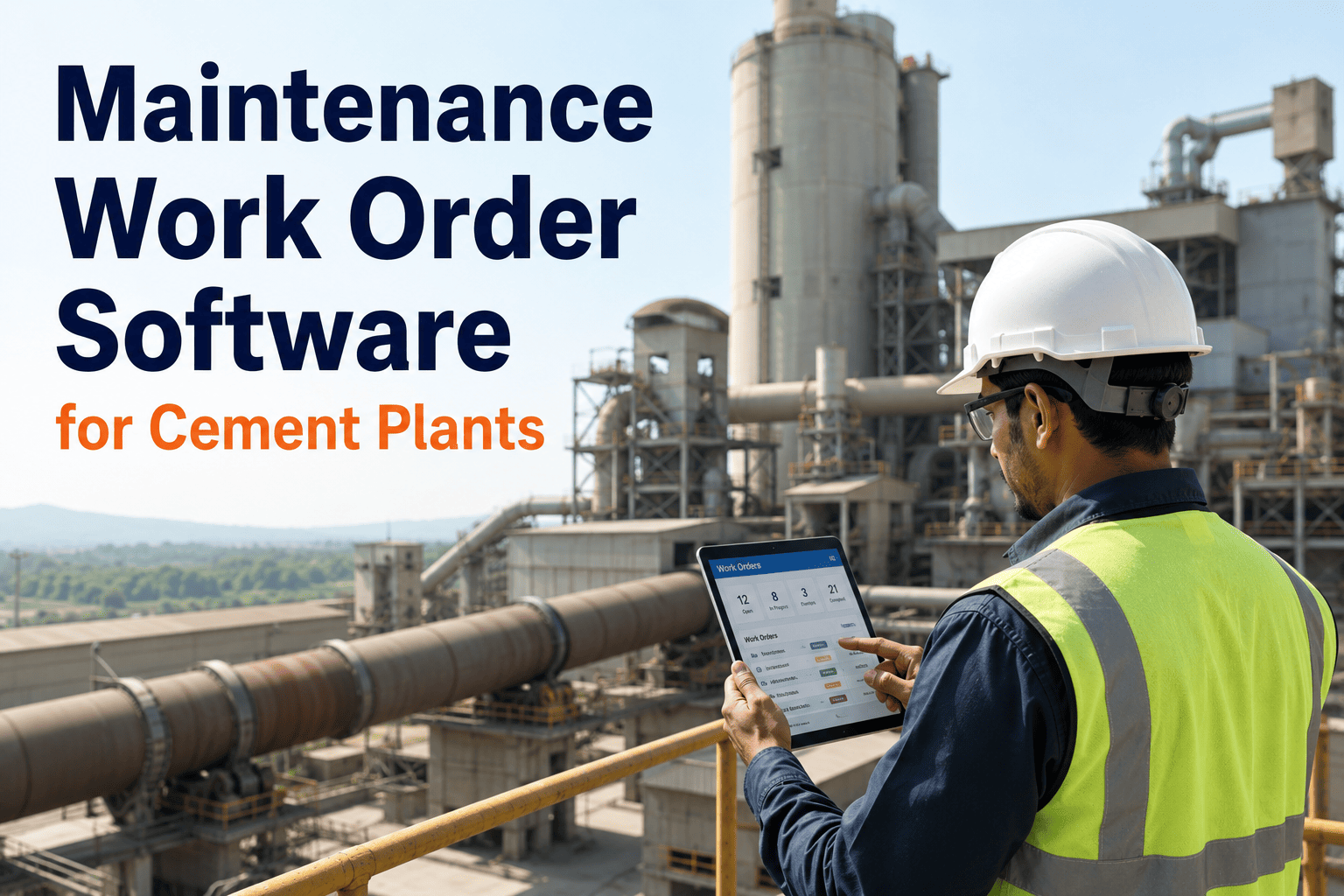
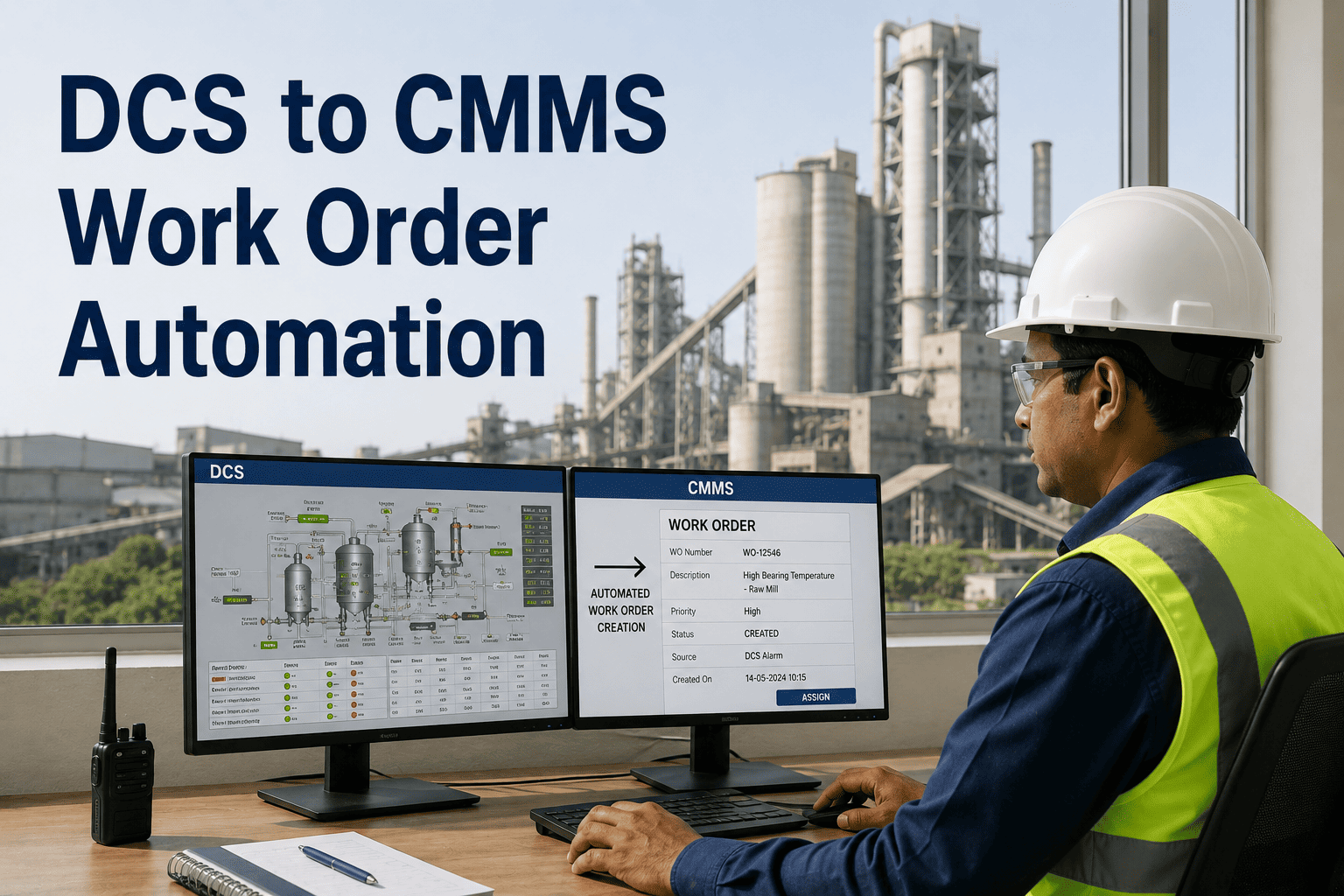
SAP PM knows exactly what every asset in your cement plant costs, when it was last serviced, and which cost center it charges against — but it has no idea what's actually happening on the kiln deck right now. That disconnect is the field execution gap: a technician standing next to a vibrating raw mill gearbox with a desktop ERP screen built for a planner sitting at a terminal, not a person in gloves who needs to log a reading in ten seconds and move to the next asset. The gap doesn't show up as a system failure. It shows up as data that's three days stale, work orders closed from memory back in the office, and a maintenance history nobody fully trusts. Run a free gap analysis between your SAP PM setup and field reality with OxMaint before your next audit exposes it for you.
ERP Integration · SAP Integration
Where SAP PM Stops and Field Execution Should Start
A structured look at the gap between what SAP PM was built to manage and what a cement plant technician actually needs at the asset — and how a mobile execution layer closes it without replacing SAP.
The Adoption Problem
SAP PM Generates Data Only If Technicians Actually Use It
20–40%
typical consistent technician adoption of standard SAP PM on the plant floor in heavy industrial environments
45 min
paperwork time per shift technicians spend re-keying field notes into SAP after the fact, before mobile execution
4–9 mo
typical SAP PM mobility rollout timeline when mobile execution is treated as an ERP project instead of a field tool
Mapping the Gap
Three Layers, One Disconnect
SAP PM — System of Record
Equipment masters, work order history, cost postings, and procurement integration with MM and FI/CO. Built for desktop planners, accurate, but slow to update from the field.
The Execution Gap — three days stale, re-keyed from memory, never reconciled
The Plant Floor — Where Work Actually Happens
A technician next to a kiln support roller bearing or a raw mill gearbox, working with gloved hands, no laptop, no time to navigate transaction codes.
A mobile execution layer sits inside that gap — syncing equipment data down from SAP and pushing completed work order data, parts consumption, and readings back up, without changing what SAP controls.
Keep SAP as the Backbone. Give the Floor a Tool It Will Use.
OxMaint doesn't ask you to choose between SAP's enterprise control and field usability. Work order and inventory data sync bidirectionally, so finance and procurement keep working from SAP as the system of record.
Gap Checklist
Five Signs Your SAP PM Has a Field Execution Gap
01Technicians carry printed work orders and re-key notes into SAP hours later, back at a shared terminal
02Maintenance history in SAP is consistently a day or more behind what actually happened on the floor
03Spare parts get requested verbally or on paper instead of through a system-tracked reservation
04New technicians need weeks of training before they can navigate SAP transaction codes confidently
05Reliability engineers don't fully trust SAP data because they know how much of it was entered from memory
Closing It Without Replacing SAP
What an Execution Layer Actually Does
| SAP PM Alone | SAP PM + Mobile Execution Layer |
|---|
| Technician learns transaction codes over weeks | Mobile interface usable within hours, asset data imported from SAP |
| Work order updates happen back at a terminal | Updates, photos, and readings captured at the asset in real time |
| Parts requests handled verbally or on paper | Purchase requisition auto-generated and synced into SAP MM |
| Offline plant zones mean delayed or lost data | Mobile app works fully offline, syncs automatically when reconnected |
| SAP remains the only system, untouched by field reality | SAP stays system of record for cost and inventory, unchanged |
Timeline Comparison
Deployment Speed Is Where the Gap Compounds
SAP PM Mobility Add-On
4–9 months
on top of an existing SAP PM implementation, requiring separate licensing and configuration work
Standalone Mobile Execution Layer
2–4 weeks
running alongside your existing SAP instance, importing asset master data rather than re-entering it
FAQ
Frequently Asked Questions
Does adding a mobile execution layer mean replacing our SAP PM investment?
No. SAP remains your system of record for cost accounting, procurement, and master data. A mobile execution layer adds a field-friendly interface on top, syncing work order completions, parts consumption, and readings back into SAP automatically rather than asking technicians to use SAP screens directly.
Will we need to re-enter our SAP asset master data from scratch?
No. Asset and equipment master data can be imported directly from your existing SAP export, so technicians see the same asset records they already work against in SAP, just presented through a mobile-first interface built for fieldwork rather than a desktop terminal.
How is this different from SAP Fiori mobile screens?
Fiori extends SAP's existing interface to mobile but typically requires a substantial separate implementation timeline and still has offline gaps in heavy industrial environments. A standalone execution layer is built mobile-first from the ground up, with full offline functionality designed specifically for gloved-hand, low-connectivity plant conditions.
What happens to spare parts requests raised from the mobile app?
When a work order consumes stock below a set threshold, a purchase requisition is generated automatically and synced into SAP MM. The resulting PR status and live stock availability then flow back into the mobile app, so the next technician sees real numbers instead of a static count.
How long does a typical gap-closing deployment take?
A standalone mobile execution deployment typically takes two to four weeks, compared to the four to nine month timeline common for SAP PM mobility add-ons tied to a broader ERP project.
Book a demo to map a realistic timeline against your current SAP setup.
Close the Gap Between SAP and the Plant Floor
OxMaint runs maintenance execution on mobile while staying synced to SAP for inventory, cost, and procurement — no ERP replacement project, no months of waiting to see the gap close.