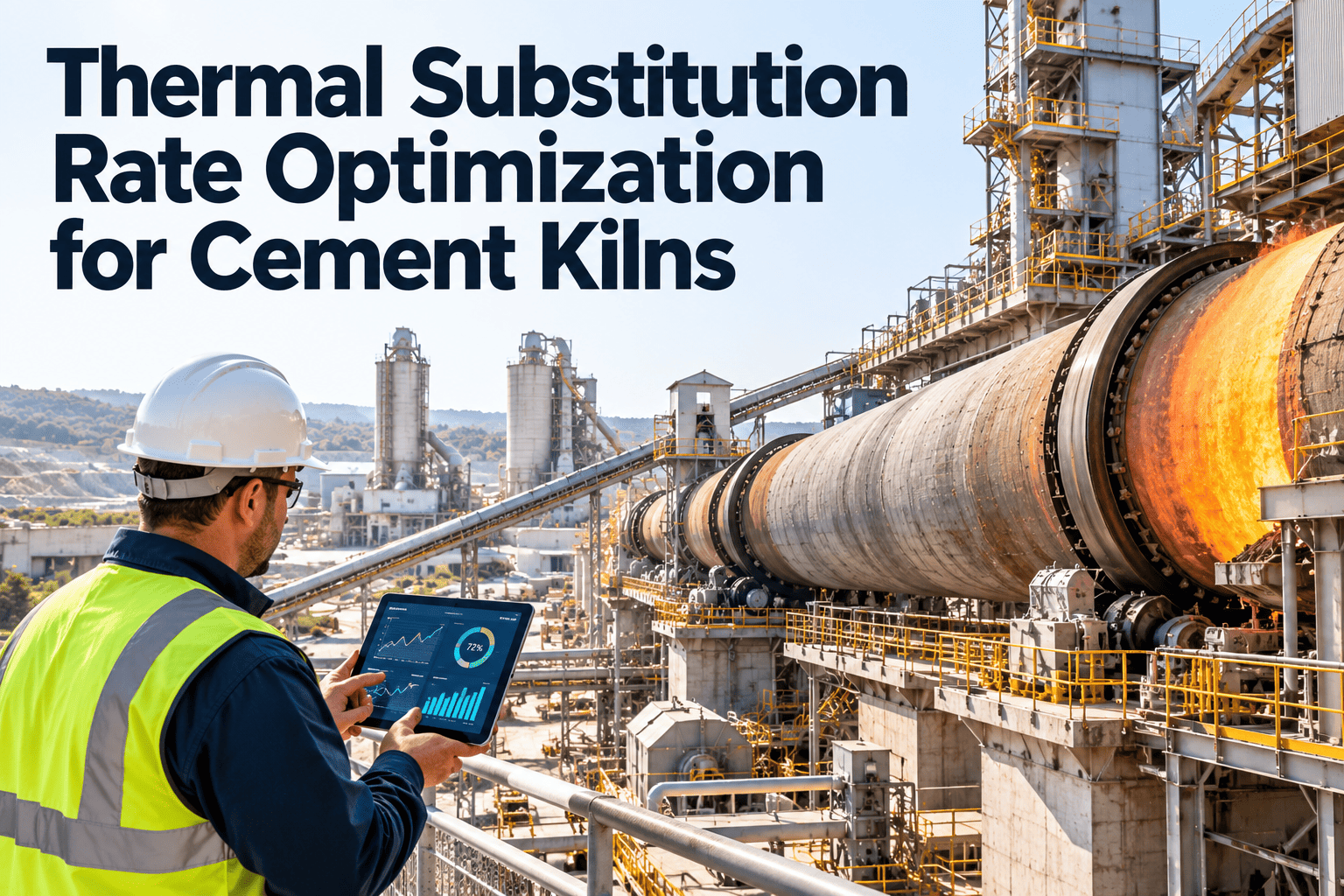
Raising thermal substitution rate is not a single dial you turn up. Every additional percentage point of alternative fuel puts more demand on fuel preparation, feeding accuracy, calciner residence time, and kiln chemistry control. Plants that push TSR without matching reliability end up trading fuel savings for stops, cleaning shifts, and quality drift. The goal is the highest TSR the plant can hold steadily, and a structured maintenance management platform is what keeps that ceiling defensible.
Thermal Substitution Rate Optimization for Cement Kilns
Find the point where fuel cost savings stop paying for the extra failures, trips, and cleaning work. Align TSR targets with asset reliability instead of chasing a headline percentage.
What TSR really measures
- Thermal substitution rate is the share of kiln heat input supplied by alternative fuels rather than conventional fossil fuels.
- It is calculated on energy, not mass, so low calorific value fuels need much more tonnage per point of TSR.
- Average TSR hides instability. A plant averaging a target with wide hourly swings often has worse quality than one at a lower, steady rate.
- Biogenic content and emissions reporting depend on accurate fuel records, not only on the kiln dosing screen.
The TSR versus reliability balance
| Lever | Benefit as TSR rises | Reliability pressure | Maintenance response |
|---|---|---|---|
| Fuel cost | Lower energy cost per ton clinker | More tonnage handled, more wear | Track wear rates per tonne handled |
| Calciner firing | Absorbs coarser fuel | Residence time and oxygen limits | Inspect tertiary air, burners, and refractory |
| Chlorine and alkali | None | Coating and blockages rise | Cleaning schedule and bypass reliability |
| Feeding systems | Enables multiple streams | More equipment in series | Redundancy and airlock spares |
| Kiln stability | Fuel diversity | Heat input variability | Metering calibration and control loop review |
Where the practical ceiling comes from
Fuel side
- Supply consistency and contract volume
- Moisture, particle size, and ash
- Contaminants such as metals and stones
Process side
- Calciner volume and residence time
- Kiln inlet chemistry and cycles
- Flame stability at the main burner
Asset side
- Feeder availability and accuracy
- Preheater cleaning burden
- Fan, filter, and bypass capacity
The lowest of these three limits sets the sustainable TSR. Raising the wrong one first wastes capital.
Optimization roadmap
Baseline the current system
Record TSR variation, feeder trips, CO events, cleaning hours, and quality deviations by fuel mix.
Fix the weakest link
Resolve chronic feeder, airlock, and metering problems before adding a new stream.
Step up in controlled increments
Raise TSR in small steps and hold each level long enough to see coating and quality effects.
Lock in with maintenance strategy
Adjust preventive tasks and spares to the new load, then repeat the cycle.
Make every TSR step traceable
Connect fuel changes, asset work, and downtime so you know whether a higher rate actually pays off.
Reliability requirements by system
Signals that TSR is ahead of reliability
When two or more appear together, hold the TSR level and address the failing assets first.
Maintenance strategy at higher TSR
- Move critical feeders from calendar tasks to runtime and condition-based inspections.
- Classify assets by criticality so a failure at the feeding point is treated as a kiln risk, not a conveyor issue.
- Stock the parts that actually fail, such as airlock rotors, liners, load cells, and burner tips.
- Use root cause analysis for repeat blockages and record the fix against the asset.
- Plan preheater cleaning and refractory work into scheduled stops instead of reacting to trips.
How Oxmaint supports TSR work
Asset and work order control
Register every fuel-handling asset, log faults from mobile devices, and see repeated failures by equipment.
Preventive and condition tasks
Schedule inspections by runtime, and trigger tasks from vibration, temperature, or pressure readings.
Reporting and inventory
Review downtime, planned versus reactive work, and spares levels in dashboards for reliability meetings.
Pre-step checklist before raising TSR
- Feeder availability and trip causes reviewed for the last quarter
- Fuel specification agreed with suppliers, including chlorine and moisture
- Calciner oxygen and CO behavior verified at current TSR
- Bypass and gas system capacity confirmed
- Spare parts and cleaning resources ready for the shutdown window
- Quality team briefed on expected free lime and strength effects
Frequently asked questions
Is the highest TSR always the best target?
No. The best target is the highest rate held steadily without raising downtime or quality risk.
What limits TSR first in most plants?
Often fuel preparation, feeding reliability, or calciner capacity, before the kiln itself.
How does maintenance affect TSR?
Feeder and preheater reliability decide how long alternative fuel can run. Book a demo to see the workflow.
Why track TSR variation?
Swings disturb kiln heat balance and quality even when the average looks good.
Where can a plant begin?
Register feeding assets and log every trip. You can start here.
Raise TSR with reliability behind it
Give operations and maintenance one shared record of what limits substitution on your kiln.