Cement plants operate under one of the most layered regulatory environments in heavy industry — EPA Title V air permits, NESHAP Subpart LLL emissions standards, MSHA mine safety mandates, OSHA confined space rules, and ISO 50001 energy certifications all run simultaneously. Yet the violations that trigger the costliest enforcement actions are rarely the obvious ones. They are the quiet drifts, the missed documentation windows, and the data gaps that accumulate invisibly — until an auditor arrives. EPA collected over $71 million in Clean Air Act penalties in FY2024 alone, with cement designated a National Enforcement Priority. Identifying these risks before regulators do is the difference between a routine audit and a consent decree. If your plant needs a smarter way to track, schedule, and document compliance activities, explore Oxmaint's CMMS platform and see how automated PM scheduling and digital audit trails eliminate these exposures.
2026 Compliance Risk Report · Cement Industry
Top 8 Hidden Compliance Risks in Cement Plants (2026)
From CEMS calibration drift to MSHA exam gaps — the violations most cement plants don't see coming until the fine lands.
Why Hidden Risks Cost More
$71M+
Clean Air Act penalties collected by EPA in FY2024 — cement is a designated National Enforcement Priority
$100K/day
Maximum EPA fine per day of NESHAP or Title V permit violation in a cement plant
$50M+
Consent decree exposure for repeat violations — often triggered by documentation failures, not actual exceedances
$329K
Maximum per-citation penalty for MSHA "flagrant" violations at integrated quarry-cement operations
The 8 Hidden Risks — Ranked by Audit Impact
These are not theoretical risks. Each one represents a documented enforcement pattern across US cement plants in the past three years.
CEMS Calibration Drift on Stack Monitors
Continuous Emissions Monitoring Systems require daily zero-and-span checks under EPA Title V. When calibration drifts — even slightly — the system generates false exceedances or data gaps. Both outcomes trigger mandatory excess emission reports, and repeated gaps convert into permit violations regardless of actual stack performance. This is the single most common enforcement trigger at US cement plants.
NESHAP Subpart LLL Record Gaps During Kiln Upsets
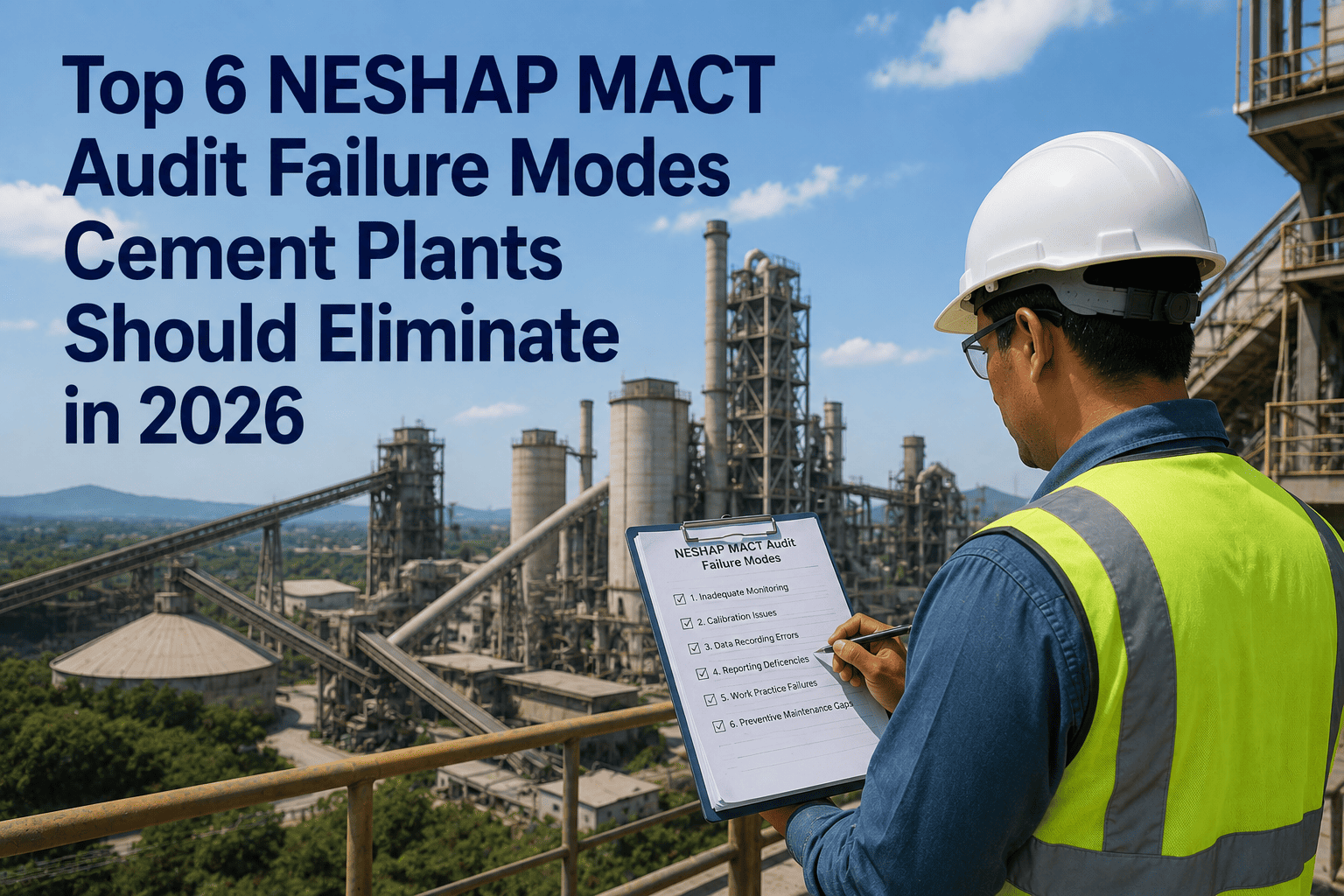
NESHAP Subpart LLL mandates continuous monitoring across five pollutant categories: PM, SO2, NOx, mercury, and dioxins. During kiln upsets, startups, and shutdowns — precisely when operating conditions change most — documentation requirements intensify. Plants that lack automated logging during these events produce audit record gaps that regulators treat as violations even when emissions stayed within limits.
MSHA Workplace Examination Record Failures
Integrated cement plants with captive quarries must comply with MSHA Part 56 requirements, including documented pre-shift examinations of mobile equipment, haul roads, and blast zones. The most common audit finding is not that examinations were skipped — it is that they were performed but not recorded in a format MSHA inspectors can verify. A verbal walkthrough with no written or digital record carries zero compliance value.
ISO 50001 Energy Performance Indicator (EnPI) Drift
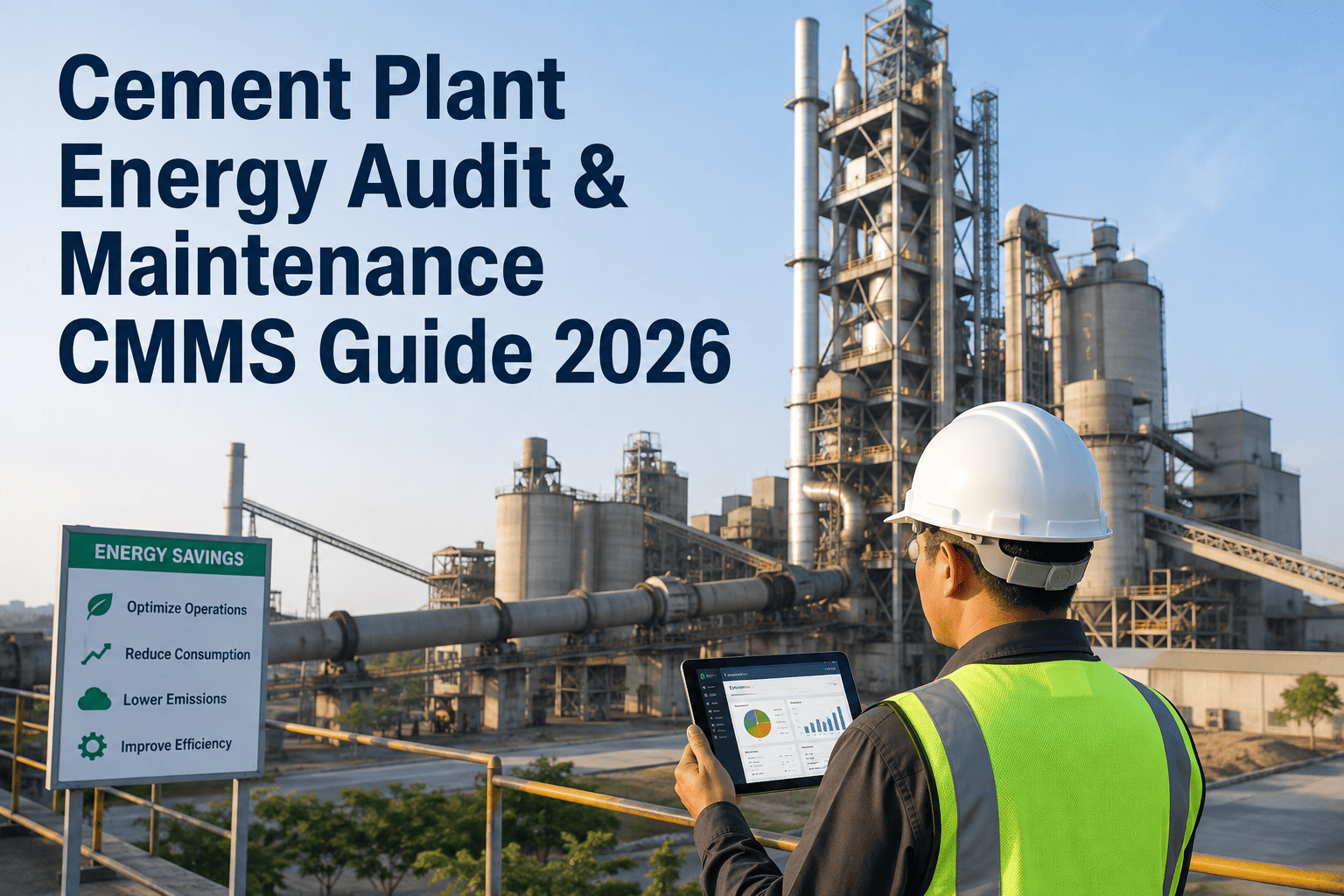
Cement kilns consume 110–130 kWh per tonne of clinker. ISO 50001 certification requires documented energy performance indicators (EnPIs) showing measurable improvement against a baseline — not just data collection, but trend evidence. Plants that collect sub-metering data without linking it to asset-level PM records and action plans fail recertification when auditors ask for the improvement trail rather than just the numbers.
EU CBAM Embedded Carbon Documentation Gaps
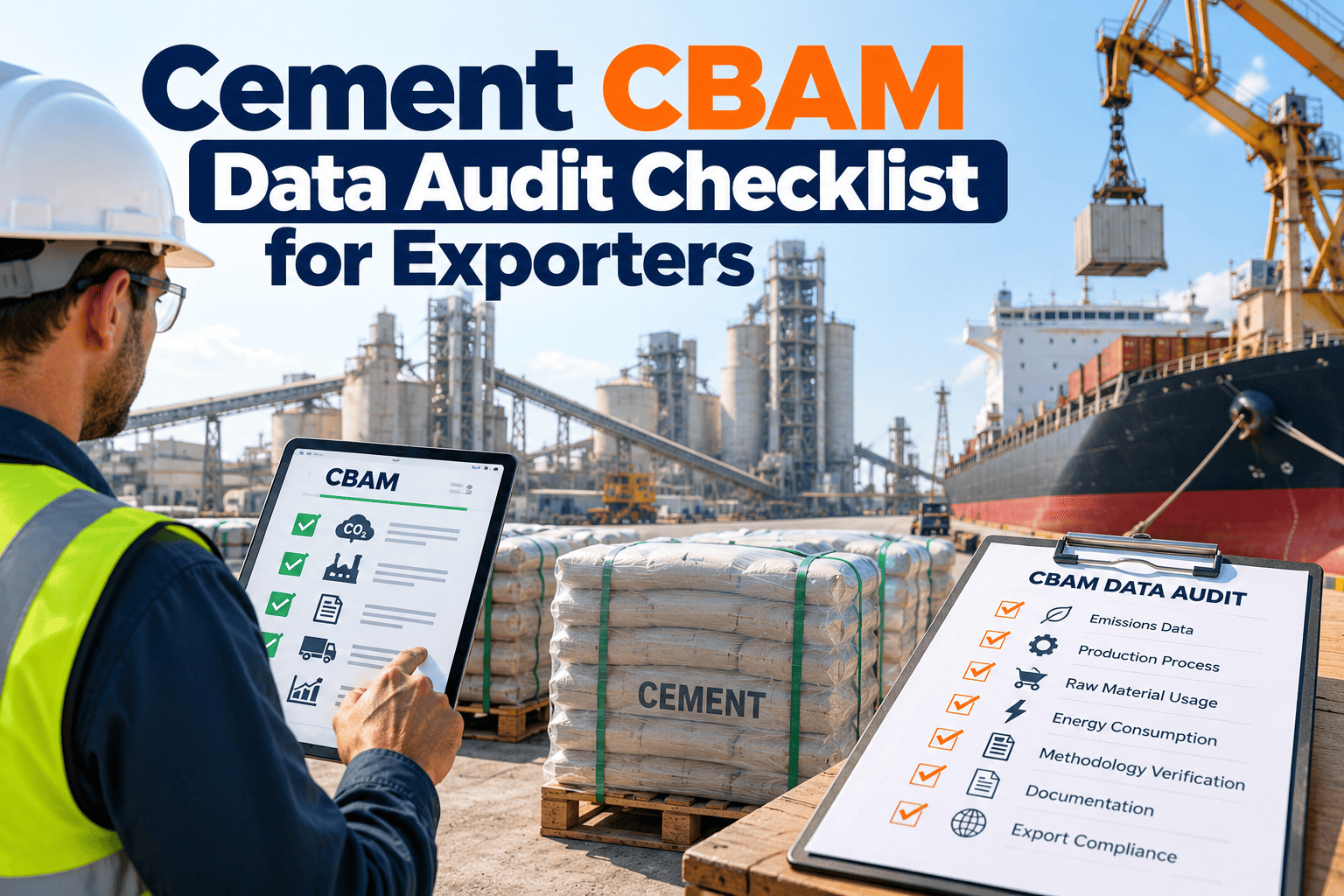
EU Carbon Border Adjustment Mechanism enforcement began in 2026. Cement exports to European markets now require verified asset-level embedded carbon data — not estimated figures, but documented, traceable records tying kiln operating parameters to verified CO2 output. Plants exporting to Europe without this documentation face carbon border tariffs that immediately eliminate competitive positioning in those markets.
OSHA Confined Space Permit Documentation Failures
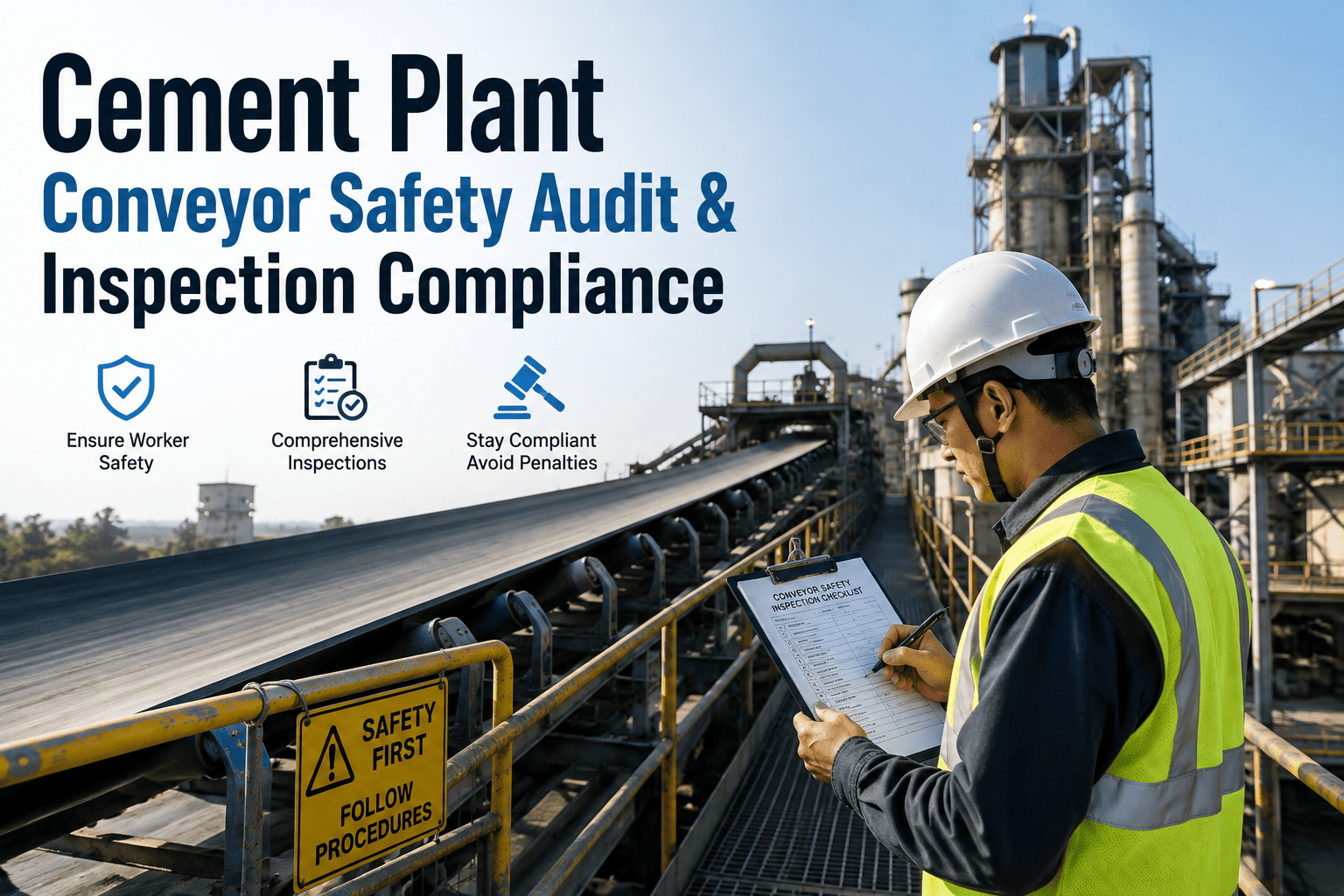
Silos, preheater towers, and clinker storage are permit-required confined spaces under OSHA 29 CFR 1910.146. OSHA inspections at cement plants find permit-required confined space documentation failures at a high rate — not because the work is unsafe, but because permit records are stored in paper binders that cannot be produced during an unannounced inspection. Missing or incomplete permits trigger citations averaging thousands of dollars per instance.
Bag Filter and Dust Collector PM Gaps
Electrostatic precipitators and pulse-jet bag filters are opacity-critical assets under EPA standards. Missing or delayed preventive maintenance on these systems — especially differential pressure monitoring and bag inspection intervals — produces opacity exceedances that are directly citable. Regulators treat overdue PM as evidence of willful non-compliance, escalating what would be a warning into a formal Notice of Violation.
ISO 14001 Environmental Aspect Register Not Linked to Operations
ISO 14001 requires a live environmental aspect and impact register connected to operational controls — not a document updated before certification audits. When kiln stack emissions records, stormwater drainage inspection logs, and dust suppression PM histories cannot be traced directly to specific assets and scheduled intervals, certification bodies issue major non-conformances. This risk is especially acute for plants that recently switched CMMS systems and migrated records incompletely.
Every one of these risks has a paper trail solution. Oxmaint's CMMS gives your compliance team automated PM scheduling, digital inspection records, CEMS integration, and one-click audit package generation — so you're never scrambling when an inspector arrives.
Quick Reference: Risk Summary Table
| Risk |
Regulation |
Max Penalty |
Severity |
Root Cause |
| CEMS Calibration Drift |
EPA Title V / NESHAP LLL |
$100K/day |
Critical |
No automated calibration PM |
| Kiln Upset Record Gaps |
NESHAP Subpart LLL |
$100K/day |
Critical |
Manual logging during upsets |
| MSHA Exam Record Failures |
MSHA 30 CFR Part 56 |
$329K/citation |
High |
Paper records not producible |
| ISO 50001 EnPI Drift |
ISO 50001:2018 |
Certification loss |
High |
No asset-linked EnPI tracking |
| EU CBAM Carbon Gaps |
EU CBAM 2023/956 |
Market exclusion |
High |
No verified embedded carbon data |
| Confined Space Permits |
OSHA 1910.146 |
$15K+/citation |
Medium |
Paper permits not retrievable |
| Bag Filter PM Gaps |
EPA Opacity Standards |
$25K–$100K/day |
Medium |
Overdue PMs on filtration assets |
| ISO 14001 Register Disconnect |
ISO 14001:2015 |
Certification loss |
Medium |
Register not linked to CMMS assets |
Frequently Asked Questions
How does CEMS drift cause permit violations even when actual emissions are within limits?
EPA treats a calibration gap or failed zero-and-span check as a data gap, not a clean reading. Under Title V, data gaps beyond allowed thresholds automatically convert into excess emission events in quarterly reports — regardless of what the plant actually emitted.
Oxmaint's automated CEMS calibration scheduling prevents these gaps before they generate reportable events.
What does EU CBAM enforcement mean for US cement exporters in 2026?
Starting in 2026, cement shipped to EU markets requires verified embedded carbon documentation per tonne of clinker — not estimated values, but traceable asset-level data. Plants without verified records face carbon tariffs that effectively eliminate the economics of European market access.
Book a demo to see how Oxmaint generates audit-ready carbon trails from existing CMMS data.
Why do MSHA exam record failures happen even when safety walkthroughs are actually done?
MSHA inspectors cannot credit a verbal or undocumented examination. Pre-shift walkthroughs completed without a timestamped, signed record produce the same audit outcome as walkthroughs that never happened. Digital mobile inspection records with GPS and timestamp data are the only format that survives an unannounced MSHA audit without risk.
Can a single CMMS platform address all eight of these compliance risks?
Yes — when CMMS is configured with asset-linked PM schedules, digital permit workflows, CEMS integration, and clause-mapped audit trail generation, it serves as the compliance backbone across environmental, safety, and ISO standards simultaneously.
Oxmaint is built for exactly this use case in cement and heavy industrial environments.
What is the most common ISO 14001 audit finding at cement plants?
The most frequent major non-conformance is an environmental aspect register that exists as a static document rather than a live, asset-linked system. Certification bodies increasingly require that the register trace directly to specific assets, scheduled operational controls, and closed corrective actions — not a spreadsheet updated in the weeks before the audit.
Stop Finding Compliance Gaps After the Auditor Does
Oxmaint gives your EHS and maintenance teams the platform to automate compliance PM scheduling, digitize inspection records, integrate CEMS data, and generate audit packages in minutes — not weeks. Start free today and see what your audit exposure looks like right now.