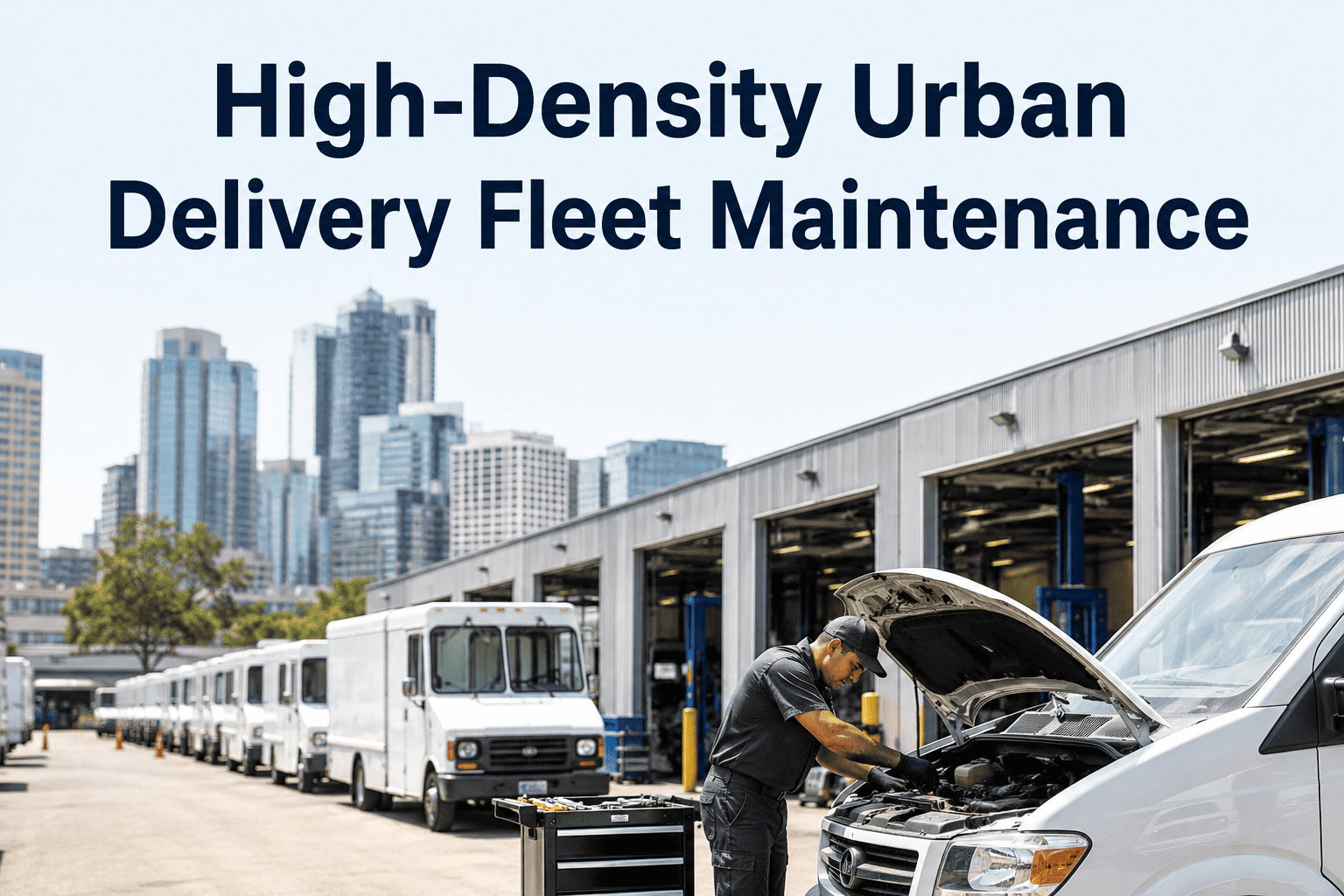
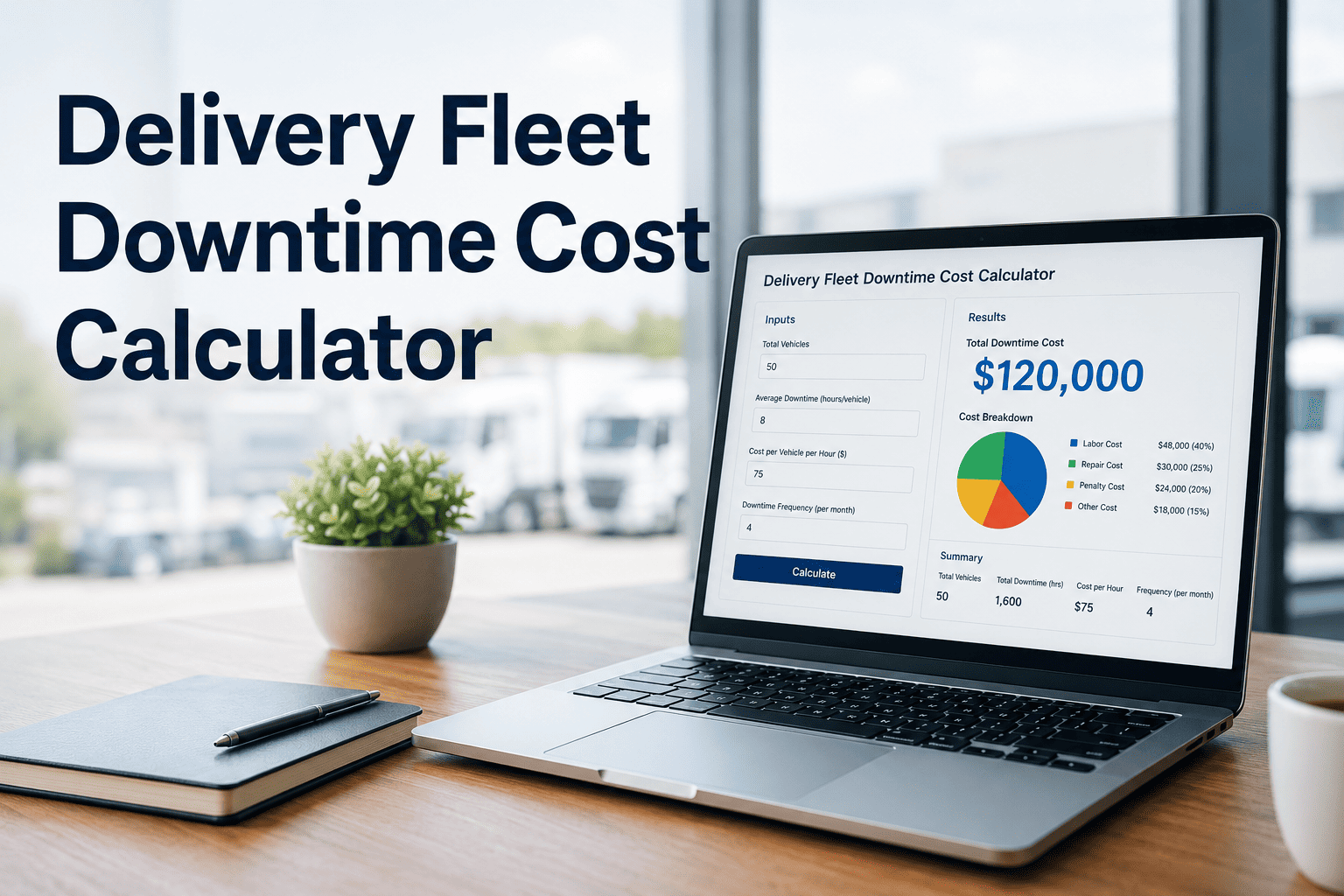
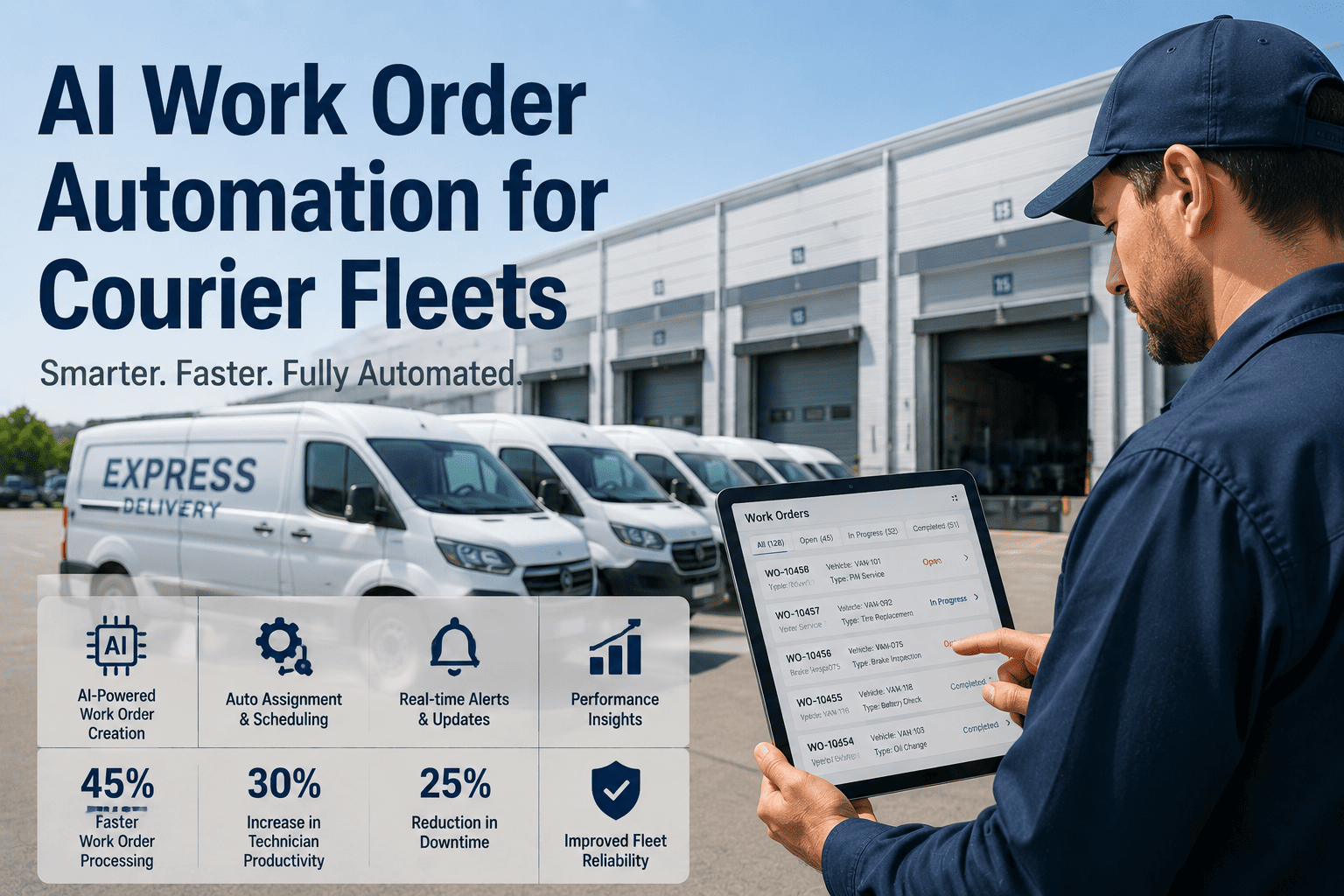
Urban delivery fleets operate in one of the harshest mechanical environments on the planet. Constant stopping and starting across dense city routes accelerates brake wear, degrades tires faster, drains batteries harder, and stresses suspension systems beyond what highway mileage ever could. A single vehicle breakdown during peak hours does not just delay one delivery — it triggers a cascade of SLA failures, customer complaints, and emergency dispatch costs that quickly dwarf the cost of the missed maintenance that caused it. OxMaint.ai gives high-density urban delivery teams the tools to track wear patterns by route, trigger work orders automatically, and keep every vehicle in the field with the maintenance intelligence it actually needs. Start your free trial and see how proactive maintenance changes what urban fleet operations look like.
FLEET MAINTENANCE · URBAN DELIVERY · LAST-MILE UPTIME
Urban routes destroy vehicles faster. Here is how high-density delivery fleets stay ahead of it.
Stop-and-go cycles, tight turns, curb loading, and back-to-back routes push brake pads, tires, batteries, and suspension to their limits — faster than any maintenance schedule built for highway fleets.
THE URBAN WEAR PROBLEM
What city routes actually do to your fleet — by the numbers
Urban delivery vehicles accumulate wear at rates that most standard PM schedules never account for. The gap between scheduled maintenance and actual wear is where breakdowns happen.
Brake Wear
3x
faster brake pad degradation on urban stop-and-go routes vs. highway mileage
Tire Stress
40%
more tire wear in dense urban environments due to curb loading and sharp turns
Battery Drain
60%
of urban delivery EV breakdowns linked to battery degradation from frequent charge cycles
Suspension Load
2.5x
greater suspension stress from pothole-heavy urban roads and repeated heavy-load drops
WHAT REACTIVE MAINTENANCE COSTS
The real price of a single urban fleet breakdown
01
Vehicle goes down mid-route
Driver calls dispatch. Packages on board cannot reach customers. SLA clock is already ticking.
02
Emergency roadside or tow dispatch
Average emergency roadside cost: $300–$800 per incident. Tow adds another $200–$500 depending on location.
03
Substitute vehicle scramble
Pulling another vehicle disrupts its route. Two routes are now compromised instead of one.
04
SLA penalty and customer credit
Failed deliveries trigger penalty clauses with retail clients. Late fees per SLA breach range from $50–$2,000.
05
Repair cost at premium rate
Emergency repairs cost 40–60% more than scheduled maintenance. Unplanned brake jobs, tire replacements, and battery swaps are never cheap.
STOP REACTING. START PREVENTING.
OxMaint.ai puts route-aware maintenance on autopilot for your urban fleet.
Urban delivery teams using OxMaint report fewer roadside breakdowns, faster work order resolution, and maintenance schedules that actually match how hard city routes work their vehicles.
HOW OXMAINT WORKS FOR URBAN FLEETS
Built for the pace and complexity of high-density city delivery
01
Route-Based Wear Tracking
Assign maintenance intervals by route intensity, not just mileage. Urban stop-count, vehicle load, and elevation data feed directly into PM triggers that match actual wear patterns.
02
AI Work Order Generation
When a vehicle hits a usage threshold or a driver flags an issue on the mobile inspection app, OxMaint auto-generates a prioritized work order with parts needed, labor estimate, and scheduling recommendation.
03
Mobile Pre-Trip Inspections
Drivers complete digital DVIR inspections from their phones before every shift. Brake, tire, battery, and suspension checks are logged in under 3 minutes. Failed items auto-escalate to the maintenance queue.
04
Real-Time Alerts and Escalation
Telematics and driver reports trigger instant alerts when a vehicle needs attention. Fleet managers see the issue, the affected route, and the recommended action — all in one dashboard view.
05
Maintenance Cost Analytics
See cost-per-vehicle, cost-per-route, and breakdown frequency side by side. Identify which vehicles and which routes are driving your maintenance budget — and act on it with data instead of intuition.
06
Fleet Availability Dashboard
Know exactly how many vehicles are field-ready at any moment. Scheduled downtime for PM no longer competes blindly with operational demand — OxMaint optimizes maintenance windows around your delivery schedule.
BEFORE AND AFTER OXMAINT
How urban fleet maintenance operations change
PM intervals set by mileage only — urban routes wear parts twice as fast but get serviced on the same schedule
Driver defect reports go into a paper log or a text message that gets lost before maintenance sees it
Breakdown discovered at vehicle start-up or mid-route — emergency cost every time
Fleet manager manually tracks vehicle status across spreadsheets, calls, and whiteboards
No visibility into which routes or vehicles are consuming the most maintenance budget
PM triggers fire based on route intensity and actual wear signals — not just odometer readings
Driver mobile inspection flags defects instantly — work order created automatically, parts ordered
Predictive alerts surface wear issues 3–7 days before they become failures — planned repair, not emergency
Single dashboard shows real-time fleet availability, open work orders, and scheduled PM windows
Cost analytics by vehicle and route reveal exactly where maintenance budget is going
URBAN FLEET MAINTENANCE PRIORITY GUIDE
Which systems to monitor most closely on high-density urban routes
COMMON QUESTIONS
What urban fleet teams ask about OxMaint
Can OxMaint track maintenance by route, not just by vehicle?
Yes. OxMaint lets you tag work orders and PM triggers to specific route types, allowing you to see exactly which city zones are accelerating wear.
Try it free to configure route-based maintenance profiles for your fleet.
How do drivers report defects using OxMaint?
Drivers complete digital pre-trip inspections from any smartphone in under 3 minutes. Failed checks auto-create work orders with photos attached. No paper forms, no dispatcher relay, no lost reports.
Book a demo to see the driver app in action.
Does OxMaint integrate with fleet telematics systems?
OxMaint supports integration with major telematics platforms. Vehicle data like engine hours, battery state, and fault codes feed directly into OxMaint's maintenance triggers and dashboard analytics without manual entry.
How quickly can an urban fleet team get started on OxMaint?
Most urban fleet teams are fully operational in OxMaint within 1–2 weeks. Vehicle data import, PM schedule setup, and driver mobile onboarding all happen in parallel.
Start your free trial to begin immediately.
Can OxMaint help reduce our emergency repair spend specifically?
Directly, yes. By catching wear signals before they become failures, teams using OxMaint typically shift from reactive to planned repairs — which cost 40–60% less per incident and eliminate emergency dispatch fees.
START TODAY
Urban routes are hard on vehicles. Your maintenance system should be harder on downtime.
OxMaint.ai gives urban delivery fleet teams the inspection tools, AI work orders, wear-based PM triggers, and real-time analytics to keep every vehicle in the field — and every delivery on time.