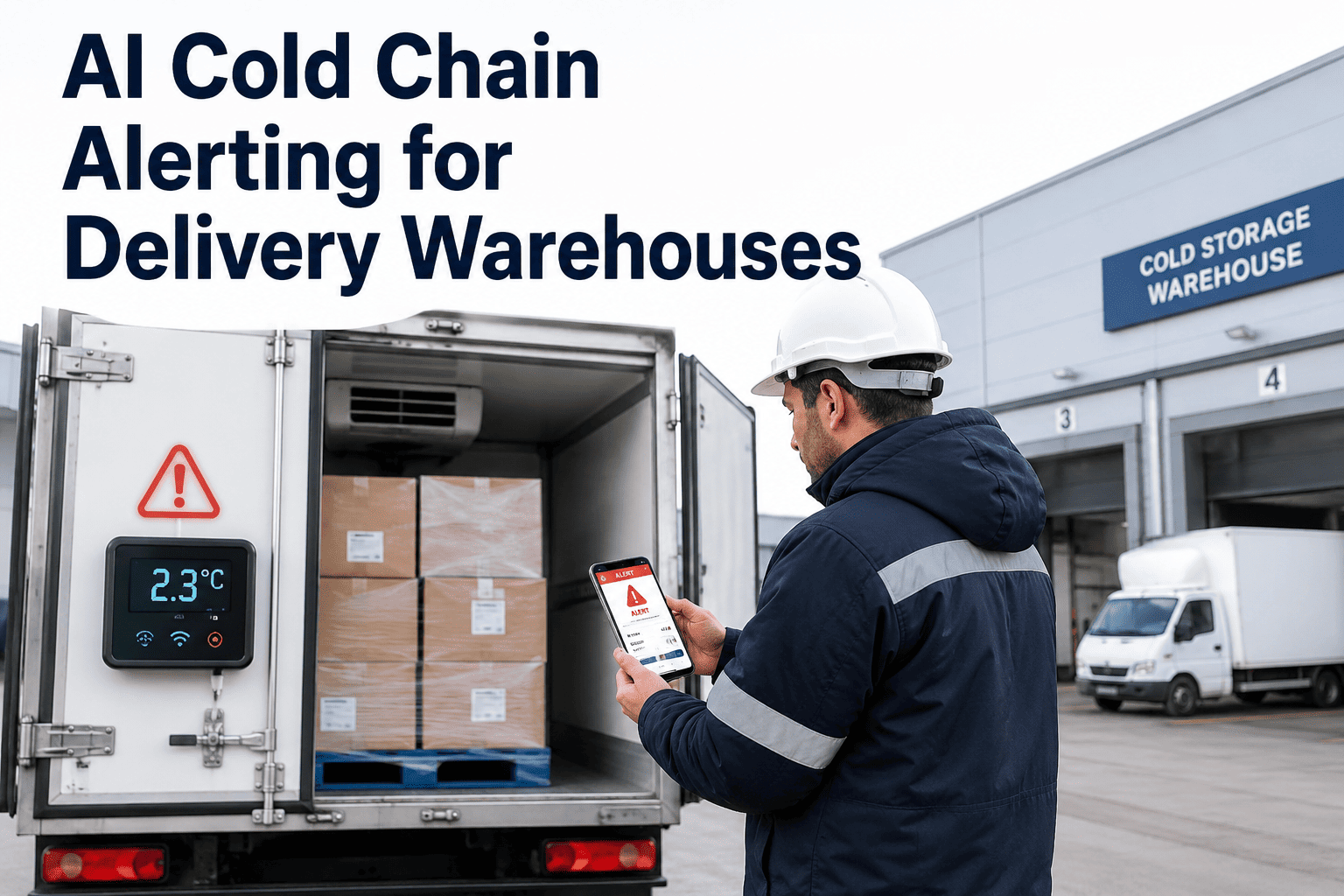
The call came from a grocery distribution client at 4:17 AM on a Saturday in August. A 42,000 sq ft cold storage facility in Phoenix holding $3.8 million in frozen pharmaceutical products, premium proteins, and dairy had experienced a compressor failure on Refrigeration Unit 2 at approximately 1:30 AM. The building management system was configured to alarm at 0 degrees Fahrenheit. The freezer zone controlled by Unit 2 was designed to hold -10F. The compressor failed gradually — not a hard stop but a declining capacity that allowed the temperature to drift upward slowly, passing through -5F at 2:15 AM, reaching 0F and triggering the alarm at 3:40 AM. The on-call technician received the alarm at 3:42 AM, arrived at 4:30 AM, and confirmed the compressor failure at 4:45 AM. By that time, the zone temperature had reached 8F. The pharmaceutical products had exceeded their validated storage range of -5F to -15F for over three hours. Every unit in that zone — $1.6 million in temperature-sensitive biologics — required destruction under FDA 21 CFR Part 211 regulations because the temperature excursion could not be proven to have left product efficacy intact. The premium proteins and dairy, while not destroyed, required accelerated distribution with reduced shelf life, generating $340,000 in markdown losses. Total financial impact: $2.14 million. An IoT temperature monitoring system with sensors sampling every 60 seconds would have detected the compressor's declining performance within 15 minutes of the onset of failure — when the temperature was still at -8F, well within specification. A rate-of-change alert would have triggered at the moment the cooling curve diverged from normal, dispatching the technician two hours earlier, before any product crossed its temperature threshold. The $8,400 monitoring system that was not installed would have prevented $2.14 million in losses. The facility installed the system the following Monday.
Cold storage facilities are the most financially concentrated risk environment in logistics. A single temperature excursion in a pharmaceutical freezer destroys more product value per minute than any other equipment failure in distribution operations. Frozen foods, biologics, vaccines, insulin, blood products, specialty chemicals, and temperature-sensitive electronics all require continuous, documented environmental control — not just at the moment of inspection, but every minute of every hour between inspections. Traditional cold storage monitoring relies on chart recorders that document temperature history without alerting to excursions in progress, manual thermometer readings taken 2-4 times per day that miss 96% of the hours between readings, and building management system alarms configured at failure thresholds rather than early-warning thresholds. IoT monitoring replaces all three with continuous, wireless sensor networks that measure temperature at 60-second intervals, humidity at 5-minute intervals, and door-open duration in real time — feeding data into dashboards that trend, alert, predict, and document simultaneously. When connected to a CMMS platform, every environmental anomaly generates automated maintenance work orders for compressor inspection, door seal replacement, evaporator defrost scheduling, and insulation integrity assessment. This guide covers exactly how IoT cold storage monitoring works, what it catches that traditional monitoring misses, and why the ROI is measured in prevented catastrophes.
-20F to -10F
Deep Freeze
Biologics, Vaccines, Blood Products
Excursion cost: $800K-$4M per event
-10F to 0F
Standard Freeze
Premium Proteins, Ice Cream, Seafood
Excursion cost: $200K-$1.2M per event
32F to 40F
Refrigerated
Dairy, Produce, Deli, Floral
Excursion cost: $80K-$500K per event
59F to 77F
Controlled Room
Oral Pharmaceuticals, Cosmetics, Chocolate
Excursion cost: $50K-$300K per event
What Traditional Cold Storage Monitoring Misses
The gap between traditional monitoring and IoT monitoring is not a matter of precision — it is a matter of time. Traditional methods capture snapshots. IoT captures the continuous film. The failures that destroy cold storage inventory happen in the gaps between snapshots.
Slow-Drift Compressor Degradation
A compressor losing 3-5% capacity per week raises zone temperature by 0.5F per day. Manual checks taken at the coldest point of the refrigeration cycle show -9F — within spec. But the zone is hitting -4F at the warmest point of each cycle, and the trend is worsening. IoT sensors sampling every 60 seconds capture the full thermal cycle and detect the widening amplitude that signals compressor degradation 2-4 weeks before it causes an excursion.
Door Seal Failure & Infiltration Loading
Damaged door seals allow warm, humid air to infiltrate continuously. Compressors compensate by running longer cycles — maintaining temperature but consuming 25-40% more energy and accelerating their own wear. Manual temperature checks show normal. The energy waste and compressor stress are invisible until the compressor fails from overwork. IoT humidity sensors detect infiltration within hours by measuring relative humidity spikes that correlate with door activity patterns.
Evaporator Frost Buildup
Ice accumulation on evaporator coils reduces airflow and heat exchange efficiency progressively. Zone temperature remains within spec because the compressor compensates — until frost reaches a critical threshold and airflow drops suddenly. The temperature excursion appears instantaneous but has been building for weeks. IoT airflow sensors and supply-vs-return air temperature differential monitoring detect frost buildup long before it impairs cooling capacity.
Hot-Spot Zones & Stratification
A single temperature sensor in the center of a 15,000 sq ft freezer reads -12F. But the southeast corner near the loading dock wall reads -3F due to thermal bridging through the insulated panel joint. Product stored in that corner has been experiencing chronic temperature stress that a single-point sensor placement will never detect. Multi-point IoT sensor grids map the actual thermal landscape of the entire zone, identifying hot spots that need engineering correction.
Every one of these failure modes destroys inventory while traditional monitoring shows normal readings. Schedule a demo to see how IoT environmental monitoring catches what manual checks and BMS alarms miss.
Your Freezer Failed 2 Hours Ago. Your Alarm Just Triggered Now.
Traditional alarms trigger at the failure threshold. IoT monitoring triggers at the first sign of deviation — hours before product is at risk. Close the detection gap before your next temperature excursion.
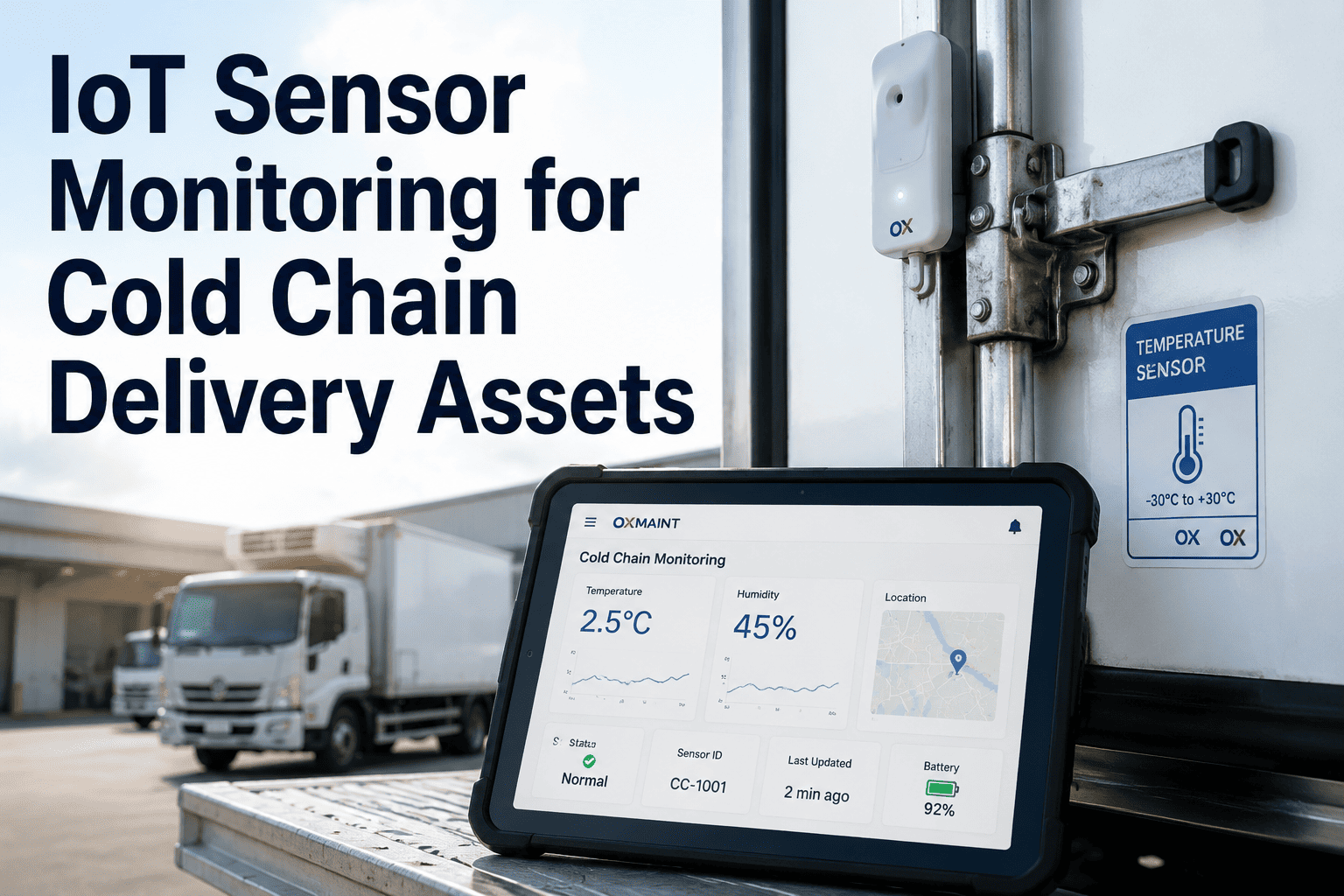
Effective cold storage monitoring requires purpose-built sensors designed for extreme temperature environments — standard industrial IoT sensors fail in freezer conditions. The sensor technologies below are engineered for -40F to +120F operating ranges with the accuracy, battery life, and wireless reliability that cold chain compliance demands.
Sensor 01Wireless Temperature Probes
Accuracy: +/- 0.3FRange: -40F to +185FSample Rate: 60 secBattery: 3-5 years at -20F
NIST-traceable calibrated probes placed at multiple heights and locations within each zone. Measures ambient air temperature and can include product-simulation probes (thermal mass blocks) that represent actual product temperature rather than air temperature — critical for FDA compliance where product temperature, not air temperature, determines excursion status.
Sensor 02Humidity & Dew Point Sensors
Accuracy: +/- 2% RHRange: 0-100% RHDew Point: CalculatedBattery: 3-5 years
Measures relative humidity and calculates dew point to detect door seal infiltration, defrost cycle effectiveness, and condensation risk on product packaging. Humidity spikes correlate with door-open events and indicate seal degradation when spikes occur with doors closed. FDA and USDA documentation requires humidity records for many cold chain products.
Sensor 03Door Contact & Duration Sensors
Type: Magnetic reed switchResolution: Open/close eventDuration: Seconds trackingBattery: 5+ years
Tracks every door open/close event with duration timing. Correlates door events with temperature and humidity changes to quantify the thermal impact of dock operations, forklift traffic, and picking activity. Identifies operational patterns that cause the highest thermal load — enabling scheduling optimization that reduces energy consumption 15-30%.
Sensor 04Differential Pressure & Airflow Sensors
Measures: Pascal differentialAirflow: m/s velocityResolution: 0.1 PaPower: Hardwired
Monitors air pressure between zones to verify positive/negative pressure relationships and evaporator airflow velocity to detect frost buildup and fan motor degradation. Declining airflow velocity is the earliest indicator of evaporator frost accumulation — triggering defrost cycle optimization before cooling capacity is impaired.
Sensor Placement Strategy for Cold Storage Facilities
Zone Type
Sensor Types
Placement Density
Key Placement Rules
Alert Thresholds
Deep Freeze (-20F to -10F)
Temp + Humidity + Door
1 per 2,500 sq ft + product probe
Sensors at 3 heights (floor, mid, ceiling) near walls and center. Product probe in warmest identified location.
Temp: +/- 3F from setpoint. Rate: >1F/hr rise
Standard Freeze (-10F to 0F)
Temp + Humidity + Door
1 per 3,000 sq ft + product probe
Focus on dock-adjacent areas and ceiling near evaporators. Door sensors on all access points.
Temp: +/- 3F from setpoint. Door: >5 min open
Refrigerated (32F to 40F)
Temp + Humidity + Airflow
1 per 4,000 sq ft
Sensors away from direct evaporator discharge. RH sensor near produce to detect condensation risk.
Temp: +/- 2F from setpoint. RH: >90% sustained
Controlled Room (59F to 77F)
Temp + Humidity
1 per 5,000 sq ft
Sensors at product level on racking, away from HVAC supply diffusers and exterior walls.
Temp: +/- 4F from setpoint. RH: >65% sustained
Dock Staging Areas
Temp + Door + Humidity
1 per dock door + zone ambient
Sensor between dock seal and staging area. Door sensor on overhead and dock leveler position.
Temp: >50F during receiving. Duration: >20 min staging
The Financial Devastation of Temperature Excursions
Temperature excursions are the single highest-cost failure event in cold chain logistics — exceeding equipment breakdowns, warehouse fires, and even most natural disaster scenarios in terms of per-incident financial impact. The cost compounds across four cascading layers that each multiply the initial product loss.
Layer 1
Direct Product Destruction
FDA-regulated products that exceed validated temperature ranges for documented durations must be destroyed — no exceptions, no recoverable value. Frozen biologics at $400-$2,000 per unit, vaccines at $50-$500 per dose, premium proteins at $8-$25 per pound. A single freezer zone can hold $500K-$4M in inventory.
$500K-$4M per event
Layer 2
Regulatory Action & Documentation
Temperature excursion documentation for FDA, USDA, or client quality systems requires investigation reports, root cause analysis, corrective action plans, and ongoing monitoring evidence. FDA warning letters for inadequate cold chain controls average $250,000 in remediation costs. Repeat violations trigger facility inspections.
$100K-$500K per regulatory event
Layer 3
Client Contract Penalties & Loss
Pharmaceutical and food clients include temperature compliance SLAs with financial penalties for excursion events. A single documented excursion triggers contract review. Two events within 12 months typically result in contract termination. Replacing a cold chain client costs 8-12 months of business development.
$200K-$2M in contract value at risk
Layer 4
Insurance & Premium Impact
Cold storage insurance claims for product loss are among the highest in warehouse operations. Claims above $500K trigger premium increases of 20-40%. Insurers increasingly require documented continuous monitoring as a condition of coverage — facilities without IoT monitoring face coverage exclusions for temperature-related losses.
$50K-$200K annual premium increase per claim
A comprehensive IoT monitoring system for a 40,000 sq ft cold storage facility costs $8,400-$22,000. A single temperature excursion in a pharmaceutical freezer costs $1.6 million minimum. The monitoring system pays for itself by preventing 0.5% of one excursion event. Sign up free to start building the continuous temperature documentation your cold chain compliance requires.
Traditional Monitoring vs. IoT Cold Storage Intelligence
Capability
Traditional Monitoring
IoT Continuous Monitoring
Temperature measurement frequency
2-4 manual readings per day — captures 0.3% of the operating hours
Every 60 seconds, 24/7/365 — captures 100% of the thermal profile
Excursion detection speed
Hours to days — found at next manual reading or BMS alarm at failure threshold
Under 2 minutes — rate-of-change alerts catch deviation at onset
Compressor health visibility
Zero — compressor condition unknown until failure or scheduled PM
Cycle time, run ratio, and thermal performance trending predict degradation
Hot spot identification
Single-point measurement — entire zone represented by one sensor location
Multi-point grid maps thermal variation across the full zone volume
Compliance documentation
Paper chart recorders or manual logs — time-consuming, error-prone, audit-risky
Automated digital records with tamper-proof timestamps — audit-ready 24/7
Door activity impact analysis
No correlation between door events and temperature impact — invisible waste
Every door event correlated with thermal and humidity impact quantified in BTU
Annual monitoring cost (40K sq ft)
$45K-$85K in labor, chart recorders, calibration, and missed excursion losses
$8.4K-$22K including sensors, platform, and automated compliance reporting
ROI of IoT Cold Storage Monitoring
These figures represent a 40,000 sq ft multi-zone cold storage facility with deep freeze, standard freeze, and refrigerated zones — a typical pharmaceutical or food distribution cold chain operation.
Documented continuous monitoring program → 15-20% cold storage premium decrease
Compliance labor elimination
$34,000
Automated reports replace 8 hrs/week of manual log compilation and chart review
Total Annual Value
$1,090,000
40K sq ft multi-zone cold storage facility
Against deployment and annual operating costs of $8,400-$22,000, first-year ROI is 50-130x. This is among the highest-ROI monitoring investments in all of logistics because the protected asset value per square foot in cold storage exceeds every other warehouse type by 10-50x. Schedule a demo to model the excursion risk and monitoring ROI for your specific cold storage operation.
From Monitoring to Maintenance: The CMMS Connection
Temperature data alone prevents excursions. Temperature data connected to a CMMS prevents the equipment failures that cause excursions. This is the difference between reactive alarm response and proactive refrigeration maintenance.
IoT Detects: Compressor run-time ratio increasing 3% per week — zone temperature stable but system working harder
CMMS Creates: Preventive work order for compressor inspection — technician finds low refrigerant charge, recharges system, run ratio normalizes. Excursion prevented 3-4 weeks before it would have occurred.
IoT Detects: Humidity spikes of 8-12% RH occurring when no doors are logged open — infiltration from unknown source
CMMS Creates: Investigation work order for zone envelope integrity — technician finds deteriorated panel joint sealant on south wall allowing humid air infiltration. Sealed for $800, preventing $18K/yr in excess energy and compressor wear.
IoT Detects: Supply-return air temperature differential narrowing from 14F to 8F across evaporator — frost buildup reducing heat exchange
CMMS Creates: Defrost cycle optimization work order — technician adjusts defrost schedule from 2x to 3x daily for this unit, restoring evaporator efficiency. Also creates PM task to inspect defrost heater elements for degradation.
Sign up free to connect cold storage monitoring data directly to automated maintenance workflows in OXmaint.
Conduct 48-hour thermal mapping survey of each zone to identify hot spots and stratification patternsDefine sensor placement locations based on thermal map, product storage patterns, and regulatory requirementsDetermine alert thresholds for each zone: absolute limits, rate-of-change triggers, and equipment performance baselinesConfigure CMMS equipment records for refrigeration assets with criticality scoring and maintenance plans
02
Week 3-4
Sensor Installation & Network Commissioning
Install wireless temperature, humidity, and door sensors — no wiring, no facility shutdown requiredDeploy wireless gateways with cellular backup for redundant data transmissionPerform NIST-traceable calibration verification on all temperature sensorsConfigure cloud platform dashboards, alert routing, and CMMS work order integration
03
Week 5-8
Baseline Capture & Alert Optimization
Collect 30 days of continuous data to establish zone-specific thermal and humidity baselinesCharacterize refrigeration cycle patterns: compressor run times, defrost cycles, recovery curvesTune rate-of-change alerts to catch genuine anomalies while eliminating false alarms from normal operationsGenerate first automated compliance reports and validate against regulatory documentation requirements
04
Ongoing
Continuous Monitoring & Predictive Maintenance
Automated CMMS work orders for compressor anomalies, door seal degradation, and defrost optimizationMonthly energy efficiency reports correlate door activity and defrost patterns with energy consumptionAnnual sensor calibration verification and network health assessmentCompliance documentation auto-generated for FDA, USDA, and client quality system audits
Case Study: Pharma Cold Chain Operator Prevents $4.8M in Excursion Losses
A pharmaceutical distribution company operating a 52,000 sq ft cold storage facility in Memphis handled $22 million in annual pharmaceutical inventory across three temperature zones: deep freeze (-15F), standard freeze (0F), and controlled room temperature (68F). In the 18 months before IoT deployment, the facility experienced two temperature excursion events — one from a compressor failure detected 3.5 hours late (loss: $1.6M), and one from a door seal failure that created a chronic hot spot undetected for 11 days (loss: $340K). Insurance premiums had increased 32% after the two claims.
The facility deployed 24 wireless temperature sensors, 8 humidity sensors, 12 door contact sensors, and 4 airflow sensors across all zones. Total deployment cost: $18,400. Within the first 60 days, the monitoring system identified: a compressor showing 4% weekly increase in run-time ratio (pre-failure indicator — repaired for $2,800), a deteriorating door seal on the deep freeze dock access (replaced for $650 before infiltration caused temperature excursion), and a hot spot in the northeast corner of the controlled room zone where product was consistently 6F above the zone average (resolved by adjusting supply air diffuser direction). Over 24 months post-deployment, the facility experienced zero temperature excursions. Projected prevented losses based on the pre-deployment excursion rate: $4.8 million. Insurance premiums decreased 18% at renewal due to documented continuous monitoring. Energy costs decreased 22% through door management and defrost optimization.
$4.8M
Projected prevented excursion losses over 24 months of IoT monitoring
Zero
Temperature excursion events in 24 months — down from 2 events in 18 months
22%
Energy cost reduction through door management and defrost cycle optimization
$18.4K
Total monitoring system deployment cost for 52K sq ft multi-zone cold storage
Frequently Asked Questions
01
How many temperature sensors does a cold storage facility need?
Sensor density depends on zone size, temperature criticality, and regulatory requirements. Deep freeze zones holding pharmaceutical products need the highest density — 1 sensor per 2,500 sq ft minimum, plus product-simulation probes at the warmest identified location from thermal mapping. Standard freeze zones need 1 per 3,000 sq ft. Refrigerated zones need 1 per 4,000 sq ft. Additionally, each zone needs at least one humidity sensor and door sensors on every access point. A typical 40,000 sq ft multi-zone facility requires 16-24 temperature sensors, 4-8 humidity sensors, 8-12 door sensors, and 2-4 airflow sensors. Total sensor investment: $6,000-$14,000 depending on sensor capability and certification level.
02
Can IoT sensors survive and perform accurately in deep freeze environments?
Yes — purpose-built cold chain IoT sensors are designed for operating temperatures down to -40F with specified accuracy maintained across the full temperature range. Key design features include lithium thionyl chloride batteries that maintain capacity at extreme cold (standard lithium batteries fail below -4F), conformal-coated electronics that prevent condensation damage during temperature transitions, and NIST-traceable calibration certificates valid across the full operating range. Battery life at -20F is typically 3-5 years with 60-second sampling intervals. Sensors should be recalibrated annually per FDA and USDA requirements, with the calibration verification documented in the CMMS for audit readiness.
03
Does IoT monitoring satisfy FDA 21 CFR Part 211 and FSMA cold chain requirements?
IoT monitoring systems meet and exceed FDA and FSMA documentation requirements when properly configured. FDA 21 CFR Part 211 requires continuous temperature recording for pharmaceutical storage — IoT sensors sampling every 60 seconds with automated digital records satisfy this requirement more comprehensively than chart recorders. FSMA requires documented preventive controls for temperature-sensitive food products including monitoring procedures, corrective actions, and verification activities — all of which IoT platforms automate. Critical compliance requirements include NIST-traceable sensor calibration, tamper-proof digital records with audit trails, automated deviation reporting, and documented corrective action workflows. The CMMS integration ensures that every temperature deviation triggers a documented corrective action work order — closing the compliance loop automatically.
04
How does IoT monitoring reduce cold storage energy costs?
Cold storage energy optimization comes from three data-driven improvements. First, door activity analysis identifies operational patterns that cause the highest thermal load — scheduling high-traffic operations during off-peak cooling demand reduces compressor cycling by 15-25%. Second, defrost cycle optimization uses evaporator performance data to schedule defrost events based on actual frost accumulation rather than fixed timers — eliminating unnecessary defrost cycles that waste energy and briefly warm the zone. Third, infiltration detection identifies door seal failures and envelope weaknesses that force compressors to overwork — fixing a single deteriorated door seal can reduce zone energy consumption by 8-15%. Combined energy savings typically range from 18-30% of baseline cold storage energy costs, which for a 40,000 sq ft facility represents $60,000-$120,000 annually.
05
What is the total cost and payback period for cold storage IoT monitoring?
Total deployment cost for a 40,000 sq ft multi-zone cold storage facility ranges from $8,400-$22,000, including wireless sensors ($4,000-$12,000), gateways with cellular backup ($2,000-$4,000), installation and calibration ($1,200-$3,000), and first-year platform subscription ($1,200-$3,000). Annual renewal cost is approximately $1,200-$3,000 for platform subscription plus $800-$1,500 for annual sensor calibration. Against annual savings of $1.09 million (excursion prevention, energy optimization, contract retention, compliance automation), the payback period is measured in days rather than months. Even excluding the catastrophic excursion prevention value, energy savings and compliance labor reduction alone achieve payback within 3-5 months.
$1.6 Million in Destroyed Pharmaceuticals. $8,400 Monitoring System. You Choose.
That Phoenix facility lost $2.14 million because a compressor drifted for 2 hours before the alarm triggered. Your compressors are aging right now. Your door seals are deteriorating. Your evaporator coils are frosting. Let IoT sensors see what your BMS alarm cannot — before your next excursion writes the check.