Every warehouse manager knows the 2 AM call — a conveyor line has seized, dock equipment is frozen, and a robotics arm has stopped mid-cycle. The real question is: why did no one know it was failing? OxMaint's CMMS paired with NVIDIA Jetson edge AI answers that question before the failure happens — detecting vibration anomalies, thermal drift, and load irregularities at the equipment level, then automatically triggering maintenance work orders with zero human intervention, so your team fixes the right equipment at the right time instead of reacting to the wrong breakdown at the wrong hour.
Edge AI + CMMS Automation
NVIDIA Jetson Edge AI for Warehouse Predictive Maintenance
Deploy real-time AI fault detection on conveyors, dock equipment, and robotic systems — and automatically route failures to OxMaint work orders before downtime hits your SLAs.
$260K
average cost per hour of unplanned warehouse downtime
40%
reduction in unplanned downtime with predictive maintenance
67 TOPS
Jetson Orin Nano Super AI inference — processes camera + sensor streams simultaneously
72%
year-over-year growth in Jetson deployments across warehouse automation
Why Warehouses Are Moving AI to the Edge
Cloud-based monitoring works well for reporting. It fails at real-time fault detection. By the time a sensor alert travels to a cloud server, gets processed, and returns an action — a conveyor belt has already seized, a dock leveler has already failed, and a picking robot has already stopped. NVIDIA Jetson modules solve this by running the entire inference loop locally on the equipment floor — no latency, no cloud dependency, no gap between detection and response.
The Cloud Problem
Round-trip to cloud adds 200–800ms to every inference decision. That gap is enough for a belt misalignment to cause a full jam, or a bearing overheat to trigger thermal shutdown. Cloud AI is a reporting tool, not a protection tool.
The Edge Solution
Jetson modules process camera feeds, vibration sensors, and motor current data on-device in under 10ms. Fault patterns are matched locally. The decision to raise an alert or trigger a CMMS work order happens before the cloud is even notified.
The CMMS Connection
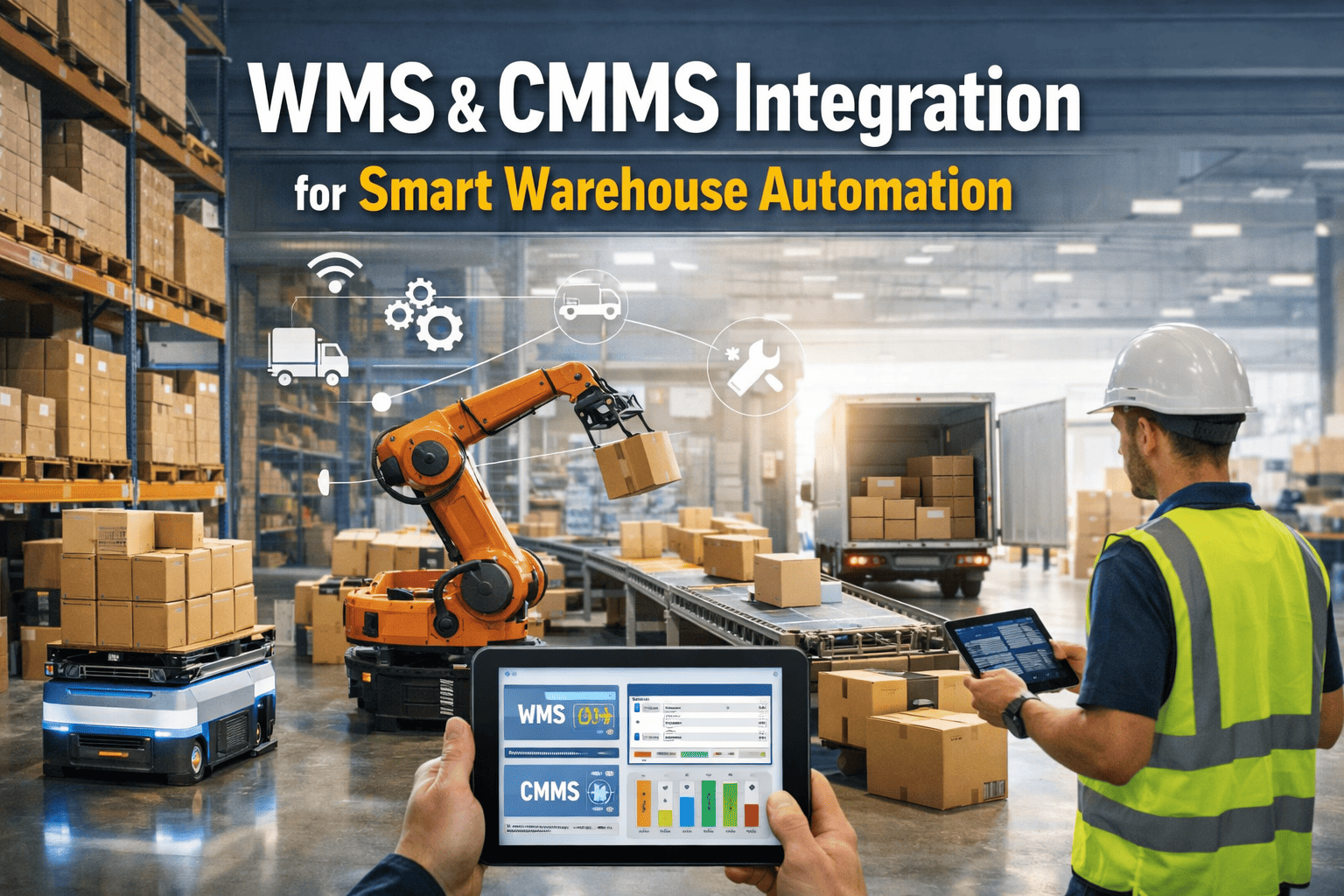
Edge AI detection without a maintenance workflow is an alarm without a follow-through. OxMaint closes the loop — Jetson raises the fault, OxMaint creates the work order, assigns the technician, and tracks the fix. End-to-end, automated.
The Three Equipment Areas Jetson Monitors in Warehouses
Not every warehouse asset needs edge AI equally. The highest-value deployments focus on the three equipment categories where failure creates the most immediate operational impact — and where visual and sensor-based AI detection provides the clearest lead time before breakdown.
01
Conveyor Systems
What Jetson Detects
Belt misalignment and lateral drift captured by camera at 30fps — flagged before edge contact damage
Bearing vibration signature deviation — distinguishes early-stage fatigue from normal operating noise using accelerometer FFT processed on-device
Motor current draw anomalies — elevated current indicates mechanical drag, jammed rollers, or failing gearbox
Splice and belt tear detection via computer vision — catches rips and delamination before full belt failure
One bearing failure on a main sortation conveyor averaged $1.2M in total impact across parts, lost production, and rush logistics costs.
02
Dock Equipment
What Jetson Detects
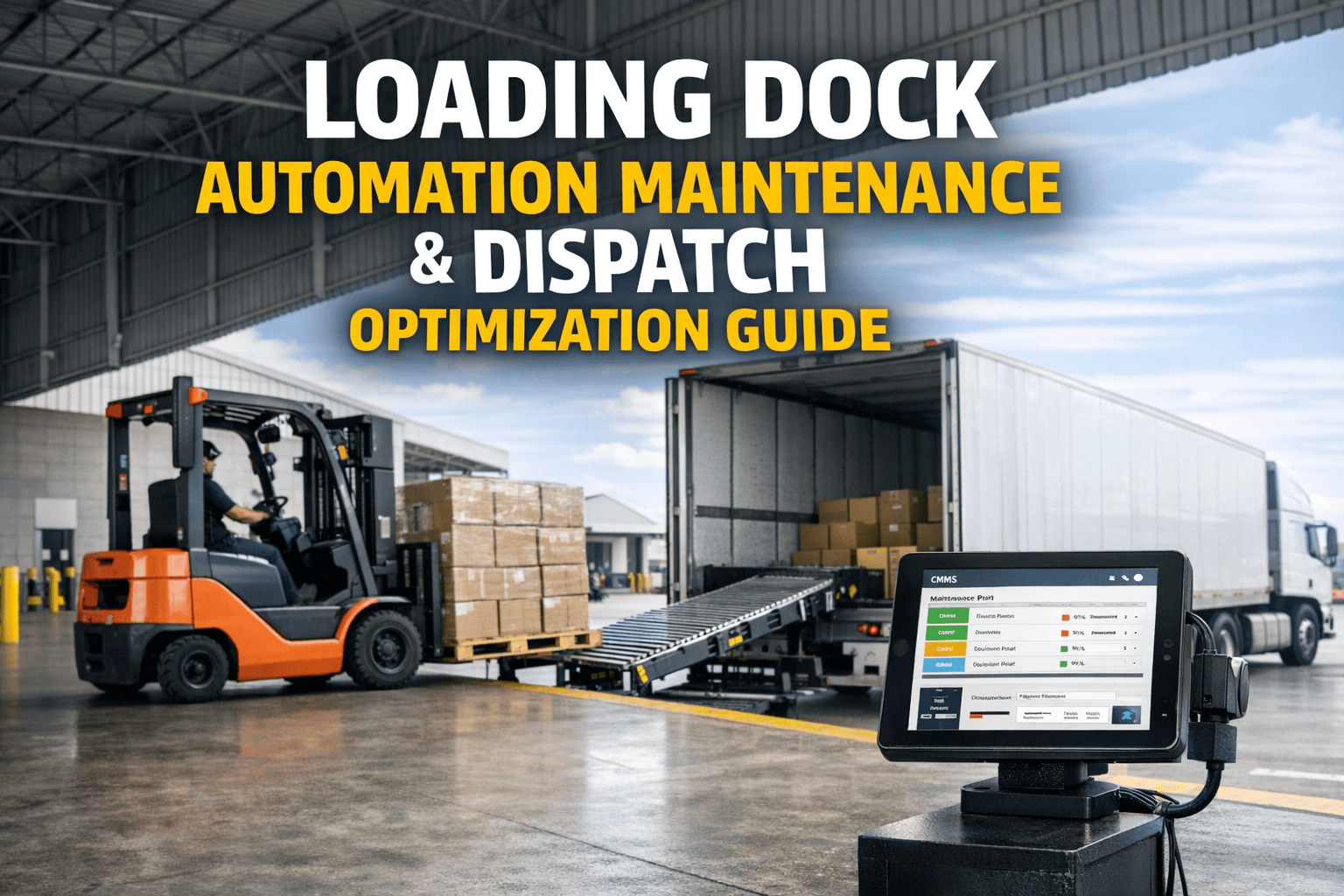
Dock leveler hydraulic pressure drop — detected via pressure transducer before leveler collapses under load
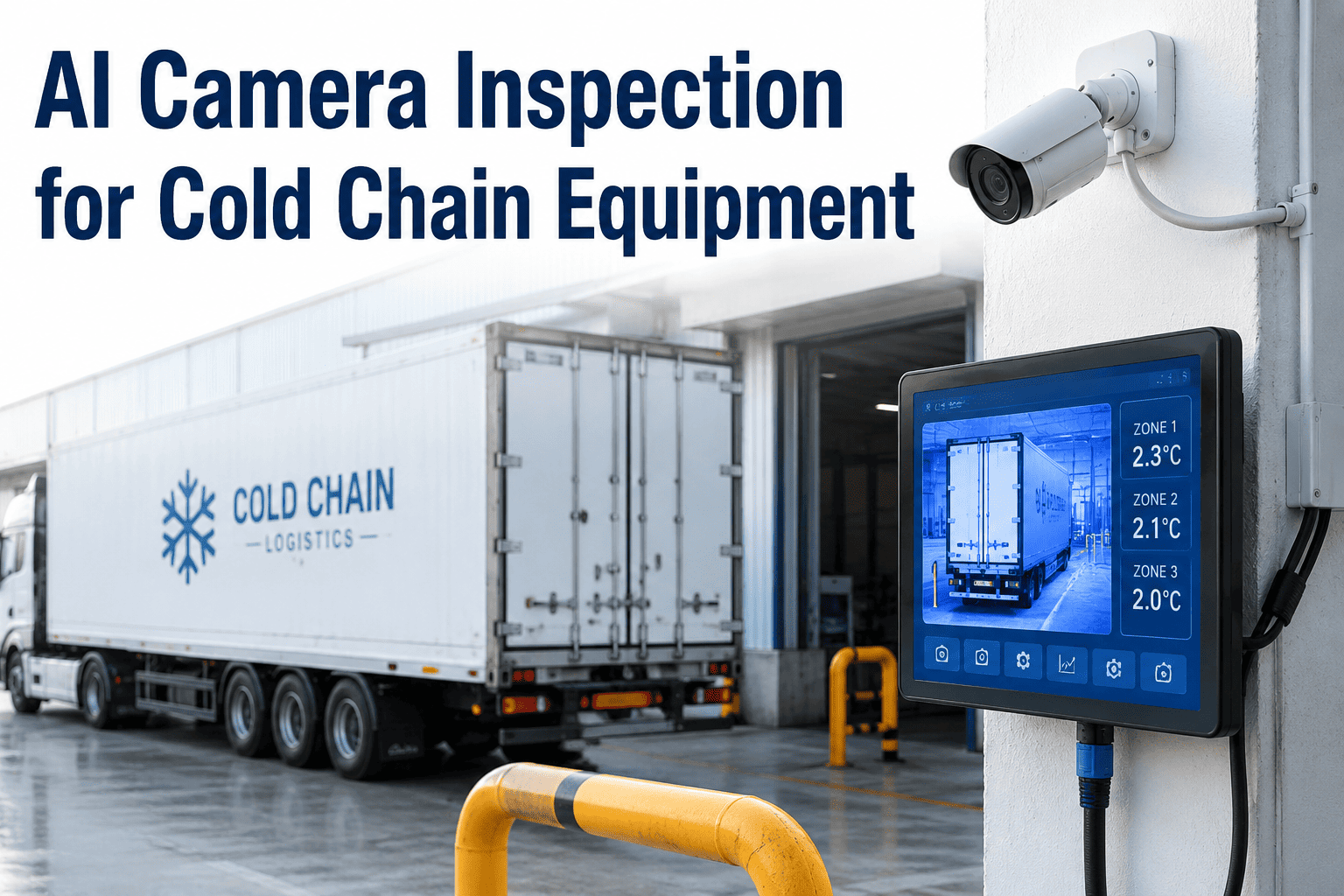
Dock door seal degradation — thermal camera detects cold air ingress patterns that indicate seal failure
Vehicle restraint engagement failures — camera vision confirms restraint position before truck departure clearance
Door motor current and cycle count trending — predicts actuator wear before a door fails to close during a shift
A dock that cannot cycle trucks during peak receiving hours creates a cascading SLA breach across inbound shipments for the entire day.
03
Robotic Systems
What Jetson Detects
Joint torque and servo current trending — identifies increasing resistance that precedes joint seizure in picking arms
Path deviation from nominal trajectory — vision system detects sub-millimetre drift that indicates encoder wear or mechanical slack
AGV wheel and motor wear — current signature and camera-based odometry cross-validation detects degradation before navigation failures
End-effector grip force inconsistency — detects suction cup wear or pneumatic pressure decay before drop rates increase
Amazon Robotics runs its Jetson-powered warehouse systems through simulation training before deployment — cutting development from years to months.
Connect Your Jetson Fault Detections to Automatic Work Orders
OxMaint receives fault signals from edge AI systems and creates prioritised maintenance work orders instantly — with asset location, fault type, severity, and technician assignment. No manual logging, no alert fatigue, no missed failures.
How the Jetson-to-CMMS Data Flow Works
The integration between NVIDIA Jetson edge AI and OxMaint follows a five-stage pipeline — from physical sensor input at the equipment to a closed maintenance record in the CMMS. Each stage is discrete, testable, and auditable.
1
Sensor Capture
Cameras, accelerometers, current transformers, thermocouples, and pressure transducers connected to Jetson module via GPIO, USB, or GigE Vision. Data streams continuously at configured sample rates — vibration at 1–10kHz, cameras at 15–60fps, thermal at 9Hz.
▼
2
On-Device Inference
Jetson runs TensorRT-optimised models — object detection for visual anomalies, FFT analysis for vibration signatures, and statistical process control for current and temperature trends. All inference executes locally. The Jetson Orin Nano Super delivers 67 TOPS at just 10–25W, making it practical for distributed installation across dozens of assets.
▼
3
Fault Classification
When inference output crosses a calibrated threshold, the edge system classifies the fault — type (bearing, belt, motor, hydraulic), severity (watch, alert, critical), and asset identifier. Multi-sensor corroboration reduces false positives: a thermal spike alone triggers a watch; a thermal spike plus current elevation triggers an alert.
▼
4
CMMS Work Order Creation
Fault payload is sent via REST API or MQTT to OxMaint. OxMaint creates a work order automatically — pre-populated with asset ID, fault description, severity, location, and recommended action from the fault library. Technician assignment rules route the work order based on fault type and shift schedule.
▼
5
Feedback and Model Improvement
Technician findings recorded in OxMaint — confirmed fault, false positive, or no issue found — feed back into threshold calibration. Over time, the system's fault classification accuracy improves for your specific equipment and environment. MTBF, detection lead time, and false positive rate are tracked per asset in the OxMaint dashboard.
Jetson Module Selection for Warehouse Deployments
Not every monitoring point requires the same compute. Matching the Jetson module to the detection task — by sensor count, model complexity, and throughput requirement — determines both performance and total deployment cost.
Scroll to view full table
| Jetson Module |
AI Performance |
Best Fit in Warehouse |
Typical Asset Coverage |
Power Draw |
| Jetson Orin Nano Super |
67 TOPS |
Single conveyor segment, one dock station, or individual robotic arm — camera + 2–4 sensors |
1–2 assets |
10–25W |
| Jetson Orin NX 16GB |
100 TOPS |
Conveyor zone with multiple camera views, dock cluster with thermal + pressure monitoring |
3–6 assets |
25–45W |
| Jetson AGX Orin 64GB |
275 TOPS |
Full sortation system, multi-robot cell, or warehouse bay with dense sensor instrumentation |
8–15 assets |
60–75W |
| Jetson AGX Thor |
2,070 TFLOPS FP4 |
Autonomous mobile robot fleets, humanoid logistics robots, full-facility perception hub |
Facility-wide |
130W |
What OxMaint Adds to the Edge AI Stack
NVIDIA Jetson handles detection and inference. OxMaint handles everything that happens after the fault is identified — making the difference between an alert that gets ignored and a failure that gets fixed before it costs your operation.
Automatic Work Order Generation
Fault signals from edge devices create structured work orders in OxMaint without any manual input. Asset, fault type, severity, location, recommended procedure, and required spare parts are pre-populated from the fault library.
Sign in to configure your fault-to-work-order mapping.
Technician Routing and Scheduling
Work orders are assigned based on technician availability, skill certification, and current workload — across shifts. A critical bearing fault at 3 AM does not wait until morning for assignment. On-call routing and mobile push notifications ensure the right person is notified immediately.
Spare Parts Inventory Integration
When a fault is classified as bearing failure, OxMaint checks spare parts inventory for the correct bearing SKU, reserves it for the work order, and triggers a reorder if stock falls below the minimum. No scramble for parts during a repair window.
Book a demo to see spare parts automation.
Maintenance History and MTBF Tracking
Every work order completed against an asset builds its maintenance history. OxMaint calculates MTBF per asset, per fault type, and per equipment category — letting you identify which conveyor zones, dock stations, or robotic systems are degrading faster than expected and where PM intervals need adjustment.
Edge AI Alert Audit Trail
Every edge AI alert that creates a work order is logged with timestamp, sensor readings, fault classification, and confidence score. Technician findings are recorded against the alert. This closed-loop record is your evidence for equipment reliability analysis, compliance documentation, and insurance claims.
Downtime and Cost Dashboard
OxMaint tracks planned versus unplanned downtime per asset, repair cost per fault type, and technician response time per severity level. These metrics quantify the ROI of your Jetson deployment and justify expansion to additional warehouse zones.
Sign in to see your maintenance cost dashboard.
Before vs. After: Reactive to Predictive in a Distribution Centre
This before-and-after comparison reflects typical operational changes when Jetson edge AI is integrated with OxMaint across a mid-size distribution centre running three shifts.
Before Edge AI + CMMS
Conveyor failures discovered when production stops — average 2.8 hours to restore operation
Maintenance technicians dispatched based on operator reports — correct fault diagnosed after arrival 60% of the time
Spare parts sourced reactively — 30% of repairs delayed by parts availability
PM intervals set by manufacturer schedule regardless of actual usage and load
No asset-level fault history — repeat failures on the same equipment not tracked systematically
Downtime cost reported monthly — no visibility during the shift when decisions matter
After Jetson Edge AI + OxMaint
Faults detected 4–72 hours before equipment failure — intervention planned during scheduled downtime windows
Work orders pre-populated with fault type and location — technician arrives with correct tools and parts 87% of the time
Spare parts reserved automatically when fault detected — no reactive sourcing delays
PM intervals adjusted dynamically based on actual asset condition data from edge sensors
Full fault history per asset — repeat failures trigger root cause analysis workflows automatically
Real-time downtime tracking per asset and shift — maintenance decisions informed by live cost data
Frequently Asked Questions
Does the NVIDIA Jetson system need to connect to the cloud to trigger OxMaint work orders?
No — inference runs entirely on the Jetson module at the edge, with no cloud dependency for fault detection. The Jetson communicates with OxMaint via your local network (LAN or private VLAN) using REST API or MQTT, keeping sensitive equipment data within your facility boundary. Cloud connectivity is optional for dashboard access and remote monitoring but is not required for the core detection-to-work-order pipeline.
Sign in to configure your on-premises OxMaint integration.
Which Jetson module is the right starting point for a warehouse pilot?
For most warehouse pilots covering conveyors and dock equipment, the Jetson Orin Nano Super is the recommended starting point — it delivers 67 TOPS of AI inference at under 25W and costs significantly less than higher-tier modules. It handles a camera feed plus three to four sensor streams simultaneously, which covers the majority of single-asset monitoring use cases. Pilots typically instrument the highest-criticality conveyor zone first, demonstrate ROI over 90 days, then expand.
Book a demo to see how OxMaint supports phased rollout tracking.
How does OxMaint handle false positives from edge AI fault detection?
OxMaint records every edge AI alert as a work order, and technicians log their findings — confirmed fault, false positive, or no issue found — when the work order is closed. False positive data feeds back into threshold calibration for the edge model. Over a 60–90 day calibration period, false positive rates typically drop significantly as the model learns your specific equipment baseline. The audit trail from every alert ensures you can demonstrate detection accuracy to management and justify system expansion based on real performance data.
Can OxMaint receive fault data from multiple Jetson devices across a large warehouse?
Yes — OxMaint supports multi-asset, multi-zone fault ingestion from any number of Jetson devices simultaneously. Each device is mapped to its specific asset or asset group in OxMaint, so work orders are created and routed correctly regardless of how many edge devices are transmitting. Large distribution centres typically deploy Jetson units zone by zone, with each unit feeding OxMaint independently through the same API endpoint using unique asset identifiers.
Sign in to configure multi-zone asset mapping in OxMaint.
Stop Reacting to Failures. Start Detecting Them First.
Pair NVIDIA Jetson edge AI with OxMaint CMMS — real-time fault detection on your warehouse equipment, automatic work order creation, technician routing, spare parts reservation, and full maintenance history in one connected platform.