Every damaged parcel triggers a chain of costs: a replacement shipment, a refund or credit, return freight, customer service time, and a customer who may not order again. Many operations respond by adding more cardboard and void fill, which raises material and shipping costs without addressing the cause. This guide covers reducing in-transit package damage through testing, packaging selection, handling analysis, equipment condition, and a returns data loop, supported by records from maintenance management software where equipment is part of the cause.
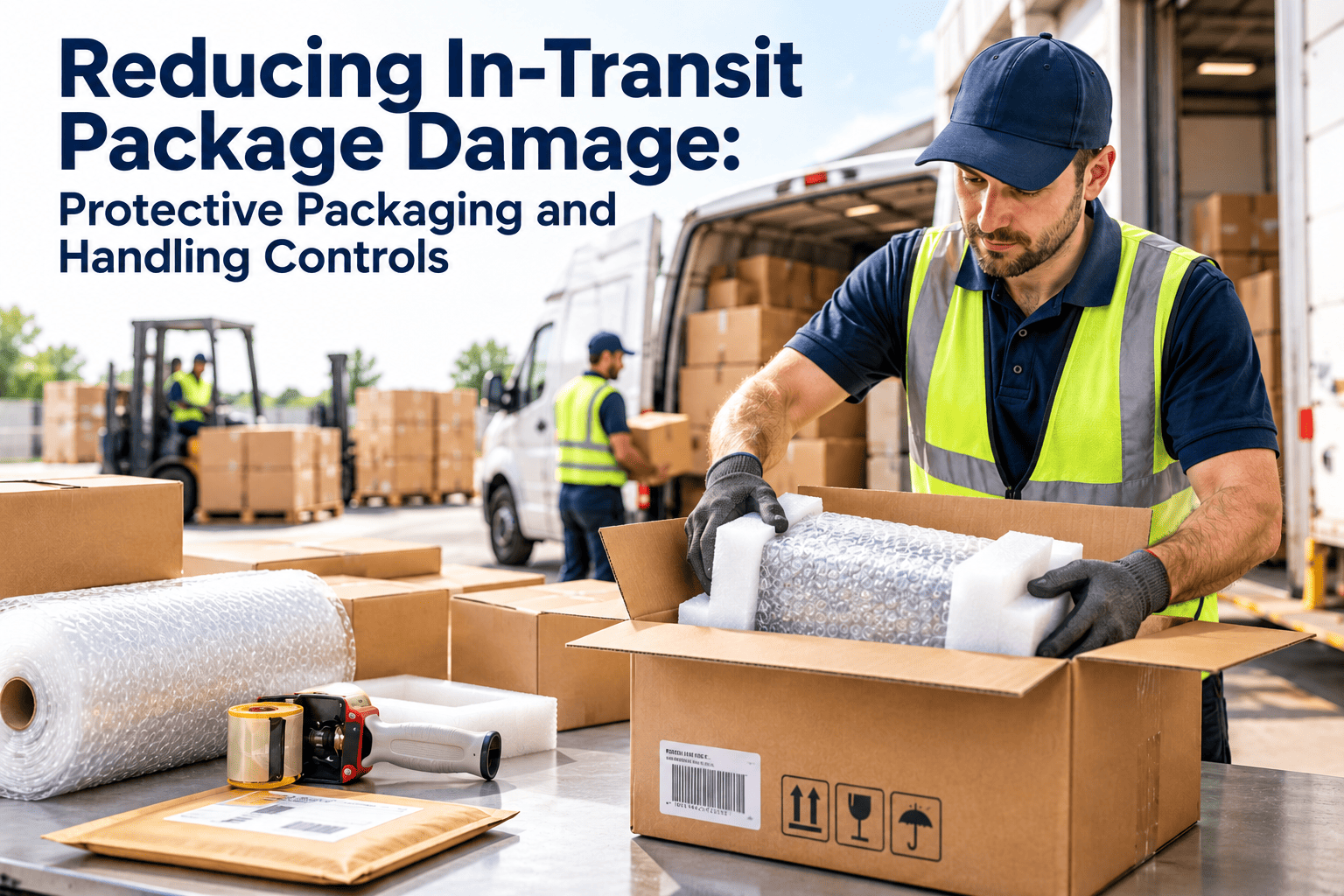
Reducing In-Transit Package Damage: Protective Packaging and Handling Controls
Damage is rarely caused by one bad box. It comes from the combination of product fragility, packaging design, handling forces, and equipment condition at each stage of the journey. Finding which stage is responsible is the first step to fixing it.
The true cost of a damaged shipment
The visible cost is the refund. The hidden costs usually exceed it, and they repeat for every damaged unit.
Four root causes behind most transit damage
Sorting damage into causes prevents the common mistake of treating every incident as a packaging problem.
Product fragility
The item cannot tolerate normal shocks, vibration, or pressure, and needs design or protection changes.
Packaging design
Box strength, cushioning, void space, and closure are mismatched to the product and the shipping method.
Handling environment
Drops, throws, stacking, and sortation transfers exceed what the package was designed to survive.
Equipment condition
Worn conveyors, misaligned transfers, faulty pack equipment, and poor vehicle restraints add avoidable force.
Testing packaging against realistic hazards
Laboratory testing replaces guesswork. For parcel shipments up to about 150 pounds, the ISTA 3A procedure is widely used to simulate drop, vibration, compression, and environmental exposure. Some retailers and marketplaces require testing evidence from suppliers.
- Test the product in its final shipping configuration, not a prototype box
- Use several samples when finalizing a design, since a single pass can hide variation
- Retest after any change to the product, box supplier, cushioning, or carrier
Balancing protection against over-packing
Over-packing is not a safe default. It adds material cost, increases dimensional weight charges, creates waste, and can still fail if the design is wrong.
- Product moves inside the box
- Corners and edges crush
- Damage claims and returns rise
- Low material cost hides high total cost
- Tested against real hazards
- Snug fit with correct cushioning
- Lower dimensional weight
- Damage rate stays within target
- Excess void fill and large boxes
- Higher freight and storage cost
- More packing labor and waste
- Damage can persist if root cause is elsewhere
Packaging choices by damage mode
Match the protection method to the failure you actually see.
| Damage mode | Typical symptom | Packaging response |
|---|---|---|
| Impact from drops | Dented corners, cracked housings | Corner protection, adequate cushion thickness, correct box strength |
| Compression from stacking | Crushed cartons, bowed sides | Higher board strength, internal supports, better load patterns |
| Vibration over distance | Scuffing, loosened parts, abrasion | Immobilize the product and separate surfaces |
| Puncture | Holes in cartons or poly bags | Stronger outer materials and protection of sharp features |
| Moisture and humidity | Soft cartons, mold, label failure | Barrier materials, sealed liners, and correct closures |
| Open or burst seals | Missing contents, loose items | Proper tape application, tested closures, maintained taping equipment |
Fix the equipment behind the damage
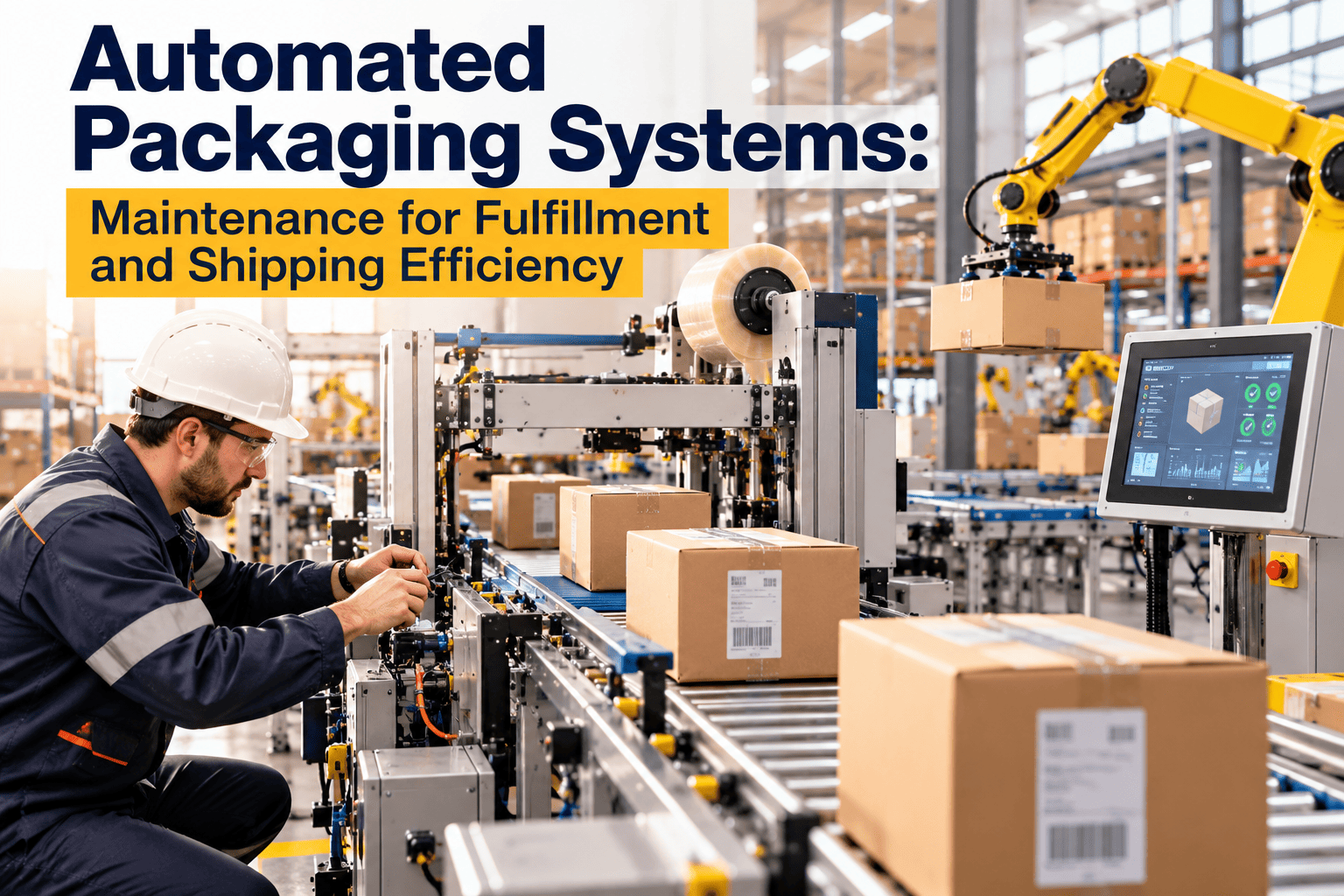
See how asset records, inspections, and preventive maintenance can keep conveyors, sorters, and packing equipment from adding avoidable force to every parcel.
A simple damage code list that makes data comparable
Free-text damage notes are hard to analyze. A short set of codes turns scattered reports into patterns a team can act on.
| Code group | Examples | Likely owner |
|---|---|---|
| Product defect or fragility | Part failure with no package damage | Product or quality team |
| Packaging failure | Crushed corner, torn carton, open seal | Packaging engineering |
| Pack process error | Wrong box, missing cushioning, loose item | Operations and training |
| Facility handling or equipment | Impact marks, conveyor scuffs, sorter damage | Operations and maintenance |
| Carrier handling | Forklift puncture, crush from stacking, wet carton | Transportation and carrier management |
| Unknown | No clear evidence | Review process to reduce this group |
Pack station standards that prevent avoidable damage
Many damage claims originate at the packing bench. Clear standards and well-maintained tools make correct packing the easy option.
Lanes, carriers, and service levels change the hazard
The same package can perform well on one route and badly on another. Carrier networks differ in sort steps, handoffs, and manual touches.
- Several hub transfers and sorts
- Mixed freight with heavy items
- Long distances with more vibration
- Rural or irregular last-mile handling
- Compare damage by lane and carrier each month
- Test packaging for the harshest regular lane
- Share evidence with carriers during reviews
- Adjust packaging only on lanes that justify it
- Direct or regional delivery
- Fewer handoffs and sorts
- Dedicated vehicles or route drivers
- Shorter transit times
Palletizing and trailer loading controls
Damage that appears on arrival is often a loading problem. Stable unit loads and proper restraint protect cartons from compression and shifting.
- Build pallets with a consistent pattern and avoid overhang that leaves cartons unsupported
- Use corner boards, stretch wrap, or strapping suited to the load weight and expected handling
- Limit stack height based on carton compression strength, not only on available trailer space
- Place heavy and rigid freight at the bottom, and keep fragile freight away from load shift zones
- Use bars, straps, or air bags to prevent movement, and inspect them for wear before each use
- Record loading exceptions, such as damaged pallets or shifted loads found at unloading
Training and accountability for handlers
Even the best packaging fails when handling habits are poor. Short, repeated coaching works better than annual lectures.
Handling profile analysis: measure what the package experiences
A handling profile describes the forces a package meets between packing and delivery. Without measurement, teams argue about whose fault damage is.
- Place shock and vibration recorders inside test shipments and send them through the normal network
- Note the time and location of each event to identify the stage that produces the highest impacts
- Compare lanes, carriers, and facilities so problem sites stand out from the average
- Walk the conveyor and sort route and look for drops, hard stops, tight merges, and rough transfers
- Review loading practices for stacking height, load shifting, and restraint use
Equipment faults that quietly damage parcels
Mechanical wear changes how gently a facility handles freight. These faults often go unnoticed until damage reports rise.
The returns data feedback loop
Returns and damage claims contain the evidence needed to fix damage at the source, but only if the information is captured in a usable form.
- Photograph damaged items and cartons from several angles, because the pattern of damage often reveals the cause
- Keep a small library of retained damaged samples so teams can compare failures against design changes
- Send recurring equipment-related findings to maintenance with the date, location, and asset involved
- Close the loop by telling packers and handlers what changed because of their reports
- Review the damage data again after peak season, because temporary staff and unusual volume often expose weaknesses in standards and equipment that normal weeks hide
How Oxmaint supports damage reduction on the equipment side
Oxmaint is maintenance software, not a packaging design or returns management tool. It helps when damage analysis points to equipment condition.
- Asset records for conveyors, sorters, packing machines, wrappers, dock equipment, and vehicles, with service history
- Preventive maintenance schedules and inspections for transfers, diverts, tape heads, guards, and restraints
- Work orders created from damage investigations, with assignment, priority, and completion records
- Inventory tracking for belts, rollers, tape head blades, and other parts that affect handling quality
- Reports that compare downtime and repeat repairs by asset, so damage-prone equipment is easier to identify
Sustainability without sacrificing protection
Reducing damage is one of the most effective sustainability measures in fulfillment, because a damaged parcel wastes the product, the packaging, and the freight twice. Lighter packaging only helps when it is tested and the damage rate stays under control.
Common shortcuts
- Switching to lighter materials without retesting
- Removing cushioning to cut cost, then absorbing claims
- Using one box design for very different products
- Ignoring returns data when changing suppliers
Better practice
- Retest any material change under realistic hazards
- Right-size boxes to cut void fill and dimensional weight
- Group products by fragility and design for each group
- Review damage data before and after every packaging change
KPIs for a damage reduction program
Track both the outcome and the conditions that influence it.
| KPI | What it shows | Warning sign |
|---|---|---|
| Damage rate by SKU | Products that fail most often | A few SKUs drive most claims |
| Damage rate by lane and facility | Where handling forces are highest | One site far above the others |
| Damage by cause code | Share from packaging, handling, or equipment | Large unclassified share |
| Packaging cost per order | Material and dimensional weight cost | Cost rises with no damage improvement |
| Equipment-related damage events | Incidents tied to specific assets | Repeat events on the same machine |
| PM compliance on handling equipment | Planned service completed on time | Missed PMs before damage spikes |
- Review KPIs by SKU, lane, and facility each month, and share the results with packaging, operations, and maintenance together
- Set a target damage rate per product family and revisit it when carriers or materials change
- Treat a sudden rise in damage at one site as a prompt to inspect its equipment before changing the packaging
Frequently asked questions
What is ISTA 3A testing?
It is a general simulation test for individually packaged products up to about 150 pounds shipped through parcel networks. It combines drop, vibration, and optional environmental conditioning.
Is adding more packaging the best way to cut damage?
Not always. Extra material raises cost and waste, and it may not fix damage caused by equipment or handling. Test first, then right-size.
How can I tell if equipment is damaging parcels?
Compare damage by facility, line, and time against maintenance history. You can track equipment inspections to spot transfers and diverts that need repair.
What data should we capture on damaged returns?
Record the SKU, damage type, photo, carrier, lane, and origin facility. Consistent codes make patterns visible within weeks.
Does Oxmaint design packaging or manage returns?
No. It manages maintenance for the equipment involved. To see how it fits, book a demo.
Stop equipment from adding damage to every shipment
Give maintenance and operations one record of equipment condition, planned service, and repeat repairs across your packing and delivery sites.