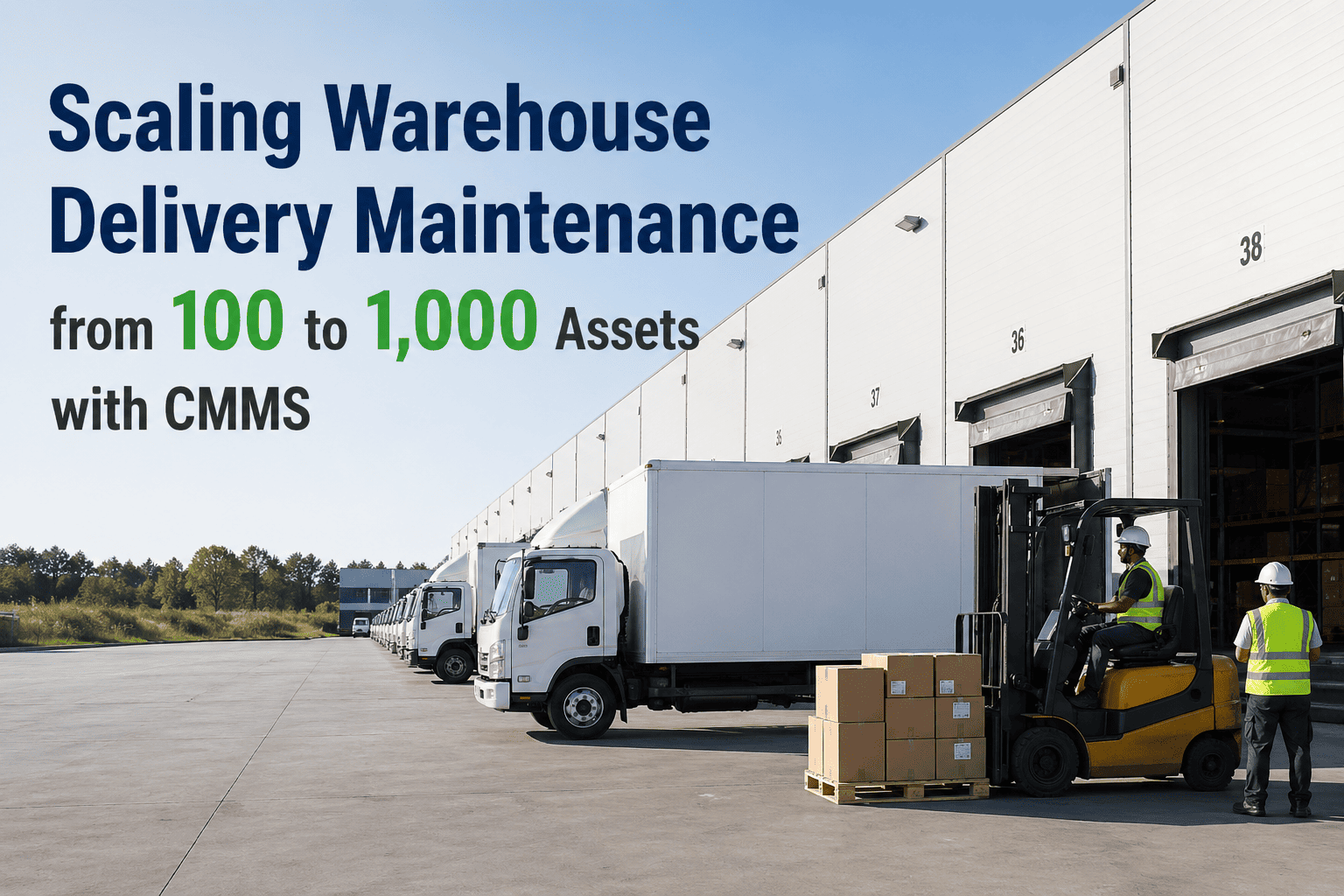
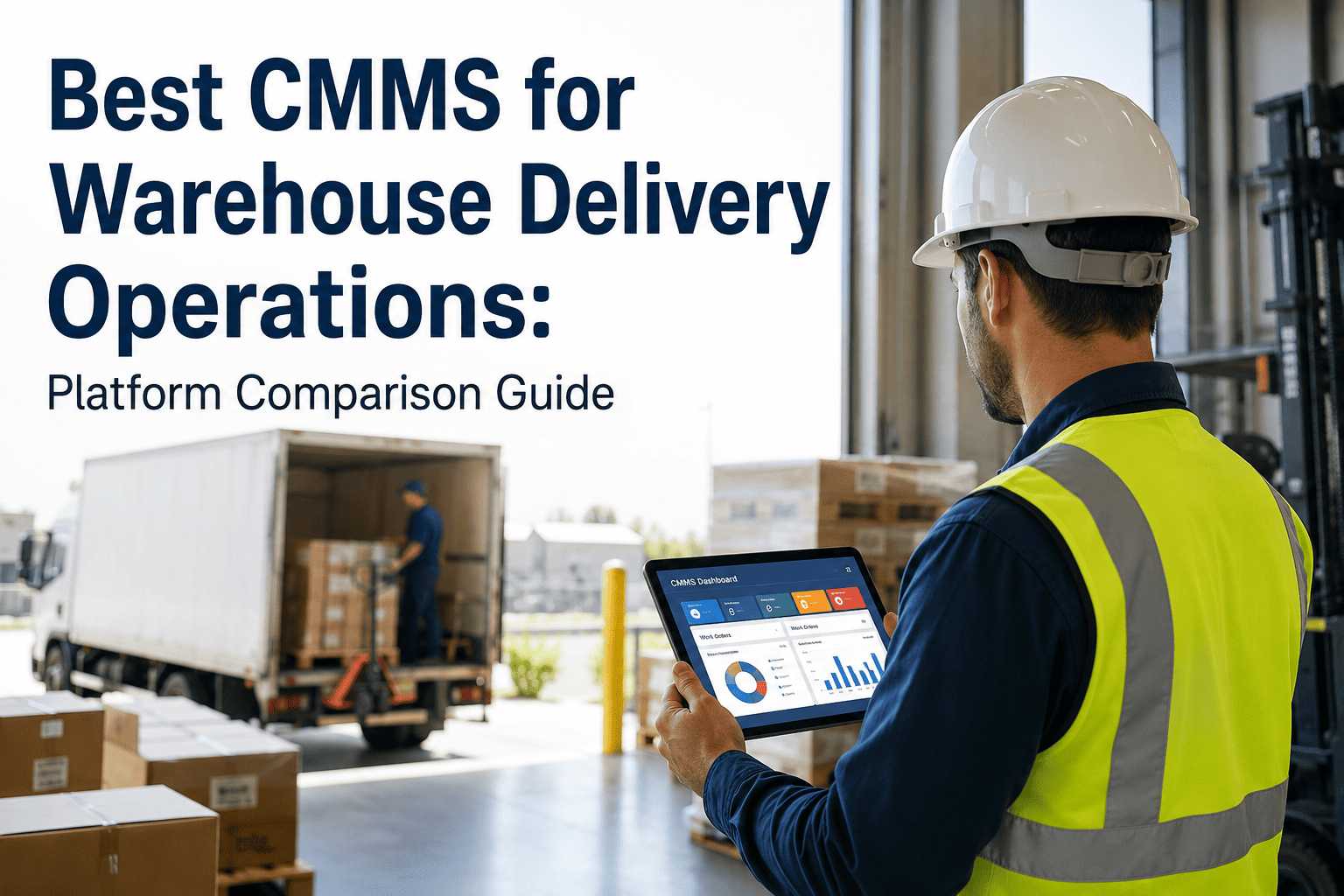
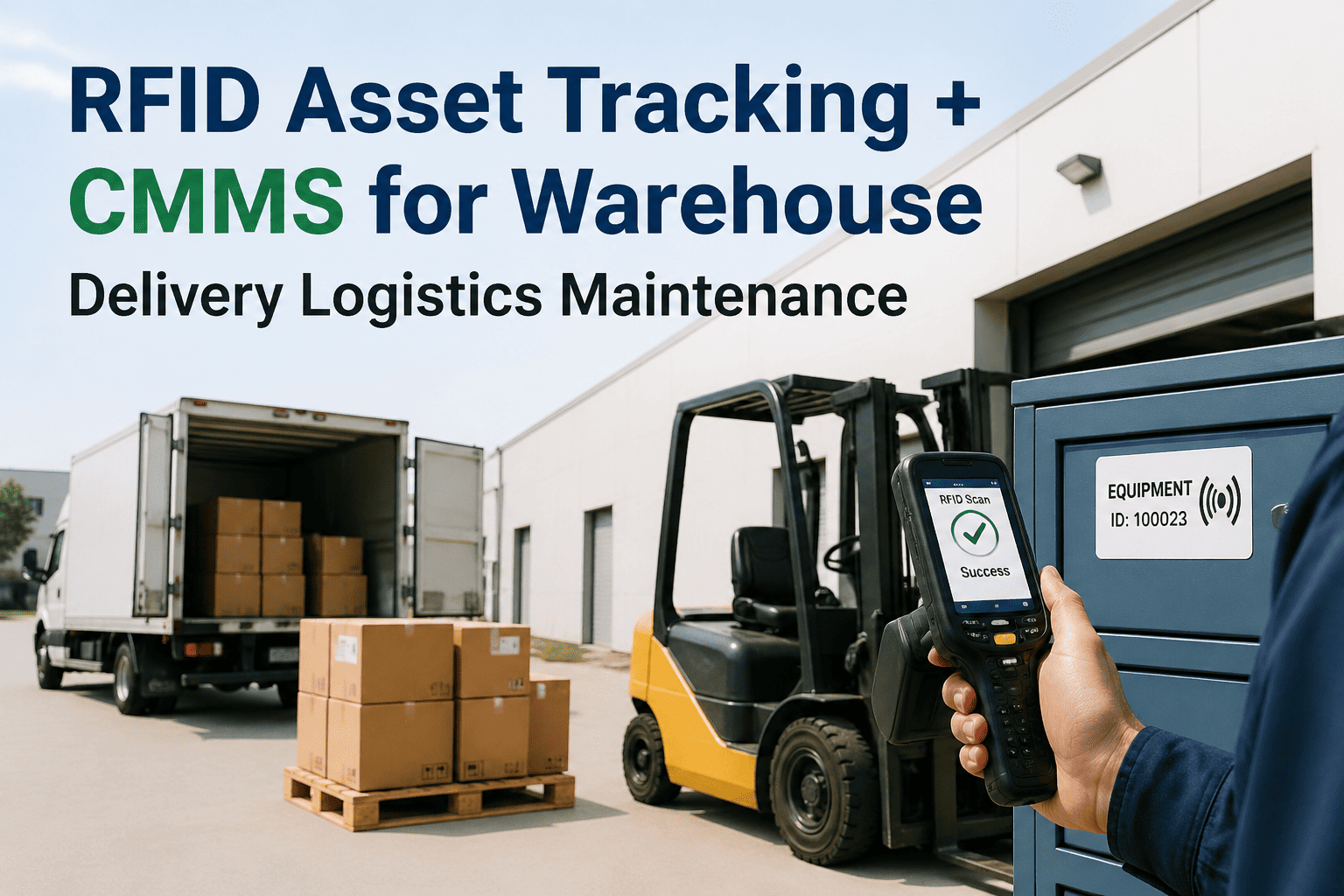
Most warehouse operations don't fail at scale — they fracture at the exact moment growth outruns their maintenance systems. Managing 100 assets with a spreadsheet and a good technician is survivable. Managing 500 assets the same way means missed PMs accumulate silently, reactive work consumes 60% of technician hours, and equipment failures begin arriving faster than they can be resolved. The path from 100 to 1,000 assets in a warehouse or delivery operation is not a staffing problem — it is an information and automation problem, and AI CMMS is precisely engineered to solve it. Operations that scale maintenance infrastructure alongside asset growth consistently achieve 20-30% lower maintenance cost per asset and sustain planned maintenance rates above 70%, even as headcount stays flat. If your warehouse is growing and your maintenance process is not, explore how Oxmaint scales with your asset portfolio or book a strategy session with an operations specialist.
Warehouse Scaling Intelligence
From 100 to 1,000 Assets: The CMMS Strategy That Keeps Maintenance From Breaking
Every 3x asset increase creates a new inflection point where manual maintenance systems collapse. Here is what each growth stage demands — and exactly how AI CMMS resolves it.
70%+
Planned maintenance rate achievable at 1,000 assets with CMMS
0
Additional FTEs needed when scaling with automation
25%
Typical wrench time without CMMS — vs. 55%+ with it
10.9%
Annual CMMS market growth — the industry is moving fast
The 4 Growth Stages — and What Breaks at Each One
Every warehouse hits a predictable fracture point as its asset count grows. Knowing where your operation sits on this curve tells you exactly what CMMS capability to deploy next.
Stage 1
100 Assets
Manageable — but fragile
What breaks
PMs tracked in Excel, one knowledgeable technician holds the system together. One resignation ends institutional memory permanently.
CMMS unlocks
Digital asset register, PM auto-scheduling, mobile work orders. Knowledge captured in the system, not in heads.
Stage 2
250 Assets
Reactive spiral begins
What breaks
PM backlogs accumulate, reactive work rises above 45%, and parts shortages delay every emergency repair by 1-2 days.
CMMS unlocks
Automated work order prioritization, min/max inventory reorder, and failure trend analysis to shift from reactive to planned.
Stage 3
500 Assets
Manual systems collapse
What breaks
Technician scheduling becomes unmanageable. Asset histories are siloed. Compliance audits take days. Multi-site visibility is zero.
CMMS unlocks
Skill-based technician dispatch, full asset lifecycle tracking, automated compliance logs, and multi-site dashboards.
Stage 4
1,000 Assets
Scalable with AI
What breaks
Without predictive maintenance, unplanned downtime compounds. Reactive-only operations at this scale can lose $2M+ annually.
CMMS unlocks
AI failure prediction, IoT sensor integration, ERP sync, KPI benchmarking against industry peers — all from a single dashboard.
Which stage is your warehouse at? Oxmaint maps your current asset count, PM rate, and team size to a custom scaling roadmap — instantly, in your first session.
5 CMMS Capabilities That Make 1,000-Asset Maintenance Possible
Each capability below directly addresses a scaling failure mode. Without them, every new asset added to your fleet increases operational risk rather than capacity.
01
Usage-Based PM Automation
Reduces reactive work by 35%
Trigger maintenance by hours of runtime, cycles, or sensor readings — not just calendar dates. A forklift running two shifts needs maintenance on a different schedule than one running half days. CMMS adjusts automatically.
02
Centralized Asset Lifecycle Tracking
Full history on every asset, instant access
Every repair, PM, part replacement, and failure event logged against the asset — permanently. When a conveyor belt fails at 3 AM, the on-call technician opens the app and sees everything that has ever happened to it.
03
Intelligent Inventory Management
12-18% parts cost reduction
Auto-reorder triggers fire when stock drops below minimum. Parts usage history predicts what you'll need next month. Operations managing 1,000 assets without this carry tens of thousands in dead inventory.
04
Multi-Site Unified Dashboard
One view for all sites, real time
Distribution networks with 3, 5, or 20 sites see the same KPIs — downtime, open work orders, PM compliance — on one screen. No waiting for emailed reports. No logging into separate systems per location.
05
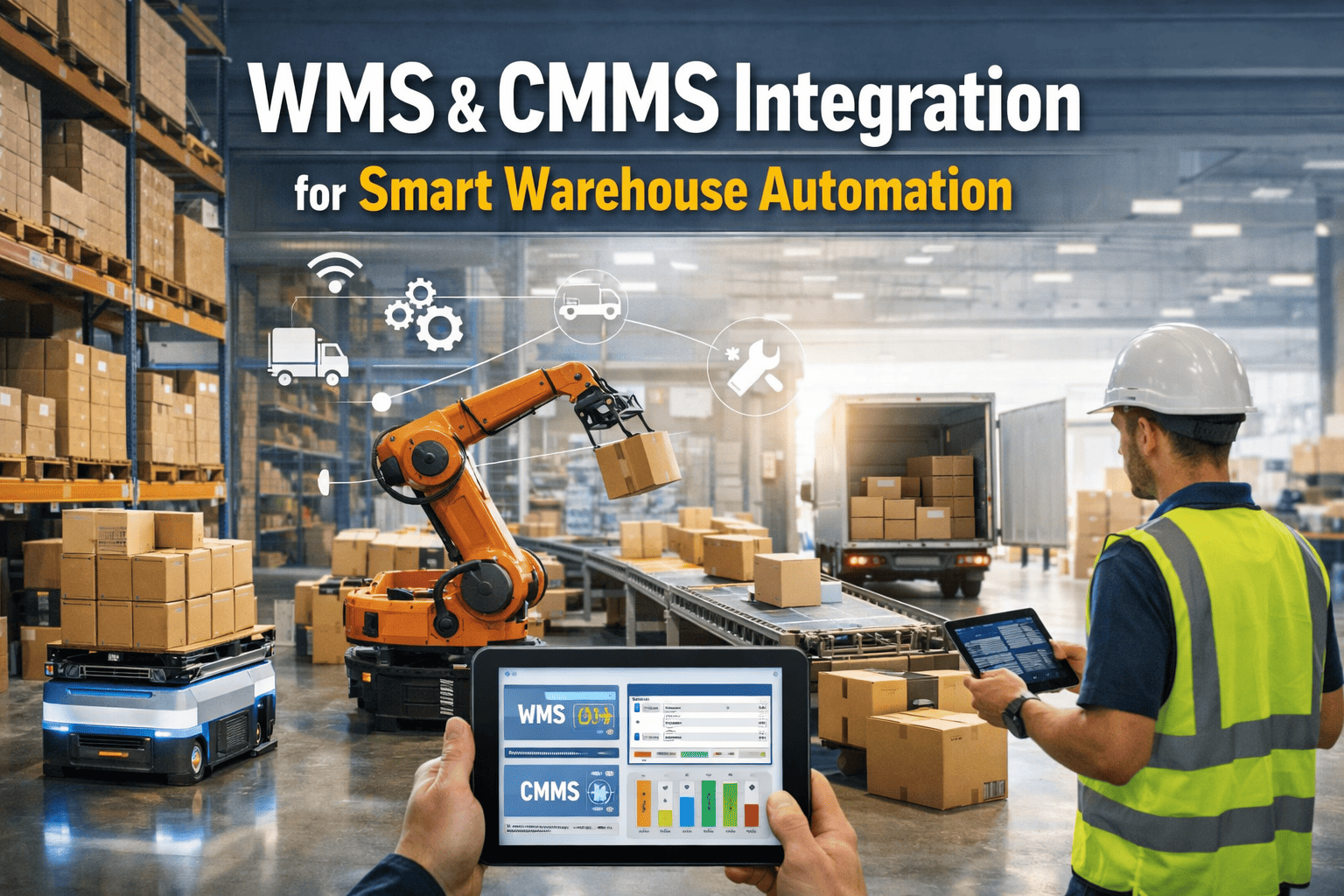
ERP and WMS Integration
Eliminates $28k-$75k/yr in reconciliation
Bidirectional sync with SAP, Oracle, and WMS platforms means work order costs, parts consumption, and labor data flow automatically. Finance teams get accurate maintenance spend without spreadsheet reconciliation.
Headcount vs. Assets: Breaking the Linear Trap
Without CMMS, every doubling of assets demands proportional headcount growth. With CMMS automation, the curve flattens — the same team manages significantly more.
Without CMMS
100 assets
2 FTEs
250 assets
5 FTEs
500 assets
10 FTEs
1,000 assets
20 FTEs
Linear cost growth. Reactive fires increase. Uptime degrades.
With Oxmaint CMMS
100 assets
2 FTEs
250 assets
3 FTEs
500 assets
5 FTEs
1,000 assets
7-8 FTEs
Automation absorbs volume. Planned maintenance rises. Uptime improves.
Figures based on industry benchmarks for distribution and logistics operations. Actual staffing depends on asset type, site count, and automation level. Book a session to model your specific operation.
Scaling Readiness: Does Your Maintenance Stack Match Your Asset Count?
Use this table to assess whether your current tools can handle your next growth phase.
Scroll table to view all columns
| Capability Needed |
Spreadsheet |
Basic CMMS |
Oxmaint AI CMMS |
| Asset register up to 1,000+ |
Manual, error-prone |
Yes, limited |
Unlimited, with hierarchy |
| Usage-based PM triggers |
Not possible |
Date-based only |
Runtime, cycles, sensors |
| Multi-site visibility |
Separate files |
Limited reporting |
Unified real-time dashboard |
| Mobile technician access |
No |
Basic app |
Full offline-capable mobile |
| ERP / WMS integration |
Manual re-entry |
Limited connectors |
SAP, Oracle, bidirectional |
| AI failure prediction |
Not possible |
Not available |
IoT + ML-driven alerts |
| Compliance auto-documentation |
2-3 days manual |
Partial templates |
Audit-ready always |
| Inventory auto-reorder |
Manual tracking |
Alerts only |
Usage-based auto-trigger |
Start a free Oxmaint trial to immediately access all capabilities in the right column — no feature gating at any tier.
Frequently Asked Questions
How long does it take to onboard 500 or 1,000 assets into Oxmaint?
Oxmaint supports bulk asset import via CSV or Excel, meaning 1,000 assets can be loaded in a single session. Most operations complete core onboarding — assets, PM schedules, and technician accounts — within the first week. No implementation consultant required.
Start your free trial to test the import workflow.
Can Oxmaint handle maintenance across multiple warehouse sites?
Yes. Oxmaint is built for multi-site distribution operations. Each site has its own asset register, technician teams, and PM schedules — but directors and operations managers see a unified KPI dashboard across every location in real time.
Book a demo to see the multi-site view live.
At what asset count does a warehouse actually need a CMMS?
The breakeven point is typically 50 to 80 assets, where manual tracking begins generating missed PMs and reactive repair premiums. By 150 assets, the cost of not having a CMMS exceeds the cost of the software. The earlier you transition, the lower the scaling cost.
Try Oxmaint free to confirm your ROI threshold.
Does Oxmaint integrate with our WMS or ERP system?
Oxmaint offers bidirectional connectors for major ERP and WMS platforms including SAP and Oracle. Work order costs, parts usage, and labor data sync automatically — eliminating manual reconciliation and providing finance teams with accurate maintenance spend data.
Book a session to review your specific integration requirements.
Can we scale from 100 to 1,000 assets without increasing our maintenance team?
Yes — and this is the primary reason logistics operations adopt AI CMMS. Automation handles PM scheduling, work order dispatch, inventory reorders, and compliance logging. Industry benchmarks show CMMS-enabled teams managing 1,000 assets with 7-8 FTEs versus 18-20 required without automation.
Start your free trial and see the efficiency gains firsthand.
Scale Your Warehouse. Not Your Maintenance Headcount.
Oxmaint gives growing distribution and logistics operations the automation, visibility, and AI-driven predictive maintenance needed to manage 1,000 assets with the same team that managed 100. Start free — and build a maintenance infrastructure that scales with your business.