Ask a fulfillment supervisor which injuries cost the most hours and the answer is usually the same: strains and sprains from lifting, reaching, twisting and repeating the same motion thousands of times a shift. These musculoskeletal injuries rarely come from one dramatic event. They build from job design, equipment condition and pace, which means they can be engineered down. This guide explains how to assess ergonomic risk in packing, picking and loading work, which controls work best, and how well-maintained equipment quietly protects workers. If you want your inspections and equipment records in one place, start with Oxmaint.
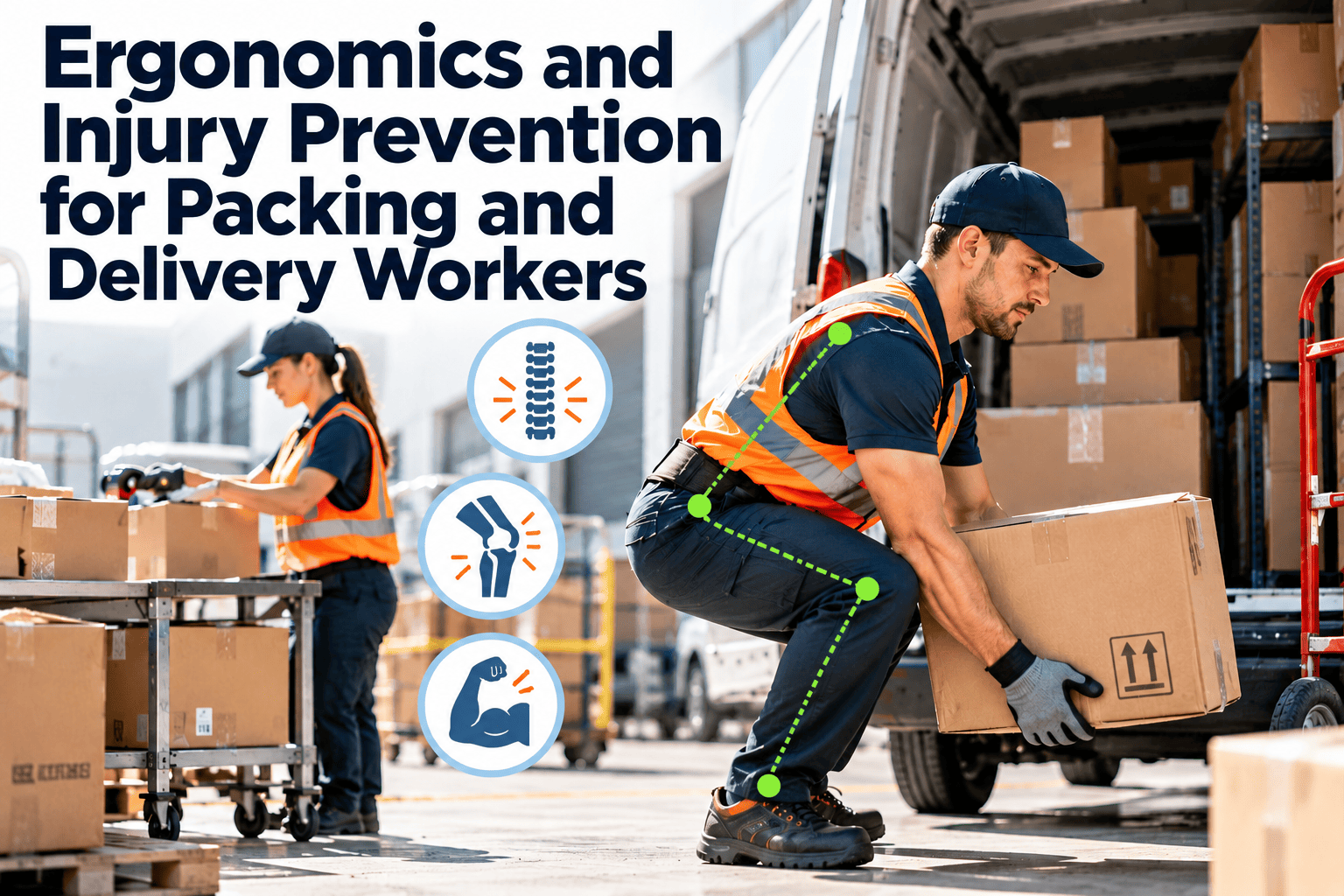
Ergonomics and Injury Prevention for Packing and Delivery Workers
Design the job to fit the worker, keep the equipment that supports it working, and measure risk before it turns into lost time and turnover.
Why ergonomic injuries concentrate in warehouse work
Four risk factors that stack
- Force: heavy or awkward cartons, stiff carts, hard-to-move pallets and tight grips.
- Repetition: the same motion at the pace the process demands, with few natural pauses.
- Posture: shelves at floor or overhead height, deep reaches into trailers and twisting at pack stations.
- Duration and recovery: long shifts, overtime peaks and too little variety to rest tissues.
Why peaks make it worse
Seasonal surges bring temporary staff, faster rates and longer hours. New workers have less experience of safe technique just when the exposure is highest.
Regulatory context
- In the United States there is no single OSHA ergonomics standard, but employers can be cited under the general duty clause for recognized ergonomic hazards.
- Many countries and insurers expect documented manual handling risk assessments.
- Check the rules and reporting duties that apply in each location you operate.
Job hazard map for packing, picking and loading
| Task | Main exposures | Common injury | First controls to try |
|---|---|---|---|
| Floor-level picking | Repeated bending, lifting from low shelves | Lower back strain | Slot heavy and fast items at waist height, add lift-assist where needed |
| Overhead picking and stocking | Shoulder elevation, reaching with load | Shoulder tendon injuries | Lower slot heights, provide stable steps and pickers with reach limits |
| Pack station work | Repetitive wrist and hand motion, standing, twisting | Wrist, hand and neck strain | Adjustable benches, tape dispensers within reach, anti-fatigue matting |
| Trailer loading and unloading | Lifting from floor, deep reaches, hot or cold conditions | Back and shoulder strain | Extendable conveyors, roller beds, powered loaders, team-lift rules |
| Cart and pallet moving | High push and pull force, worn wheels | Shoulder and back strain | Powered jacks, wheel maintenance, route flooring repairs |
| Van loading for delivery | Lifting into cargo area, awkward parcel shapes, repeated stepping | Back, knee and shoulder strain | Load height aids, shelving layout by stop order, tailgate or step improvements |
Controls ranked by how reliably they work
Training workers to lift correctly helps, but it cannot offset a job that demands lifting from the floor hundreds of times a shift.
Keep the equipment that protects your people working
Oxmaint helps teams schedule inspections and preventive maintenance for conveyors, lift aids, carts and dock equipment, and turn worker reports into tracked work orders.
The maintenance link most ergonomics programs miss
When equipment is neglected
- Cart wheels seize and workers push harder to move loads.
- A conveyor section stops and cartons are carried by hand.
- A dock leveler sticks and unloading means lifting over a gap.
- A lift table drifts and the pack height is wrong for hours.
- Floor damage forces awkward steering and sudden jolts.
When equipment is maintained
- Wheels, casters and bearings are checked and replaced on schedule.
- Conveyors are inspected so stops are planned, not sudden.
- Dock equipment is tested and repaired before it becomes a lift hazard.
- Adjustable furniture is verified and fixed when it fails.
- Floor defects are logged and repaired promptly.
Make ergonomic reports easy to raise
Give workers a short way to flag a stiff cart, a broken adjuster or an awkward station, ideally with a photo. Route the report to a work order with an owner, and close the loop so workers see the fix. Reports that disappear teach people to stop reporting.
An ergonomic assessment program, step by step
Gather injury and discomfort data
Combine incident logs, first-aid visits, absence records and worker discomfort surveys to find the jobs where problems cluster.
Observe the real job
Watch tasks at normal pace across shifts. Note reach distances, lift heights, carton weights, grip types and repetitions per minute.
Score the risk
Use a recognized method such as the NIOSH lifting equation or a posture checklist such as RULA or REBA, applied consistently by trained assessors.
Choose controls with the workers
Pilot options at one station, ask operators what feels better and measure the change before rolling out.
Reassess and keep records
Re-score after changes, record decisions and revisit when rates, products or layouts change.
On lifting limits
The NIOSH lifting equation starts from a reference load of 23 kg (51 lb) under ideal conditions and reduces it for factors such as distance from the body, height and frequency. Real warehouse lifts rarely meet ideal conditions, so treat it as a screening tool, not a safe-weight guarantee.
Job rotation that actually reduces exposure
Rotation works when
- Tasks use different muscle groups, not just different locations.
- Workers are trained for each station before they rotate.
- Heavy tasks are shared fairly.
Rotation fails when
- Both tasks load the same shoulder or back.
- It is used to hide an unsafe job.
- Rates are not adjusted for new workers at a station.
Assistive equipment: choose it, then keep it working
Lift and positioning aids
Scissor lift tables, pallet positioners, vacuum hoists and tilt tables reduce reaching and bending. Check hydraulics, controls and limit switches routinely.
Moving aids
Powered pallet trucks, tuggers and quality carts cut push force. Wheels, brakes, batteries and handles need scheduled inspection.
Station design
Adjustable benches, tilted bins, good lighting and anti-fatigue mats help neutral posture. Verify adjustment mechanisms still work.
Dock and loading aids
Extendable conveyors, dock levelers, vehicle restraints and ramps reduce lifting at trailers. Test and service them on a cycle.
Hand tools
Tape guns, label printers and cutters affect grip force and wrist angle. Replace worn blades and failing mechanisms early.
Vehicle interiors
Shelving, steps, door mechanisms and load restraints in delivery vans change how often drivers bend, lift and twist.
Ergonomics is a productivity investment, not only a safety cost
Pack station before redesign
- Fixed-height bench forces tall and short workers into poor postures.
- Tape, labels and void fill sit at the far edge of reach.
- Cartons arrive on the floor and are lifted to the bench.
- Workers slow down late in the shift as fatigue builds.
Pack station after redesign
- Adjustable bench set to each worker's elbow height.
- Frequently used items within a short, comfortable reach.
- Cartons delivered at bench height by conveyor or lift table.
- Pace holds steadier across the shift with fewer errors.
Track throughput alongside injuries
Record units packed per hour, error rates and rework at redesigned stations. Better postures often reduce fatigue-related mistakes, which gives operations leaders a reason to support the change beyond injury statistics.
Delivery drivers and van loaders have their own exposures
Where strain comes from
- Repeated entry and exit from the cab and cargo area.
- Carrying parcels of unpredictable weight and shape.
- Loading in stop order with items stacked or hidden.
- Working in heat, cold or rain with time pressure.
What helps
- Shelving and bins arranged by stop sequence to cut searching.
- Steps, grab handles and door mechanisms kept in good repair.
- Carts or hand trucks stored within easy reach.
- Clear rules for team lifts and heavy or oversized items.
Fleet condition is part of the picture
A sticking sliding door, a broken step or a worn seat adds force and awkward movement to every stop. Include these items in pre-trip inspections so they become work orders instead of daily annoyances.
People who need extra attention in the program
New and temporary workers
Build up pace gradually, pair with experienced colleagues and give short, practical coaching on the actual tasks.
Workers returning after time off
Offer a graded return to heavy tasks and keep communication open about discomfort, in line with medical advice.
Workers of different body sizes
Design for adjustability rather than the average person, so stations and equipment suit a wide range of users.
Mistakes that undermine ergonomic programs
Relying on posters and training
Awareness helps, but it cannot overcome shelf heights, rates and layouts that force bad postures.
Buying equipment and forgetting it
Lift aids that are broken or poorly adjusted are quickly abandoned, and workers revert to manual lifting.
Ignoring pace and staffing
Unrealistic targets override every other control. Review rates when a station is redesigned.
Assessing only after an injury
Waiting for claims means the exposure has already done harm. Use discomfort reports and observation first.
Leaving workers out of design
Operators know which reach is awkward and which tool fights back. Ask them before choosing controls.
No follow-up on fixes
If reports do not lead to visible action, people stop reporting and early warnings disappear.
Measuring whether ergonomic changes work
Leading measures
- Share of high-risk jobs reassessed after a change.
- Ergonomic reports raised and closed on time.
- Preventive maintenance completed on assistive equipment.
- Worker discomfort survey scores by station.
Lagging measures
- Musculoskeletal injury counts and severity.
- Lost-time and restricted-duty days.
- Workers compensation costs and claims.
- Turnover and absence in high-strain roles.
Expect an early rise in reports
When you make reporting easier and safer, recorded discomfort often rises at first. That is a sign that hidden problems are surfacing, not that the program is failing. Judge results over several months alongside severity and lost time.
A useful rule for any ergonomic change: if a worker would need to be told to use the new method, the design is probably wrong. The best controls make the safe way the easy way, and the people doing the job should test any change for a full shift at real pace before it is approved, and they only stay that way if someone inspects and repairs them. Build both the design review and the maintenance routine into the same program so neither is forgotten. Review the combined results quarterly with operations, safety and maintenance leaders in the same room, and agree which stations and assets get attention next based on injury reports, discomfort surveys, repair backlog and the stations where workers say the job still feels wrong.
Where Oxmaint fits in a warehouse ergonomics program
Useful capabilities
- Preventive maintenance for conveyors, lift tables, carts, levelers and powered trucks.
- Inspection checklists that include condition items linked to strain, such as stiff wheels or sticking adjusters.
- Work orders raised from worker reports with photos and priority.
- Asset history showing repeat faults on equipment that workers struggle with.
- Dashboards for overdue inspections and repair backlog.
Practical habits
- Tag ergonomic aids as assets so they are never forgotten.
- Add a quick check of adjusters and wheels to daily start-up rounds.
- Prioritize repairs that affect high-risk jobs.
- Review ergonomic work orders alongside injury trends each month.
Frequently asked questions
What is the most effective way to reduce warehouse lifting injuries?
Remove or reduce the lift through design, such as better slotting, lift aids and conveyors. Training and rotation support this but should not be the only controls.
Does equipment maintenance really affect ergonomics?
Yes. Stiff carts, stuck levelers and failed adjusters raise force and awkward postures. A system such as Oxmaint keeps that equipment on a preventive schedule.
How often should ergonomic assessments be repeated?
Reassess after any change in layout, product, rate or equipment, and review high-risk jobs on a regular cycle. Complaints or injuries at a station should trigger an earlier review.
Can workers report ergonomic problems through a maintenance system?
They can, using a short request with a photo that creates a work order. You can book a demo to see how requests are routed and tracked.
Is job rotation enough to prevent strain injuries?
Only if the rotated tasks load different body parts and the risky jobs are also redesigned. Rotation alone can spread exposure without reducing it.
Protect workers and keep throughput steady
Pair good job design with well-maintained equipment and fast response to worker reports. Oxmaint helps warehouse and delivery teams keep the assets that reduce strain inspected and repaired.