Most warehouse delivery hubs treat energy as a fixed operating cost. Monthly utility bills paid without questioning why consumption increased 12% year-over-year. HVAC systems running at full capacity because zone controls were never commissioned properly. Compressors cycling inefficiently because nobody tracked runtime hours or noticed the 15% capacity loss from fouled heat exchangers. Lighting systems consuming 40% more power than necessary because the retrofit to LED happened three years ago but the old operating schedules were never updated. The result is predictable — energy costs that climb steadily, equipment that fails prematurely from running harder than necessary, and operational expenses that nobody connects to deferred maintenance decisions made six months earlier. McKinsey's 2024 logistics operations research found that warehouses with CMMS-tracked energy system maintenance reduce energy costs 18-28% within 18 months while simultaneously extending equipment life 25-40% compared to facilities treating energy systems as run-to-failure assets. The difference is not installing expensive monitoring systems but whether routine maintenance on compressors, HVAC, and lighting gets scheduled based on runtime data, completed before efficiency degrades, and validated through consumption tracking that proves the maintenance investment delivered measurable savings. OxMaint tracks energy system maintenance and correlates work orders with consumption patterns — showing which PM tasks actually reduce energy waste and which equipment needs intervention before efficiency losses become permanent cost increases.
Warehouse Operations · Energy Management
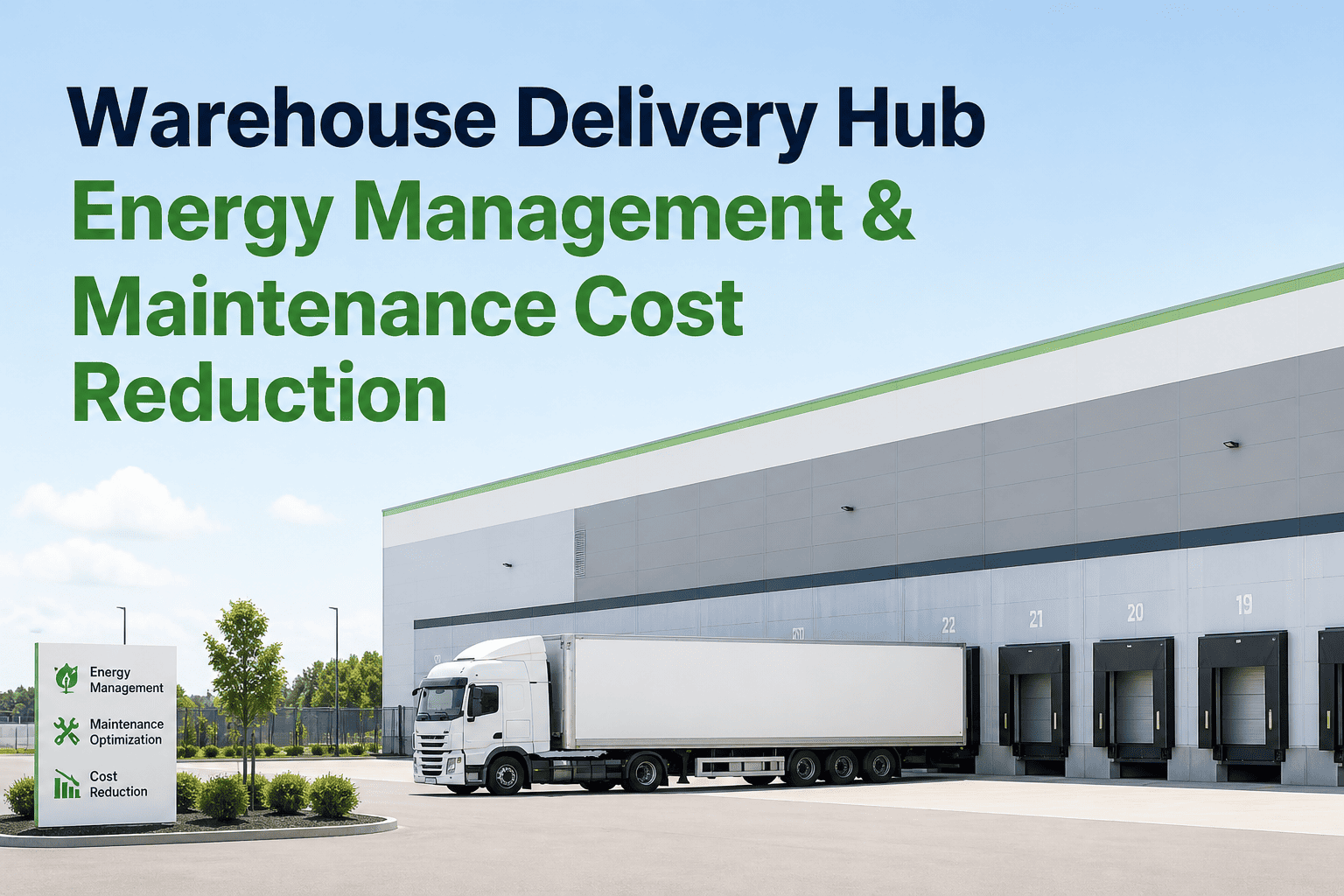
Warehouse Delivery Hub Energy Management Through Maintenance Cost Reduction
CMMS-Tracked Energy Systems Maintenance Cuts Utility Costs 18-28% While Preventing Facility-Wide Failures
The Energy Cost Reality in Warehouse Delivery Operations
$2.40-$3.80
Energy cost per square foot annually for refrigerated warehouse delivery hubs
22-35%
Of total warehouse operating costs attributed to energy systems
12-18 months
Payback period for energy-focused PM programmes through consumption reduction
The 3 Energy Systems That Determine Warehouse Operating Costs
Refrigeration & HVAC
40-55% of total facility energy consumption
Compressors, condensers, evaporators, and climate control systems. A single refrigeration compressor operating 15% below design efficiency due to fouled condensers costs $8,000-$14,000 annually in excess energy. Most facilities discover the efficiency loss only after catastrophic failure forces emergency replacement.
Critical PM: Condenser coil cleaning quarterly, refrigerant charge verification biannually, compressor oil analysis every 2,000 hours.
Lighting Systems
15-25% of total facility energy consumption
High-bay LED fixtures, dock lighting, office areas, and exterior security lighting. Warehouses operating on pre-retrofit schedules consume 40% more lighting energy than necessary. Fixture failures increase 300% when cleaning intervals exceed 18 months as heat buildup degrades LED driver electronics.
Critical PM: Fixture cleaning annually, occupancy sensor calibration every 6 months, emergency lighting testing monthly.
Compressed Air & Material Handling
12-20% of total facility energy consumption
Air compressors, conveyor drives, sortation systems, and automated storage equipment. Compressed air leaks costing 20-30% of compressor capacity go undetected because nobody correlates increasing runtime hours with stable throughput. A 3mm leak wastes $2,400 annually in a facility paying $0.12/kWh.
Critical PM: Leak detection surveys quarterly, filter replacement monthly, belt tension verification biweekly.
Track Energy System Maintenance Before Efficiency Losses Become Permanent Costs
OxMaint schedules PM tasks based on equipment runtime hours, flags overdue maintenance before energy consumption increases, and tracks which maintenance activities actually reduce utility costs.
How Deferred Maintenance Drives Energy Cost Escalation
Week 0
PM Task Skipped
Compressor condenser coil cleaning deferred due to operational priority — equipment continues running normally.
→
Week 4-8
Efficiency Decline Begins
Fouled coils reduce heat rejection efficiency by 8-12%. Compressor runs 15-20 minutes longer per cycle to maintain temperature setpoint. Energy consumption increases 10-15%.
→
Week 12-16
Performance Degradation Accelerates
Extended runtime increases compressor discharge temperature. Higher heat accelerates lubricant breakdown. Efficiency loss reaches 18-25%. Monthly energy cost up $1,200-$1,800.
→
Week 20-24
Failure Risk Escalates
Compressor cycling frequency doubles. High discharge temps degrade motor windings. Facility now paying 22-30% more for refrigeration while simultaneously approaching component failure.
Energy-Focused PM Tasks That Deliver Measurable Cost Reduction
Refrigeration Compressor Maintenance
Quarterly
8-15% energy reduction
Condenser coil pressure wash, refrigerant charge verification, superheat/subcooling measurement, compressor oil sample analysis, vibration readings on motor bearings.
HVAC Air Handler Service
Monthly
12-18% energy reduction
Filter replacement, coil cleaning, belt tension adjustment, damper operation verification, economizer calibration, variable frequency drive parameter review.
Lighting System Optimization
Annually
15-25% energy reduction
Fixture cleaning, occupancy sensor calibration, daylight harvesting verification, operating schedule review, driver failure tracking, lumen output testing.
Compressed Air Leak Detection
Quarterly
20-35% energy reduction
Ultrasonic leak survey, pressure drop measurement, dryer performance verification, filter pressure differential check, receiver tank inspection.
Conveyor Drive Maintenance
Biweekly
5-10% energy reduction
Belt tension verification, bearing lubrication, motor current measurement, alignment check, idler roller inspection, brake adjustment.
Measuring Energy Savings From Maintenance Activities
1
Baseline Energy Consumption
Record equipment energy usage for 2-4 weeks before PM intervention. Compressor kWh per ton-hour, HVAC kWh per degree-day, lighting kWh per operating hour.
2
Execute Maintenance Task
Complete PM activity and document specific work performed. Condenser cleaned, filters replaced, leaks repaired with location and estimated CFM saved.
3
Monitor Post-Maintenance Performance
Track same energy metrics for 2-4 weeks after PM completion. Calculate percentage change in energy consumption per unit of work performed.
4
Calculate Cost Savings
Multiply energy reduction by utility rate and annual operating hours. A 12% compressor efficiency improvement saving 15,000 kWh annually at $0.12/kWh delivers $1,800/year savings.
Connect Maintenance Activities to Energy Savings With Automated Tracking
OxMaint correlates PM completion dates with energy consumption changes — proving which maintenance tasks reduce costs and justifying continued investment in energy-focused preventive programmes.
Preventing Facility-Wide Energy System Failures
Refrigeration Compressor Failure During Peak Season
Trigger: Condenser maintenance deferred for 9 months, high discharge temperatures damage compressor motor windings
Impact: Emergency compressor replacement $35,000-$55,000, product loss from temperature excursion $12,000-$40,000, 48-72 hour delivery operations disruption, customer service failures during peak demand period
Prevention: Quarterly condenser cleaning, monthly discharge temperature monitoring, biannual refrigerant charge verification
HVAC System Failure in Multi-Tenant Warehouse
Trigger: Air handler filters not replaced for 6 months, airflow restriction causes evaporator coil freeze, refrigerant migration damages compressor
Impact: Complete HVAC replacement $45,000-$80,000, tenant complaints and potential lease penalties, 5-10 day lead time for equipment procurement, temporary cooling rental $8,000-$15,000
Prevention: Monthly filter replacement, differential pressure monitoring across filters, coil inspection quarterly
Compressed Air System Capacity Loss
Trigger: Air leaks accumulate undetected, compressor runtime reaches 100%, system pressure drops below sortation equipment requirements
Impact: Sortation system downtime 4-8 hours daily until leaks located, throughput capacity reduced 30-40%, emergency compressor rental $3,500/week, leak repair backlog 2-3 weeks
Prevention: Quarterly ultrasonic leak surveys, pressure monitoring at critical equipment, monthly receiver tank inspection
Frequently Asked Questions
How much can energy-focused PM realistically reduce warehouse utility costs?
Facilities implementing systematic energy system maintenance typically achieve 18-28% reduction in energy costs within 18 months. The savings come from eliminating efficiency losses before they compound — a compressor running 15% inefficiently for 12 months wastes more energy than the cost of quarterly maintenance for 5 years.
What energy system maintenance delivers the fastest payback?
Compressed air leak detection and repair typically pays back in 2-6 months. A single 3mm leak costs $2,400 annually in wasted energy. Quarterly leak surveys costing $800-$1,200 annually often identify $8,000-$15,000 in annual energy waste within the first survey.
How does CMMS tracking improve energy system maintenance outcomes?
CMMS schedules PM based on equipment runtime hours rather than calendar dates — ensuring compressors get maintenance at 2,000-hour intervals regardless of whether that occurs in 3 months or 6 months. Runtime-based scheduling prevents both over-maintenance and under-maintenance, optimizing labour investment.
Can OxMaint integrate with building management systems to track energy consumption?
Yes. OxMaint accepts energy data feeds from BMS platforms and submetering systems. The integration enables correlation between PM completion and consumption changes — proving which maintenance activities deliver measurable savings and which need programme adjustment.
What is the risk of deferring energy system maintenance during budget constraints?
Every month of deferred maintenance typically increases energy consumption 1.5-3% as efficiency degrades. A facility deferring $5,000 in compressor maintenance often experiences $1,200-$2,400 in excess monthly energy costs within 6 months — spending more on wasted energy than the deferred maintenance would have cost.
Warehouse Energy Management — OxMaint
Reduce Energy Costs 18-28% Through CMMS-Tracked Energy System Maintenance