Campus 5G deployments are accelerating — over 60% of U.S. universities plan or have deployed private 5G or Wi-Fi 6E networks by 2026 to support smart campus initiatives, research computing, and IoT sensor infrastructure. But 5G infrastructure is not set-and-forget. Small cell antennas, edge computing nodes, fiber junction boxes, and distributed antenna systems (DAS) are physical assets that degrade, fail, and require preventive maintenance just like HVAC systems and elevators. A single failed edge node can disrupt connectivity for an entire building. A corroded small cell antenna reduces coverage and creates dead zones that impact research operations, campus safety systems, and student experience. Most campus IT teams track these assets in spreadsheets or ticketing systems designed for software incidents — not physical asset maintenance. The result is reactive replacement instead of preventive care. To see how OxMaint tracks 5G infrastructure alongside traditional campus assets, you can start a free trial or book a campus infrastructure walkthrough.
Smart Campus Infrastructure / 5G Asset Management 2026
Campus 5G Infrastructure Maintenance Tracking with CMMS
Small cells, edge nodes, DAS antennas, and fiber junction boxes are physical assets — not just network endpoints. CMMS brings the same preventive maintenance discipline to connectivity infrastructure that campus facilities already apply to HVAC and electrical systems.
60%+
Universities deploying private 5G/Wi-Fi 6E by 2026
200+
Small cells on a typical mid-size campus
5-7 yr
Average small cell replacement cycle
24/7
Connectivity uptime expectation from campus users
The 5G Asset Types That Need CMMS Tracking
Campus 5G infrastructure includes four distinct asset categories — each with different maintenance intervals, failure modes, and lifecycle expectations. OxMaint registers each as a separate asset class with its own PM schedule.
01
Small Cell Antennas
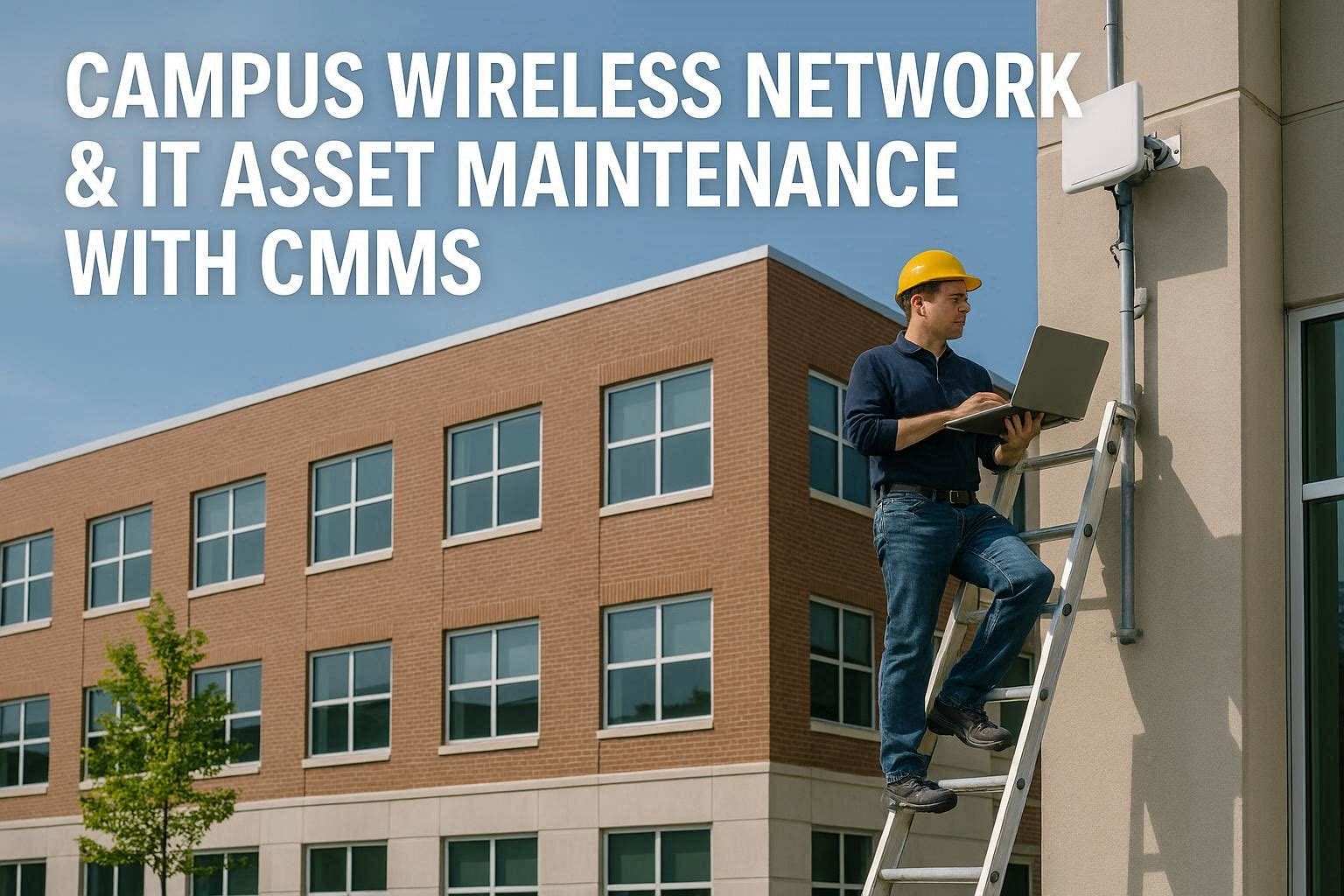
Pole-mounted or building-mounted small cells provide coverage density. Outdoor units face weathering, corrosion, and alignment drift. PM includes annual visual inspection, signal strength verification, mounting hardware torque check, and weatherproofing seal inspection.
Weathering inspectionSignal verificationMount torque checkSeal integrity
02
Edge Computing Nodes
Edge nodes process data locally for latency-sensitive applications. They contain servers, switches, and UPS units in environmentally controlled enclosures. PM includes filter replacement, UPS battery testing, thermal management verification, and firmware updates.
Filter replacementUPS battery testThermal checkFirmware tracking
03
Distributed Antenna Systems (DAS)
In-building DAS provides indoor coverage for large campus buildings — libraries, student unions, research facilities. Components include head-end units, fiber distribution, and remote antennas. PM covers signal level testing, fiber connection inspection, and amplifier calibration.
Signal level testingFiber inspectionAmplifier calibrationCoverage mapping
04
Fiber and Power Infrastructure
Underground fiber conduits, junction boxes, power feeds, and backup generators supporting connectivity infrastructure. These assets share maintenance needs with traditional campus utilities — but are often invisible to the facilities team because they're tracked by IT in separate systems.
Junction box inspectionConduit integrityPower feed testingBackup generator PM
One Platform for Traditional Campus Assets and 5G Infrastructure
Stop tracking connectivity equipment in spreadsheets. OxMaint manages 5G assets alongside HVAC, electrical, and plumbing — all in one asset hierarchy with unified PM scheduling and reporting.
Frequently Asked Questions
Why should campus 5G infrastructure be in a CMMS instead of IT ticketing?
IT ticketing systems track incidents — something broke, someone fixes it. CMMS tracks assets — what you have, what condition it's in, when it needs maintenance, and what it costs over its lifecycle. 5G infrastructure is physical equipment with predictable degradation curves. Treating it like a software incident means you only discover failures after they impact users. CMMS prevents failures before they occur — the same way it prevents HVAC breakdowns.
How does OxMaint track 5G assets alongside traditional campus infrastructure?
OxMaint's asset hierarchy is flexible — 5G infrastructure registers under the same portfolio structure as HVAC, electrical, and plumbing. A small cell antenna on Building A is an asset under Building A, with its own PM schedule, failure codes, and cost tracking. The facilities director sees all campus assets — traditional and connectivity — in one dashboard.
Start a free trial to see the unified asset view.
What preventive maintenance do small cell antennas actually need?
Outdoor small cells need annual visual inspection (corrosion, physical damage, mounting integrity), signal strength verification against baseline, weatherproofing seal inspection, and power connection testing. Indoor small cells need less frequent physical inspection but still require signal coverage verification and firmware management. OxMaint generates these as recurring PM work orders with mobile checklists.
Can CMMS integrate with network monitoring systems for 5G?
Yes — OxMaint supports API integration with network management platforms. When a monitoring system detects signal degradation or a node going offline, it can push an alert to OxMaint which auto-generates a corrective work order. This bridges the gap between IT monitoring (what's happening) and facilities maintenance (who fixes it and when).
Book a demo to discuss your network monitoring integration.
Campus Connectivity Is Physical Infrastructure. Maintain It Like Physical Infrastructure.
5G small cells, edge nodes, DAS antennas, and fiber infrastructure are assets with lifecycles, maintenance needs, and failure modes. OxMaint brings the same preventive maintenance discipline your campus applies to HVAC and elevators to the connectivity infrastructure that students, faculty, and researchers depend on every day.