Campus Fire Door Annual Inspection Checklist (NFPA 80)

By Stephen King on June 5, 2026

campus-fire-door-annual-inspection-checklist-nfpa

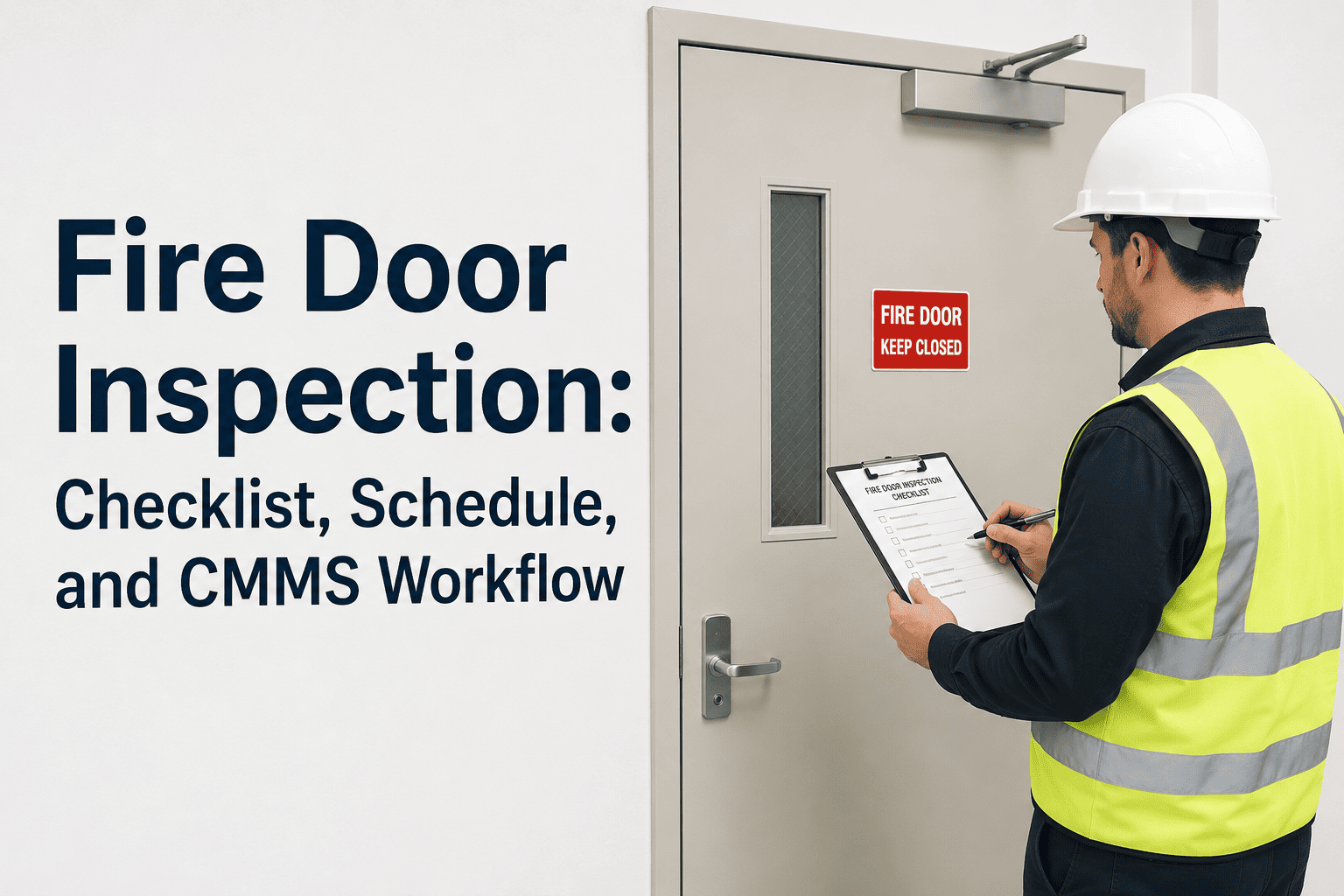
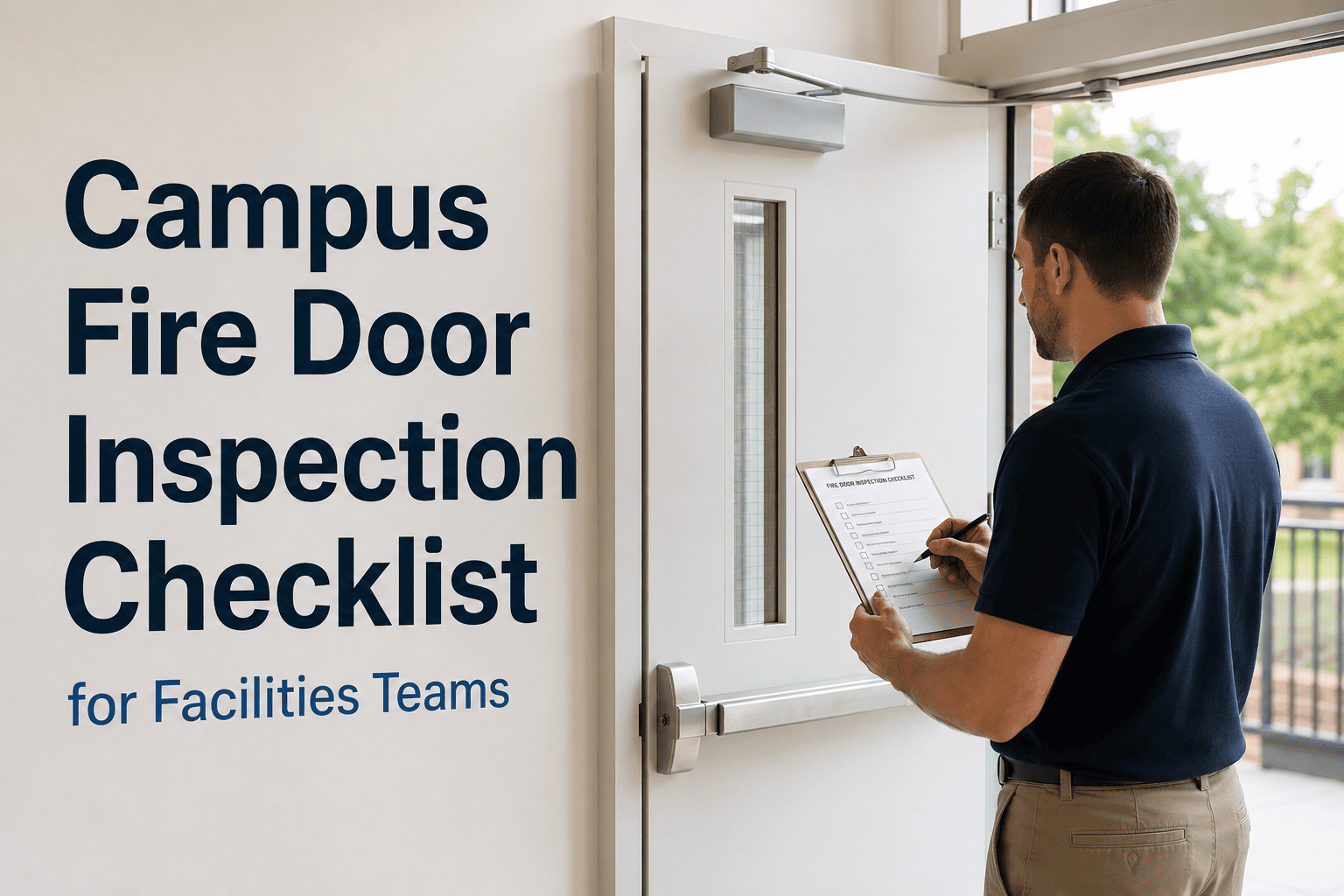
Campus fire doors are life-safety assets — not just architectural hardware. Under NFPA 80, every fire door assembly in a university or college building must receive a documented annual inspection covering labels, clearances, latching, closers, and glazing integrity. A missed inspection or an undocumented deficiency can result in accreditation findings, AHJ citations, and — most critically — a door that fails to hold during a fire event. Most campus facilities teams still manage fire door inspection records across paper binders, shared drives, and disconnected spreadsheets, making it nearly impossible to demonstrate system-wide compliance when the authority having jurisdiction (AHJ) arrives. Sign Up Free to bring your campus fire door inspection program into a structured, auditable platform, or Book a Demo to see how OxMaint manages NFPA 80 compliance documentation across every building in your portfolio.

Manage Campus Fire Door Inspections in One Platform

OxMaint digitizes your NFPA 80 annual inspection workflow — assign inspections by building, track deficiencies, and produce audit-ready reports for every fire door on campus.

Why It Matters

The Compliance Stakes of NFPA 80 on a University Campus

Critical
Life Safety Failure Risk
A fire door that fails to latch, close, or hold its rating during a fire event directly threatens occupant egress and compartmentalization — the core function NFPA 80 is designed to protect.
Critical
AHJ and Accreditation Findings
Authorities having jurisdiction and accreditation bodies expect complete annual inspection records for every fire door assembly. Gaps in documentation produce citations regardless of actual door condition.
High
Deferred Deficiency Liability
Undocumented deficiencies — missing labels, broken closers, improper clearances — accumulate across large campus portfolios when inspection records are paper-based or manually managed.
High
Inspection Scale Complexity
A single university campus may have hundreds or thousands of fire door assemblies across dormitories, labs, libraries, and administrative buildings — impossible to track reliably without a purpose-built platform.
NFPA 80 Annual Inspection

Campus Fire Door Annual Inspection Checklist — 11-Point NFPA 80 Framework

OxMaint pre-loads fire door inspection templates aligned to the NFPA 80 annual inspection requirements. Each inspection point is assigned, completed, and closed with a timestamped record — linked to the door's asset history and building location.

01
Fire Door Label Verification
Confirm the fire rating label is present, legible, and permanently affixed to the door leaf and frame. Labels must not be painted over, obscured, or damaged. Missing or illegible labels constitute an immediate deficiency requiring corrective action before the door is returned to service.
02
Door Clearances — Top, Bottom, Sides
Measure and document clearances between the door leaf and frame at the top, latch side, hinge side, and meeting stile (pairs). NFPA 80 specifies maximum clearances; undercut at the bottom must not exceed the listed value. Any gap outside tolerance is a rated deficiency.
03
Self-Closing Device Function
Verify the door closer or self-closing mechanism fully returns the door to the latched position from any open angle without manual assistance. Doors that do not fully close under closer force alone fail this inspection point. Document closer condition and any adjustment or replacement needed.
04
Positive Latching Confirmation
Confirm the latch bolt positively engages the strike plate when the door is released from the open position. Fire doors must latch without manual manipulation. Check latch throw length, strike alignment, and latch operation. Document fail status if the door does not positively latch.
05
Door Leaf and Frame Condition
Inspect the door leaf and frame for warping, holes, breaks, damage, or field modifications that compromise the fire rating. Unauthorized penetrations, cutouts, or hardware modifications that are not listed for the assembly are NFPA 80 deficiencies requiring documented corrective action.
06
Glazing and Vision Panel Integrity
Verify that any glazing in the door assembly is fire-rated glazing with a visible label and is free of cracks, chips, or damage. Non-rated glazing in a fire door assembly is a cited deficiency. Confirm glazing retainer condition and that there are no gaps between glazing and frame.
07
Hardware — Hinges, Pivots, and Bearings
Inspect all hinges and pivot hardware for proper fire-rated listing, secure mounting, and signs of wear or damage. Hinge count must meet the listing requirements for the door height and weight. Any missing, broken, or non-listed hinge hardware must be documented and corrected.
08
Coordinator Function (Paired Doors)
For double-door assemblies with coordinators, verify the coordinator ensures the inactive leaf closes before the active leaf to allow proper latching sequence. Coordinators that allow incorrect sequence or that are missing on paired fire door assemblies must be documented and corrected.
09
Smoke and Intumescent Seals
Inspect intumescent and smoke seal strips on the door edge and frame for continuity, adhesion, and damage. Gaps, missing sections, or deteriorated seals compromise both smoke containment and the fire-resistance rating of the assembly. Document condition and any required seal replacement.
10
Door Bottom and Threshold Seal
Verify the door bottom condition — automatic door bottoms, drop seals, or threshold seals must be functional, properly aligned, and free of damage. Confirm clearance between door bottom and threshold or floor covering meets listed tolerances for the assembly.
11
Hold-Open Device Compliance
Confirm that no unapproved hold-open devices (wedges, chains, door stops) are in use. If listed electromagnetic hold-open devices are present, verify they release upon fire alarm activation. Unauthorized hold-open devices are an immediate deficiency under NFPA 80 and require documented corrective action.
OxMaint Workflow

How OxMaint Manages Campus Fire Door Compliance

Step 1
Asset Import by Building
Every fire door assembly is entered as a tracked asset with location, door number, fire rating, and assembly type. OxMaint supports campus-scale portfolios with building-level filtering and site dashboards.
Step 2
Annual Inspection Assignment
NFPA 80 annual inspection work orders are generated and assigned to facilities technicians by building or zone. Each work order contains the 11-point checklist with pass/fail fields and deficiency documentation.
Step 3
Deficiency Tracking and Corrective Actions
Any failed inspection point automatically generates a corrective maintenance work order linked to the door asset. Deficiency status, corrective action taken, and return-to-service authorization are all documented in the same record.
Step 4
Audit-Ready Compliance Reports
When the AHJ or accreditation surveyor requests fire door inspection records, OxMaint generates a complete compliance report by building, inspection date, and deficiency resolution status — in minutes, not hours.

Replace Paper Fire Door Logs with a Compliance-Ready Platform

OxMaint gives campus facilities and life safety teams structured inspection workflows, deficiency tracking, and complete NFPA 80 documentation for every fire door assembly — across every building.

Documentation Standards

What NFPA 80 Requires in Campus Fire Door Inspection Records

Documentation Element NFPA 80 Requirement OxMaint Support
Inspection date and inspector identity Required for each annual inspection record Auto-captured on work order close
Door assembly identification Location, door number, fire rating Linked to asset record with building location
Pass/fail result per inspection point Each of the 11 NFPA 80 inspection items Structured checklist fields with result capture
Deficiency description Nature and location of each deficiency found Free-text deficiency field per failed item
Corrective action documentation Action taken, parts replaced, return-to-service Linked corrective work order with closure record
Record retention Minimum one inspection cycle; AHJ may require longer Unlimited historical record retention by asset
Frequently Asked Questions

Campus Fire Door Annual Inspection — Common Questions

What does NFPA 80 require for annual fire door inspections on a university campus?
NFPA 80 Section 5.2 requires an annual inspection of every fire door assembly covering 11 specific items including labels, clearances, latching, closing function, glazing, hardware, and seals. All inspections must be documented with results and deficiency corrective actions retained as permanent records. Sign Up Free to deploy NFPA 80-aligned inspection checklists across your campus.
How many fire doors does a typical university campus have?
Large university campuses commonly have hundreds to several thousand fire door assemblies across residence halls, academic buildings, laboratories, libraries, and administrative facilities. Managing annual inspections at this scale requires a platform like OxMaint — not spreadsheets. Book a Demo to see campus-scale portfolio management in action.
What happens if a fire door fails the annual NFPA 80 inspection?
Any door that fails an inspection point must have the deficiency documented and corrective action completed and recorded before the door can be returned to service. OxMaint automatically generates a corrective work order for each failed item, keeping the entire deficiency-to-resolution workflow in one auditable record.
Who is qualified to perform NFPA 80 fire door annual inspections on campus?
NFPA 80 requires inspections be performed by individuals with knowledge and understanding of the operating components of the type of door being inspected. Many campuses use certified facilities staff, third-party fire door inspection contractors, or DHI-certified inspectors. All inspection results must be documented regardless of who performs them.
Can OxMaint manage fire door inspections across multiple campus buildings or sites?
Yes. OxMaint supports multi-building and multi-site asset management with building-level filtering and system-wide dashboards. Each fire door asset is tracked by location, and compliance status is visible across all campus facilities from a single view. Sign Up Free to configure your campus building structure.
How does OxMaint help during an AHJ fire door inspection audit?
OxMaint generates complete compliance reports filtered by building, inspection date range, door asset, and deficiency status — in minutes. When a surveyor requests fire door inspection records, campus facilities teams can respond with a full documented history rather than searching paper binders or disconnected spreadsheets. Book a Demo to see audit report generation live.

Your Campus Fire Doors Deserve Better Than a Spreadsheet

OxMaint gives campus facilities and life safety teams a purpose-built platform for NFPA 80 annual fire door inspections — structured checklists, deficiency tracking, and complete audit-ready documentation for every door assembly.

Share This Story, Choose Your Platform!