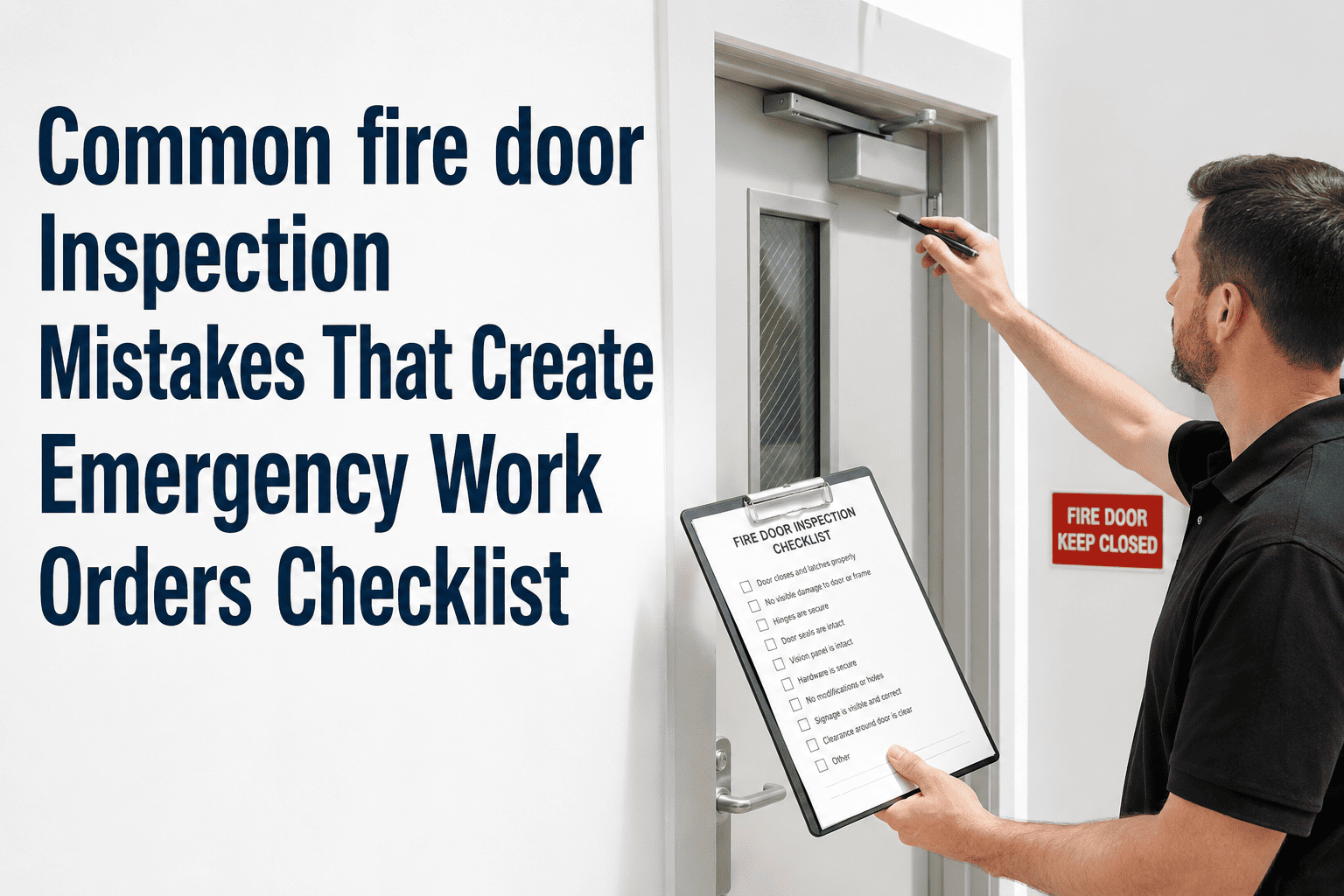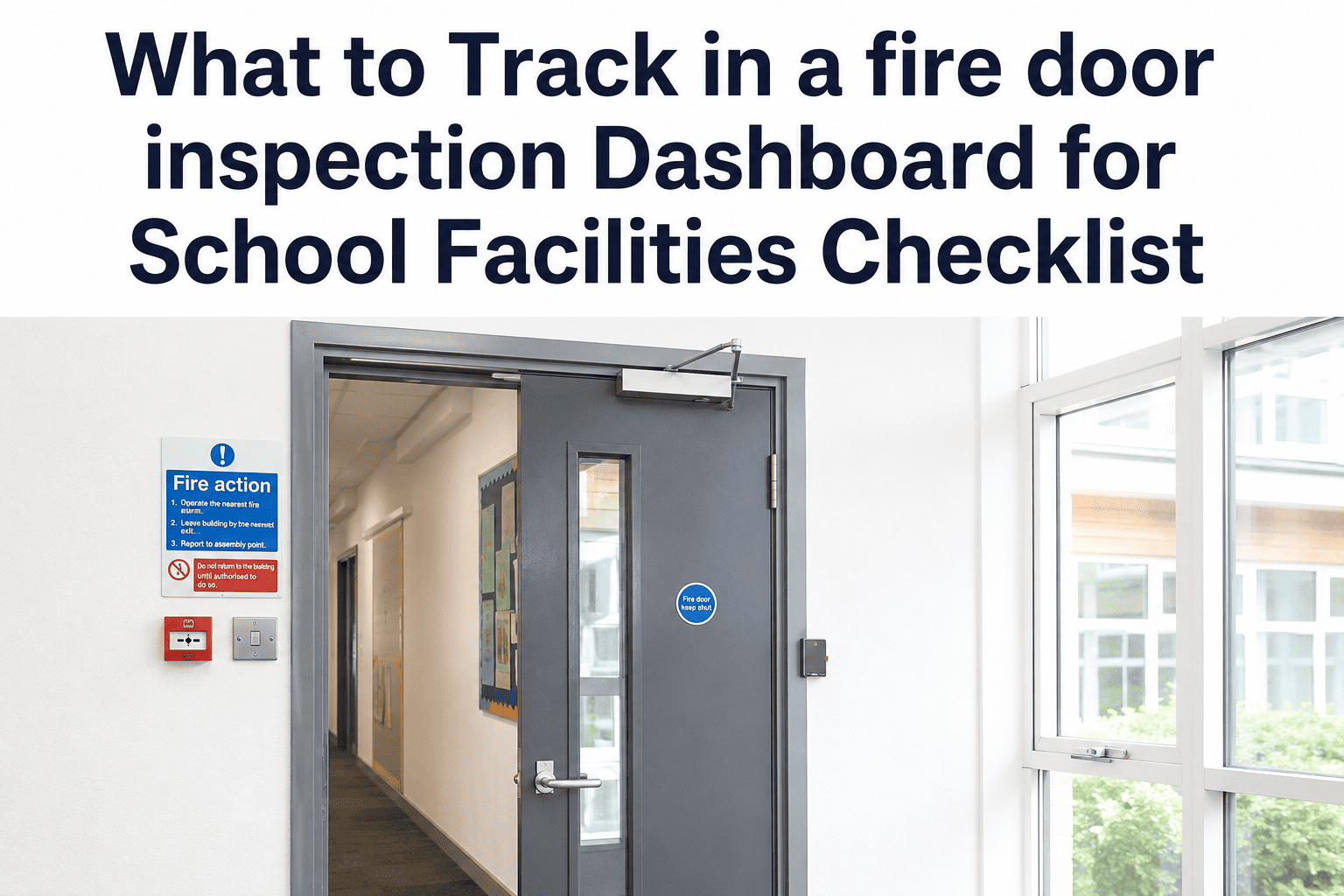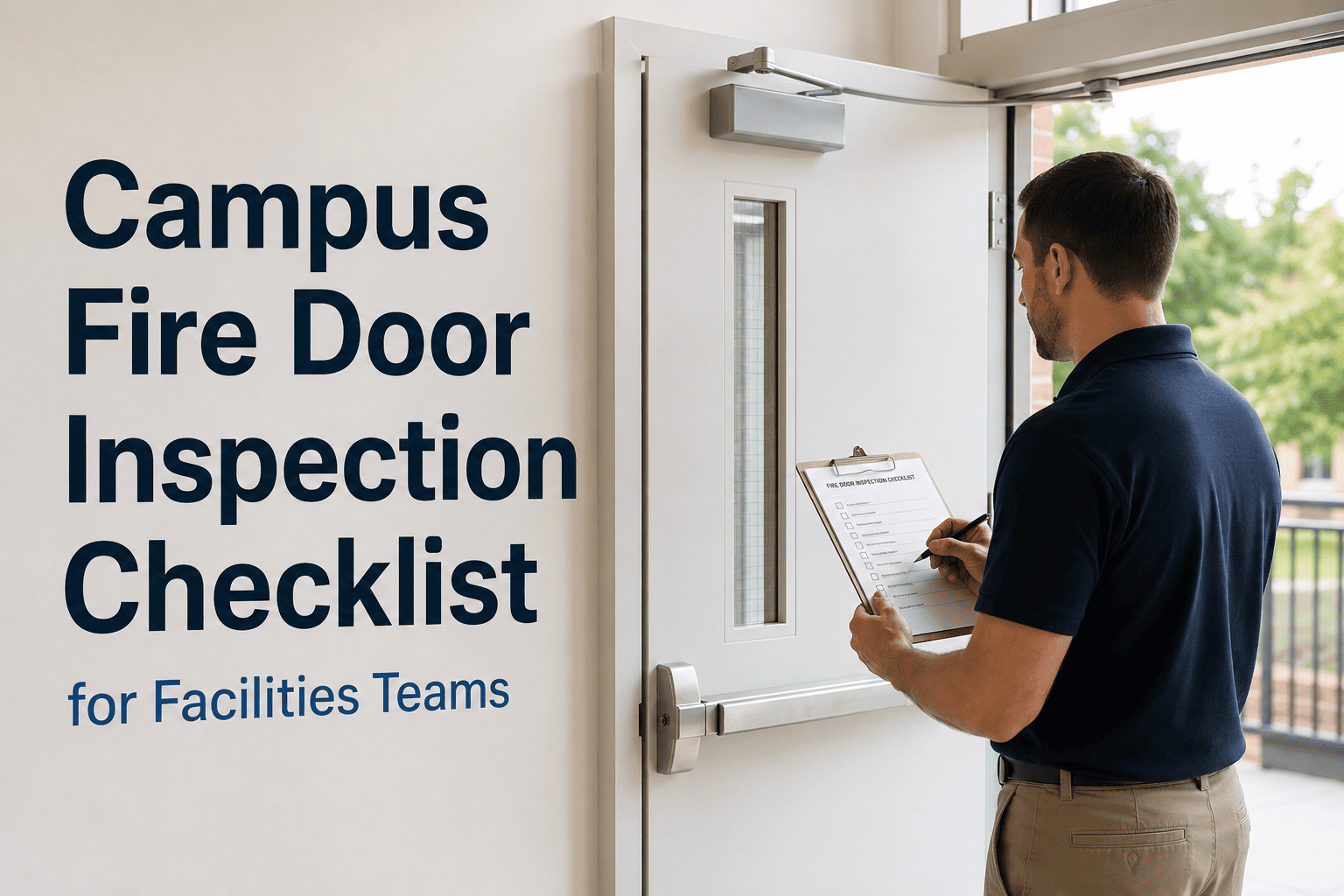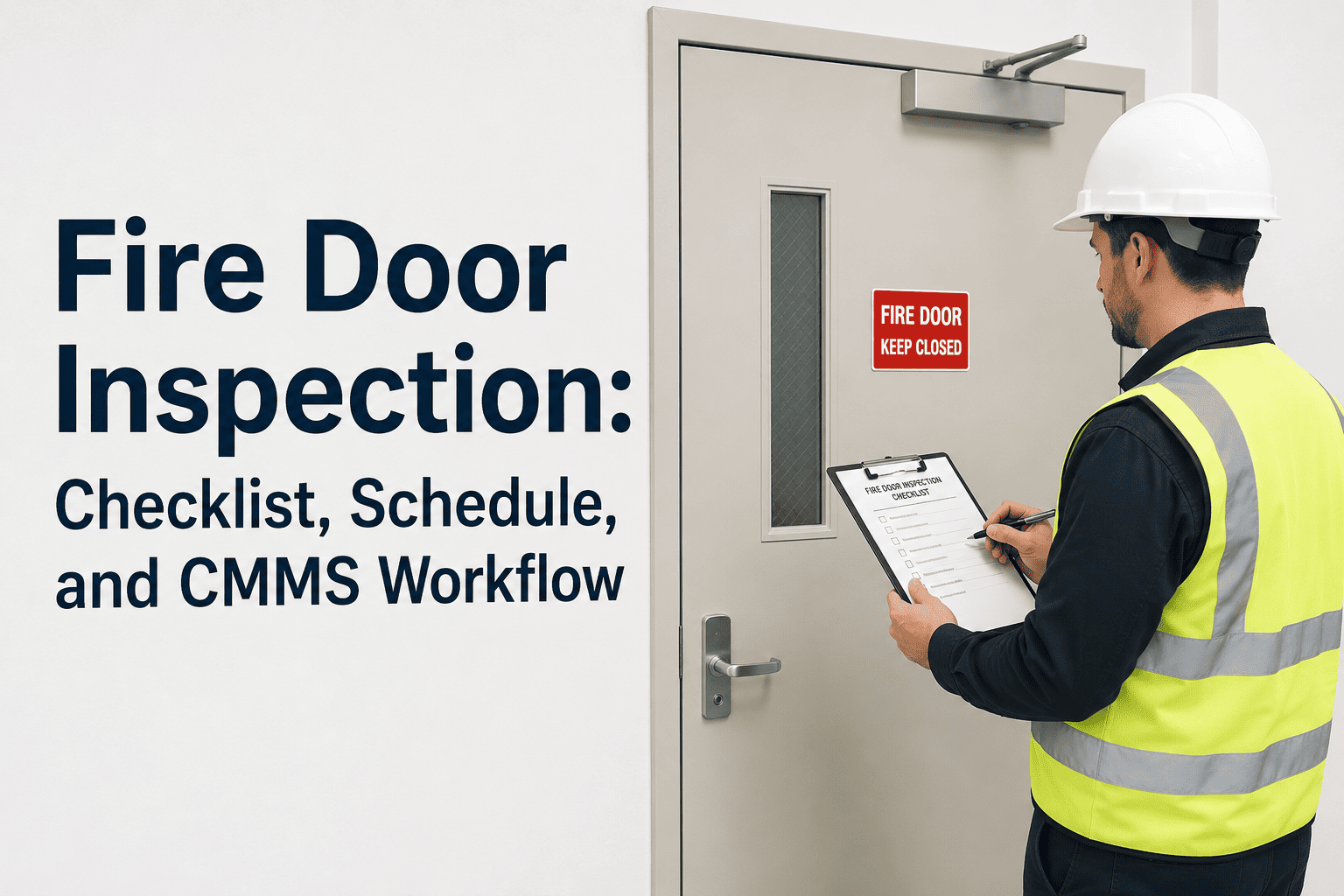
Every fire door in a school building has exactly one job: close, latch, and hold back smoke and flame long enough for everyone to get out safely. NFPA 80 requires every fire-rated door assembly to be inspected at least once a year against a thirteen-point checklist covering labels, clearances, hardware, and closing performance. Most violations an authority having jurisdiction finds during a walkthrough are not dramatic equipment failures — they are propped-open doors, painted-over labels, and inspection records nobody can produce. This checklist walks through every point on that inspection, how often each check needs to happen, and how to run the whole programme as a scheduled workflow inside OxMaint.
1. Fire Rating Label Verification
Every fire-rated door assembly must carry a permanent, factory-applied label stating its fire-resistance rating. The label is the only proof the assembly is what the building's life safety plan says it is — if an inspector can't read it, the door is treated as unrated.
2. Door Leaf and Frame Condition
A fire door is only as good as the assembly around it. Damage to the leaf, frame, or seals can break the fire rating even when the door still looks like it closes normally.
3. Hardware, Latching, and Closing Performance
Door closer and latch failures cause the majority of fire door inspection failures nationwide. A door that swings shut but doesn't latch fails just as completely as a door that never closes at all.
4. Clearances, Undercut, and Glazing
Clearances determine whether smoke can migrate around the edges of a closed door. NFPA 80 sets a maximum gap at every edge, measured with a calibrated gauge rather than judged by eye.
5. Hold-Open Devices and Field Hardware
A fire door that's propped open is a fire door that doesn't exist for the few minutes it matters most. NFPA 80 only permits one type of hold-open device, and it isn't a wedge.
6. Inspection Schedule
NFPA 80 sets the annual minimum, but most school facilities teams layer a lighter monthly visual check on top so a propped door or broken closer doesn't sit unnoticed for a year.
| Frequency | Performed By | What's Checked | Documentation |
|---|---|---|---|
| Monthly visual check | Facility or custodial staff, no certification required | Door closes and latches, isn't propped open, no visible damage | Visual check log entry |
| Annual certified inspection | Qualified person — trained staff or certified contractor | Full thirteen-point NFPA 80 checklist | Signed report, retained 3+ years |
| Post-incident inspection | Qualified inspector, triggered by the event | Re-verify rating integrity after impact, fire, or nearby construction | Incident work order and corrective report |
7. CMMS Workflow
A checklist on paper still depends on someone remembering to run it. In OxMaint, the same thirteen points become a four-step workflow that runs itself.