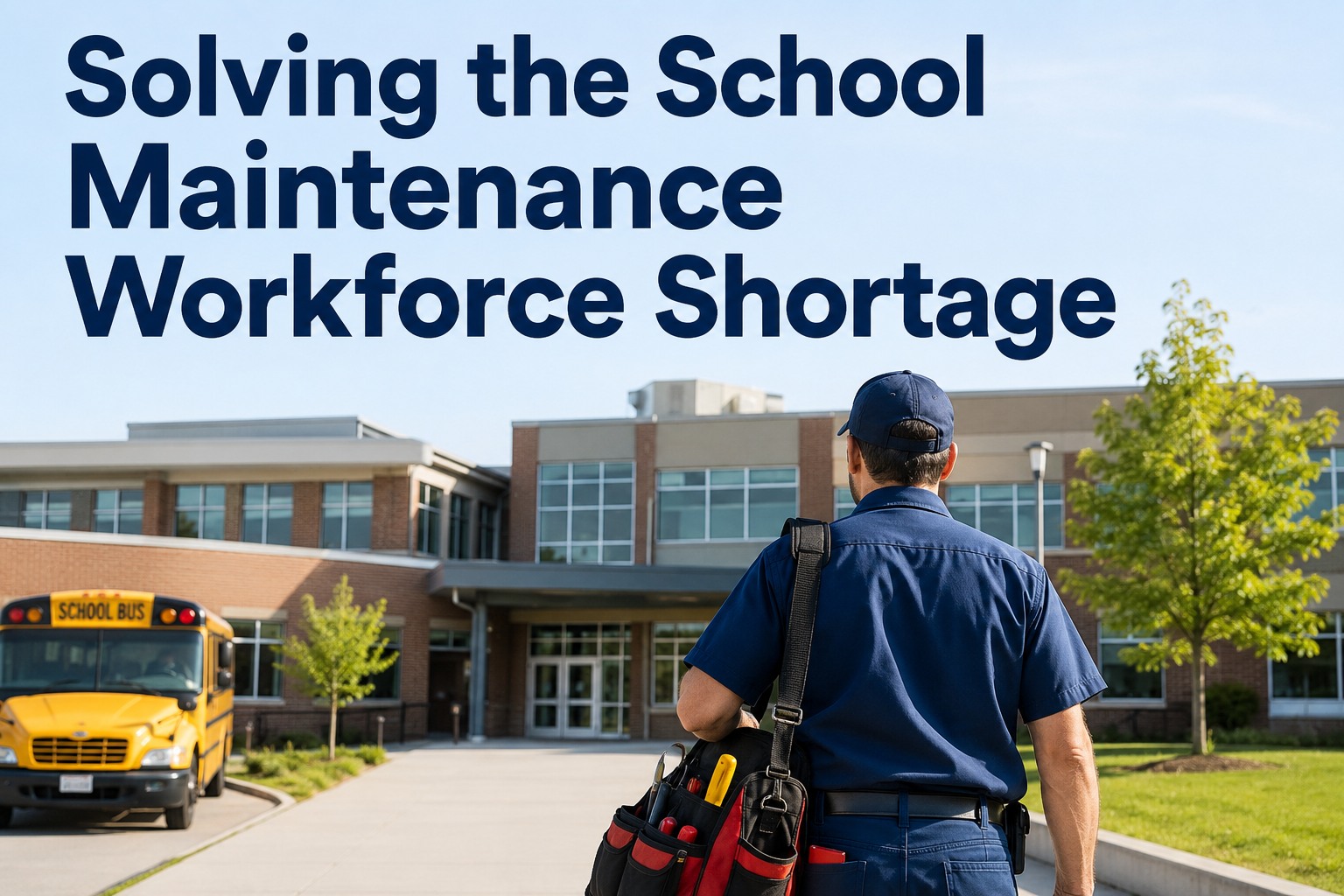
Campus facilities teams are running on fumes. One in four technician positions sits vacant across U.S. higher education, and the technicians who remain are absorbing workloads that were designed for teams twice their size. Deferred maintenance backlogs grow quietly while leadership debates budget, and every reactive breakdown costs nearly five times more than a planned fix. The math is brutal — and the traditional answer of hiring more staff is no longer available to most institutions. Start a free trial with Oxmaint or book a demo today to see how modern CMMS turns a smaller team into a higher-output operation.
Campus Maintenance Workforce Crisis: How CMMS Fills the Gap
With 23% vacancy rates across education facility teams, every technician must produce at their absolute ceiling. Oxmaint's AI-powered CMMS eliminates wasted motion, automates routine scheduling, and turns a lean crew into a high-output operation — without adding headcount.
What the Campus Workforce Crisis Actually Means
The campus maintenance workforce shortage is not a future risk — it is a present operational condition. Facilities departments across universities and school districts are functioning with skeleton crews, routing reactive breakdowns ahead of planned maintenance, and losing institutional asset knowledge every time an experienced technician leaves. The problem compounds itself: understaffed teams cannot complete preventive maintenance on schedule, which accelerates equipment deterioration, which creates more emergency breakdowns, which absorbs the remaining capacity — a cycle that no amount of overtime can break without a structural fix. Start a free trial with Oxmaint and see how smart automation changes this equation, or book a demo to walk through a live campus scenario.
Six Ways Understaffing Breaks Campus Operations
When the team is stretched, preventive maintenance is the first casualty. Reactive calls get priority. PM backlog silently grows until equipment fails at the worst possible moment — mid-semester, peak HVAC load, or during a high-profile campus event.
Experienced technicians retire carrying 20 years of asset knowledge in their heads. No digital record of failure patterns, preferred repair approaches, or quirky equipment behavior. When they leave, the next breakdown on that asset starts from zero.
Without automated routing, facility managers spend the first two hours of every morning manually sorting work requests, calling technicians, and chasing status updates — time that should be spent on planning, vendor management, and compliance.
Gaps in staff coverage get filled with emergency contractor calls at premium rates. Without visibility into which assets are consuming most contractor time, there is no data to make the case for targeted hire or equipment replacement.
Paper and spreadsheet systems have no automatic escalation. Deferred work orders age silently. Leadership cannot see the risk accumulation until a failure makes the backlog visible — usually at the worst time and highest cost.
Inspection records, safety certifications, and regulatory filings require staff hours to compile. Understaffed teams deprioritize documentation until an audit forces a scramble — creating liability exposure and audit findings that damage institutional reputation.
How CMMS Multiplies Output From a Smaller Team
The answer to the workforce crisis is not replacing people — it is eliminating the invisible overhead that consumes their productive hours. Oxmaint's campus CMMS removes coordination friction, automates PM scheduling, and surfaces the right information to every technician before they set foot on a job. A team of 8 with Oxmaint consistently outperforms a team of 12 without it. See this in action with a free trial, or book a demo and bring your specific campus scenario.
Every incoming request is automatically classified, prioritized, and assigned to the right technician based on skill set, current workload, and location on campus. No manual triage. No morning dispatch meetings.
Preventive maintenance runs on calendar intervals, meter readings, or production hours — automatically generating work orders with attached checklists, parts lists, and asset history. PMs do not get forgotten when the team is overwhelmed.
Technicians receive assignments on their phone, view full asset history, log completion with photos, and request parts — all from the field. No return trips to the office. No end-of-day paperwork stacks. Wrench time increases by an average of 30%.
Every repair, inspection, and failure is recorded against the asset record — permanently. When a senior technician retires, their 20 years of equipment knowledge stays in the system, searchable by the next person who works on that asset.
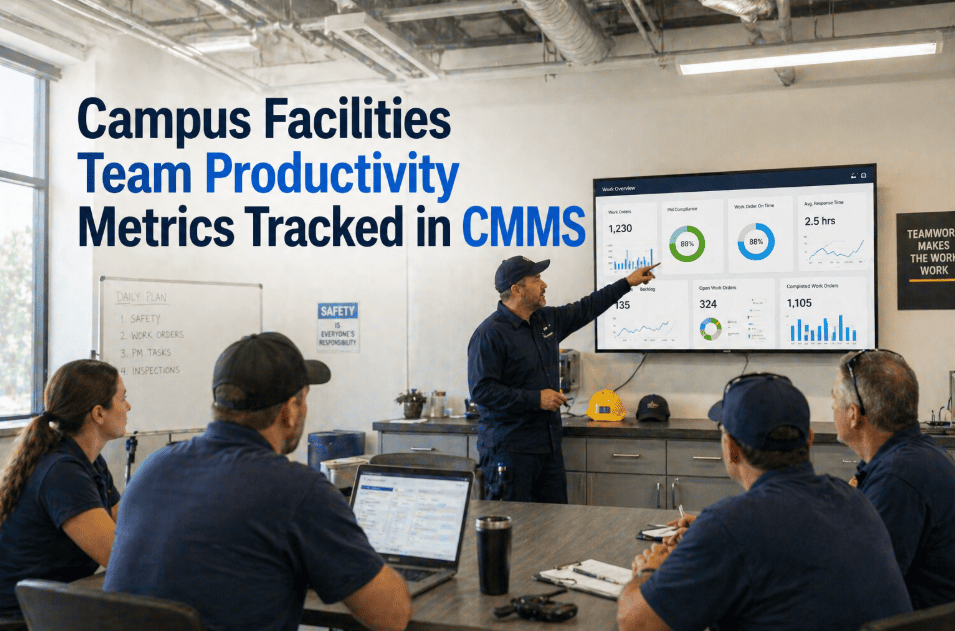
Leadership sees every open work order, its age, priority, and assigned technician in real time. Backlog cannot grow invisibly. Risk is surfaced before it becomes a failure — enabling proactive resource decisions instead of reactive scrambles.
External contractors receive work orders through the same platform. Their time, parts, and costs are logged to the asset record. Leadership sees exactly which assets drive contractor spend — and can make data-backed decisions about hiring vs. outsourcing.
Understaffed Team: Without CMMS vs. With Oxmaint
The Productivity Gains Are Measurable
Mobile-first workflows eliminate back-office trips and end-of-shift paperwork. Every hour saved on admin is an hour applied to actual maintenance.
Automated scheduling ensures PMs are not skipped when the team is short. Compliance holds even with 20–25% fewer staff than the prior year.
Preventive maintenance completed on schedule means fewer emergency breakdowns — and fewer premium-rate contractor calls to fill coverage gaps.
Most campus teams are generating automated PM work orders and eliminating manual dispatch within their first week on the platform.
Frequently Asked Questions
How does CMMS help a campus facilities team with fewer than 6 technicians?
Small teams benefit most from automation because every hour of wasted coordination is a larger percentage of total capacity. Oxmaint's automated dispatch, mobile work orders, and self-scheduling PM engine eliminate the administrative burden that consumes 30–40% of a small team's time. A five-person team using Oxmaint consistently matches the output of an eight-person team running on paper and spreadsheets.
Can CMMS help prioritize work when the team is completely overwhelmed?
Yes — and this is where the system's value is most visible. Oxmaint's priority engine classifies every incoming work request by urgency, asset criticality, and regulatory risk. When capacity is constrained, the system surfaces the highest-consequence work first and flags deferred items that are approaching failure risk thresholds. Leadership sees the full backlog ranked by risk, not by submission date — enabling smarter triage under pressure.
How quickly can a small campus team get started without a dedicated IT resource?
Oxmaint is designed for rapid deployment without IT dependency. Most campus teams import their asset list and generate their first automated work orders within the first week. The mobile app requires no training — field technicians typically complete their first digital work order in a single shift. Oxmaint's implementation team handles data migration, template setup, and crew onboarding at no additional cost.
Does using CMMS reduce the need for emergency contractor calls?
Significantly. Emergency contractor calls are driven primarily by two factors: unplanned equipment failures caused by missed preventive maintenance, and coverage gaps when in-house staff cannot respond quickly enough. CMMS addresses both. Automated PM scheduling prevents the equipment failures that drive most emergency calls. Real-time workload visibility allows supervisors to identify coverage gaps in advance and schedule contractor support proactively — at planned rates, not emergency premiums.
Your Team Is Already Doing More With Less. Now Give Them the Right Tool.
Oxmaint is built for campus facilities teams that are running lean and need every technician to operate at full output. From automated PM scheduling to mobile-first dispatch, the platform removes the friction that consumes your crew's capacity — without any complex implementation or IT involvement. Most campuses are generating real results within their first two weeks.