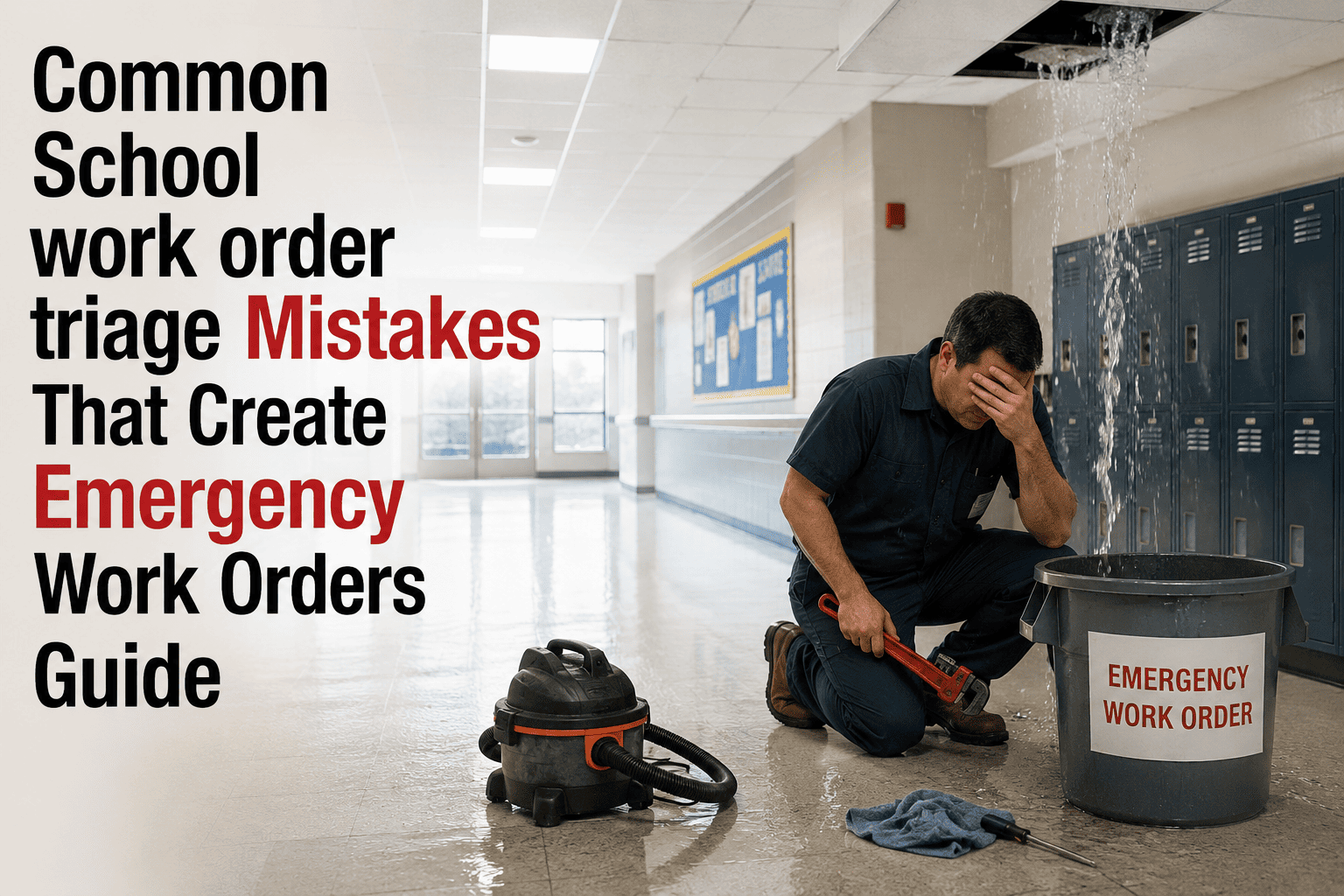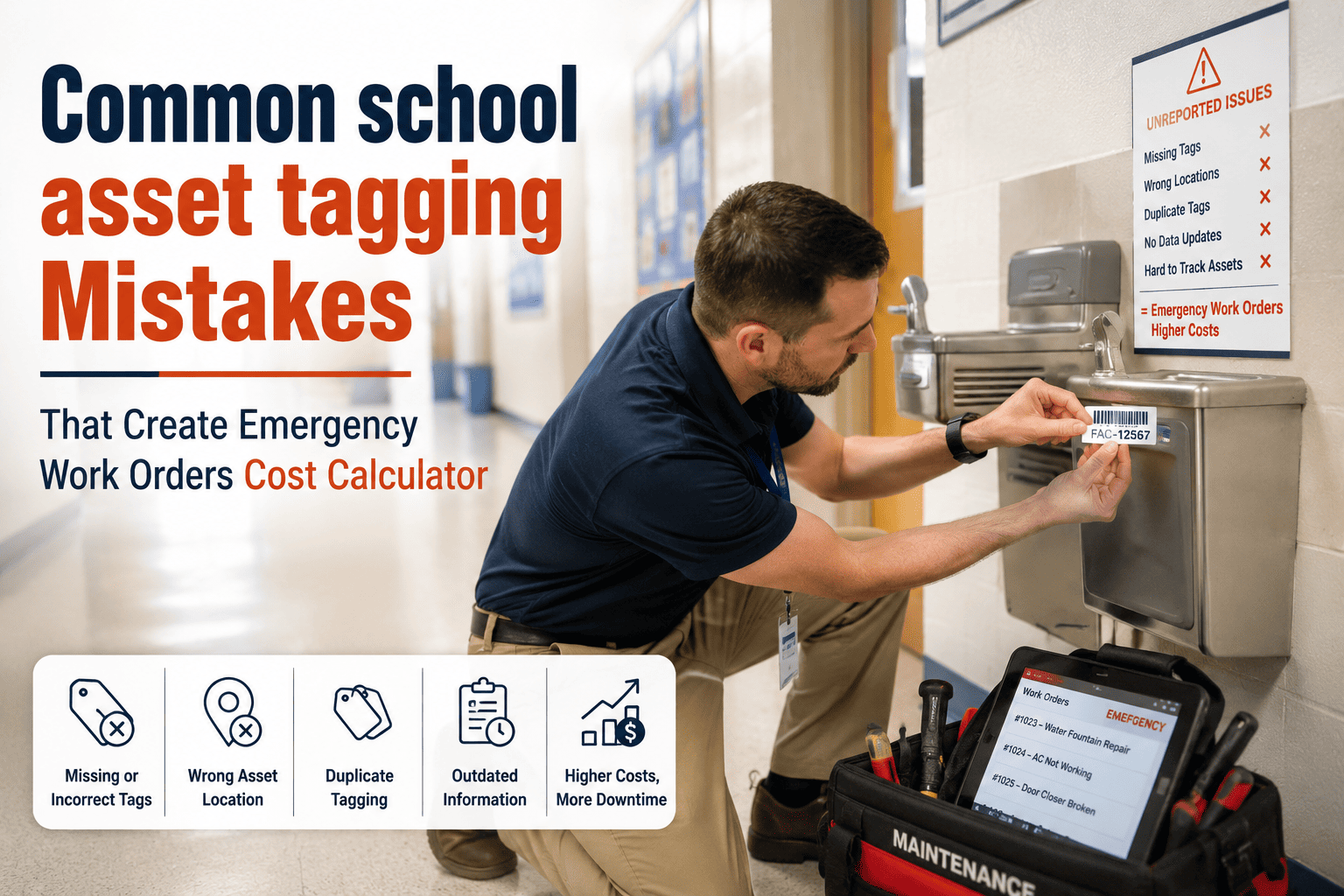
A facilities team in a mid-size district once traced an $8,400 emergency repair back to a single cause: a clogged air filter that hadn't been checked in four months. The heat exchanger overheated, triggered a safety shutdown, and the school spent another $12,000 on temporary heaters while the unit was fixed. Almost every emergency HVAC work order traces back to one of a handful of small, repeated mistakes — and every one of them is preventable with the right schedule in OxMaint.
Common Classroom HVAC Mistakes That Create Emergency Work Orders
Six recurring mistakes turn small, cheap problems into classroom closures and five-figure repair bills. Here is how to spot and stop each one.
Letting Filter Changes Slip Past Their Interval
A 90-day filter interval that quietly stretches to 130 days is the single most common root cause of classroom comfort complaints. As the filter loads up, airflow drops, the system works harder, and energy use climbs 15-30% before anyone notices a problem.
The fix is simple: track filter age per unit and trigger a work order automatically when the interval is reached — not when a teacher complains.
Treating an Aging Unit Like a New One
A 20-year-old air handler with a history of repeat faults should not sit on the same service schedule as a 3-year-old unit. Without condition scoring, aging equipment stays on standard intervals until it fails — usually during the first hot or cold week of the term.
Condition scores let teams move fragile units to higher-frequency checks before they become the call that shuts down a wing of the building.
Starting Seasonal Prep After the First Hot or Cold Week
When cooling checks begin after the first hot week, every contractor in the area is dispatching to twenty schools at once. A 4-hour summer service that should have happened in July becomes a 3-day wait in September.
Seasonal readiness should complete 30-45 days before demand rises — scheduled automatically, not triggered by the weather.
Stop These Mistakes Before They Become Work Orders
OxMaint tracks filter age, condition scores, and seasonal readiness automatically — so the schedule catches what memory misses.
Quick Fixes Without Diagnosing the Root Cause
Under time pressure, a ceiling tile gets replaced before anyone traces the leak above it, or an actuator gets swapped without finding out why it failed. These quick fixes get the classroom usable by morning, but the underlying cause returns within weeks.
Logging every repair against the same asset reveals repeat faults — a unit that has failed five times in a year is one unresolved problem, not five separate ones.
Ignoring Blocked Vents and Obstructed Diffusers
Furniture, display boards, and storage pushed against supply vents are one of the most common — and most overlooked — causes of uneven classroom temperatures and rising CO2 levels. It looks like a layout issue, not an HVAC issue, so it rarely gets reported.
Regular classroom inspections that check vent clearance alongside HVAC performance catch this before it shows up as a comfort complaint or a CO2 alert.
No Documentation Trail Across Technicians and Buildings
If a unit's repair history lives in paper files, emails, and one technician's memory, no one can see that the same air handler has failed five times in twelve months. When that technician is out, the next person starts from zero.
A shared digital history attached to every asset means any technician, on any day, has the full context before they even arrive.
Prevention Cost vs Emergency Cost
| Mistake | Prevention Cost | Emergency Cost |
|---|---|---|
| Missed filter change | $25-$75 per filter | $8,400+ (heat exchanger) |
| No condition scoring | Included in PM schedule | $12,000-$35,000 (boiler) |
| Late seasonal prep | 4 hrs per unit, standard rate | 3-day emergency wait, premium rate |
| Untracked repeat faults | Logged at no extra cost | 3-5x repair cost over time |
Frequently Asked Questions
How quickly can a district fix these mistakes once they're identified?
Filter tracking and seasonal scheduling can be set up within a week. Condition scoring and repeat-fault tracking build value over the first few months. Start a free trial to begin tracking today.
Do these mistakes apply to universities as well as K-12 schools?
Yes. The same patterns appear in residence halls, labs, and gyms — often at higher density and with more units to track across more buildings.
What is the easiest mistake for a small team to fix first?
Filter tracking. It requires no new equipment, has the clearest cost-benefit, and prevents the largest share of comfort complaints and energy waste. Book a demo to see filter scheduling set up in minutes.
How does OxMaint help avoid the documentation gap mentioned above?
Every repair, part, and technician note is logged against the specific asset, so the full history travels with the unit regardless of who services it next.
Catch the $50 Problem Before It Becomes a $5,000 Emergency
Give your team automated filter tracking, condition scoring, seasonal schedules, and a full repair history for every HVAC asset on campus.