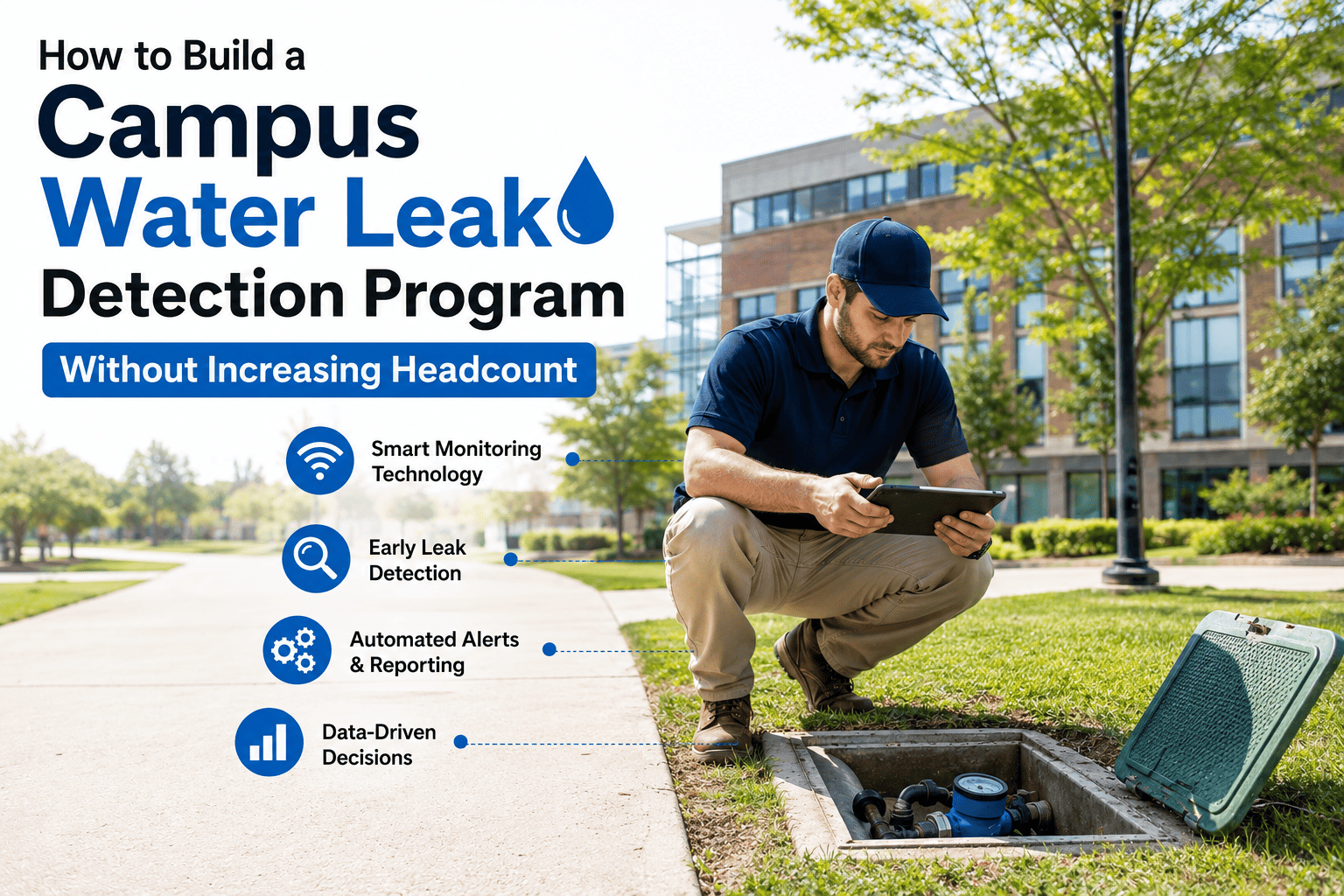
A single overnight pipe burst in an unoccupied residence hall can flood three floors before a custodian walks past it the next morning — and most campus facilities teams are already stretched too thin to add a dedicated leak-monitoring role. The good news is that a working campus water leak detection program does not require new hires; it requires wireless sensors, automated escalation, and a maintenance system that turns every alert into an assigned work order on its own. Schools facing a national K-12 maintenance backlog above $15 billion cannot solve water risk by adding people, so the model below is built entirely around automation and the staff you already have. You can Sign Up Free and route your first sensor alerts into live work orders the same week.
School & Higher-Ed Facilities Teams
Catch the Leak at 2 AM Without Hiring a Single New Person
Wireless sensors watch every mechanical room, restroom stack, and roof drain around the clock. When water appears, OxMaint converts the alert into a prioritized work order, assigns it to the on-call tech, and escalates if no one responds — turning detection into resolution without expanding your team.
Why Campuses Lose the Water Battle With the Staff They Have
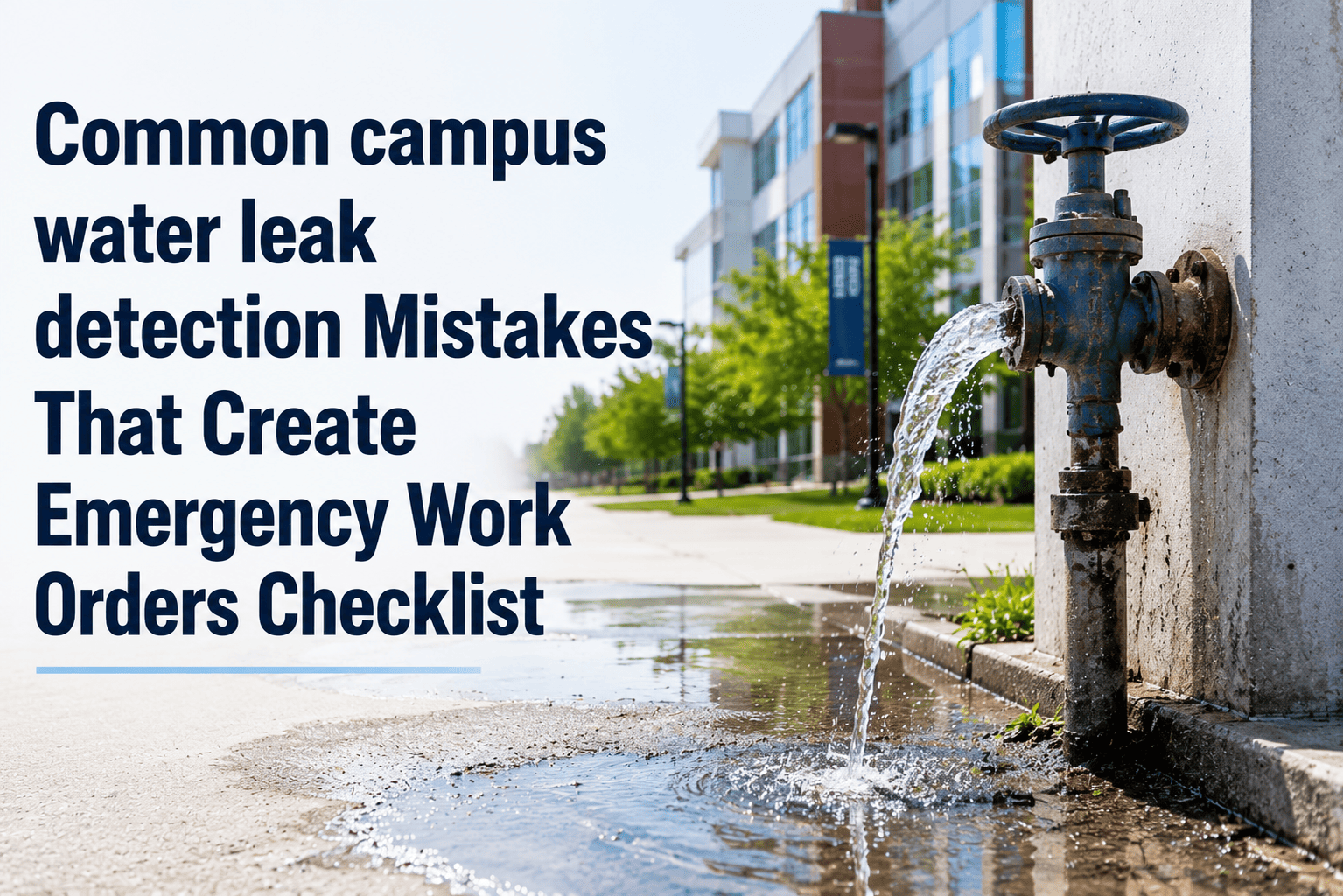
The problem is rarely effort. It is that water moves faster than a human patrol schedule, and the highest-risk hours are exactly when buildings are empty.
30%
of U.S. schools report active plumbing problems, and another 27% have roofing issues that invite water intrusion — risk that spans every building at once.
93%
reduction in damage severity is achievable with modern IoT detection that alerts within seconds instead of waiting for a morning walkthrough.
2 AM
winter-break and overnight hours are when leaks do the most damage — and when the fewest people are on site to notice anything.
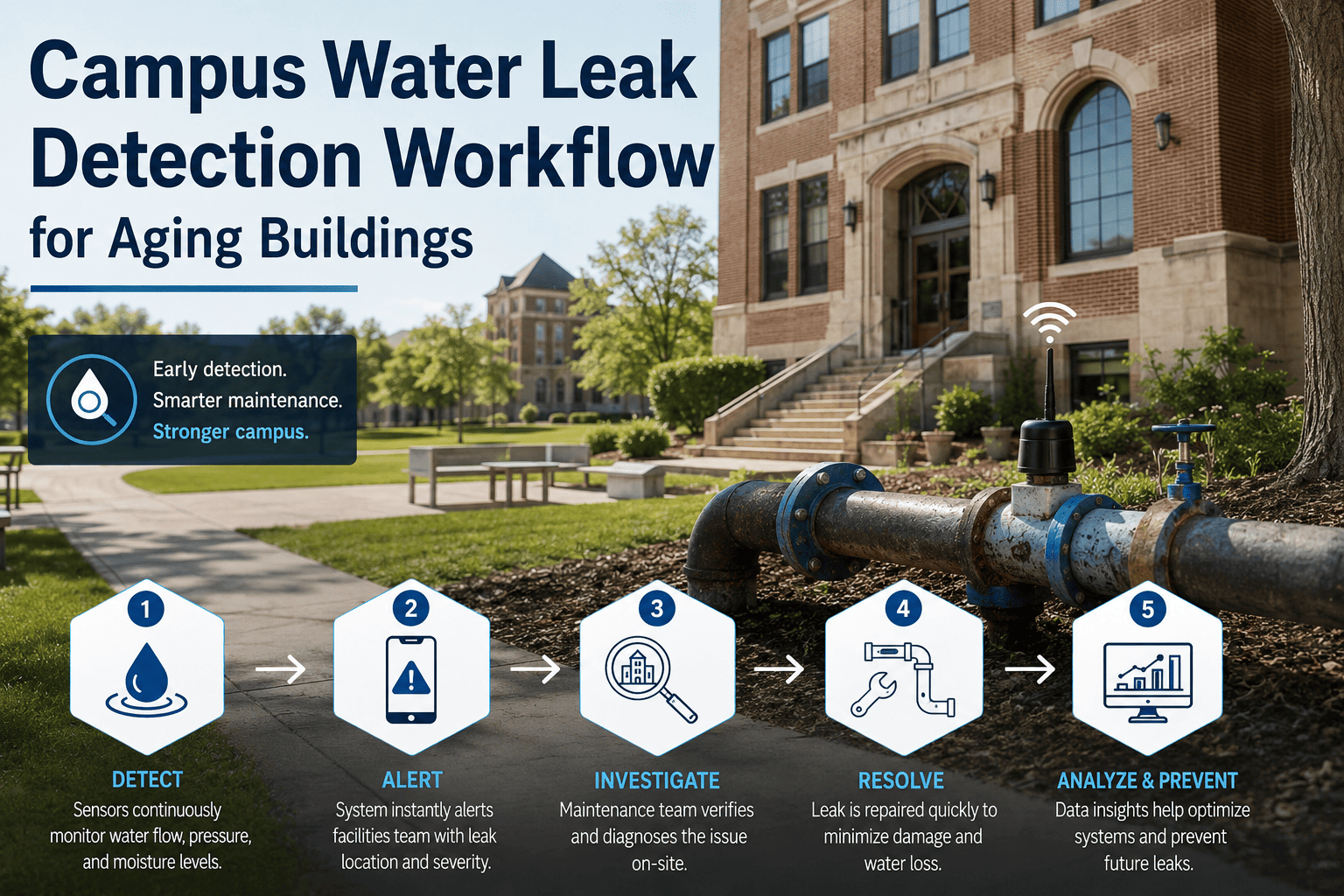
The Four-Stage Program — Each Stage Replaces Labor, Not Adds It
Build the program in sequence. Every stage is designed so the system does the watching, routing, and chasing that a new hire would otherwise be paid to do.
1
Map the High-Risk Zones
Inventory the places water concentrates: mechanical rooms, water heaters, restroom stacks, roof drains, lab sinks, and chilled-water valve locations. Tag each as a monitored asset so every future alert already knows its building, floor, and responsible tech.
2
Deploy Wireless Sensors
Battery-powered point and rope sensors install without construction permits, wall penetrations, or wiring — critical for occupied campuses. Multi-year battery life means almost no recurring maintenance burden on your existing crew.
3
Automate Alert-to-Work-Order
When a sensor trips, OxMaint generates a prioritized work order instantly, assigns it by zone, and notifies the on-call technician — no dispatcher manually reading an alert and typing a ticket at midnight.
4
Escalate and Document Automatically
If the first responder does not acknowledge, the alert climbs the chain on its own. Every event logs to the asset record, building the maintenance history that justifies next year's budget.
Book a Demo to watch a live escalation chain fire.
Where to Place Sensors — Priority Tiers for a Multi-Building Campus
You do not need to monitor every square foot on day one. Start with Tier 1, where a single failure causes the most damage, and expand outward.
Tier 1 — Critical
Mechanical rooms · Water heater bases · Boiler & chiller plants · Main supply valves
Tier 2 — High
Restroom plumbing stacks · Kitchen & cafeteria lines · Lab sink clusters · Roof drains
Tier 3 — Monitored
Library & archive ceilings · Server & AV rooms · Window-line perimeters · Storage areas
Manual Patrol vs. Automated Detection — The Real Labor Math
Patrol-Based (Adds Labor)
Leak found only on the next physical walkthrough
Overnight and break-period gaps go uncovered
Requires added staff hours to scale across buildings
No automatic record of what was found or when
Response depends on who happens to be nearby
Sensor + CMMS (No New Hire)
Alert fires within seconds of water contact
24/7 coverage including empty break periods
Scales by adding sensors, not headcount
Every event auto-logged to the asset history
Routed and escalated by rule, not by chance
Facilities Directors · Operations Leads
Turn Every Water Alert Into an Assigned Work Order Automatically
The difference between a $2,000 mop-up and a $200,000 mold remediation is how fast the right person knows. OxMaint closes that gap by routing sensor alerts straight into your existing maintenance workflow — same team, same budget, dramatically faster response.
Frequently Asked Questions
Do I need to hire staff to run a campus leak detection program?
No. The entire model is built to avoid new headcount. Wireless sensors do the watching, and OxMaint converts every alert into an assigned, escalating work order handled by your existing team.
Will installing sensors disrupt occupied buildings?
No. Battery-powered wireless sensors deploy without wiring, wall penetrations, or construction permits, so they can be placed during normal hours across multiple buildings without renovation projects.
What happens if no one responds to a leak alert at night?
OxMaint escalates the work order automatically up the on-call chain until someone acknowledges it, so an unanswered 2 AM alert never sits silently until morning.
Where should we place sensors first?
Start with Tier 1 zones — mechanical rooms, water heaters, and main valves — where one failure causes the most damage. Expand to restrooms, roofs, and sensitive rooms as the program proves itself.
Book a Demo to map your campus.
How does detection connect to our maintenance records?
Every alert and the work order it generates log directly to the asset's history, building the documentation trail that supports compliance reporting and next year's budget request.
Start Protecting Every Building Today
Stand Up Leak Detection in Days — With the Team You Already Have
You do not need a bigger crew to stop water damage. You need sensors that never sleep and a maintenance system that turns their alerts into action. OxMaint connects both, so a leak in any building becomes a tracked, assigned, escalating work order before it becomes a flood.