By the time a water stain appears on a ceiling tile, the leak behind it has often been running for days or weeks. In a campus building from the 1960s or 70s, pipes hidden behind walls, under slab foundations, and inside steam tunnels fail quietly long before anyone notices a drip, and the damage compounds fast — warped flooring, mold growth, ruined electrical components, and a repair bill that grows every day the source goes unfound. Aging buildings need a structured leak detection workflow, not a reactive one where someone happens to notice water on the floor. The earlier a leak is caught and routed to the right technician, the smaller the damage and the smaller the bill. See how OxMaint structures this workflow by visiting the free trial page.
Plumbing Maintenance / Aging Building Workflow
A Water Leak Detection Workflow Built for Aging Campus Buildings
Older buildings hide their plumbing failures behind decades-old walls and original slab foundations. Here is the workflow that catches leaks early instead of after the ceiling stains appear.
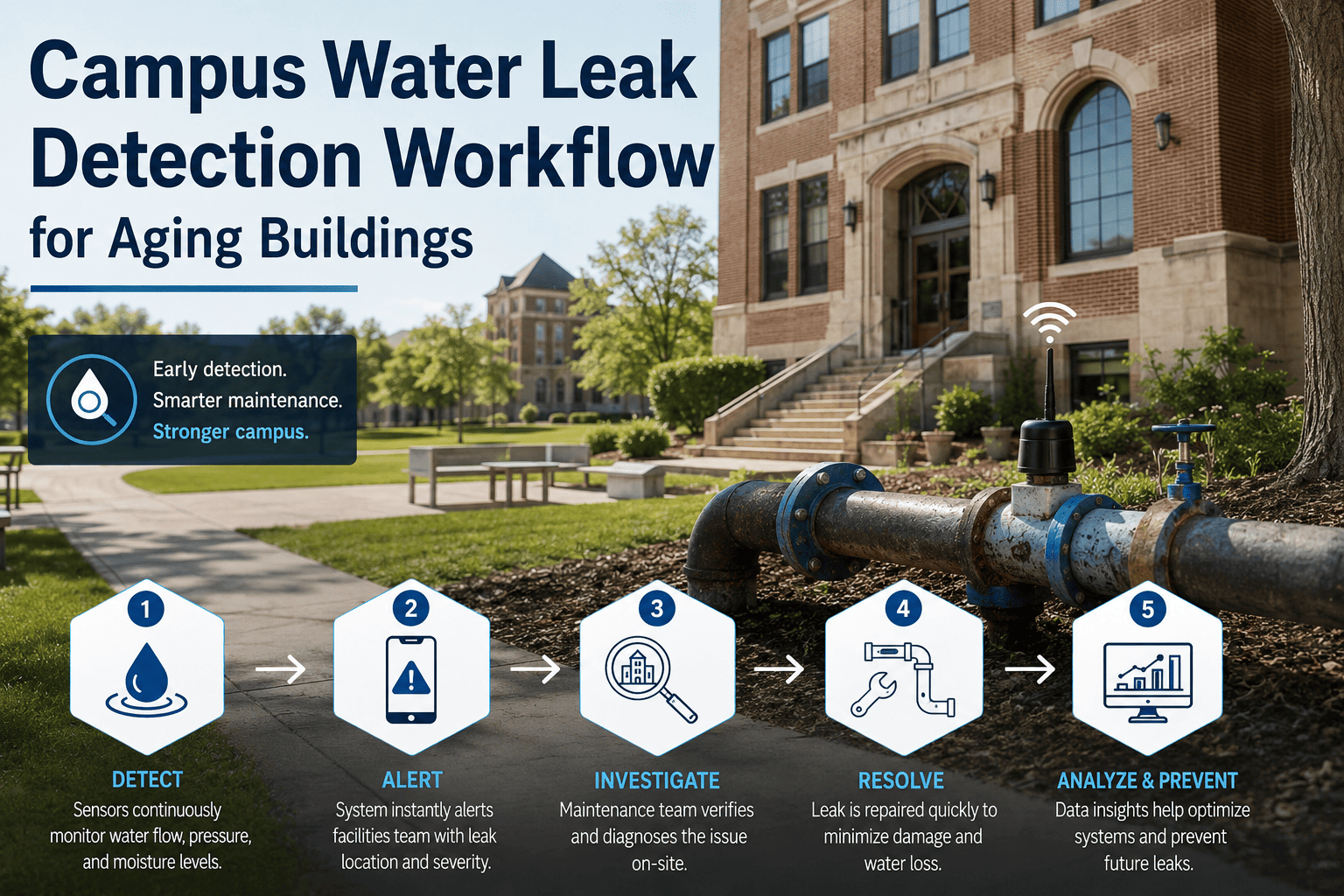
The Four-Stage Leak Detection Workflow
1
Early Signal Capture
Custodial staff, teachers, and technicians log any moisture, odor, or unexplained utility spike directly into a shared intake form — the earliest warning often comes from someone who isn't a plumber.
2
Automatic Asset Linking
Every report is tagged to the nearest known plumbing asset and zone, so a technician arrives already knowing which line, valve, or fixture is the likely source rather than starting from zero.
3
Priority Dispatch with Shutoff Location
If the report matches active-leak keywords, the work order is dispatched immediately with the nearest documented shutoff location attached, even for undocumented valves recorded by past technicians.
4
Root Cause Logging for Future Prevention
Once resolved, the root cause and repair method are logged to the asset record, so the next time that wing reports moisture, the history is already there to speed up diagnosis.
Where Leaks Hide in Older Campus Buildings
Steam and Utility Tunnels
Pre-1980 campuses often route steam and water lines through underground tunnels that flood quietly and go unchecked for long stretches between inspections.
Slab Foundation Lines
Pipes run under original concrete slabs are the hardest to access and the most expensive to repair once a failure is confirmed, making early detection critical.
Wall-Concealed Risers
Multi-story dormitories and classroom wings hide vertical supply lines inside walls, where a slow pinhole leak can travel several floors before surfacing.
Roof and Parapet Drains
Aging roof drains clog and back up during heavy rain, sending water into ceiling cavities that look identical to a plumbing leak from below.
Early Warning Signs Worth Logging Immediately
Musty Odor With No Visible Source
A persistent musty smell in a room often shows up weeks before any visible staining, especially in carpeted classrooms above slab foundations.
Unexplained Water Bill Increase
A jump in water usage with no obvious cause, like a new irrigation zone or filled pool, is one of the most reliable early indicators of an underground leak.
Discoloration on Tile or Drywall
Faint yellow or brown rings on ceiling tiles are easy to dismiss as old stains, but logging the date first noticed helps track whether it's spreading.
Soft or Spongy Flooring
Flooring that feels soft underfoot near an exterior wall or below-grade room often signals moisture intrusion well before it becomes visible.
The Real Cost of Delayed Detection
| Detection Timing | Typical Outcome | Relative Repair Cost |
| Caught within days |
Pipe section repair, no structural damage |
Lowest cost, single trade |
| Caught within weeks |
Minor drywall and flooring replacement needed |
Moderate cost, two trades |
| Caught after months |
Mold remediation and structural drying required |
High cost, multiple trades and specialists |
| Caught after a year or more |
Major structural repair, possible room closure |
Capital project level cost |
Catch the Leak Before It Becomes a Capital Project
OxMaint routes every moisture report to the right technician with asset history and shutoff locations attached, turning a slow leak into a fast fix instead of a six-figure repair.
Frequently Asked Questions
Can non-maintenance staff report a possible leak?
Yes, teachers and custodial staff can submit a moisture or odor report through a simple intake form, which is exactly how most early leaks are first noticed on a campus.
Start a free trial to set up your own intake form.
How does the system know which shutoff valve to use?
Technicians document shutoff locations, including undocumented or unlabeled valves, directly on the asset record, so the next report in that zone surfaces the correct shutoff automatically.
Does this work for underground steam tunnel systems?
Tunnel and underground infrastructure can be mapped as assets with access point notes, so technicians know which entry points flood and which stay dry during heavy rain.
What happens after a leak is fixed?
The root cause and repair method are logged permanently to the asset, building institutional history that speeds up diagnosis the next time that area reports an issue.
Book a demo to see a sample asset history.
Is this workflow only for very old buildings?
Newer buildings benefit from the same early-signal intake process, but the asset-linked shutoff and tunnel mapping features matter most for campuses with original 1960s to 1980s infrastructure.
Protect Your Oldest Buildings From Their Hidden Plumbing
OxMaint gives campus facilities teams a structured way to catch leaks early, locate shutoffs fast, and build a permanent repair history for every aging building on campus.