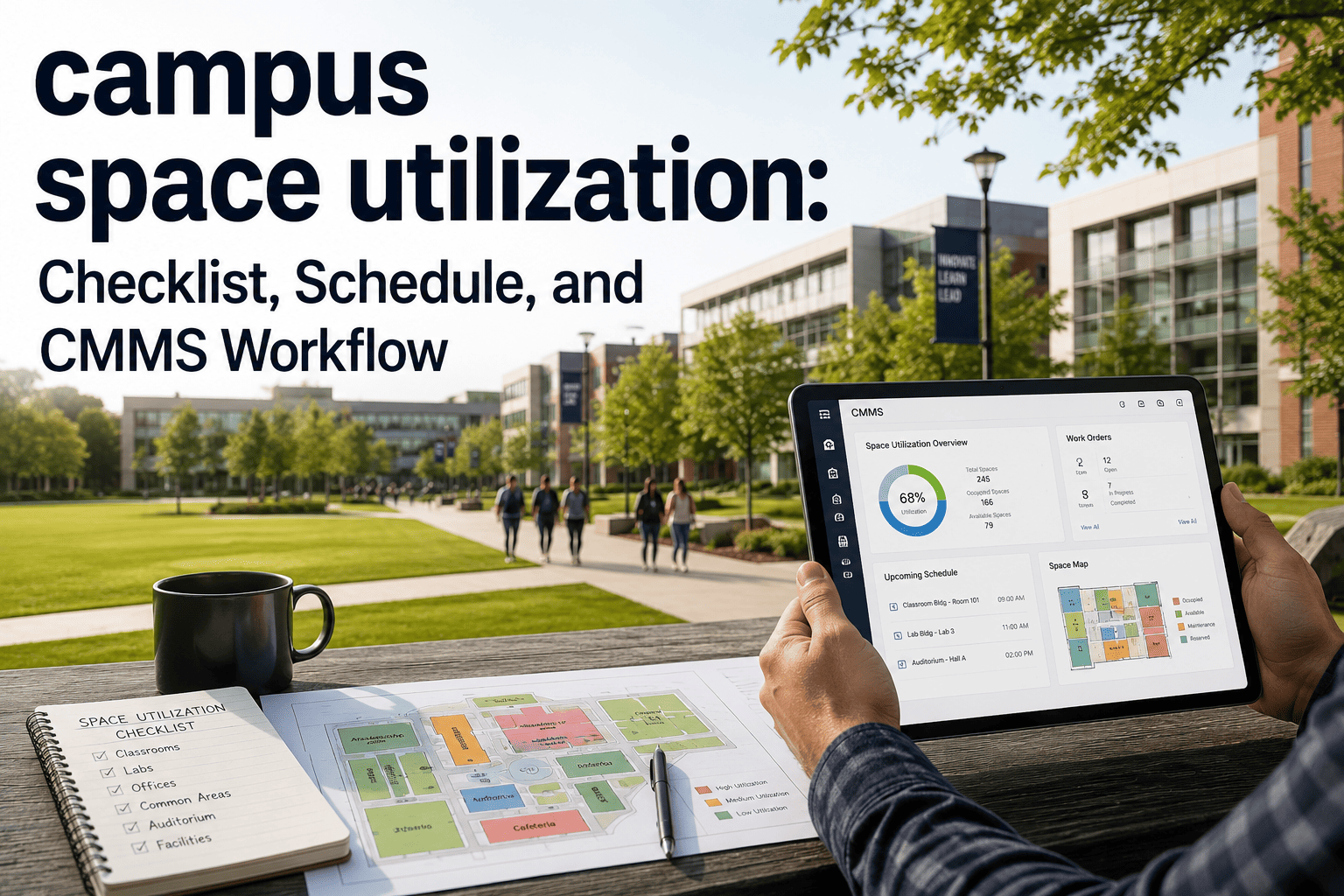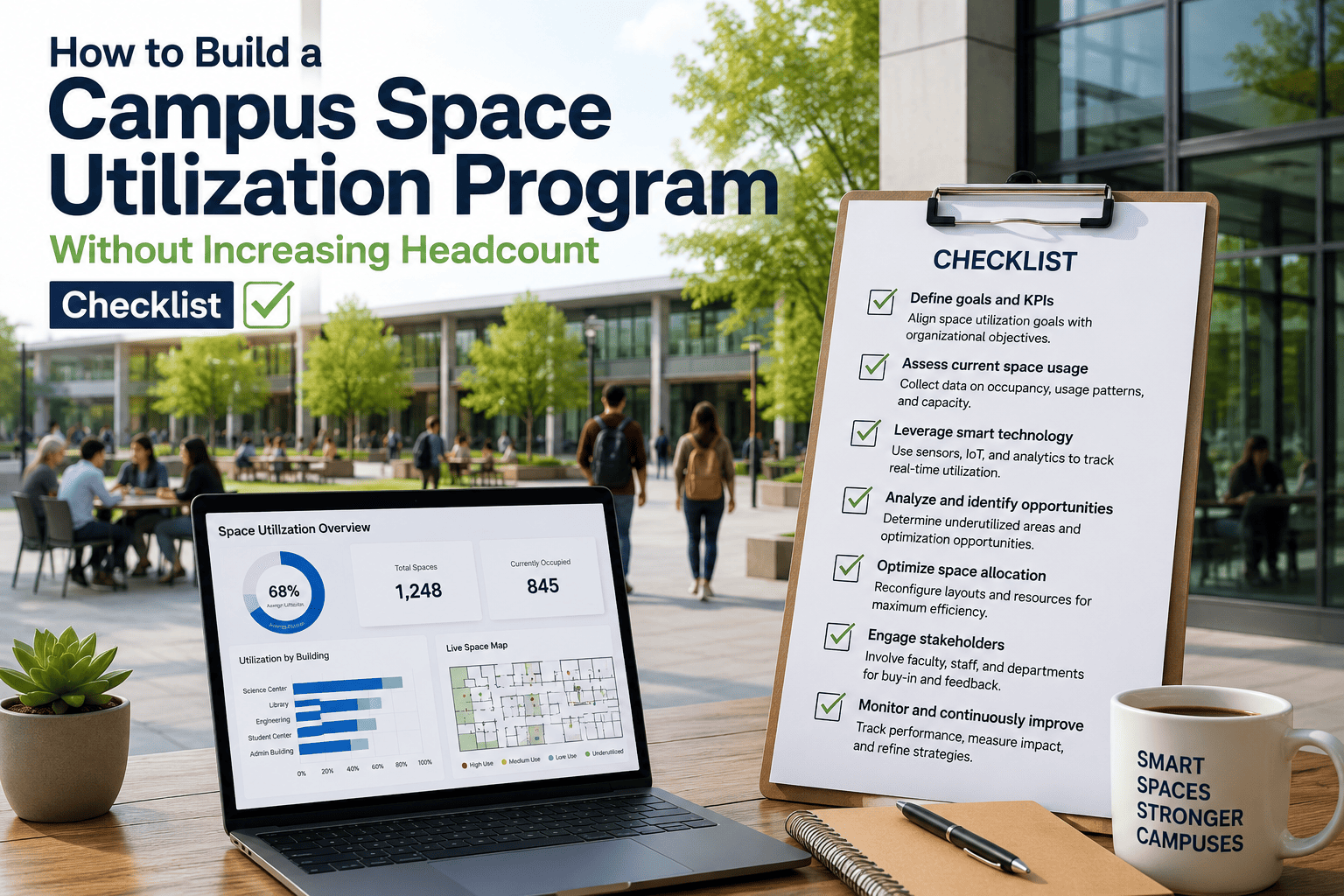
Most campuses are sitting on space they already paid to build, heat, and clean — and still don't have enough of the space people actually need. Classrooms cluster between 10 a.m. and 2 p.m. and sit empty the rest of the day, offices go unused for most of the week, and nobody can say with confidence which rooms are the problem without months of manual headcounts. The instinct is to hire a space planning team to fix it. You don't need one. This checklist shows facilities and academic operations teams how to build a working space utilization program with the staff already on payroll, using data your campus is already generating, tracked through OxMaint.
How to Build a Campus Space Utilization Program Without Increasing Headcount
A practical, four-stage checklist for measuring real classroom and building usage, finding underused space, and acting on it — using the team you already have.
Use the Data You Already Have Before Buying Anything New
Your registrar's scheduling system already records every room booked, every section size, and every meeting time. Cross-referencing that against actual room capacity gives you a usable utilization baseline without a single new sensor or a single new hire.
Find the Peak-Hour Squeeze and the Off-Hour Waste
The same pattern shows up on almost every campus: heavy demand from 10 a.m. to 2 p.m., Monday through Thursday, and near-empty buildings every evening and weekend. That mismatch is the single biggest lever you have, and it costs nothing to identify.
A campus that maps its own scheduling data before buying sensors or hiring planners gets a working utilization picture in weeks instead of a semester — and finds out where the real waste sits before spending a dollar on new space.
Centralize Scheduling Instead of Adding a Scheduling Office
Department-controlled room assignments are one of the biggest hidden drivers of underused space — a department reserves rooms based on habit, not current enrollment, and nobody outside that department can see the room is sitting empty most of the week.
Turn the Data Into Action, Not Just a Report
A surprising number of space utilization reports get filed and forgotten because they describe the problem without recommending a specific, fundable action. The report itself is not the program — what your team does with it is.
Outcomes Campuses See Without Adding Staff
Frequently Asked Questions
Do we need occupancy sensors to start a utilization program?
No — registrar scheduling data compared against room capacity gives a usable first baseline. Sensors add precision later but aren't required to begin. Track your findings in OxMaint as you go.
What utilization rate counts as "underused"?
Many institutions use roughly 68% occupancy and 32 scheduled hours per week as reference benchmarks, though your own historical baseline matters more than any external number.
Who should own this program if we're not hiring anyone?
A small standing committee from facilities, registrar, and academic affairs — meeting once a semester — typically runs this without becoming anyone's full-time job.
Why do utilization reports often fail to drive change?
Reports that describe patterns without recommending a specific, fundable action rarely overcome the organizational habit of department-controlled space.
Can OxMaint help track space and maintenance together?
Yes — linking space records to maintenance and asset data in one system keeps utilization decisions connected to real facility costs. Book a demo to see it.
Turn Empty Rooms Into Recovered Budget
OxMaint connects your space records to maintenance and asset data in one dashboard, so utilization decisions and facility costs live in the same place — no new headcount required.