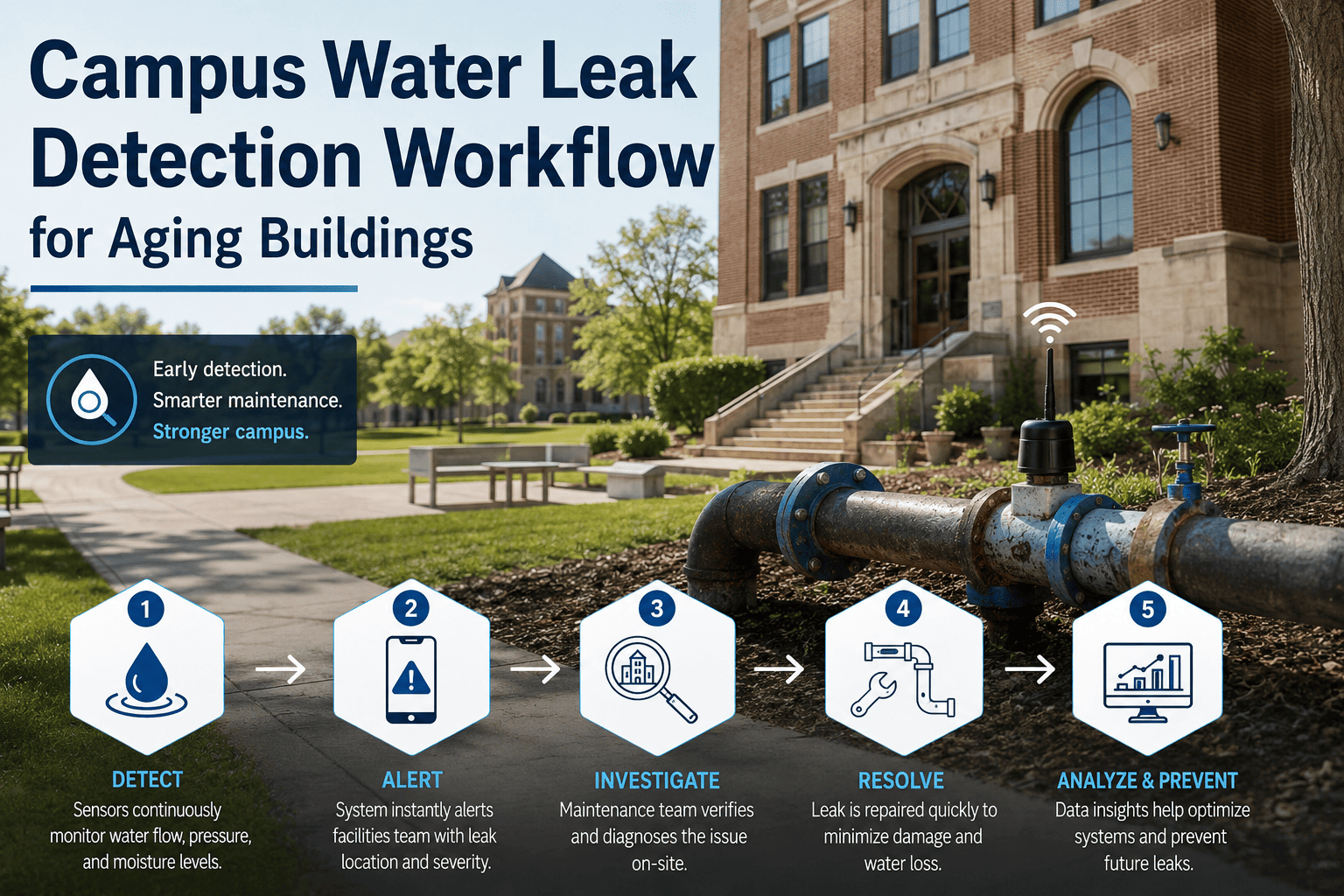
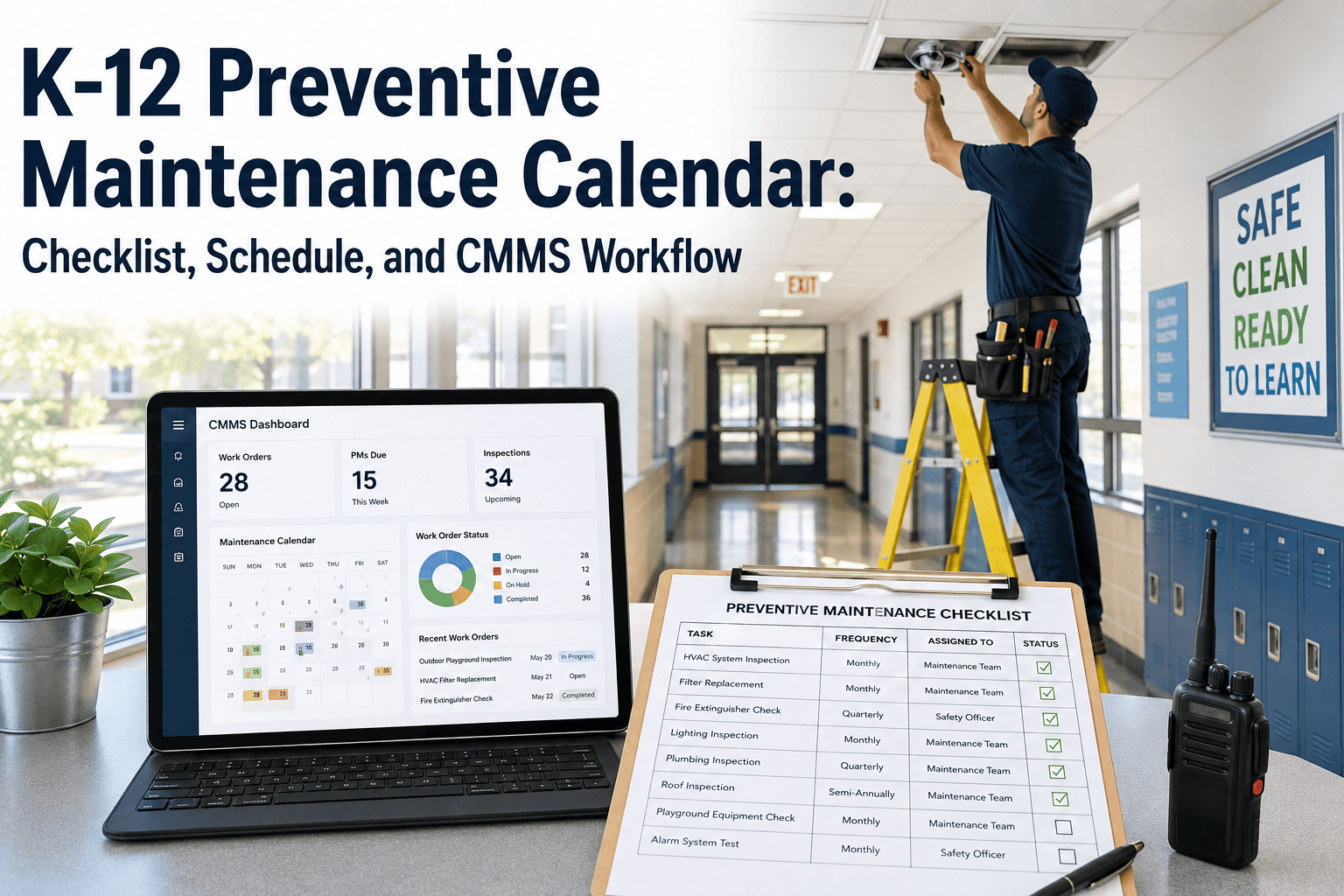
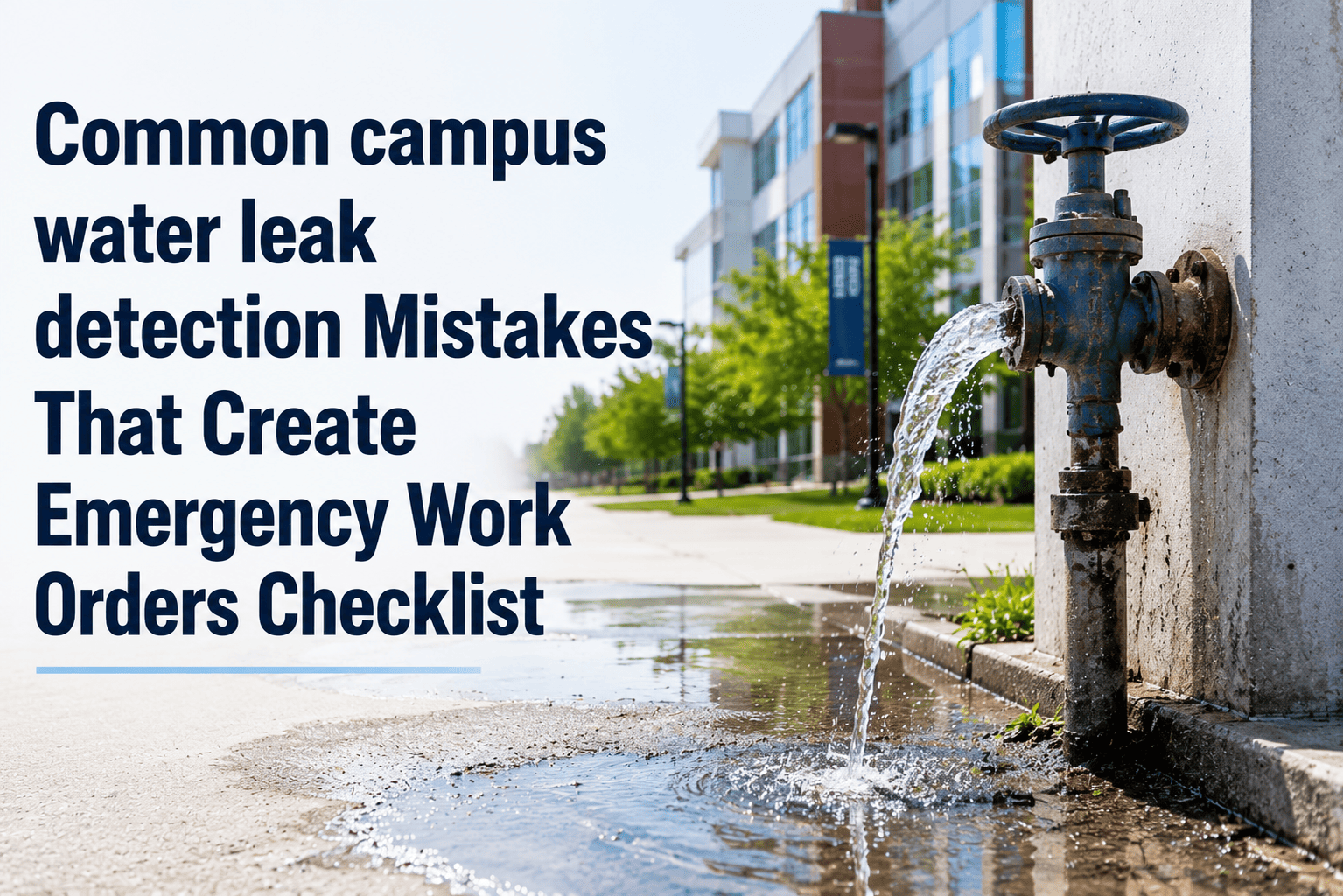
A pinhole leak inside a wall cavity can run for weeks before it shows as a stain on the ceiling below — and by the time the stain appears, the drywall, insulation, and subfloor underneath are already compromised. Campus buildings with decades-old supply lines, irrigation systems, and rooftop HVAC condensate drains are especially exposed, since a single unnoticed leak in a dormitory or lab building can shut down a wing for repairs and mold remediation. This checklist lays out a practical water leak detection schedule and inspection workflow that catches leaks while they are still a maintenance fix, tracked end to end in OxMaint.
Plumbing Maintenance · Campus Facilities · Leak Prevention
Campus Water Leak Detection: Checklist, Schedule, and CMMS Workflow
Most campus water damage isn't caused by a single catastrophic pipe burst — it's caused by a slow leak nobody was scheduled to look for. Here is the detection checklist, the inspection schedule, and the workflow that closes that gap.
DDaily
WWeekly
MMonthly
QQuarterly
The Leak Lifecycle — Where Most Detection Fails
1Leak BeginsPinhole corrosion, loose fitting, or worn gasket starts a slow drip inside a wall or ceiling void
→
2Hidden SpreadMoisture travels along framing and insulation, invisible from any occupied space for days or weeks
→
3Surface SignA stain, bubble, or musty smell finally appears — by now the damage is structural, not cosmetic
→
4Emergency RepairDemolition, mold testing, and remediation replace what could have been a thirty-minute fitting repair
Checklist
Weekly and Monthly Leak Detection Points
Catching a leak at stage one or two on the lifecycle above depends entirely on whether someone is scheduled to look in the right places before the damage surfaces on its own.
Visible supply lines under sinks, behind washers, and at water heater connections checked for moisture, corrosion, or mineral buildup at fittings
WFacilities Technician
Rooftop HVAC condensate drain lines inspected for algae buildup, kinks, or blockages that cause overflow into ceiling cavities below
MHVAC Technician
Irrigation system zones walked and checked for unusually saturated soil, surfacing water, or a noticeable spike in landscaping water meter readings
WGrounds Technician
Ceiling tiles and wall corners in basements, mechanical rooms, and ground-floor labs scanned for discoloration, sagging, or a musty odor
WFacilities Inspector
Master water meter reading logged and compared to prior period — an unexplained increase with no corresponding usage change signals a hidden leak somewhere in the system
MFacilities Manager
Exterior building foundations and below-grade utility tunnels checked for damp patches, efflorescence staining, or pooling water after dry weather
MFacilities Inspector
A leak caught at week one is a fitting replacement. The same leak caught at week six is demolition, drying equipment, and a mold remediation invoice. OxMaint schedules every leak detection point on a recurring route and logs meter readings so the trend line — not just the photo — tells you something is wrong.
Daily Checklist
Daily Leak Detection Points
Daily checks focus on the fixtures and zones most likely to fail without warning between scheduled rounds.
Dishwashing and laundry room floor drains checked for slow drainage or backup, which often signals a developing line blockage
DKitchen Staff
Walk-in cooler and ice machine drain pans inspected for overflow residue or pooling indicating a clogged condensate line
DKitchen Staff
Restroom floor areas around toilets and urinals checked for moisture at the base, which points to a failing wax ring or supply line
DCustodial Staff
Equipment-Specific Checklist
Mechanical Room and Equipment Leak Points
Mechanical rooms hide the leaks with the highest damage potential because they run unattended for the longest stretches between scheduled visits.
Water heater pressure relief valve and base of tank checked for active dripping, rust streaks, or pooled water on the floor
WPlumbing Technician
Boiler and chiller plant piping inspected for insulation staining, which indicates a slow leak hidden under the wrap
MHVAC Technician
Fire suppression and sprinkler system valves checked for weeping or corrosion at threaded joints during routine walk-throughs
MFire Safety Technician
Backflow preventers and pressure-reducing valves inspected for discharge port dripping, which signals an internal seal failure
MPlumbing Technician
Seasonal Checklist
Seasonal Leak Risk Points
Seasonal transitions create their own leak risks — freeze-thaw cycles, irrigation startup, and storm drainage all need a dedicated review outside the regular weekly cadence.
Exterior hose bibs and exposed piping inspected before the first freeze to confirm shutoff valves and insulation are in place
QGrounds Technician
Irrigation system pressure-tested at spring startup to catch winter-cracked lines before full-season operation begins
QGrounds Technician
Roof drains and scuppers cleared of debris ahead of seasonal storms to prevent ponding that forces water under flashing
QRoofing Technician
Workflow
What Happens After a Leak Indicator Is Found
A detection checklist only has value if a positive finding moves immediately into a tracked response rather than a verbal note to "keep an eye on it."
Finding logged with photo evidence and exact location at the moment it is discovered, not at the end of the inspection round
MInspection App Entry
Work order auto-generated with severity tier — active dripping or pooling routed as urgent, staining or odor without active water routed as standard priority
MCMMS Auto-Routing
Source isolated where the leak is upstream of an occupied space — shutoff valve closed and area cordoned until repair is completed
MPlumbing Technician
Repair closed out with confirmation that the moisture source has stopped, not just that the visible symptom was patched over
MFacilities Manager Sign-Off
Compliance KPIs
Metrics That Show Your Leak Detection Program Is Working
| Metric | How to Measure | Target |
| Detection-to-Repair Time |
Hours from finding logged to repair completed |
Under 24 hours |
| Water Meter Variance |
Month-over-month usage vs. baseline |
Under 8% unexplained variance |
| Repeat Leak Rate |
Same fixture or zone flagged twice in 90 days |
Under 5% |
| Inspection Route Completion |
Scheduled leak checks completed on time |
100% per cycle |
FAQs
Frequently Asked Questions
How often should campus buildings be checked for water leaks?+
Visible plumbing connections and ceiling areas should be checked weekly, while meter readings and below-grade areas can be reviewed monthly.
OxMaint can schedule both cadences on a single recurring route.
What is the earliest sign of a hidden water leak?+
An unexplained rise in the master water meter reading is usually the earliest sign, often appearing weeks before any visible staining or odor shows up in an occupied space.
Why do rooftop HVAC units cause indoor water damage?+
Condensate drain lines clog with algae or debris over time, causing the condensate pan to overflow and drip through the roof deck into ceiling cavities below, often far from the unit itself.
Should a suspected leak be repaired immediately or monitored first?+
Any active dripping or pooling should be treated as urgent and isolated immediately. Staining without active moisture can be scheduled as a standard repair, but should still be tracked, not left unrecorded.
Can a CMMS actually reduce water damage costs on campus?+
Yes — routing leak indicators straight into tracked work orders with severity-based response times cuts the window between discovery and repair.
Book a demo to see the workflow in action.
Digitize Leak Detection · OxMaint CMMS
Catch the Drip Before It Becomes a Demolition
OxMaint schedules leak detection routes, tracks meter trends, and routes every finding into a work order automatically — so a slow leak gets fixed while it's still cheap to fix.