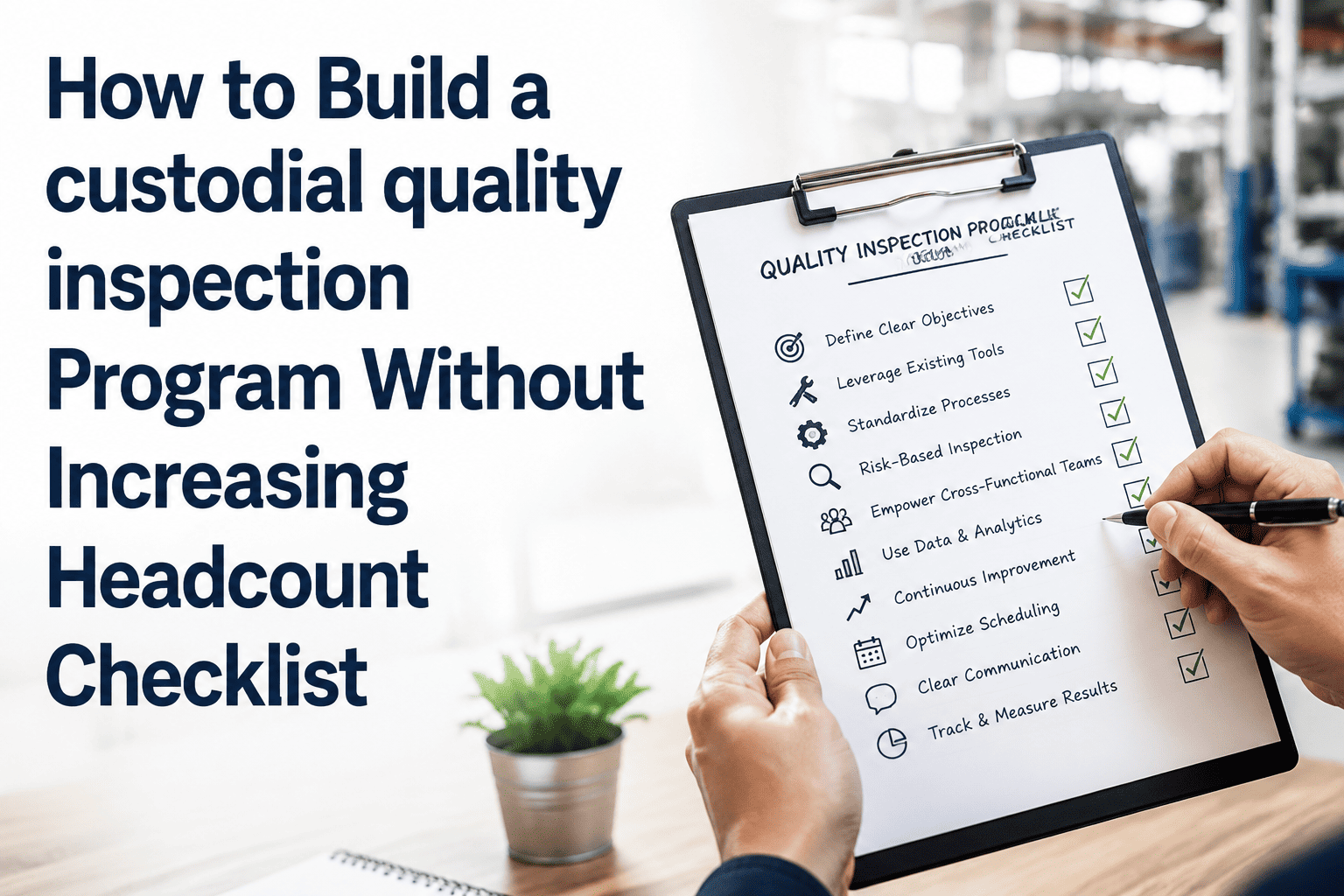
Most facilities directors are told the same thing when they ask for a real inspection program: hire more supervisors. But a quality program does not fail for lack of headcount — it fails for lack of structure. The labor is already on your campus; it is buried in paper forms, desk data entry, re-walks, and complaint-chasing. Redirect those lost hours into risk-based inspections, mobile scoring, and automatic work-order routing, and one supervisor can cover what used to take three. This checklist builds that program step by step, with every audit and corrective action tracked in OxMaint.
1. Baseline Audit With Existing Staff
You cannot improve what you have not measured. Before changing anything, establish where each building actually sits on the APPA appearance scale using the supervisors already on shift — no new hires, no consultant.
2. Standardize Forms and Target Levels
Inconsistent forms create inconsistent results and waste re-inspection labor. A single standard library of inspection forms means any supervisor can audit any building the same way, the first time.
3. Set Risk-Based Inspection Frequency
Inspecting every space equally wastes labor on low-risk offices and under-covers high-risk restrooms. Concentrate inspection effort where failure carries the most cost — health, visibility, and complaint volume.
4. Move Inspections to Mobile
Paper inspection is double work: walk the building, then sit at a desk and re-enter everything. Mobile scoring eliminates the second step entirely and is the single biggest labor recovery in the build.
5. Auto-Route Failures to Existing Custodians
A failed item that nobody owns becomes a re-inspection later — pure wasted labor. Automatic routing closes the loop so the supervisor never personally chases a fix.
6. Add Self-Inspection and Peer Audits
Supervisors cannot be everywhere, so extend the program's reach by having custodians inspect their own areas and peers spot-check each other. It multiplies coverage without a single new supervisor.
7. Trend Scores and Reallocate Labor
The payoff phase: with clean data flowing in, you can move people toward problem areas and prove to leadership exactly what your current staffing sustains — turning the program into a budget tool.