Bond elections are won or lost on trust — voters need to believe that the money will go toward real, documented needs rather than a wish list assembled the week before the vote. Most district facilities teams know exactly what their buildings need, but turning that knowledge into a presentation that a skeptical voter finds credible is a different challenge entirely. This case study covers how one school district used its Oxmaint-tracked Facility Condition Index data, photo evidence from completed and pending work orders, and lifecycle cost projections to build a bond presentation that passed by a 2:1 margin — after a previous bond attempt without this data had failed. If your district's next bond campaign needs evidence voters can trust, start a free trial to begin tracking your facility condition data now, or book a demo to see how FCI reporting supports a bond case.
The Bond That Failed, and the One That Passed 2:1
A school district's first bond attempt failed without supporting data. The second attempt, built on Oxmaint's Facility Condition Index, photo evidence, and lifecycle cost projections, passed by a 2:1 margin.
A Bond Request Without Evidence Voters Could Verify
The district's first bond attempt asked voters to approve funding for a list of building improvements — new roofs, HVAC replacements, electrical upgrades — based on a facilities team's professional judgment about which buildings needed work most. The list was accurate, but it had no supporting documentation that voters or local media could examine. When opposition groups questioned whether the numbers were inflated or whether some buildings really needed the work claimed, the district had no condition assessments, no photos, and no maintenance history to point to. The bond failed at the ballot box, and the district went back to managing the same deferred maintenance with the same constrained operating budget.
Building a Bond Case on Three Years of Tracked Condition Data
Before attempting a second bond, the district spent roughly three years building out its asset registry in Oxmaint — every roof, HVAC unit, boiler, electrical panel, and major building system across the district, each with a condition score, maintenance history, and photo documentation collected during routine inspections and work orders. By the time the second bond campaign began, the district had a Facility Condition Index for every building in the portfolio, calculated from real inspection data rather than estimates, along with photo evidence showing the actual condition of failing equipment.
Each building's FCI was calculated from the ratio of deferred maintenance cost to current building replacement value — a standard metric that facilities professionals and bond consultants recognize, calculated from real asset data.
Work order photos showing corroded HVAC units, failed roof sections, and aging electrical panels gave the presentation visual proof that matched the written condition scores.
For each major system flagged for replacement, the district showed projected costs if replaced now versus the escalating cost and risk of continued deferral — framing the bond as cost avoidance, not just spending.
How the District Presented FCI Data to the Board and Voters
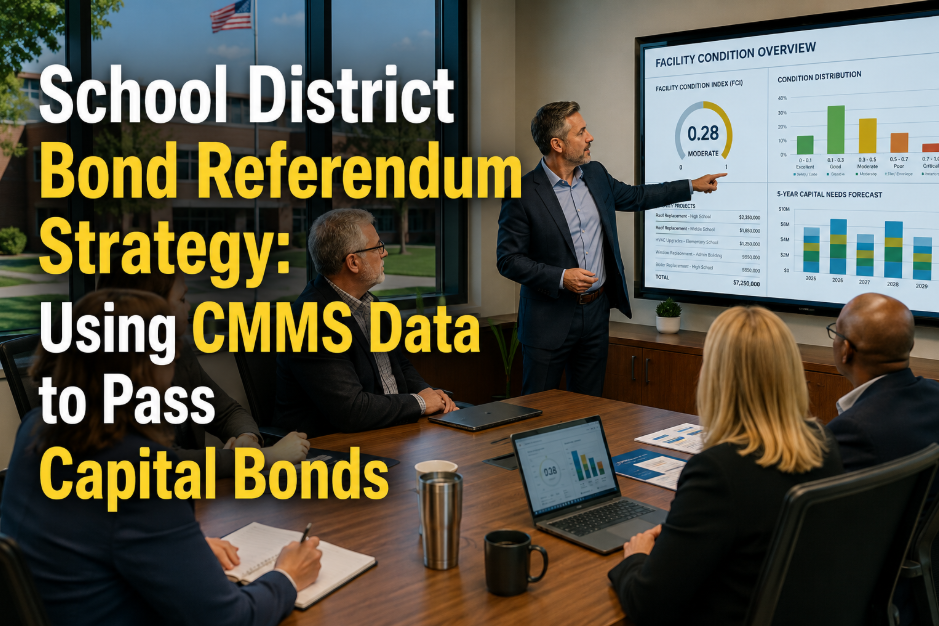
An opening view ranked every building by FCI, immediately showing which schools were in the worst condition — making the case visual before any numbers were explained.
For the highest-FCI buildings, the presentation drilled into specific systems — roof age, HVAC condition, electrical capacity — each tied to a photo and a maintenance record.
For each major system, the district showed the cost to replace now versus the projected cost in five years if deferred — a side-by-side that made the bond's urgency concrete.
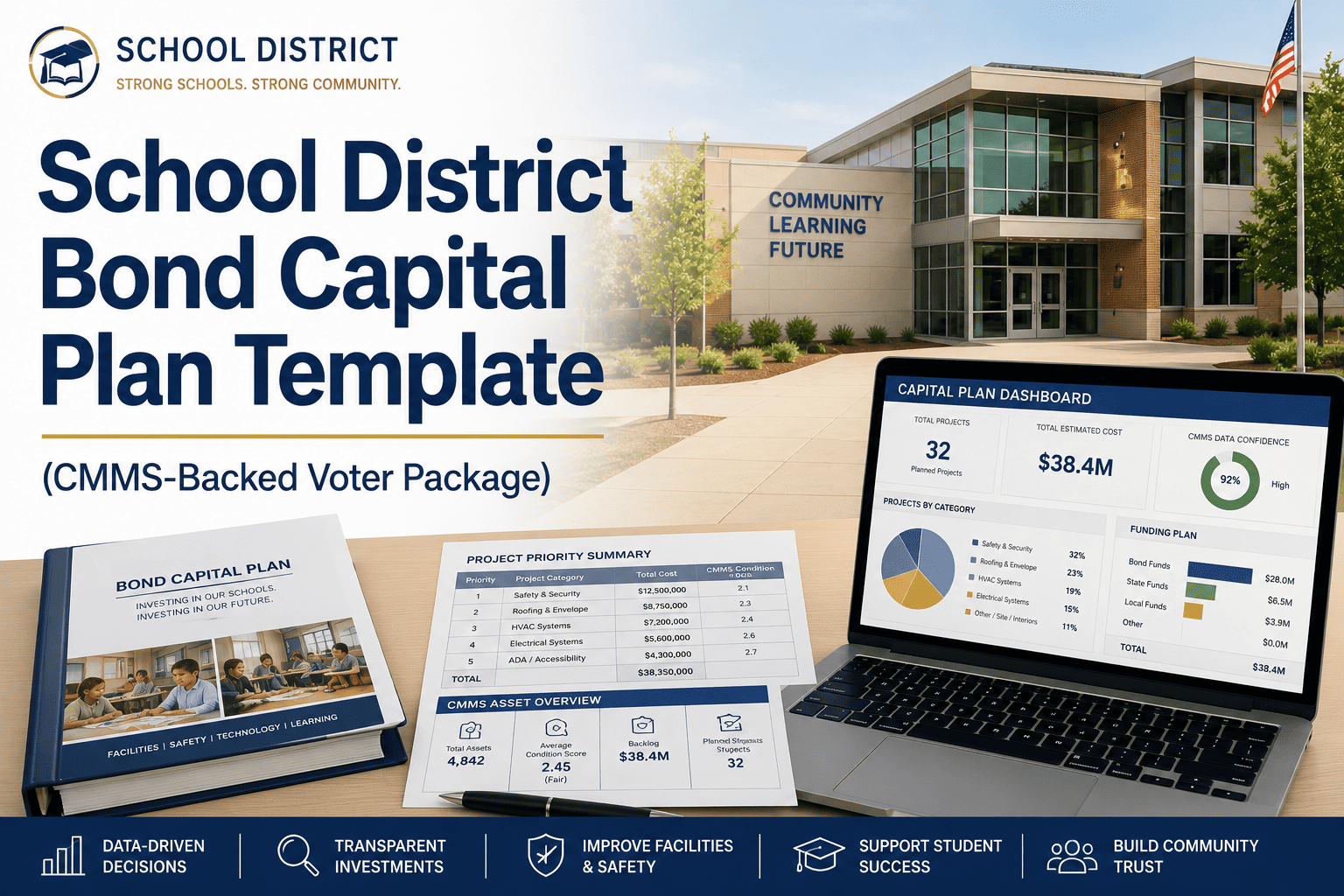
Every dollar requested in the bond was mapped directly back to a specific building, system, and FCI score — so the bond amount was traceable to the underlying data, not a round number.
Voters Trust Numbers They Can See the Source Of
An FCI presentation built on three years of tracked condition data, photo evidence, and lifecycle cost comparisons gave this district's bond campaign the credibility its first attempt lacked. If your district's next bond campaign needs that same foundation, start tracking facility condition data now — bond cycles take years to prepare for.
What the Data-Backed Campaign Achieved
Frequently Asked Questions
What is a Facility Condition Index and how is it calculated?+
How long does it take to build the condition data needed for a bond presentation?+
Can photo evidence from work orders be used in a bond presentation?+
How do you map a bond budget back to specific facility data?+
Does this approach work for smaller districts with fewer buildings?+
Start Building the Data Your Next Bond Campaign Will Need
FCI scores, photo-documented condition records, and lifecycle cost projections take time to build — but they are what turns a bond request into a case voters can verify for themselves.