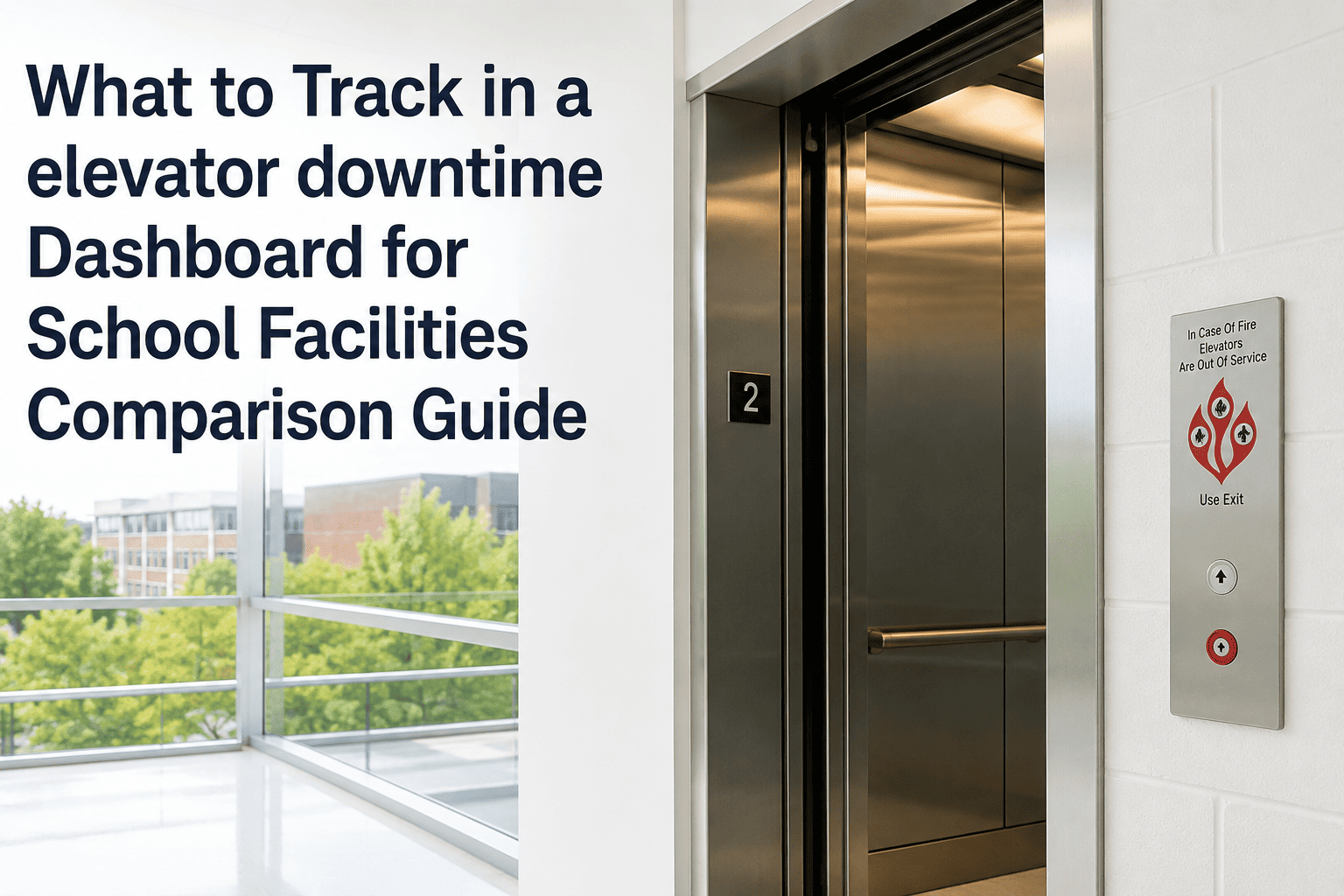
University elevators run over 200 trips per day on average — more than almost any commercial building — yet most campus facilities teams still manage elevator maintenance reactively, waiting for failures instead of preventing them. A single elevator outage in a multi-story academic building can affect thousands of students and faculty, trigger ADA compliance violations, and cost $4,000 to $18,000 in emergency repair and contractor dispatch fees. APPA's 2025 benchmarking data shows that campuses without a structured elevator maintenance program experience 3.4x more unplanned downtime than peers using AI-driven predictive maintenance tools. The good news: reducing elevator downtime does not require new staff or bigger budgets — it requires smarter systems. Platforms like OxMaint give university facilities leaders real-time visibility into elevator health, automated PM scheduling, and mobile-first technician workflows that catch failures before they disrupt campus operations. Book a demo to see how OxMaint helps your campus run without interruption.
University Elevator Downtime Reduction Guide for Facilities Leaders
A practical, data-backed playbook for facilities directors who need fewer outages, better compliance, and a maintenance program that scales without adding headcount.
Why University Elevators Fail More Than They Should
Most elevator failures are not sudden — they are gradual and predictable. The problem is that without continuous monitoring and structured PM programs, maintenance teams never see the warning signs until it is too late.
Teams only act when elevators stop working. No condition data, no trend analysis, no early intervention — just repeated emergency calls and frustrated occupants.
State elevator inspections require documented service records. Paper logs get lost, misfiled, or are simply incomplete — creating compliance gaps that expose institutions to fines.
A 150-building campus may have 300+ elevators managed across separate buildings, departments, and even vendors. Without a single platform, no one has the full picture.
When PM schedules live in spreadsheets or are manually tracked, they slip — especially during high-traffic periods like finals, move-in week, and commencement.
The Downtime Cost Breakdown Per Elevator
One elevator outage creates a cascade of direct and indirect costs that most facilities budgets never fully account for.
After-hours contractor call-out fees, travel charges, and minimum service rates
Unplanned component replacement costs 4.8x more than scheduled replacement
Extended outages in ADA-required access routes trigger federal compliance violations
Faculty, students, and staff rerouted, delayed, or unable to access floors during outage
A 5-Step Strategy to Reduce Elevator Downtime
This framework is used by facilities leaders at research universities managing 50 to 500 elevators. Each step builds on the last — and none requires hiring additional staff.
Assign every elevator a unique asset ID in your CMMS with model, installation year, load capacity, inspection due dates, and service history. Without this foundation, you cannot schedule PM, track failure patterns, or benchmark performance across buildings.
A high-traffic elevator in a residence hall during move-in week degrades faster than one in a low-traffic administrative building. PM frequency should reflect actual usage cycles, not a fixed monthly calendar that treats all elevators the same.
Motor temperature anomalies, door sensor drift, and hydraulic pressure drops are all detectable before they cause outages. AI-driven maintenance platforms analyze these signals continuously and generate alerts with recommended actions before failures happen.
Replace paper inspection logs with mobile-completed digital checklists that auto-attach photos, technician signatures, and timestamps. Documentation is instantly accessible for state inspections, insurance audits, and ADA compliance reviews.
Mean Time Between Failures (MTBF), PM completion rate, emergency work order ratio, and cost per elevator are the four metrics facilities directors should review monthly. Institutions that actively track these improve MTBF by an average of 41% within 12 months.
Ready to Stop Reacting and Start Preventing?
OxMaint's AI Predictive Maintenance module gives university facilities teams the tools to cut elevator downtime, stay compliant, and protect their capital budget — without adding headcount.
Reactive vs Predictive: What the Data Shows
Universities that shift from reactive to predictive elevator maintenance see measurable results within the first year. Here is how the two approaches compare across the metrics that matter most to facilities directors.
| Metric | Reactive Maintenance | Predictive with OxMaint |
|---|---|---|
| Annual Downtime Per Elevator | 48 – 72 hours | 8 – 14 hours |
| Emergency Work Order Rate | 62% of all orders | Under 18% |
| Average Repair Cost Per Incident | $4,200 | $890 |
| State Inspection Pass Rate | 74% | 97% |
| PM Compliance Rate | 49% | 94% |
| ADA Violation Exposure | High | Minimal |
Frequently Asked Questions
Most universities complete elevator asset setup within 1 to 2 weeks. You can import your existing inventory list directly from a spreadsheet, and OxMaint's onboarding team assists with PM template configuration. There is no lengthy implementation process. Start a free trial to see setup firsthand.
Yes. OxMaint's hierarchy supports unlimited campuses, buildings, and floors under a single account. Each campus can have its own crew assignments and compliance settings while central administration views consolidated reporting across all locations.
OxMaint generates inspection-ready reports including service history, PM completion records, technician signatures, and photo attachments for any elevator in under 60 seconds. Reports are exportable as PDF for submission to state regulatory authorities. Book a demo to see reporting in action.
OxMaint's first-year cost for a 200-building campus is under $15,000 — a fraction of legacy CMMS platforms that run $50,000 to $200,000 for comparable scale. Contact the OxMaint team for a quote tailored to your elevator count and campus structure.
OxMaint's predictive module works with data collected during technician inspections and work order history — no IoT hardware is required to start. Sensor integration is supported for universities that want real-time data feeds, but it is not a prerequisite for gaining predictive insights.
Your Campus Elevators Deserve a Smarter Maintenance Program
Every day without a structured elevator PM program is another day of preventable downtime, ADA risk, and reactive repair costs. OxMaint gives university facilities leaders the tools to take control — starting this week.