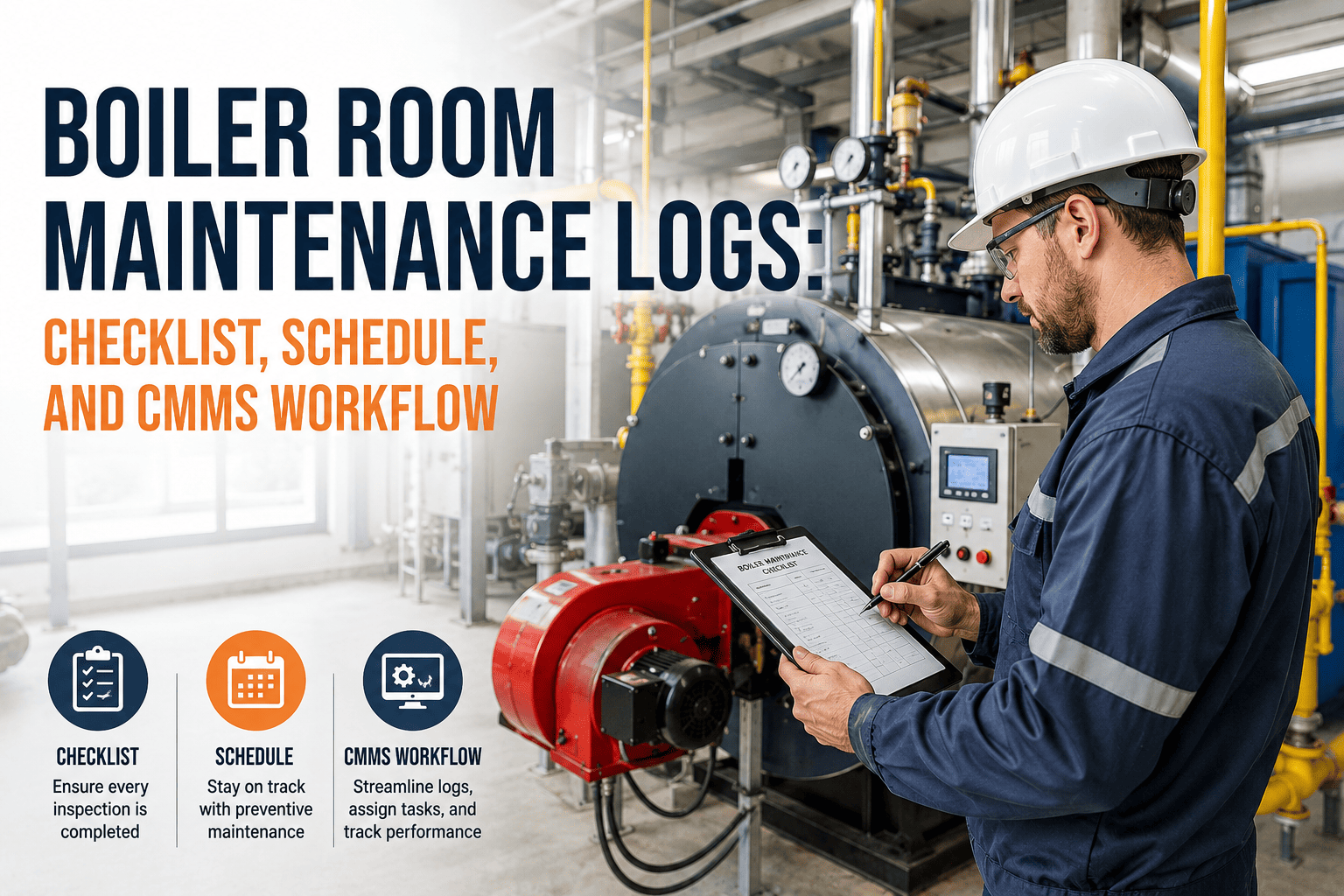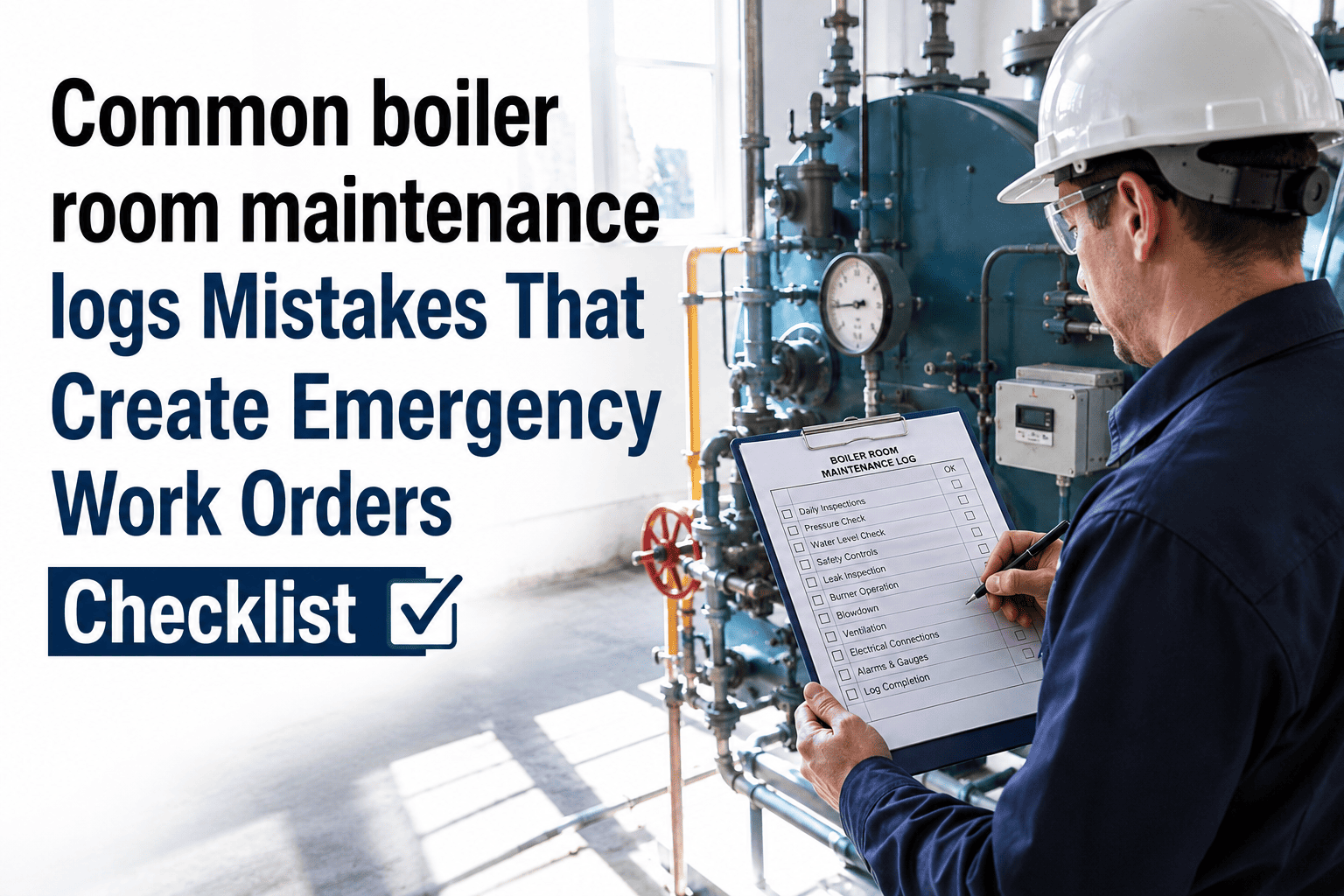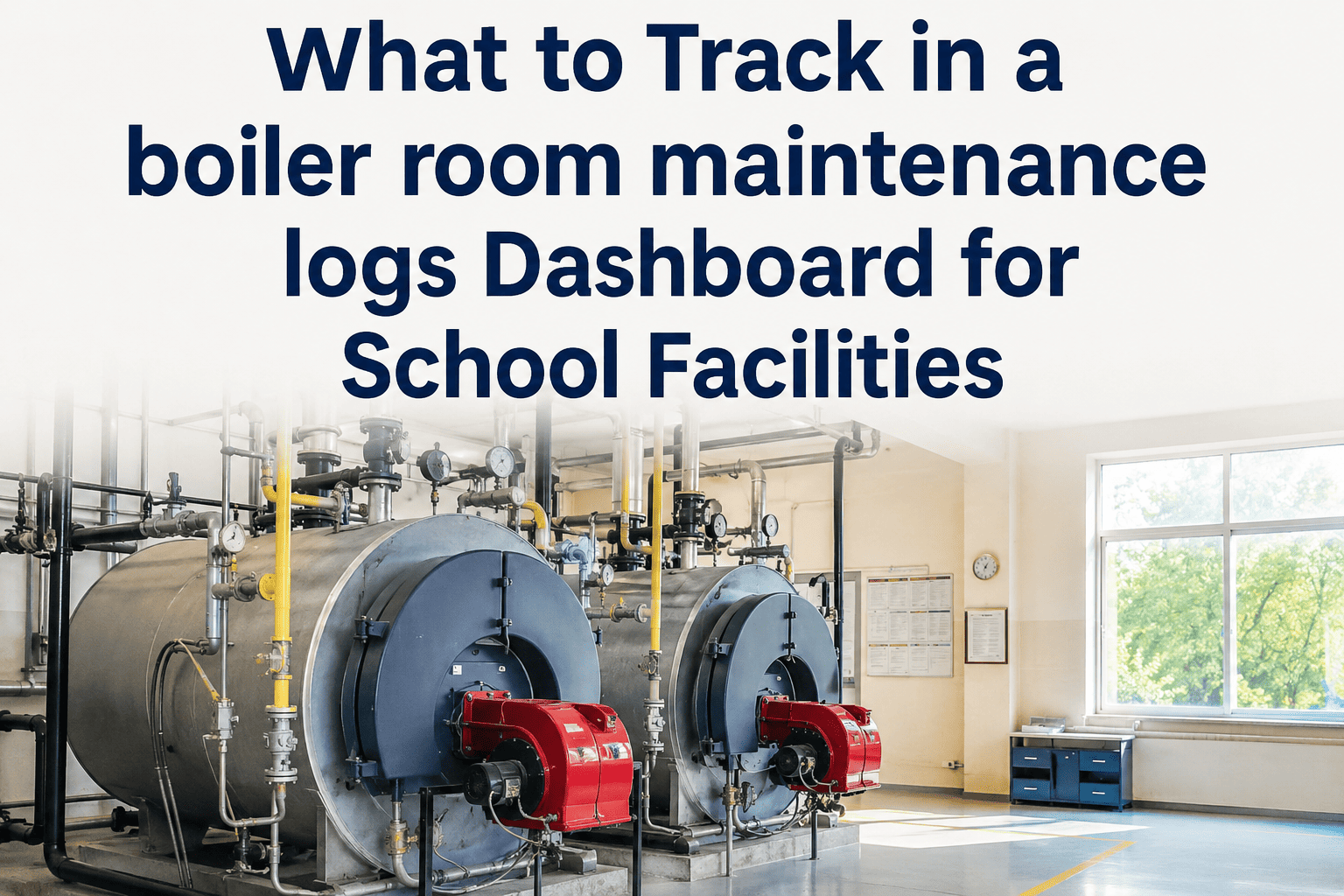
An inspector walks into a boiler room expecting one thing above everything else: documentation that proves the equipment has been operated and maintained correctly since the last visit. Missing a single log entry, a blocked combustion air louver hidden behind a stack of supplies, or a water treatment record that stops three months ago is enough to fail an inspection that the equipment itself would have passed. A boiler room dashboard built around the right log fields turns this from a scramble through a filing cabinet into a record that's already organized before the inspector arrives. Schools using OxMaint to track boiler logs report dramatically shorter inspection prep time and far fewer documentation-related findings. See what a compliance-ready boiler dashboard looks like by starting a free trial or by booking a boiler compliance walkthrough.
What Belongs in a Boiler Room Maintenance Log Dashboard
Inspectors don't fail boilers — they fail paperwork. The equipment is usually fine; the records proving it was checked, treated, and tested on schedule are where most violations actually come from.
The Documentation Inspectors Actually Ask For
State and insurance inspectors request a specific, predictable set of records during a boiler inspection. A dashboard that organizes logs around these exact categories means nothing has to be located under pressure.
Why Most Boiler Inspection Failures Aren't Mechanical
The most common findings during a school boiler inspection trace back to documentation gaps and a small set of recurring physical issues — not catastrophic equipment failure.
| Common Finding | How Often Cited | Root Cause | What Prevents It |
|---|---|---|---|
| Blocked combustion air louvers | Most frequent finding | Stored items placed in front of intake | Logged clearance check before every inspection window |
| Missing documentation | Common | Paper logs lost or incomplete | Digital log entry tied to each boiler asset |
| Improper relief valve discharge piping | Recurring | Incorrect install orientation | Photo-documented install check logged per unit |
| Isolation valve violation | Occasional but serious | Valve placed between cutoff and boiler | Configuration check logged at install and annual review |
| Expired water treatment records | Common | Chemistry checks not logged consistently | Scheduled blowdown and chemistry log entries |
What a Single Log Entry Should Actually Capture
A vague entry like "checked, ok" satisfies nobody during an audit. A complete log entry has the same four fields every time, regardless of which task it covers.
Paper Logbooks vs. a Digital Boiler Dashboard
Paper logbooks have worked for decades, but they create specific risks that only show up the day an inspector actually asks to see them.
| Situation | Paper Logbook | Digital Dashboard |
|---|---|---|
| Logbook left in the wrong building | Records inaccessible until it's located | Accessible from any device, anywhere |
| Page torn out or water-damaged | Entry is gone permanently | Entry remains in the record indefinitely |
| Inspector requests a date range | Manual page-by-page search | Filtered instantly by date and asset |
| Multiple boilers across one district | Separate logbook per building | One dashboard covering every asset |
Make Every Inspection a Five-Minute Review, Not a Three-Day Scramble
OxMaint logs every reading, test, and certificate against the boiler asset itself, so the dashboard is already inspection-ready the day the inspector walks in.
Log Frequency by Task Type
Not every log entry happens on the same schedule. A dashboard that tracks frequency per task type flags overdue entries automatically instead of relying on someone to remember the calendar.