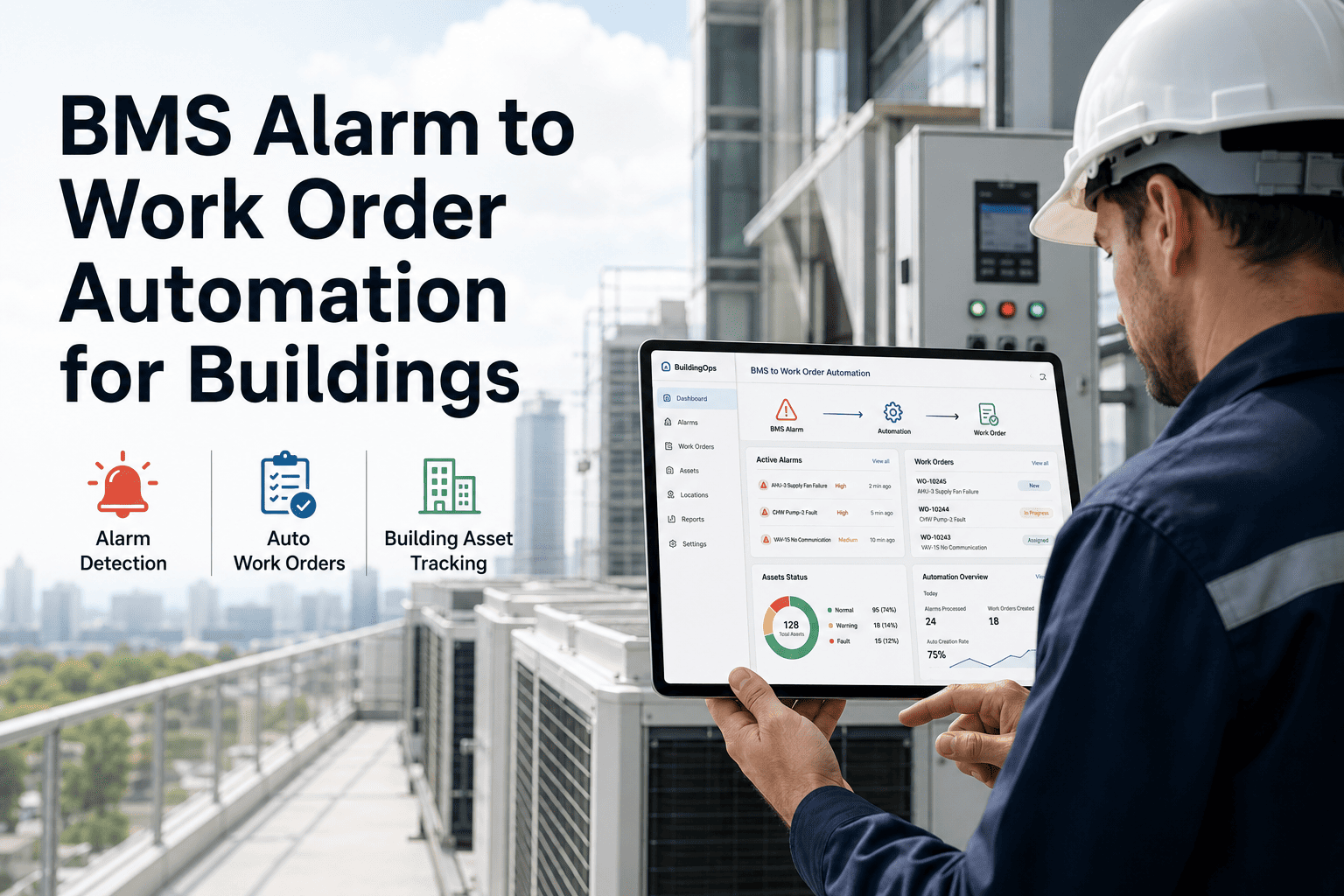
AI BMS Alarm Prioritization for Facility Teams

By Lewis Abbott on June 7, 2026

ai-bms-alarm-prioritization-facility-teams


Facility teams running modern buildings face a paradox: the smarter the BMS, the louder the noise. OxMaint AI cuts through alarm overload with intelligent scoring, asset risk context, and automated work orders — so your team responds to what matters, not just what beeps loudest.

AI Work Order Automation

Your BMS Is Screaming.Most of It Doesn't Matter.

Facility managers receive an average of 12.5 BMS alarms per day — over 50% receive up to 30. OxMaint AI scores, routes, and converts only the alarms that need action into tracked work orders before minor faults become costly downtime.

30+
Alarms per day in 50% of facilities
76%
Facility managers want better alarm management
2 in 3
Alarms ignored due to saturation fatigue
<60s
OxMaint BMS-to-work-order response time

The Real Cost of Alarm Overload

When everything is urgent, nothing is. BMS alarm fatigue silently erodes response quality across your entire facility portfolio.

01
Ignored Critical Alarms
Teams desensitized to high alarm volume stop acknowledging alerts, causing Mean Time to Acknowledge (MTTA) to climb — and critical faults to go unresolved for hours.
02
No Asset Context
A BMS alarm without asset age, criticality, and service history is just noise. Technicians waste time diagnosing alarms on recently-serviced or low-criticality equipment.
03
Manual Work Order Creation
Copying alarm details into a separate CMMS by hand introduces delay, transcription errors, and routing gaps — especially during peak alarm periods overnight and on weekends.
04
No Audit Trail
Without a documented link between a BMS alarm and the work performed, compliance audits, insurance claims, and root-cause investigations become almost impossible to support.

How OxMaint AI Prioritizes BMS Alarms

A four-layer intelligence stack converts raw alarm data into actionable, prioritized maintenance workflows.

1
Ingest BMS Data
OxMaint connects to your BMS via API, BACnet, or Modbus to pull real-time alarm streams — no manual export required.

2
Score by Asset Risk
Each alarm is scored against asset criticality, age, service history, and operational impact — not just alarm code severity.

3
Auto-Create Work Orders
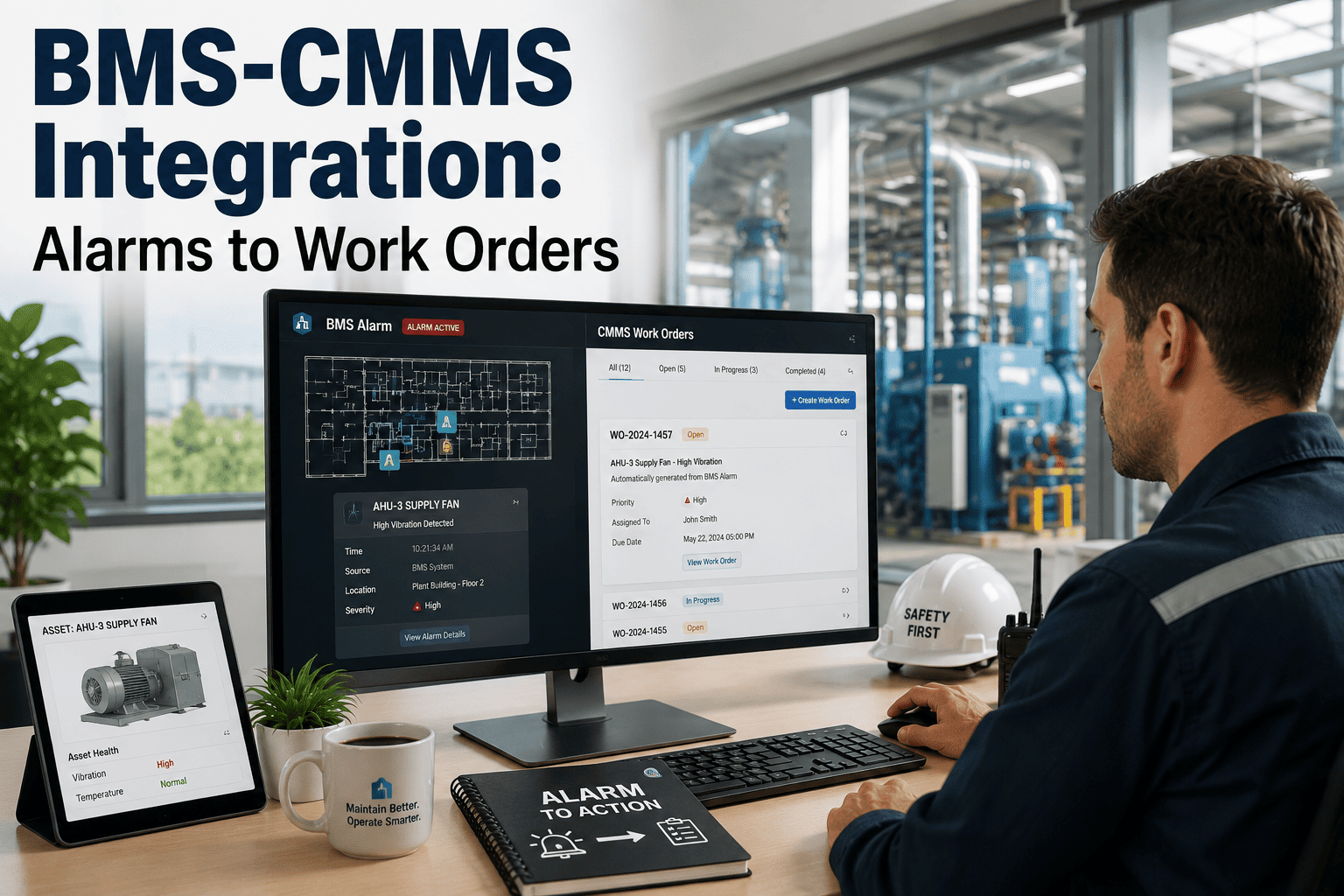
High-priority alarms trigger immediate work orders with pre-populated asset data, technician assignment, and response SLA attached.

4
Route to Right Technician
AI matches alarm type and asset location to available technicians with the right skill set — reducing response dispatch lag to under 3 minutes.

BMS Alarm Scoring Matrix

OxMaint AI weighs five factors to produce a composite priority score for every incoming alarm event.

Scoring Factor Weight Low Score Example High Score Example
Asset Criticality 35% Decorative lighting circuit Primary chiller, AHU serving ICU
Asset Age vs. MTBF 20% Asset installed 6 months ago Asset 3 years past expected lifespan
Last Service Interval 20% Serviced within last 30 days No service record in 18 months
Alarm Frequency Pattern 15% First occurrence this quarter 4th same alarm in 48 hours
Downstream System Impact 10% Isolated, non-critical zone Cascade risk to 3+ dependent systems
OxMaint AI — Smart Building CMMS

Stop letting alarm noise drive your maintenance decisions. Let AI score what's critical, assign it to the right person, and document every response automatically.

Measured Results After AI Alarm Prioritization

Outcomes from facility teams using OxMaint AI alarm management within the first 90 days of deployment.

-71%
Alarm volume requiring human review
AI filters and resolves low-priority alarms automatically
-68%
Mean Time to Acknowledge critical alarms
From 47 minutes average to under 15 minutes
100%
BMS alarm-to-work-order audit linkage
Every actioned alarm has a traceable work order record
-43%
Unplanned downtime from missed fault escalation
Early AI scoring catches faults before cascade failure

Expert Perspective


Alarm fatigue is not a technology failure — it is a prioritization failure. A BMS that generates thirty alarms a day without ranking them by asset risk is handing your team thirty equal-weight problems, which functionally means they have no problems at all. The teams that resolve this introduce scoring logic between the BMS alarm stream and the technician's queue. What they find, universally, is that fewer than eight of those thirty alarms actually require a human response on any given day. The rest are informational, duplicate, or self-resolving. AI-driven prioritization does not replace the engineer — it gives the engineer the right eight problems to focus on.

Senior Building Systems Engineer
Smart Building Operations Consultant — 19 Years Field Experience

Frequently Asked Questions

OxMaint AI supports integration with major BMS platforms including Siemens Desigo, Johnson Controls Metasys, Honeywell Enterprise Buildings Integrator, and Schneider EcoStruxure via BACnet, Modbus, and REST API. For legacy systems without direct API access, OxMaint provides a data bridge agent that reads alarm logs and forwards them to the prioritization engine. Most integrations are live within 5 to 10 business days. Book a demo to confirm compatibility with your current BMS setup.
Yes. OxMaint provides a configurable scoring rule editor where facility managers can adjust weighting for each scoring factor, define which alarm types auto-create work orders versus trigger notifications, and set escalation rules by building zone or asset class. Default scoring models are pre-built for commercial office, healthcare, and industrial facility types, and can be customized within the first week of deployment. Start your free trial to explore the rule configuration interface.
OxMaint's alarm intelligence layer includes a pattern recognition filter that identifies repeat nuisance alarms — alarms that recur frequently but have never required corrective action — and suppresses them from the work order queue while logging them for periodic review. Nuisance alarm candidates are flagged for manager approval before suppression is applied. This prevents false-positive work orders while maintaining a complete alarm log for compliance. Book a demo to see the nuisance suppression workflow in action.
OxMaint is designed for portfolio-level alarm management, with a cross-site alarm dashboard that aggregates prioritized alarms from all connected buildings into a single view ranked by composite risk score. Portfolio managers can filter by site, building system type, or alarm severity, and define which alarms escalate to regional managers versus local technicians. Work order routing and technician dispatch operate independently per site while reporting rolls up to the portfolio level. Start your free trial to test multi-site configuration.
OxMaint AI — Facility CMMS

Every minute a critical BMS alarm waits in a queue costs more than the fix. OxMaint AI makes sure the right fault gets the right technician before it becomes a failure.

AI alarm scoring. Auto work orders. Asset risk context. Built for facility teams managing complex BMS environments.
Share This Story, Choose Your Platform!