Fire pump systems are the last line of active defense in a building fire emergency — and the only way to know they will perform under load is a documented, regular inspection and test program. Regulatory bodies, insurance carriers, and fire marshals all require verifiable evidence of fire pump inspection compliance. Facilities that manage this with paper logs and spreadsheets face audit gaps, missed test schedules, and the real-world consequence that a fire pump that has not been properly maintained will fail at the moment of maximum need. This checklist provides the complete inspection framework, with guidance on how Oxmaint's compliance platform transforms it from a paper obligation into a managed, auditable digital program. Book a demo to see how Oxmaint manages fire pump inspection compliance for commercial buildings.
Fire Life Safety — Critical Priority
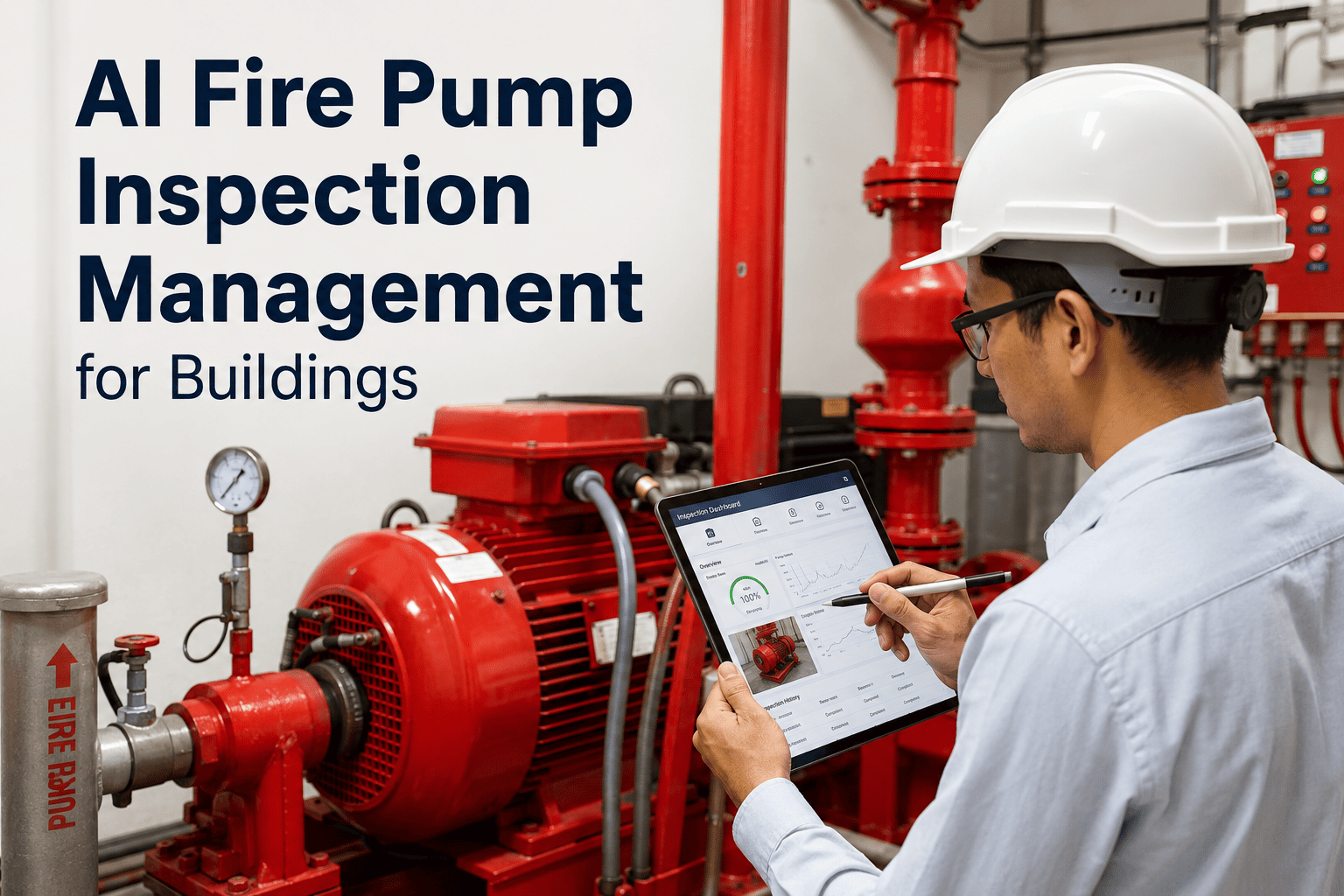
AI Fire Pump Inspection Management
For Commercial Buildings, Industrial Facilities, and Healthcare Campuses
NFPA 25
Primary compliance standard this checklist addresses
-89%
Reduction in missed inspection events with digital scheduling
3 min
Time to export complete fire pump audit documentation
Fire Pump Inspection Frequency Requirements
Weekly
Pump room visual inspection — no leaks, adequate lighting, temperature above 40°F
Controller pilot light and pressure gauge verification
Automatic transfer switch status check
Packing gland condition — minor drip acceptable, excessive leakage logged
Monthly
Diesel engine pump — 10 minute run test under no-load conditions
Electric motor pump — 10 minute run test at rated conditions
Suction and discharge pressure readings at test flow
Battery charger voltage and charging current verification
Fuel tank level check — minimum 2/3 full maintained
Annual
Full flow test to rated capacity per NFPA 25 Section 8.3
Flow curve performance vs. manufacturer acceptance criteria
Complete engine and pump alignment check
Internal inspection of pump casing for corrosion or impeller wear
Controller wiring and connection integrity verification
5-year impeller, wear ring, and bearing inspection (at first annual following 5-year milestone)
The Complete Fire Pump Inspection Checklist
Each item below corresponds to an inspectable element required by NFPA 25 and accepted by local fire authorities having jurisdiction. All items should be digitally logged with technician identification, result, and date stamp.
A
Pump Room and Physical Condition
Inspect: Weekly
Pump room temperature above 40°F (4°C) — verify adequate heating in cold weather
Cold temperatures can cause diesel fuel gelling, battery performance loss, and pipe freezing. Failure here compromises all downstream functions.
Critical
No visible water leaks from pump casing, seals, or piping connections
Minor packing drip is normal and acceptable. Pool formation, casing weeping, or pressure piping leaks require immediate corrective action work order.
High
All valves in correct open/closed position per system design — verify with visual indicator
An inadvertently closed suction or discharge valve will cause complete fire pump failure on demand. This is the single most common cause of fire pump failure during emergencies.
Critical
Pump room access is unobstructed — no stored materials blocking equipment access
Emergency access obstruction delays response time during fire events and constitutes a fire code violation that may result in citation during AHJ inspection.
Moderate
B
Controller and Electrical Systems
Inspect: Weekly / Test: Monthly
Controller pilot light illuminated — power available to fire pump controller
Loss of controller power indication requires immediate investigation. Utility power failure, breaker trip, or wiring fault must be identified and corrected before the next emergency demand event.
Critical
Pressure sensing line connections tight — no air leaks at gauge or controller fittings
Air leaks in pressure sensing lines cause erratic controller behavior and unreliable automatic start signals. The pump may fail to start on system pressure drop if sensing integrity is compromised.
High
Automatic transfer switch transfers correctly during monthly test — generator supply verified
Fire pumps in many jurisdictions must operate from emergency power. ATS function verification ensures the pump receives power during a simultaneous fire and utility failure scenario.
Critical
C
Diesel Driver — Engine Inspection Items
Inspect: Weekly / Run Test: Monthly
Engine oil level — add if below full mark; investigate if consumption exceeds 1 qt per month
Excessive oil consumption indicates piston ring wear or seal degradation. A diesel engine that runs dry during a full-flow test will sustain catastrophic damage and fail during the emergency it was needed to prevent.
Critical
Coolant level at correct mark — no discoloration or oil contamination in coolant
Coolant contaminated with oil indicates a blown head gasket or cracked block — a condition that will cause engine failure under sustained load without warning. Visual inspection catches this before catastrophic failure.
High
Fuel tank at minimum 2/3 capacity — verify fuel quality (no water or algae contamination)
Diesel fuel stored beyond 12 months develops contamination that clogs injectors under load. Annual fuel polishing or replacement is required for fire pumps with infrequent engine operation.
Critical
Starting battery voltage above 12.4V (12V system) — charging current present when connected to charger
Fire pump diesel engines must start reliably within 10 seconds of demand signal. A battery below voltage threshold will fail to crank the engine at the moment of demand.
Critical
Compliance Made Automatic
Never Face an Audit Gap on Your Fire Pump Records
Every item on this checklist becomes a tracked, assigned, GPS-timestamped task in Oxmaint. Missed inspections generate escalating alerts. Completed inspections generate audit-ready records. Book a demo and our compliance team will configure your fire pump inspection program in the platform.
Test Results: What to Record and When to Escalate
| Test Parameter |
Acceptable Range |
Action Threshold |
Required Response |
| Pump discharge pressure at rated flow |
≥ 95% of nameplate |
Below 90% of nameplate |
Corrective maintenance required before next inspection cycle |
| Diesel engine start time |
≤ 10 seconds |
10–30 seconds |
Investigate battery, fuel system, or starter within 7 days |
| Pump suction pressure |
Per design — positive for flooded suction |
Below minimum design pressure |
Investigate water supply immediately — do not leave without resolution |
| Engine oil pressure at operating temperature |
Per engine spec (typically 40–80 PSI) |
Below minimum spec or fluctuating |
Stop engine test; investigate before next run test |
| Packing gland drip rate |
20–30 drops per minute |
Stream flow or zero drip |
Adjust packing within 14 days; zero drip may indicate over-tightened packing |
Expert Review
A fire pump inspection program is only as reliable as its execution — and execution reliability is only as good as the system tracking it. I have investigated fire incidents where the pump failed on demand and the paper inspection log showed 100% compliance. When we forensically traced the records, we found entries that could not have been made on the dates recorded. Digital inspection platforms with GPS timestamping and device authentication eliminate that possibility entirely. The record either exists with verifiable metadata or it doesn't. That is the standard that protects lives and organizations.
RF
Robert Falk
Fire Protection Engineer, PE, SFPE Fellow, 25 years investigating fire system failures and compliance programs
Insurance carriers are increasingly requiring digital fire pump inspection records as a condition of coverage renewal — not because paper records are inherently unreliable, but because facilities with digital programs demonstrably have higher inspection completion rates and faster corrective action response times. We see the difference in claims data. Buildings with managed digital inspection programs have significantly lower fire system failure rates when claims occur. That data now drives underwriting, and facilities without digital programs are beginning to face premium surcharges at renewal.
GW
Gloria Weston
Senior Property Underwriter, Commercial Lines, Fire Protection Systems specialist
Frequently Asked Questions
Does Oxmaint's fire pump checklist comply with NFPA 25 requirements?
Oxmaint's fire pump inspection templates are built to NFPA 25 (Standard for the Inspection, Testing, and Maintenance of Water-Based Fire Protection Systems) requirements, including all inspection frequencies, test procedures, and documentation requirements. Templates are updated when NFPA 25 editions are revised. The platform also supports local AHJ addendums and insurance carrier-specific requirements for facilities in jurisdictions with additional requirements beyond the NFPA 25 baseline.
Book a demo to review the NFPA 25 compliance template for your jurisdiction.
How does Oxmaint handle the annual full-flow test documentation requirements?
Annual full-flow test documentation in Oxmaint captures pump curve data points across flow rates, suction and discharge pressure readings, RPM verification, and comparison against manufacturer acceptance criteria. The platform generates a completed NFPA 25 test form that can be submitted directly to local fire authorities and insurance carriers. For facilities using certified testing contractors, the contractor completes the test form within Oxmaint using a temporary access credential — so the facility maintains ownership of all test records.
Start a free trial to set up your annual test workflow.
What happens in Oxmaint when a fire pump inspection finds a deficiency requiring corrective action?
When an inspection item is marked as failed or out-of-tolerance, Oxmaint automatically generates a corrective action work order categorized by urgency — immediate, 7-day, or 30-day — based on the deficiency type. Designated managers receive instant notification. The work order tracks repair status and requires technician sign-off on completion before the deficiency is closed. A follow-up inspection task is automatically scheduled to verify the corrective action resolved the issue. The complete deficiency-to-resolution chain is documented and exportable for AHJ and insurance audit requirements.
Fire Pump Compliance Is Not Optional
A fire pump that fails under emergency demand — and cannot demonstrate a documented inspection program — represents simultaneous life safety failure and regulatory failure. Oxmaint makes compliance automatic, auditable, and verifiable. Every inspection completed, every test result captured, every corrective action tracked. Book a demo to activate fire pump compliance management for your building portfolio.