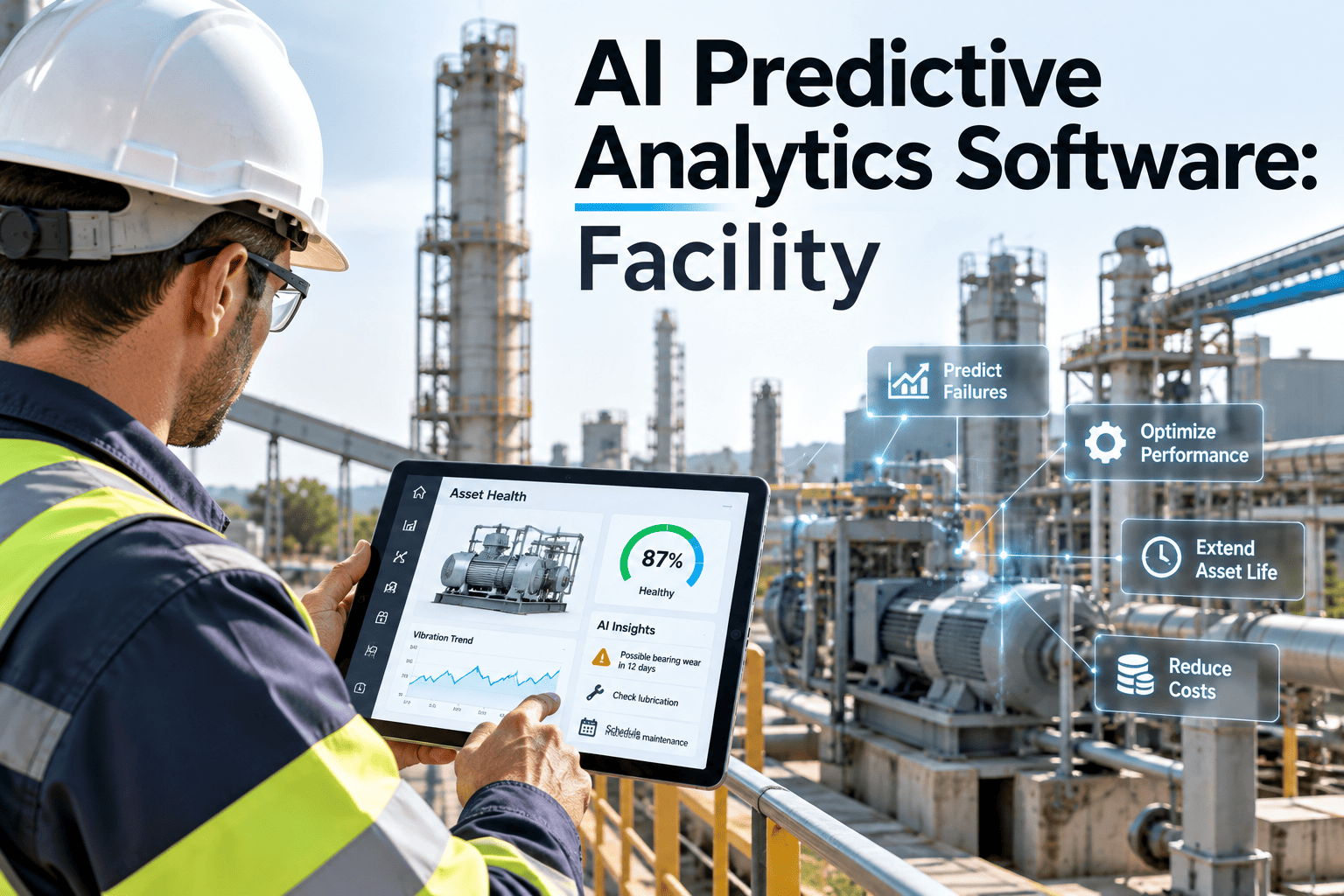
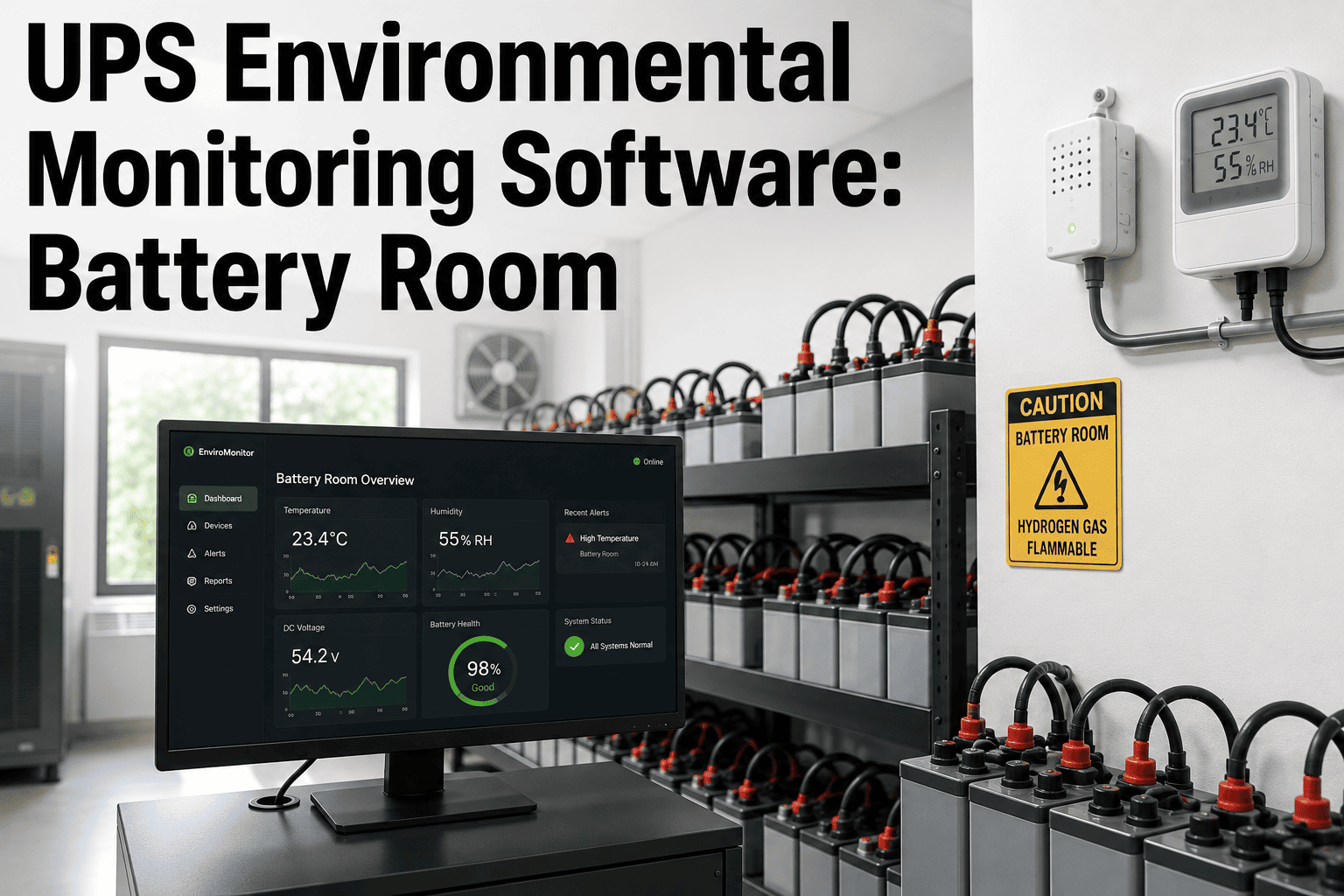
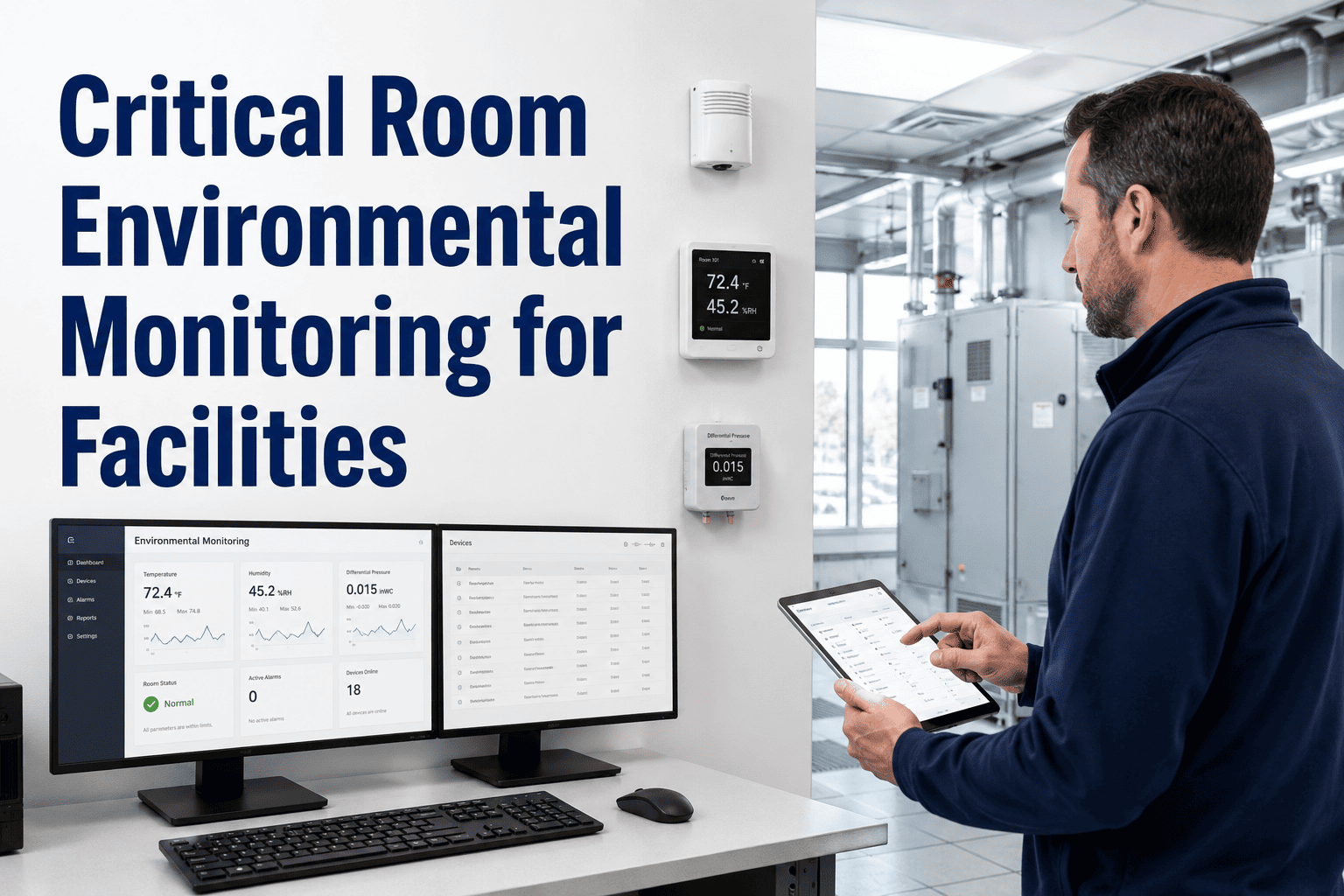
University research buildings operate under maintenance demands that no standard campus FM system was built to handle — pressurized labs, BSL-2 and BSL-3 rooms, -80°C freezers, fume hoods, clean benches, and HVAC systems that must hold temperature and pressure differentials within tight tolerances around the clock. When a compressor fails at 2 a.m. or a lab HVAC drifts out of spec, the downstream consequences include compromised samples, failed experiments, regulatory violations, and costly grant disruptions. OxMaint AI gives university facilities teams the analytics layer that connects every maintenance event, utility reading, and inspection record into one live picture of research building health. See how OxMaint monitors research building infrastructure in real time.
Article · Education Facilities · Analytics & Reporting · 2026
AI Maintenance Analytics for University Research Buildings
Labs, cold rooms, vivaria, clean benches, and fume hoods running 24/7 — university research infrastructure demands a maintenance intelligence layer, not a work order spreadsheet.
$2.8M
average research loss when a critical cold storage failure goes undetected overnight
38%
of research facility downtime events are caused by HVAC and utility system failures
6 hrs
average detection delay for critical room excursions using reactive maintenance approaches
The Research Facility Maintenance Gap
Why standard campus FM tools fail research buildings
Research buildings are fundamentally different from academic buildings — they contain equipment and environments that require 24/7 uptime, regulatory compliance, and documented maintenance histories that can survive an NIH audit. General-purpose CMMS tools treat a -80°C freezer the same as a corridor light. The result is invisible risk at the asset level that surfaces only when something fails at the worst possible moment.
01
Critical Equipment Blind Spots
ULT freezers, incubators, centrifuges, and autoclaves are rarely tracked in standard FM systems — so when they fail, there is no maintenance history, no PM record, and no early warning that was missed.
02
HVAC Compliance Documentation Gaps
BSL labs, vivaria, and clean rooms require HVAC performance logs at specific intervals. Paper binders and email chains cannot produce the structured documentation trail that biosafety officers and federal sponsors require.
03
Reactive Utility Response
Steam, chilled water, compressed air, and electrical systems serving labs are typically managed reactively. Pressure drops and temperature deviations are discovered by researchers — not by maintenance systems that should have caught them first.
04
Multi-Building Fragmentation
Large research campuses manage dozens of buildings with different HVAC systems, different equipment inventories, and different compliance requirements — but try to manage them all with the same disconnected set of spreadsheets and ticketing tools.
OxMaint Analytics in Research Buildings
What AI maintenance analytics actually monitors across your research campus
| Research Building System |
Analytics OxMaint Tracks |
Alert Triggered When |
Compliance Impact |
| BSL Lab HVAC |
Air changes per hour, differential pressure, temp trending |
Pressure differential drops below spec |
Biosafety compliance documentation |
| ULT / Cold Storage |
Temperature log, compressor run hours, door event count |
Temperature excursion above threshold |
Sample integrity, FDA cold chain |
| Fume Hoods |
Face velocity readings, last certification date, motor hours |
Certification window approaching or missed |
OSHA, EHS certification requirements |
| Vivarium Environment |
Temperature, humidity, air changes, lighting cycles |
Any parameter out of AAALAC spec range |
AAALAC / IACUC accreditation |
| Autoclave / Sterilizers |
Cycle count, last biological indicator test, pressure log |
Biological indicator test due or overdue |
Biosafety, decontamination compliance |
| Lab Utility Systems |
Compressed air pressure, DI water conductivity, vacuum level |
Utility reading outside operating range |
Equipment manufacturer requirements |
Analytics & Reporting · Built for Research Infrastructure
Your research building generates thousands of data points every day. OxMaint turns them into maintenance intelligence.
Connect lab HVAC logs, cold storage temps, fume hood certifications, and utility readings into one analytics platform — with automated alerts, work order dispatch, and compliance-ready reporting for every sponsored research requirement.
How OxMaint Works for Research Facilities
From data point to closed work order — the analytics-to-action loop
1
Condition Data In
IoT sensors, SCADA feeds, manual readings, and lab equipment APIs push data into OxMaint continuously — building a live condition record per asset.
2
AI Trend Detection
OxMaint AI identifies deviation from normal operating ranges — not just threshold breaches, but rate-of-change patterns that indicate developing faults.
3
Auto Work Order
Condition alerts auto-generate work orders assigned to the right technician with asset context, last maintenance history, and required parts pre-populated.
4
Documented Closure
Technician closes on mobile with readings, photos, and sign-off. Compliance record is complete, timestamped, and linked to the asset — permanently.
Expert Review
"University research facilities are some of the most complex maintenance environments on any campus — and the most under-resourced relative to the criticality of what they contain. A single cold storage failure that ruins six months of funded research creates more damage than a dozen classroom HVAC breakdowns. The shift to analytics-driven maintenance isn't optional for serious research institutions — it's a research continuity strategy."
Frequently Asked Questions
What university facilities teams ask before getting started
How does OxMaint handle the documentation requirements for NIH and NSF-funded facility spaces?
OxMaint generates timestamped maintenance logs, environmental monitoring records, and inspection histories that satisfy the documentation requirements in NIH Grant Policy Statements and NSF facility use reporting. Every work order is linked to the specific room or asset, with the technician name, date, readings taken, and corrective actions documented. Research compliance officers can export audit packages on demand without manual record assembly. The platform stores all records permanently, satisfying the multi-year retention periods required by federal sponsors.
Configure your compliance documentation in a free trial.
Can OxMaint monitor BSL-2 and BSL-3 lab HVAC systems with the required documentation?
Yes — OxMaint supports BSL lab-specific HVAC monitoring with configurable parameters for air changes per hour, directional airflow, differential pressure, and temperature. Readings are logged automatically when connected to building automation systems, or manually via mobile by facilities staff. Excursion events generate immediate work orders and are flagged in the biosafety compliance record. Monthly and annual HVAC performance reports required by CDC/NIH biosafety guidelines are generated automatically.
See the BSL lab monitoring setup in a live demo.
How does OxMaint integrate with the building automation systems already installed in our research buildings?
OxMaint connects to BACnet, Modbus, and REST API-compatible building automation and SCADA systems — covering the major BAS platforms used in university facilities including Johnson Controls Metasys, Siemens Desigo, and Honeywell Building Manager. For buildings without BAS connectivity, OxMaint supports IoT sensor integration and manual data entry workflows. The integration team provides university-specific onboarding and connects to existing infrastructure without requiring infrastructure replacement or additional middleware platforms.
Does OxMaint work across multiple research buildings on a distributed campus?
OxMaint's campus view allows facilities directors to see every building, zone, and critical asset across the full research campus in one dashboard — filtered by building, department, system type, or compliance status. Each building maintains its own asset hierarchy, PM schedule, and compliance record, but roll-up analytics identify patterns across the portfolio — identifying which buildings have the highest deferred maintenance backlogs, which systems are driving the most reactive calls, and where capital investment will have the greatest impact on research continuity.
Free Trial · Research-Facility Ready · No Credit Card
Research infrastructure that fails quietly costs more than a maintenance program that never sleeps.
Give your university's research buildings the analytics layer they need — continuous monitoring, automated work orders, and compliance documentation built for sponsored research requirements.