Asset Lifecycle Management for Commercial Real Estate Portfolios
By shreen on February 27, 2026
Managing a commercial real estate portfolio means tracking hundreds of assets across dozens of properties—HVAC units nearing end-of-life, roofing membranes past warranty, elevators due for modernization, and fire suppression systems requiring recertification. When asset data lives in spreadsheets, emails, and the memories of retiring facility managers, capital planning becomes guesswork. A centralized asset lifecycle platform eliminates the blind spots, giving portfolio managers the visibility they need to allocate capital where it matters most. Schedule a consultation to see how Oxmaint brings every asset into a single living record.
Why Spreadsheet-Based Asset Tracking Fails at Portfolio Scale
Commercial real estate operators managing 10, 50, or 200+ properties cannot afford to discover a chiller failure the day tenants start complaining. Yet that is exactly what happens when asset condition data is fragmented across property management silos, disconnected maintenance logs, and capital expenditure spreadsheets that were last updated two quarters ago. The cost is not just reactive repairs—it is lease non-renewals, deferred maintenance liabilities ballooning on balance sheets, and capital budgets built on assumptions instead of data. Operators who sign up for Oxmaint replace guesswork with sensor-backed asset intelligence across their entire portfolio.
68%
Of CRE operators say they lack reliable data on asset remaining useful life across their portfolio
$4.2B
Annual deferred maintenance backlog across U.S. commercial properties due to poor lifecycle tracking
23%
Average capital budget overrun when replacement decisions are based on age alone, not condition data
Key Insight
42%
of commercial building assets are replaced either too early (wasting remaining useful life) or too late (after costly emergency failures)—because operators lack real-time condition monitoring tied to lifecycle planning. Oxmaint closes this gap by connecting maintenance history, inspection data, and depreciation schedules into a single asset timeline.
Five Domains of Asset Lifecycle Management for CRE
Each domain below covers a critical area of asset lifecycle management. Portfolio managers using Oxmaint's platform can automate tracking across every domain from acquisition through disposal.
ACQ
Acquisition Asset Audit
Before closing on any property, a thorough asset inventory and condition assessment establishes the true capital position. This baseline drives your first-year CapEx budget and prevents inherited surprises.
Complete Asset Inventory — Document every major building system with install dates, model numbers, and warranty status.
Condition Scoring — Assign 1-5 ratings using standardized criteria to flag assets needing immediate capital planning.
Deferred Maintenance Quantification — Total all overdue maintenance costs that impact acquisition valuation.
PMT
Preventive Maintenance Tracking
Consistent preventive maintenance is the single largest lever for extending asset life. Without a system that schedules, tracks, and verifies PM completion, assets degrade faster than expected lifecycle curves.
PM Schedule Coverage — Every critical asset has active maintenance schedules with defined intervals and assigned vendors.
Warranty Preservation — Align PM tasks with manufacturer requirements to protect remaining warranty coverage.
CPX
Capital Planning and Forecasting
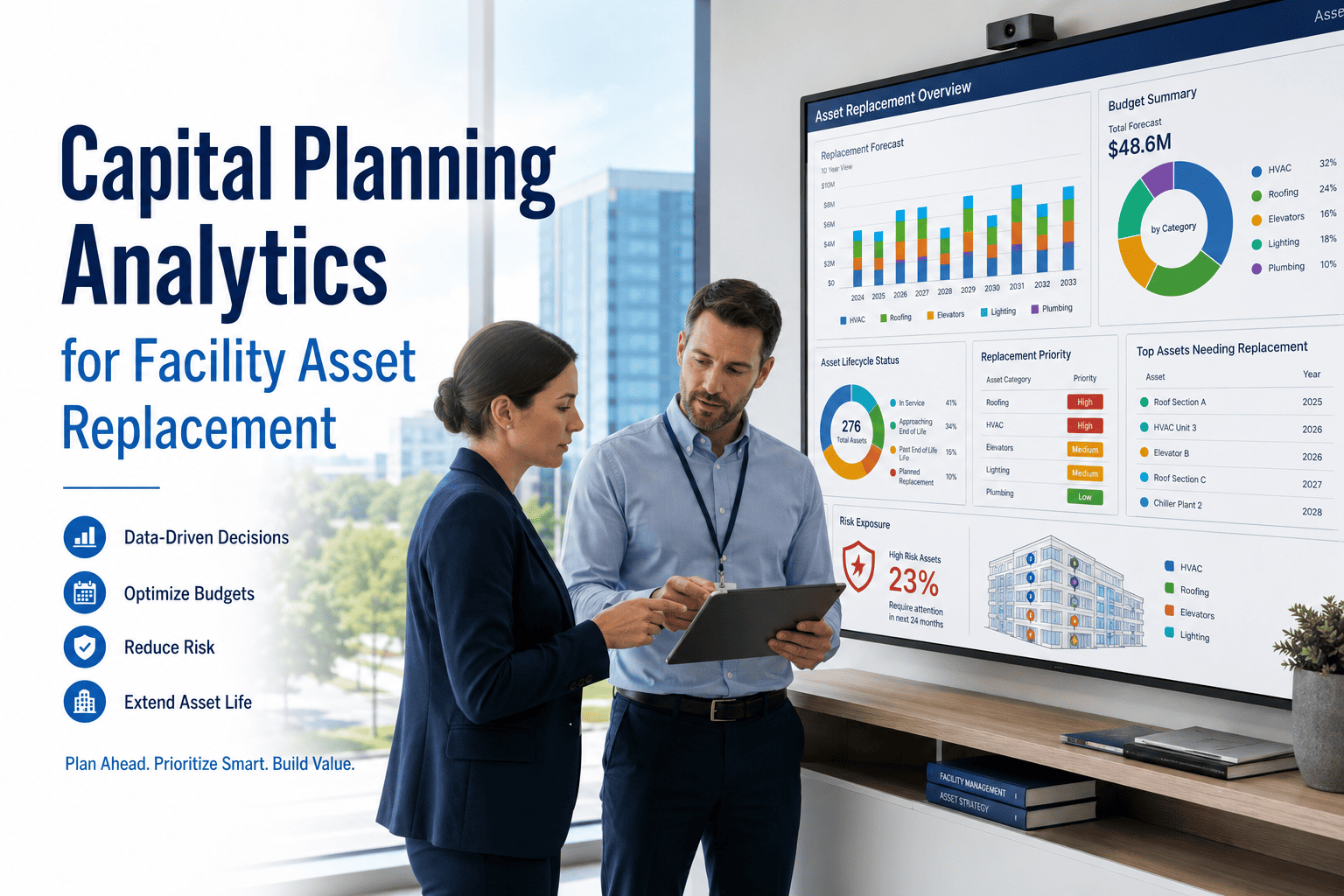
Capital expenditure planning for a multi-property portfolio requires asset-level condition data feeding into property-level budgets that roll up into portfolio-level forecasts. Sign up for Oxmaint to automate CapEx forecasting from condition data.
5-Year CapEx Forecast — Rolling replacement forecasts using RUL data, inflation-adjusted costs, and priority weighting.
Portfolio Capital Allocation — Rank properties by urgency and NOI contribution to maximize portfolio value.
Repair vs. Replace Analysis — When repair costs exceed 50% of replacement, escalate to CapEx automatically.
CMP
Compliance and Regulatory Lifecycle
Building systems have regulatory lifecycles running parallel to their physical lifecycles. Fire suppression recertification, elevator inspections, and refrigerant phase-outs all carry deadlines that a CMMS must track automatically.
Certification Calendar — Auto-alerts 90, 60, and 30 days before expiration for all required inspections.
Phase-Out Tracking — Monitor refrigerant regulations and energy mandates affecting replacement timelines.
Audit Trail — All reports, permits, and compliance docs linked to specific asset records for instant retrieval.
DSP
Disposition and Replacement Execution
When an asset reaches end-of-life, the replacement process must be documented from decommission through installation. This ensures the new asset enters the lifecycle system with a complete record from day one.
Decommission Documentation — Record final condition, failure mode, actual vs. expected lifespan, and total lifecycle cost.
New Asset Onboarding — Enter replacement into CMMS with serial number, warranty, PM requirements, and condition photos.
Lifecycle Cost Benchmarking — Compare actual ownership costs against projections to improve future forecasting accuracy.
Stop managing asset lifecycles in disconnected spreadsheets. Oxmaint gives portfolio managers a single platform to track every asset from acquisition audit through end-of-life replacement—with automated PM scheduling, CapEx forecasting, and compliance tracking built in.
Spreadsheet Tracking vs. CMMS-Powered Lifecycle Management
The gap between manual asset tracking and a connected lifecycle platform is not incremental—it is structural. Here is what changes when CRE operators move their portfolio onto Oxmaint.
Spreadsheet Tracking
Asset data updated quarterly at best—often only during annual budgeting
Condition scores based on age, not actual inspection findings
PM completion unverifiable without digging through vendor invoices
CapEx forecasts built on assumptions, adjusted reactively after failures
Compliance certifications tracked in a separate filing system—or not at all
Oxmaint Lifecycle Platform
Asset records updated in real time as work orders complete and inspections log
Condition scores driven by maintenance history, sensor data, and inspection photos
PM compliance dashboards show completion rates by property, system, and vendor
CapEx forecasts auto-update as asset conditions change, using actual RUL curves
Compliance calendar with automated alerts, linked documentation, and audit export
How Oxmaint Manages the Full Asset Lifecycle
Each capability below addresses a specific pain point that CRE portfolio managers face when trying to optimize asset performance, extend useful life, and plan capital expenditures accurately.
Centralized Asset Registry
Every asset across every property lives in one searchable database—with install dates, condition scores, warranty status, maintenance history, and linked documentation.
Multi-PropertyReal-Time Sync
Automated PM Scheduling
Set manufacturer-recommended maintenance intervals once. Oxmaint generates recurring work orders, assigns to vendors, tracks completion, and escalates missed tasks automatically.
Auto-EscalationVendor Portal
CapEx Forecasting Engine
Condition data and RUL estimates feed into rolling 5-year capital forecasts by property and portfolio. Forecasts adjust dynamically as new inspection data arrives.
Rolling ForecastNOI Impact
Compliance Alert System
Automated notifications for expiring certifications, upcoming inspections, and regulatory deadlines. Every alert links to the specific asset record with full documentation history.
Auto-AlertsAudit-Ready
We went from estimating capital needs in a boardroom to forecasting them from actual asset data. Our CapEx accuracy improved dramatically in the first year, and we caught three major equipment failures before they disrupted tenants.
— VP of Property Operations, 45-property CRE portfolio
Your Portfolio Deserves Asset Intelligence, Not Asset Guesswork
Oxmaint gives commercial real estate operators the tools to track every asset from day-one acquisition audit through end-of-life replacement—with automated preventive maintenance, real-time condition scoring, compliance tracking, and CapEx forecasting that updates as your assets age. Stop reacting. Start managing.
How does Oxmaint handle multi-property portfolios with different building types?
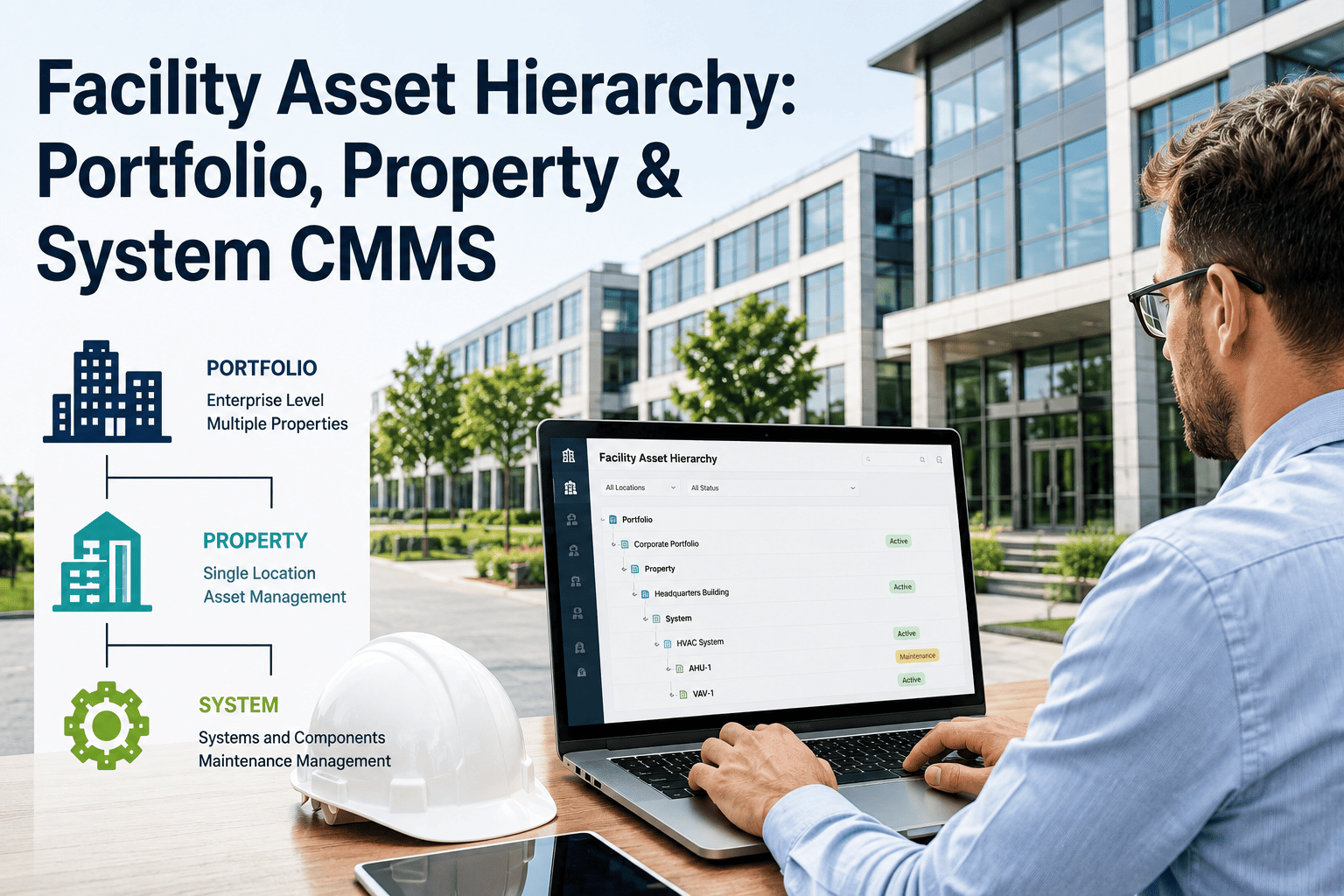
Oxmaint supports hierarchical portfolio structures—you can organize by region, property type, building, floor, and system. Each property has its own asset registry, PM schedules, and compliance calendars, while portfolio-level dashboards roll everything up for capital planning and executive reporting. Sign up to see the portfolio dashboard in action.
Can we import existing asset data from spreadsheets?
Yes. Oxmaint provides bulk import templates that map your existing spreadsheet columns to asset record fields. The onboarding team validates data quality, flags duplicates, and helps establish condition baselines for assets that lack historical maintenance records.
How does the platform calculate remaining useful life?
RUL calculations combine manufacturer-specified expected lifespan, actual maintenance history, inspection condition scores, and operating environment factors. As more data accumulates, RUL estimates become increasingly accurate—shifting from industry averages to asset-specific projections. Book a demo to see RUL modeling for your asset types.
Does Oxmaint integrate with property management and accounting systems?
Oxmaint connects with major property management platforms and accounting systems via API. Work order costs flow into operating expense tracking, CapEx approvals sync with financial workflows, and asset depreciation schedules export for accounting compliance.
What reporting is available for investors and asset managers?
Portfolio-level reports include asset condition summaries by property, 5-year CapEx forecasts with variance tracking, PM compliance rates, deferred maintenance totals, and lifecycle cost benchmarks. Reports export to PDF and integrate with investor reporting workflows. Sign up to explore the reporting suite.