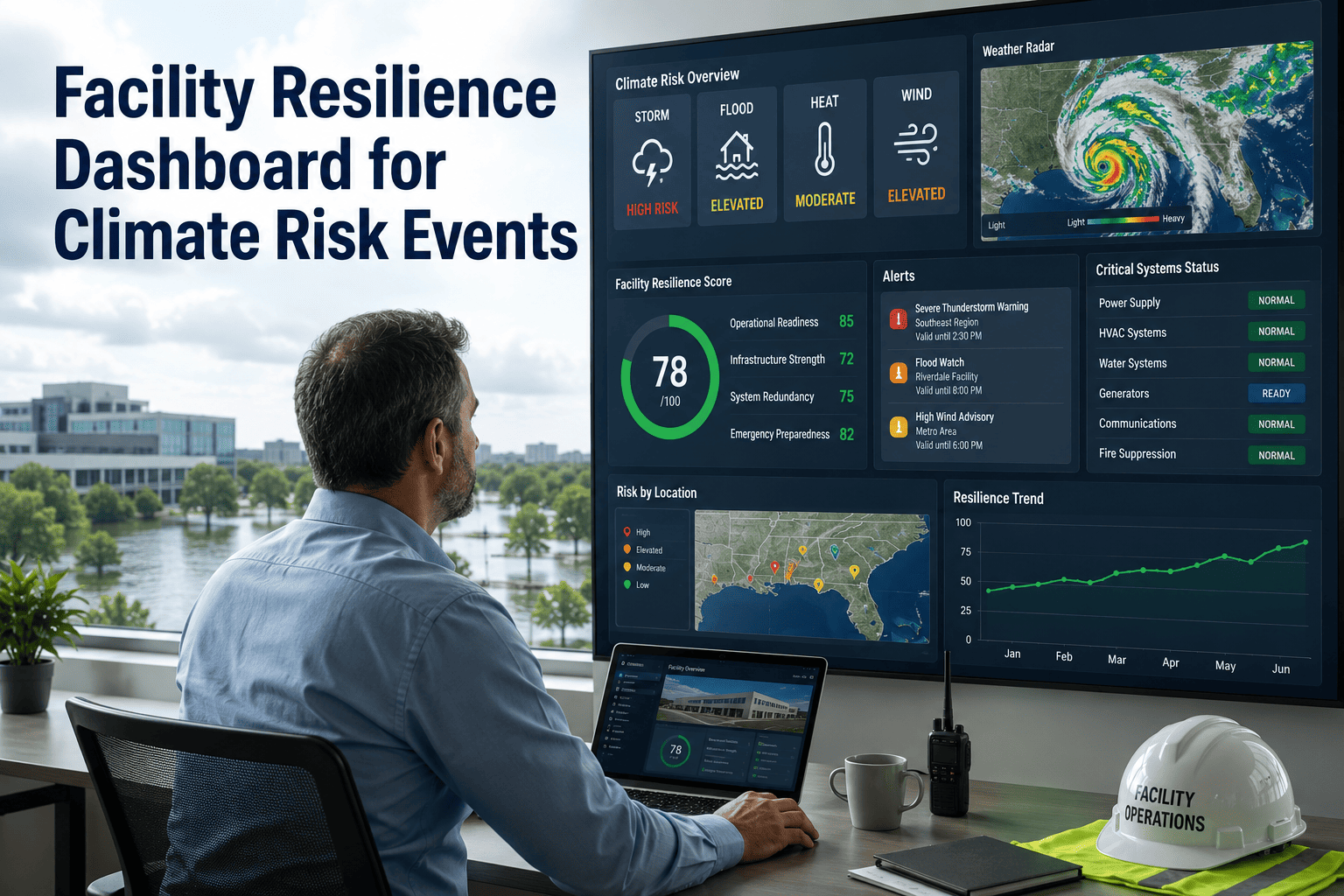
A Category 4 hurricane landfall. A two-week heatwave hitting 115°F. A once-in-a-century flood event that wasn't — because the previous one happened six years ago. Facilities across North America are no longer planning for unlikely climate scenarios; they are responding to recurring ones. The question is no longer whether extreme weather will stress your building systems — it is whether your maintenance program is positioned to respond before failure, not after. Facilities that document asset risk scores, pre-stage critical spare parts, and activate pre-defined response workflows before a storm makes landfall recover 60% faster than those reacting in real time. See how OxMaint builds climate readiness into your maintenance workflows.
Climate Resilience · Asset Risk · Facility Readiness
Climate Risk Maintenance Readiness for Facilities
Plan maintenance actions for heat events, storms, flooding, and power outages before they happen — using asset risk scoring, pre-built response workflows, and real-time condition monitoring in OxMaint CMMS.
Facility Risk Without Readiness Plan
3xhigher repair costs post-event vs pre-planned
60%faster recovery with documented readiness workflows
Four Climate Threats
The Events Your Maintenance Program Must Be Ready For
Extreme Heat
Risk: HVAC overload, chiller failure, transformer derating
HVAC systems fail at 70% of commercial building equipment breakdowns during peak demand periods. Compressors running at 110% design capacity during multi-day heatwaves fail without warning — unless pre-event inspections identify worn capacitors, low refrigerant, and fouled coils beforehand.
Severe Storms
Risk: Roof membrane failure, generator non-start, drainage blockage
Rooftop equipment becomes a projectile risk if anchor bolts are not re-torqued annually. Emergency generators fail to start in 23% of first activations due to missed PM — the precise moment when power is unavailable for maintenance. Pre-storm checklists run through CMMS eliminate this entirely.
Flooding
Risk: Basement electrical damage, pump submersion, structural compromise
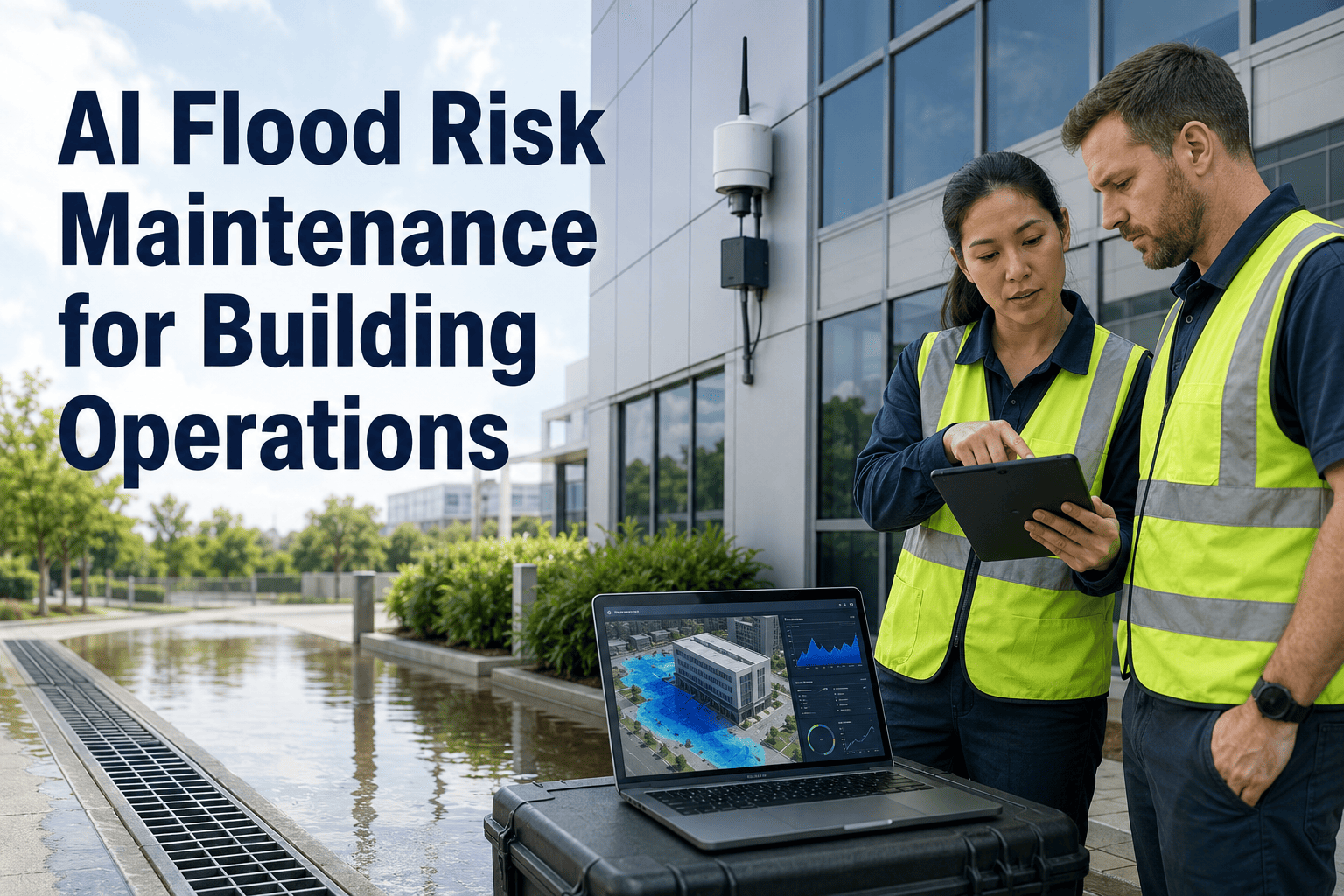
Flood-prone assets — basement switchgear, sump pumps, fire suppression risers — require documented elevation assessments and sump pump capacity verification before seasonal flood risk windows open. Facilities with these records make faster insurance claims and resume operations days ahead of facilities without them.
Power Outages
Risk: Data loss, cold chain failure, life safety system gaps
Extended outages during climate events expose backup power gaps that routine monthly generator tests never reveal. Full-load transfer tests under realistic conditions — documented in CMMS with fuel level, runtime, and switchover time — are the only way to confirm backup power is actually ready when the grid goes down.
Ready to Map Your Facility's Climate Risk by Asset?
OxMaint assigns risk scores to every asset based on climate exposure, condition history, and criticality — so your team knows exactly what to inspect, pre-stage, and protect before the next weather event.
OxMaint Response Workflows
How Pre-Built Climate Response Workflows Work in Practice
A readiness workflow in OxMaint is a triggered PM sequence — activate it 72 hours before a forecast event and the system dispatches every pre-event inspection, spare parts check, and protective measure as individual work orders to the right technicians.
72h
72 Hours Before Event
Activate the climate response workflow in OxMaint. System auto-generates work orders for all at-risk assets: HVAC pre-inspection, generator fuel and battery check, sump pump test, roof drain clearance, and emergency lighting verification. All dispatched with priority flags.
24h
24 Hours Before Event
Completion dashboard shows which pre-event tasks are done and which are open. Critical items escalate automatically if not completed. Spare parts inventory verified against a pre-defined storm kit list. Work orders with photographic evidence are ready for insurance documentation.
0h
During the Event
OxMaint dashboard shows real-time asset status. Any system alert auto-generates a prioritized work order. If a generator starts, the runtime begins logging automatically. All actions during the event are timestamped and technician-attributed for post-event reporting.
R
Recovery and Documentation
Post-event inspection workflows auto-trigger after the all-clear. Damage assessments are logged with photos and repair estimates directly against affected assets. Insurance packages are generated from the maintenance record — not reconstructed from memory weeks later.
Asset Risk Scoring
How OxMaint Scores Climate Risk Across Your Asset Portfolio
| Asset Category |
Climate Threat |
Risk Factors Scored |
Pre-Event Action |
Risk Level |
| Rooftop HVAC Units |
Extreme Heat |
Age, last PM date, refrigerant level, capacitor condition |
Full inspection + refrigerant charge verification |
HIGH |
| Emergency Generators |
Power Outage / Storm |
Last load test, fuel level, battery age, transfer switch test date |
Full-load test + fuel fill + battery replacement if needed |
CRITICAL |
| Sump Pumps |
Flooding |
Last test date, discharge capacity, float switch condition |
Functional test + backup pump verification |
HIGH |
| Roof Drainage Systems |
Storm / Flooding |
Last cleanout, overflow drain capacity, condition score |
Full clearance and flow-through test |
MEDIUM |
| Basement Electrical Panels |
Flooding |
Floor elevation vs 100-year flood line, last thermographic scan |
Elevation documentation + protective barrier staging |
CRITICAL |
| Cooling Towers |
Extreme Heat |
Basin condition, fan motor amperage, drift eliminators |
Basin cleaning + chemical treatment check |
HIGH |
SR
Expert Review
The facilities that recover fastest after extreme weather events are not necessarily the ones with the newest equipment — they are the ones with documented asset conditions, pre-staged spare parts, and defined response workflows that activate before the event rather than during it. In every post-disaster assessment I have conducted, the difference between a 24-hour recovery and a 3-week recovery came down to one variable: whether maintenance records existed that could support both repair decisions and insurance claims simultaneously. A CMMS with climate workflow capability is no longer a nice-to-have for facilities in climate-exposed regions — it is infrastructure risk management.
Sandra R. Mehta, CFM, LEED AP
Certified Facility Manager · 18 years facility resilience consulting · Former Director of Facilities, Northeast Healthcare System · IFMA Fellow
Common Questions
Climate Readiness Maintenance — FAQs
How does OxMaint assign climate risk scores to assets?
Risk scores are calculated from a combination of asset age, last maintenance date, condition rating from previous inspections, asset criticality classification, and the facility's geographic exposure profile (flood zone, heat index, storm frequency). Each asset receives a composite risk score that updates automatically when new inspection data is logged. High-risk assets are surfaced in the dashboard for immediate pre-event attention without requiring manual review of the entire asset list.
See how risk scoring works in a live demo.
Can OxMaint generate documentation for insurance claims after a climate event?
Yes. Because every pre-event inspection, repair, and protective action is logged in OxMaint with timestamps, technician signatures, and photographic evidence, the system can export a complete maintenance history for any asset within minutes of an event. Insurers and adjusters increasingly request this type of structured documentation to process claims faster and validate that standard of care was met before the event. Facilities using OxMaint report significantly faster claim settlements compared to those providing only written logs.
Start a free trial to explore the documentation capability.
How are climate response workflows configured for different types of events?
OxMaint allows facility managers to build separate workflow templates for each climate threat category — heatwave, tropical storm, winter storm, flood advisory, extended outage. Each template includes the specific assets, inspection tasks, and spare parts checks relevant to that event type. When an event is forecast, the relevant template is activated from the dashboard and all tasks are dispatched automatically. Teams do not need to remember what to check — the system generates the complete task list based on the template defined during calm conditions when clear-headed planning is possible.
Does OxMaint integrate with weather alert systems?
OxMaint supports integration with weather monitoring services via API, enabling automatic workflow triggers based on National Weather Service watches and warnings for your facility's location. When a severe weather watch is issued for your area, the system can automatically activate the pre-configured response workflow without requiring manual action — ensuring pre-event tasks begin even if the event escalates quickly. This is particularly valuable for facilities managing multiple locations across different climate risk zones.
Ask about weather integration in your demo.
Build Climate Readiness Into Your Maintenance Program — Before the Next Event
OxMaint risk-scores every asset, pre-builds event response workflows, and documents every protective action with the timestamps and evidence that support faster recovery and faster insurance claims.