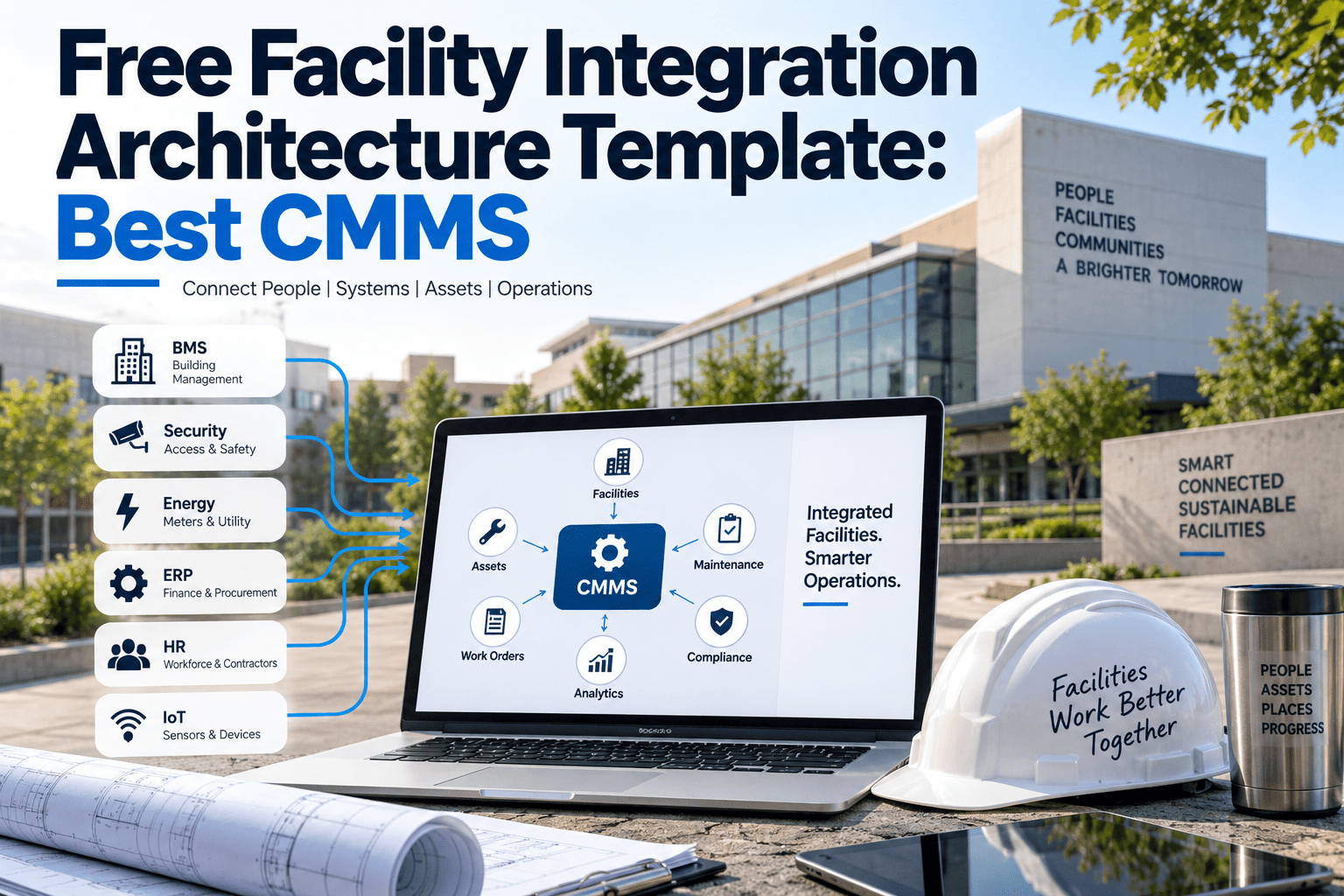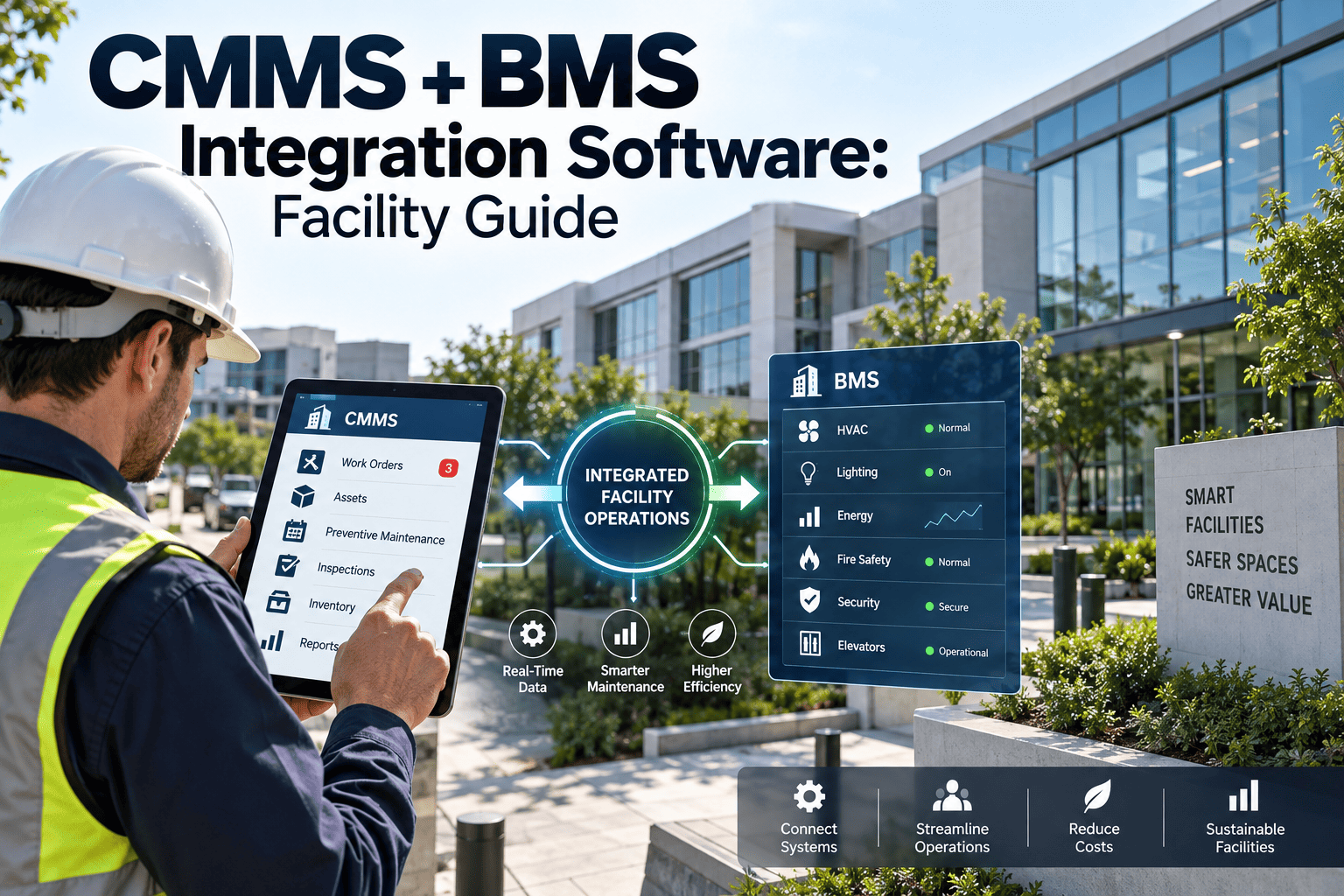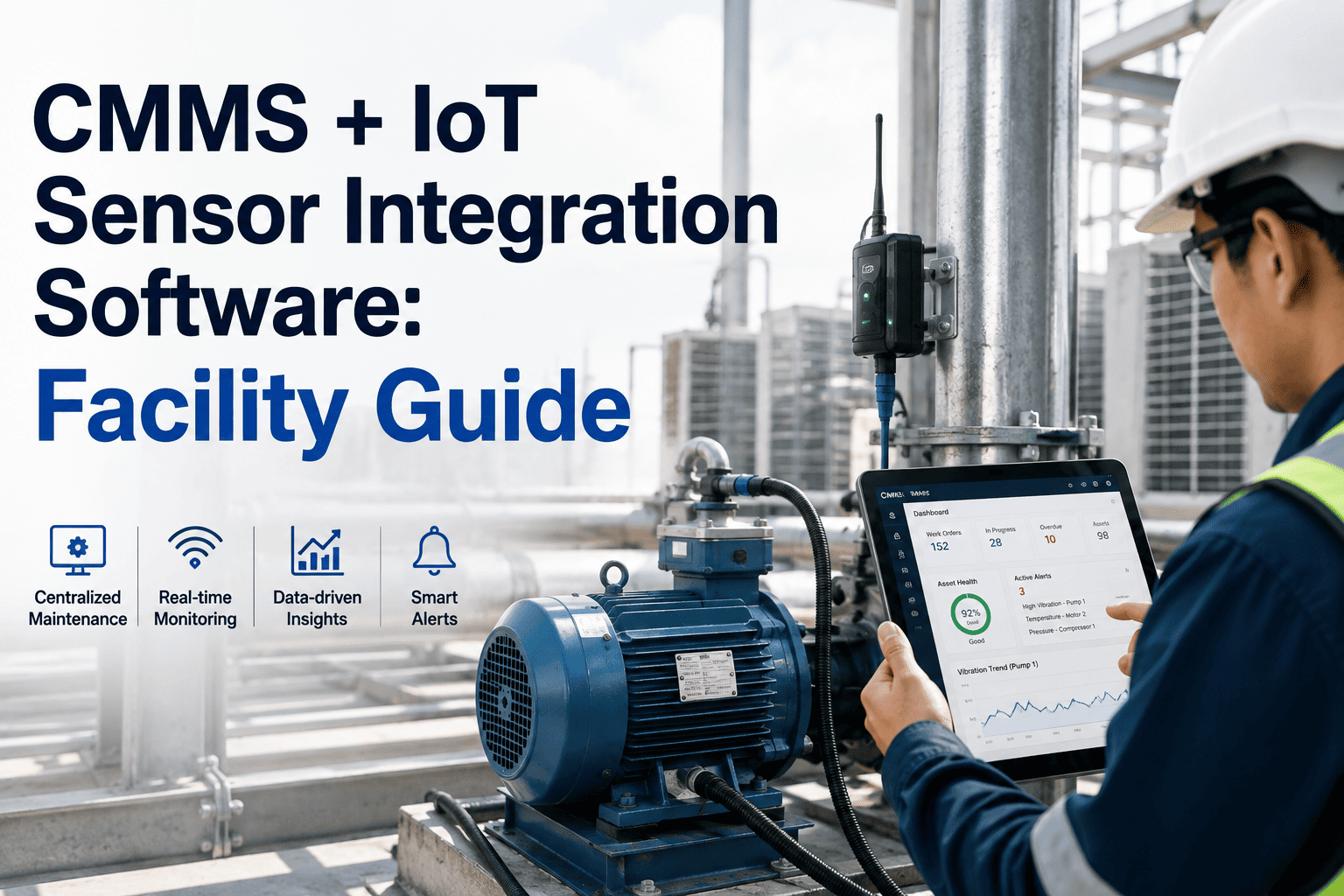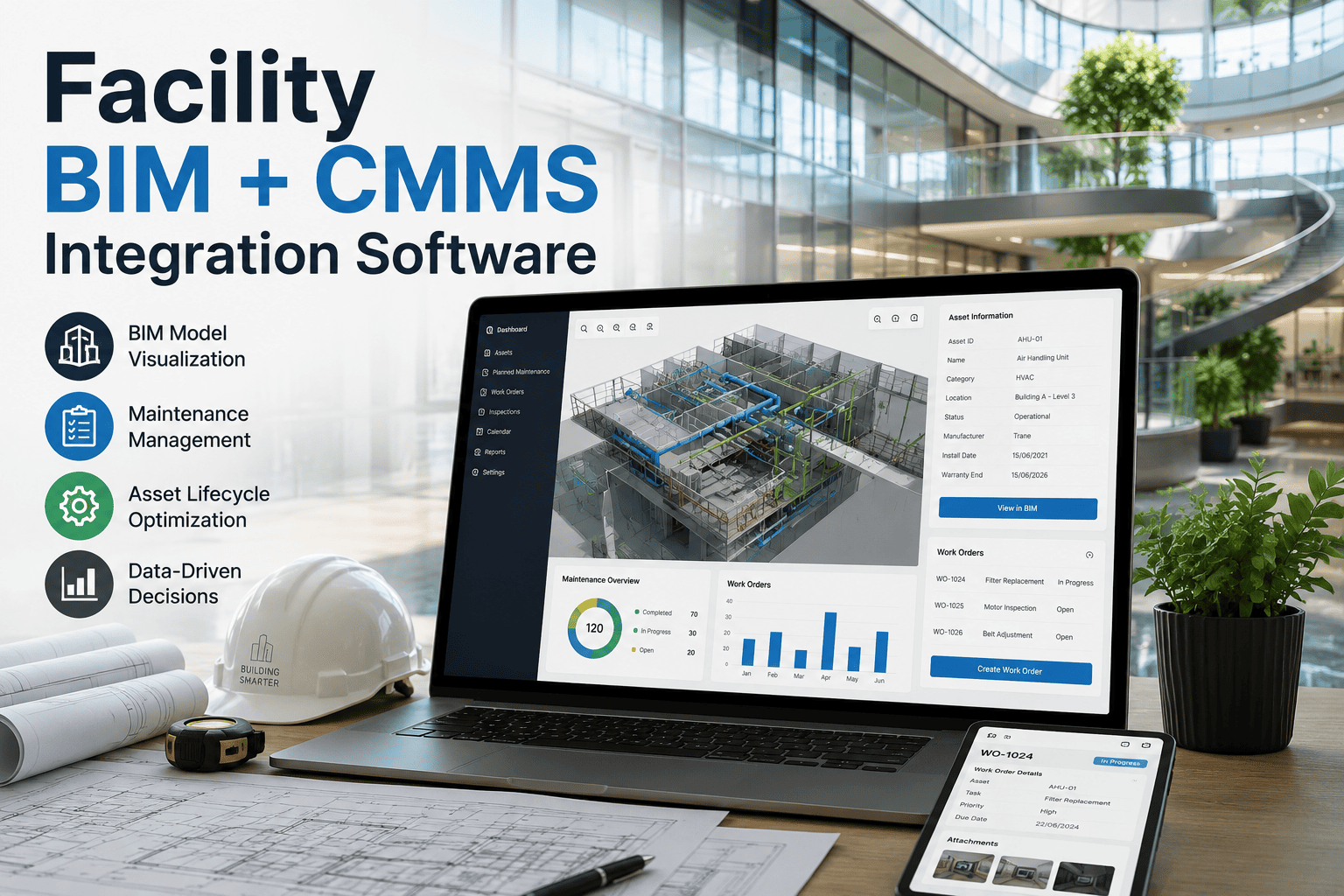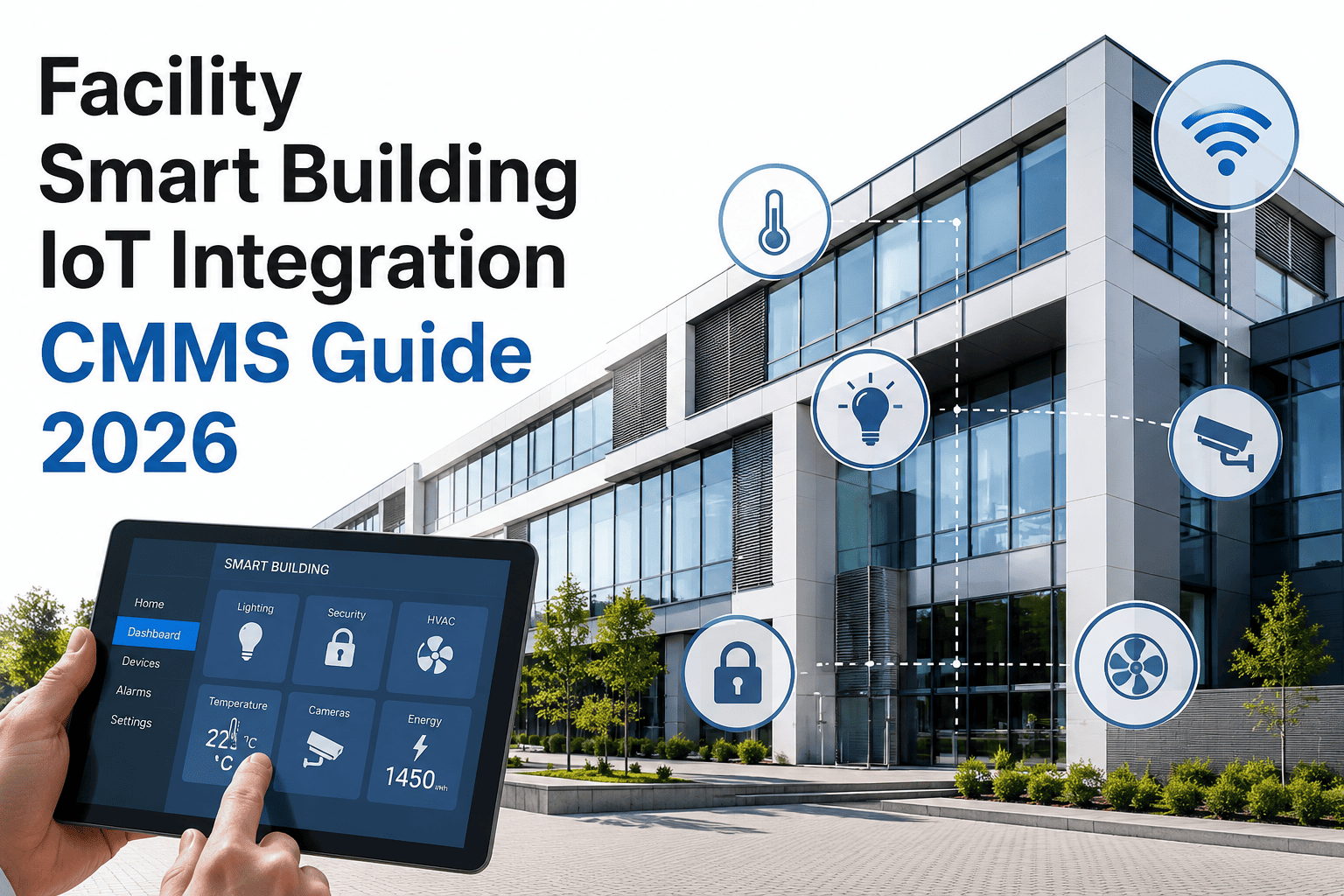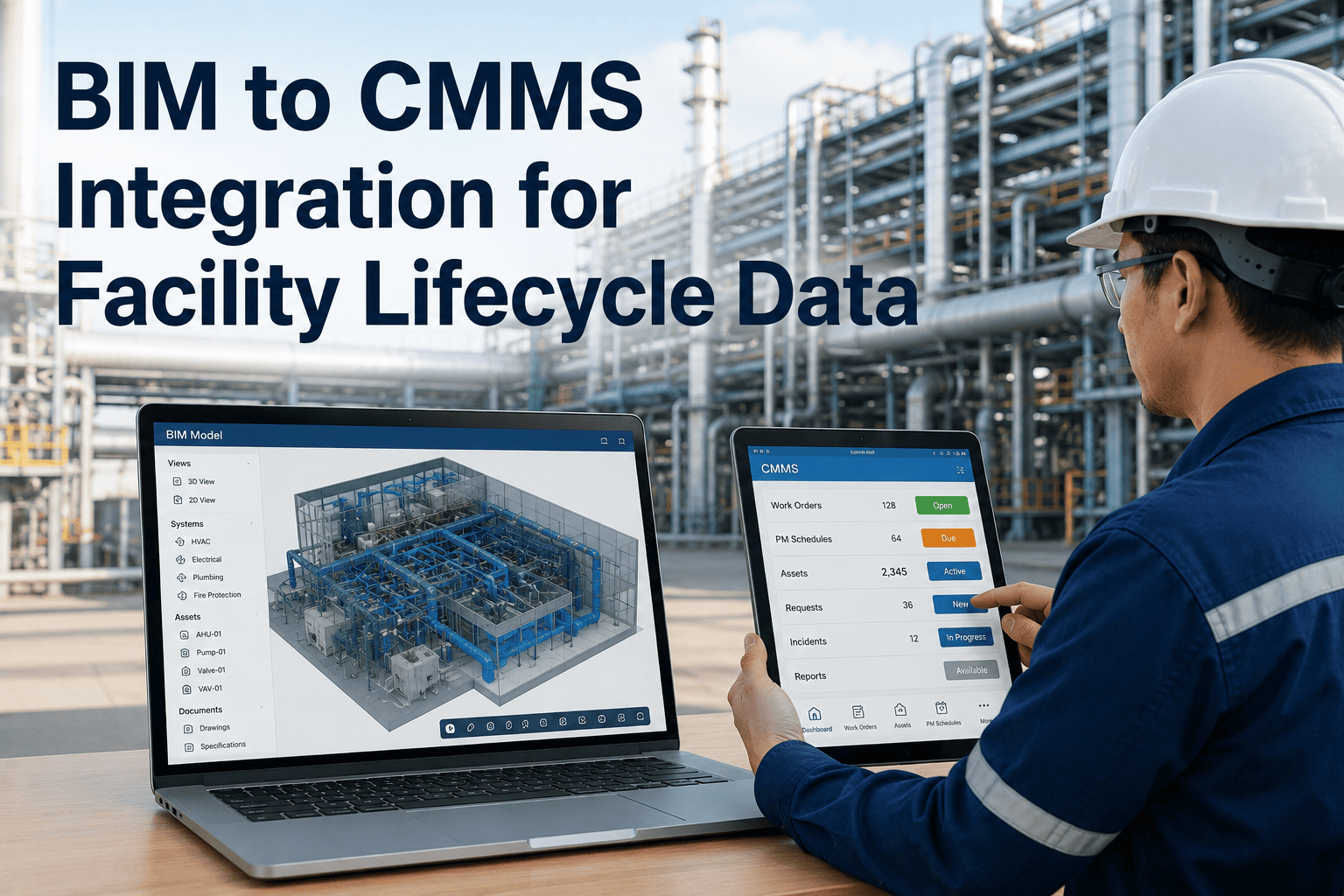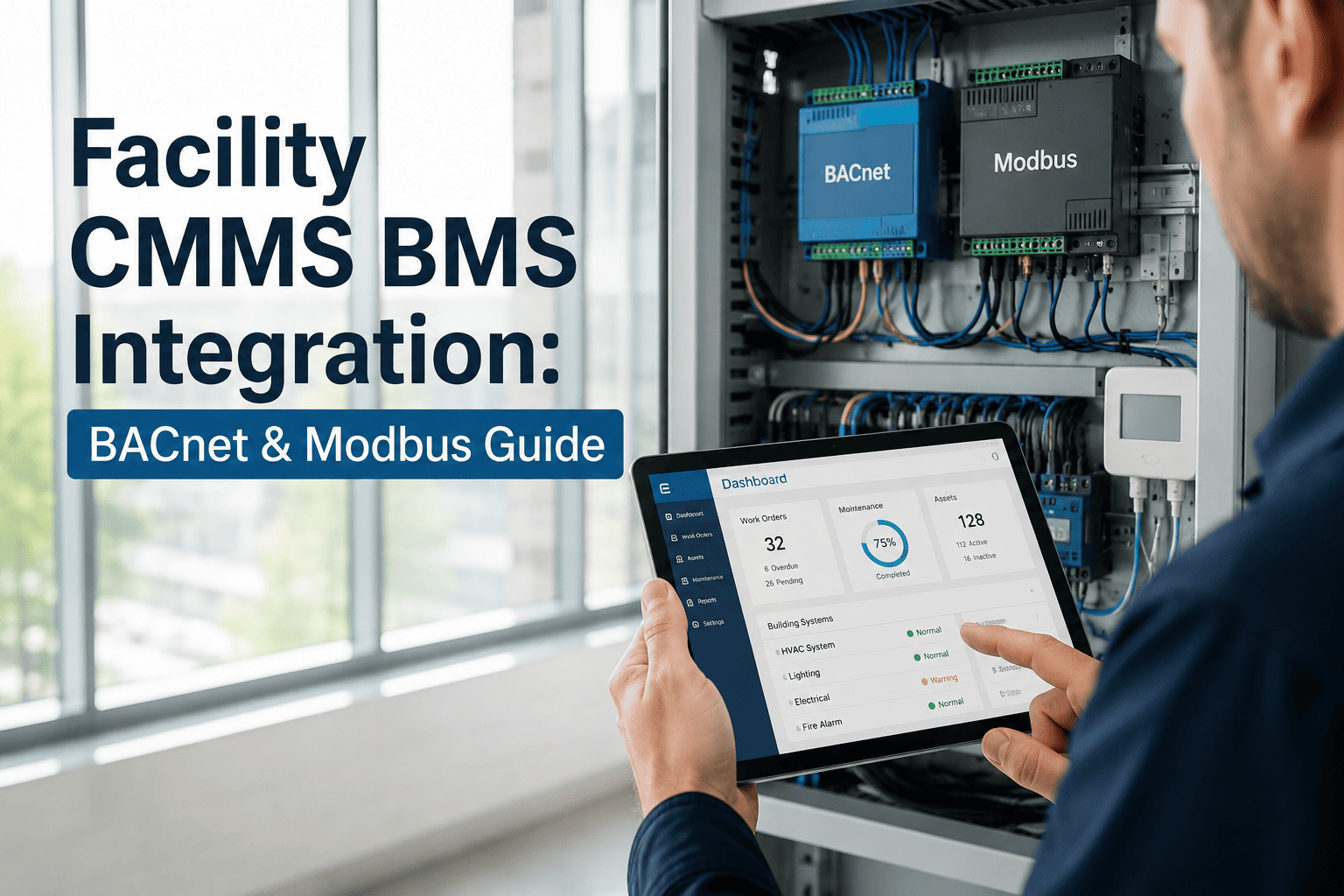
Your building's BMS already knows when a chiller drifts out of tolerance, a VAV box sticks, or a boiler reading crosses its limit — it logs the alarm and waits. In most facilities nobody is watching that screen every minute, so the alarm sits until a technician stumbles onto it hours later, or the equipment fails outright. Bridging that gap means connecting BACnet and Modbus data straight into your maintenance workflow, so every fault becomes a work order automatically. OxMaint connects natively to Siemens Desigo, Johnson Controls Metasys, Honeywell EBI, and Schneider EcoStruxure without middleware or a controls contractor. Book a demo to see your specific BMS platform mapped into automated maintenance workflows.
Facility CMMS · BMS Integration Guide
Connect Your BMS To A CMMS Without Middleware
BACnet, Modbus, and REST connectivity for Siemens Desigo, Johnson Controls Metasys, Honeywell EBI, and Schneider EcoStruxure — turning every building alarm into a routed, tracked work order.
Under 5 min
fault-to-work-order time once connected
3–6 weeks
typical go-live for modern BACnet systems
60–80%
fewer noise work orders after suppression tuning
Protocol Primer
BACnet vs Modbus — Which One Is Talking In Your Plant Room
BACnet
The building automation standard
Built forCentral HVAC plants and BMS supervisors
Data styleStructured objects with named properties and states
Common vendorsSiemens, Honeywell, Johnson Controls, Schneider
VariantsBACnet/IP over Ethernet, BACnet MS/TP over RS-485
Modbus
The universal instrumentation protocol
Built forMeters, boilers, VFDs, and legacy controllers
Data styleRaw register values, simple and widely supported
Common vendorsVirtually every meter, drive, and legacy panel
VariantsModbus TCP over IP, Modbus RTU over serial
Most facilities run both — BACnet for the central plant and supervisor layer, Modbus for meters and subsystem instrumentation. A CMMS that speaks both natively skips the middleware layer entirely.
Vendor Connectivity
API Depth Across The Four Major BMS Platforms
Siemens Desigo CC
Broad API coverage
Strong BACnet object model with support for fault detection and diagnostics, making it one of the more complete platforms for advanced maintenance triggers on large campuses.
Johnson Controls Metasys
Moderate API coverage
Reliable alarms, trends, and scheduling data over BACnet and Modbus, with OpenBlue layering analytics on top for portfolios already standardized on JCI controls.
Honeywell EBI
Narrower API surface
Open architecture for third-party tie-ins and common in airports and hospitals, though its exposed endpoints are lighter — point-level BACnet reads still cover the essentials.
Schneider EcoStruxure
Deepest API coverage
BACnet-certified servers with the widest exposed feature set of the four, well suited to mixed-vendor topologies and energy-analytics-heavy facilities.
Stop Copying BMS Alarms Into Spreadsheets
OxMaint reads BACnet/IP, Modbus TCP, and REST data directly from your BMS supervisor — no BMS reprogramming, no additional licences, and no controls contractor project to schedule first.
How It Works
From BMS Alarm To Closed Work Order
1
Fault detected
Chiller drifts, a VAV sticks, or a boiler reading crosses its set threshold inside the BMS.
2
CMMS reads the alarm
OxMaint subscribes as a read-only BACnet or Modbus client, no middleware layer involved.
3
Noise gets filtered
Suppression rules drop alarms that self-clear, duplicate, or fall inside a maintenance window.
4
Work order created
A prioritized order is assigned automatically with asset ID and trend data attached.
5
Technician resolves it
Full diagnostic context arrives on the mobile app before the panel is even opened.
Side By Side
Manual BMS Monitoring vs An Integrated Workflow
| What Changes | Manual Monitoring | OxMaint Integration |
|---|---|---|
| Fault-to-work-order time | 4–8 hours, if noticed at all | Under 5 minutes, automatically |
| Work order volume | Every raw alarm becomes noise | 60–80% reduction after tuning |
| Technician context | Arrives blind, diagnoses on site | Full trend history on mobile |
| Audit trail | Manual log entries, gaps common | Timestamped record, every event |
| Setup effort | IT project, middleware licensing | Native read-subscribe, no middleware |
Where This Fits
Facility Types Running BMS-Integrated Maintenance Today
Commercial Office Towers
Central plant equipment across dozens of floors gets monitored from one dashboard, with chiller and AHU faults routed the moment they cross threshold.
Hospitals And Healthcare Estates
Life safety and HVAC assets need traceable, timestamped alarm records for compliance audits alongside fast response for critical equipment.
Multi-Property Hotel Groups
A chiller losing efficiency at 2 AM gets caught before it fails on a sold-out weekend, protecting guest experience and unplanned repair spend.
Higher Education Campuses
Buildings of different ages and BMS vintages get normalized into one register, so estates teams see portfolio-wide risk on a single screen.
From The Field
What Facility Engineers Say After Going Live
5 / 5
Our Metasys system generated alarms all day and most of them went nowhere because nobody had time to triage them manually. Once OxMaint started reading the BACnet feed, the same alarms became assigned work orders within minutes, and our overdue PM count dropped within the first month.
Facilities Engineering Lead, Regional Office Portfolio
4 / 5
We run Desigo across three buildings and were worried about a heavy IT project to connect it. The integration read alarms directly with no changes to our controls programming, and our controls contractor never had to get involved at all.
Chief Engineer, Multi-Building Campus
Frequently Asked Questions
BMS-CMMS Integration — Common Questions
Does OxMaint modify our BMS programming or control logic?
No. OxMaint connects as a read-and-subscribe client, reading alarm states and trend data without writing to setpoints or control sequences. Book a demo to see this confirmed for your specific BMS.
Which BMS platforms and protocols does OxMaint support?
Siemens Desigo, Johnson Controls Metasys, Honeywell EBI, and Schneider EcoStruxure over BACnet/IP, BACnet MS/TP, and Modbus TCP or RTU, with REST API available for cloud-native platforms.
How long does a BACnet or Modbus integration take to go live?
Modern BACnet/IP systems typically go live in 3–6 weeks. Legacy Modbus RTU controllers need a serial-to-IP gateway first, which can extend the timeline slightly.
Will our BMS flood the CMMS with too many work orders?
Not once suppression rules are configured. Filtering alarms that self-clear, fall in a maintenance window, or duplicate an open order typically cuts actionable volume by 60–80%.
Do we need our controls contractor involved in the integration?
Usually not. The only BMS-side requirement is enabling BACnet/IP or Modbus TCP and confirming network access to the supervisor layer. Start a free trial to run a connectivity check yourself.
BMS Integration · OxMaint CMMS
Turn Every BMS Alarm Into A Tracked Work Order
Whichever combination of Siemens, Johnson Controls, Honeywell, or Schneider you run, OxMaint reads the data your BMS is already generating and puts it to work — without middleware, without reprogramming, and without a multi-month IT project.