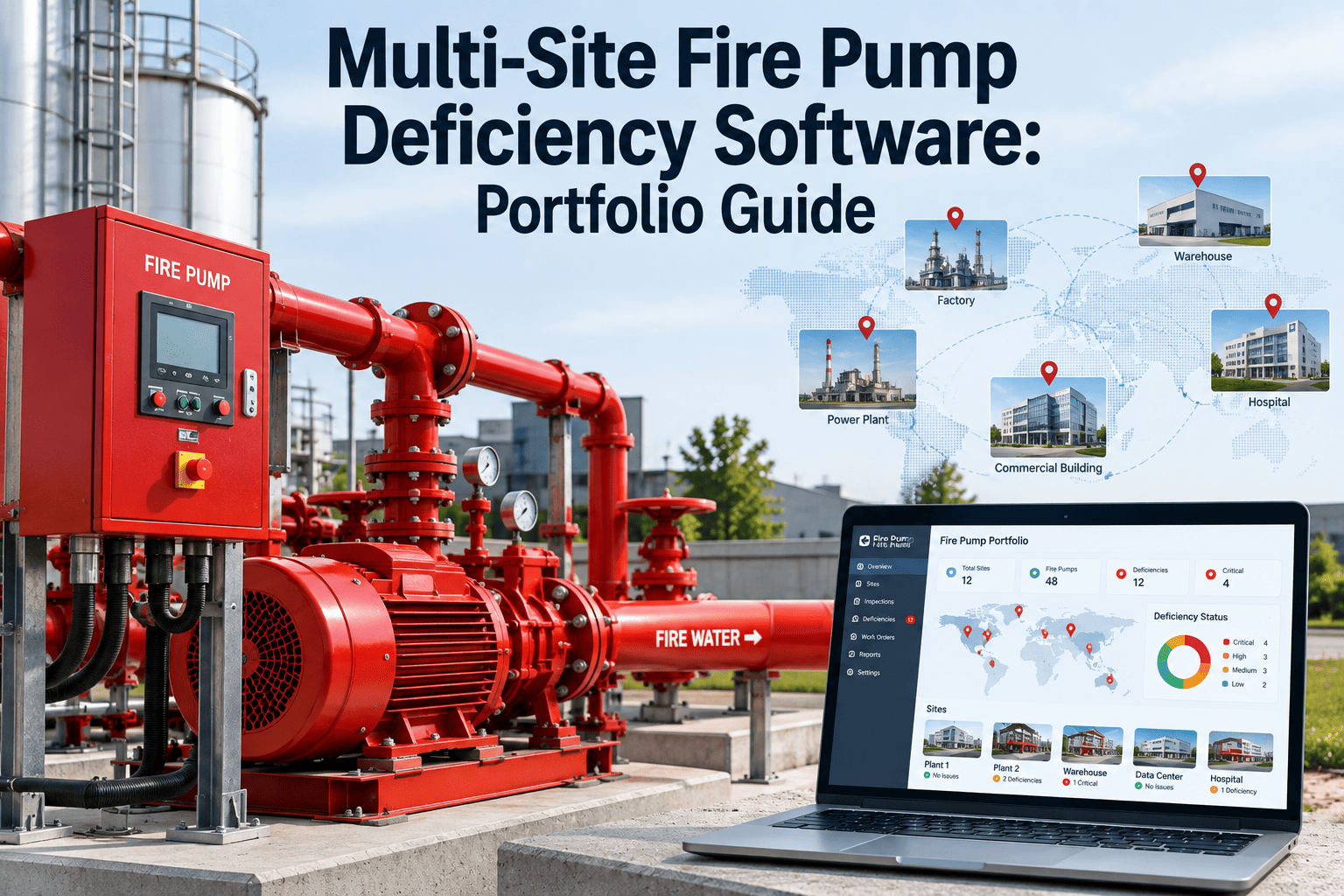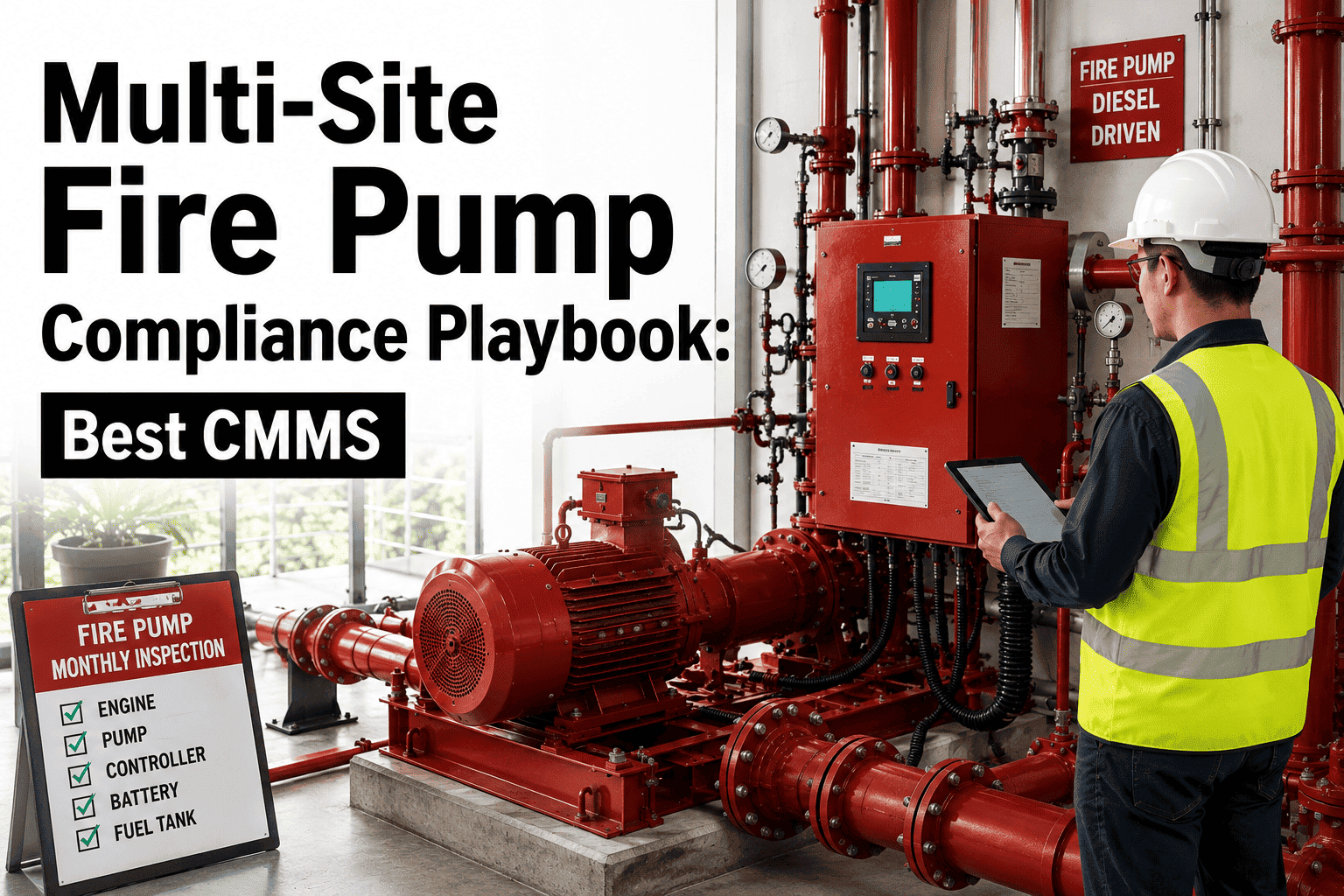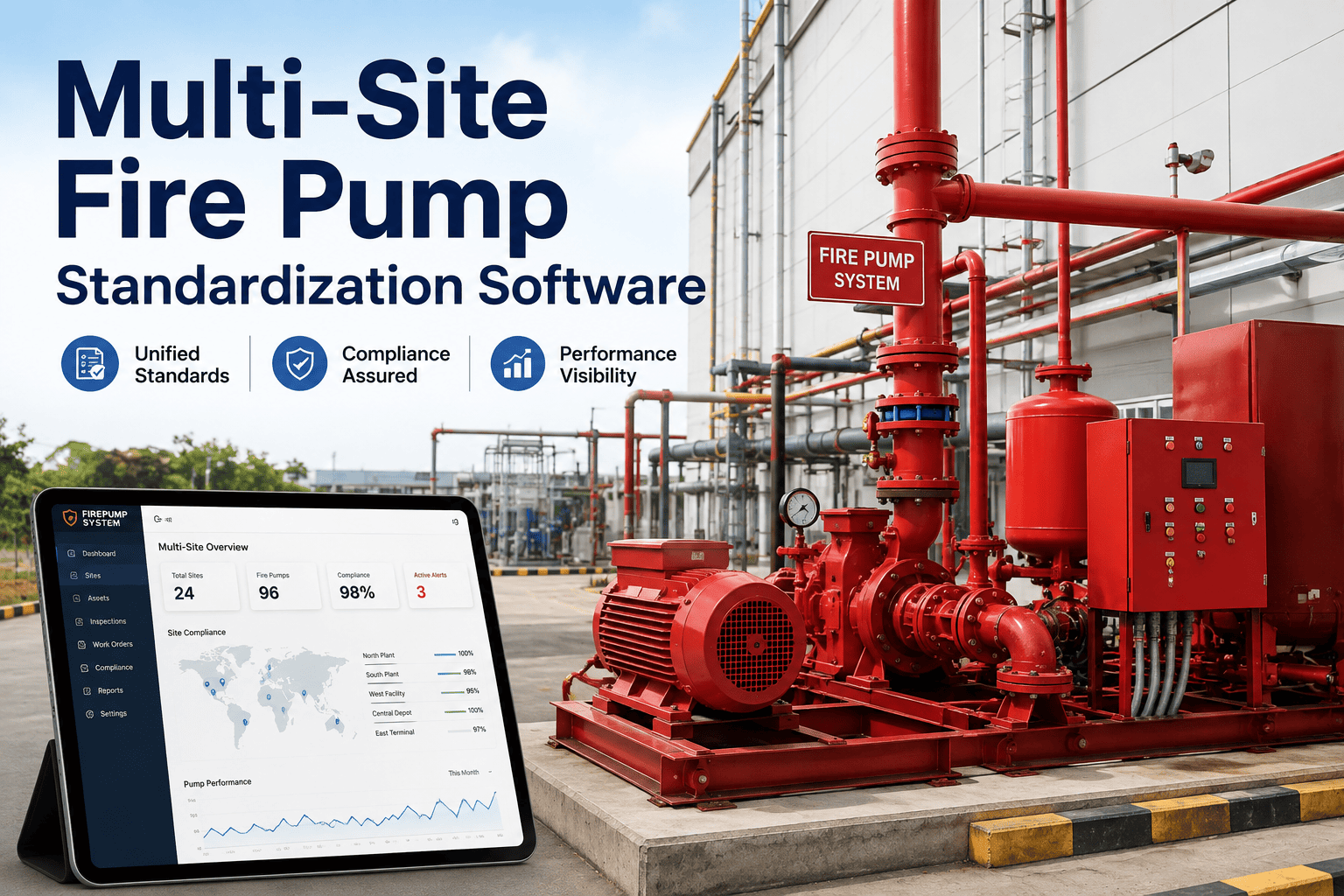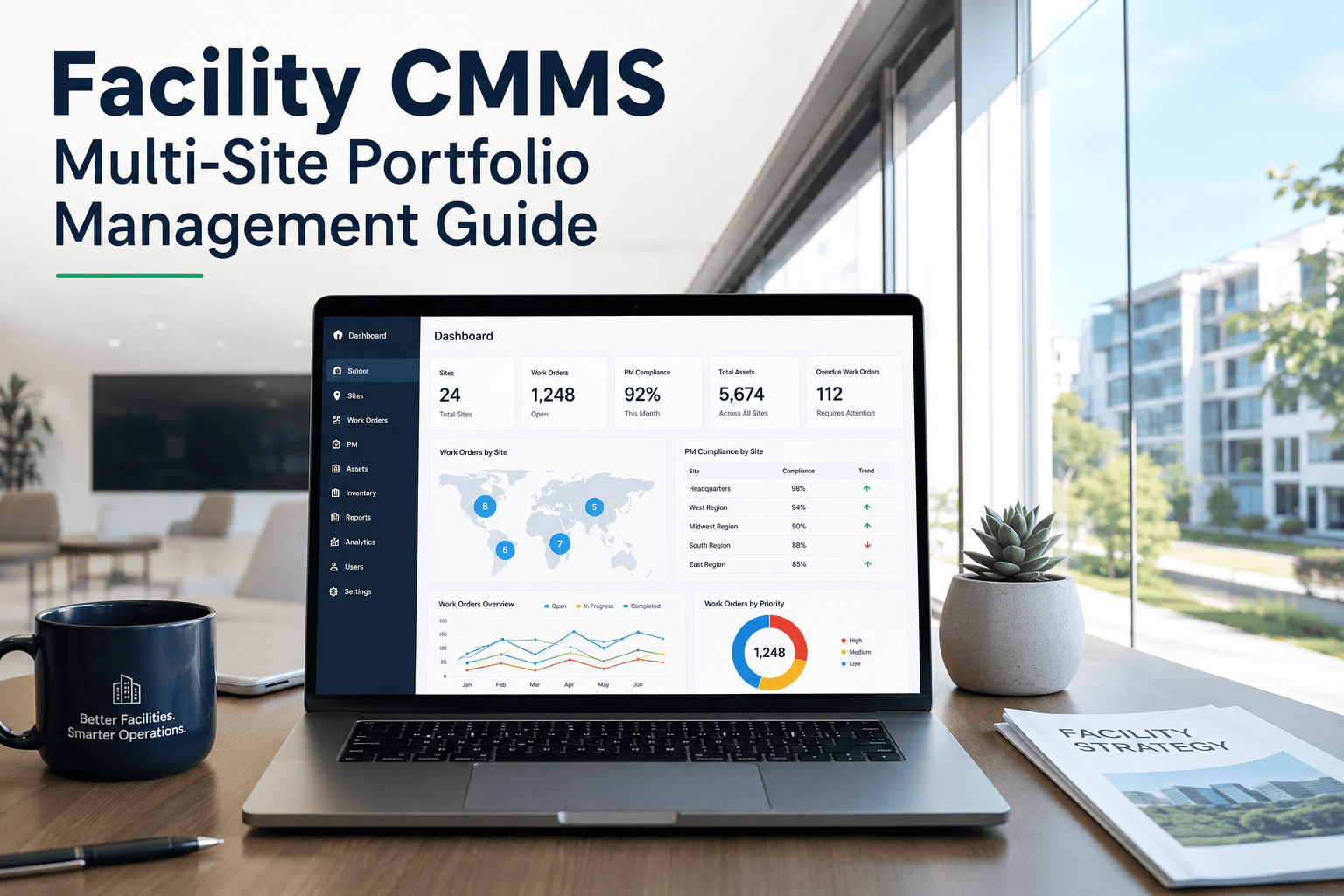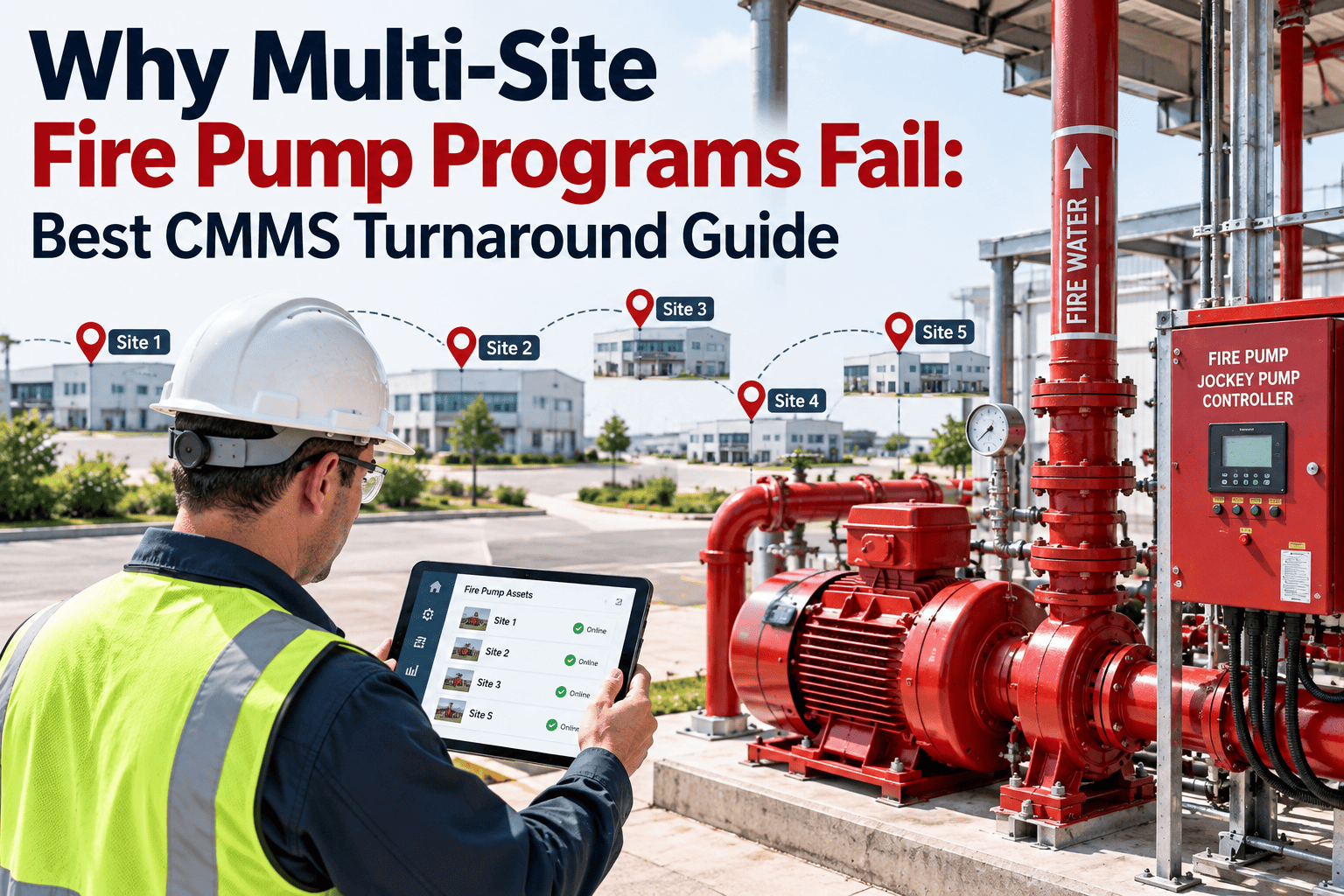
Fire pumps are the single point of failure that most multi-site portfolios never stress-test until an actual fire exposes the gap, and the reason is almost always the same: every building runs its own spreadsheet, its own contractor, and its own definition of "tested." A regional healthcare system, a retail chain, or a manufacturing group with fifteen or more locations rarely has one person who can say, with confidence, which sites are current on NFPA 20 monthly churn tests and which have been quietly slipping for two quarters. OxMaint was built to close exactly that visibility gap, giving portfolio-wide facility and fire-safety teams a single maintenance management software record for every pump, at every site, tested on the same schedule.
Why Multi-Site Fire Pump Programs Fail — And the CMMS Framework That Fixes Them
Fire pump compliance rarely fails at one site because of one mistake. It fails across a portfolio because there is no shared system tracking test dates, results, and repairs. OxMaint standardizes NFPA 20 testing across every location so no site becomes the weak link.
The Four Points Where Multi-Site Fire Pump Programs Break
A single-site fire pump program can survive on institutional memory. A ten-site or fifty-site program cannot. Portfolio-wide programs break down at predictable points, and once one site slips, the pattern tends to repeat because nothing in a spreadsheet-based system flags the drift before it becomes a compliance gap that surfaces at the worst possible moment — during an audit, a renewal, or an actual fire.
Each facility manager tracks their own pump on their own calendar, in their own format. There is no portfolio owner who can see all sites at once, so a gap at one location stays invisible to everyone above it.
Different sites use different third-party testing contractors on different cycles. Monthly churn tests and annual flow tests drift out of sync, and no one is comparing results site-to-site to catch a pattern of decline.
Test reports sit in email inboxes, binders, or local drives specific to each site. When an insurance audit or AHJ request spans the whole portfolio, someone has to manually chase down records from every location.
A pressure decline at Site A that signals impeller wear never gets compared against a similar decline at Site B. Without shared data, every site treats every failure as a first-time surprise instead of a known pattern worth watching for elsewhere.
Single-Site Habits vs. Portfolio-Wide Standards
Programs that work fine for one building quietly collapse once a portfolio grows past three or four sites, because the informal habits that make single-site management easy are exactly what make multi-site management fragile. The table below shows the gap between habits that scale and habits that do not.
The Real Cost of a Multi-Site Fire Pump Compliance Gap
Portfolio leaders often underestimate what a single missed test cycle at one site can cost once it compounds across a compliance calendar. The numbers below reflect the categories of cost that surface most often once a gap is discovered during an audit or, worse, during an actual fire event.
Insurance Premium Exposure
Carriers reviewing fire protection records for a whole portfolio treat one non-compliant site as a signal about the rest. A gap at one location can raise renewal terms across every site on the same policy.
Regulatory Citation Multiplication
Fire marshals conducting portfolio-wide reviews often visit multiple sites in the same cycle. A documentation gap discovered at one location frequently triggers closer scrutiny at every other property under the same ownership.
Emergency Response Reliability
A pump that has not been load-tested in over a year carries unknown risk. Sprinkler systems depend on rated pressure and flow, and a pump quietly degrading below spec may not be discovered until the moment it is needed most.
Staff Time Lost to Manual Chasing
Facility teams without a shared system spend hours every quarter emailing site managers, requesting PDFs, and reconciling formats — time that a standardized system removes almost entirely from the compliance workflow.
Warning Signs a Multi-Site Program Needs Immediate Attention
Portfolio compliance rarely fails overnight. It erodes gradually, one missed reminder and one staffing change at a time, and these patterns are usually visible well before an audit or an incident forces the issue into the open.
If a portfolio director cannot pull up compliance status for every site in under a minute, the program is running on individual memory rather than a shared system — and memory fails quietly.
When billing cycles from fire protection contractors do not line up across the portfolio, it usually means test cadences have already drifted apart, even if no one has flagged it yet.
If gathering documentation for an insurance or AHJ request means chasing down records from multiple site managers over several days, the portfolio has no functioning central record.
Bring Every Site Onto One Fire Pump Testing Calendar
OxMaint standardizes NFPA 20 monthly, quarterly, and annual testing across every location in your portfolio, so no single site can quietly fall behind. One dashboard shows every pump, every test, every result.
A Four-Step Turnaround Framework for Multi-Site Fire Pump Compliance
Turning around a struggling multi-site program does not require replacing every contractor overnight. It requires a sequence that surfaces the gaps first, then standardizes on top of what is already working, rather than tearing down every site's existing vendor relationships at once.
Audit Every Site's Current State
Pull the last twelve months of test records from every location, even if they are scattered across formats. This baseline shows exactly which sites are compliant, which are behind, and which have no records at all.
Standardize the Testing Calendar
Move every site onto the same NFPA 20 cadence — monthly churn tests, quarterly flow verification, annual full-load testing — so results are comparable across the portfolio instead of scattered across twelve different schedules.
Centralize Documentation
Move test reports, repair history, and contractor sign-offs into one shared system so an audit request for any site — or every site — can be answered in minutes rather than days of email chasing.
Trend Results Across Sites
Once data lives in one place, compare pressure and flow trends across similar pump models portfolio-wide. A decline pattern at one site becomes an early warning for every other site running the same equipment.
NFPA 20 Testing Frequency Reference for Multi-Site Programs
Use this as the shared calendar baseline when standardizing testing across every site in a portfolio. Diesel-driven pumps typically require more frequent driver inspections than electric-driven units, so the standardized calendar should account for driver type at each location rather than applying one blanket interval to every pump in the portfolio.
| Test Type | What It Verifies | Frequency |
|---|---|---|
| Churn Test | Pump starts and runs without discharge; jockey pump pressure holds | Monthly |
| Flow Test | Confirms rated flow capacity through test header or flow meter | Quarterly |
| Full-Load Annual Test | Pump operates at 150% rated flow; pressure, flow, and amperage recorded | Annually |
| Diesel Driver Inspection | Fuel quality, battery condition, cooling system, starting reliability | Weekly to monthly |
| Controller and Transfer Switch Test | Automatic transfer switch and controller alarms function correctly | Monthly to quarterly |
What a Standardized Multi-Site Program Actually Delivers
Portfolio-wide standardization is not just a compliance exercise. It changes how quickly problems get caught, how much a company spends reacting to them, and how confidently a facilities director can answer questions from leadership, insurers, or regulators about any site on short notice.
One Compliance View Across Every Site
Portfolio directors see every site's testing status on one screen instead of requesting updates from a dozen site managers before every audit.
Automatic Escalation on Overdue Tests
A missed monthly churn test at any site triggers an alert before it becomes a missed quarter, instead of surfacing during an annual review.
Cross-Site Failure Pattern Detection
Pressure and flow trends are comparable across sites running the same pump model, so a developing failure at one site can prompt inspection at others.
Audit-Ready Documentation On Demand
Insurance carriers and AHJs requesting records for any site, or the whole portfolio, get a complete answer in minutes instead of a multi-day document hunt.
What to Look for in a Multi-Site Fire Pump CMMS
Not every maintenance platform is built to handle a portfolio spanning dozens of buildings, each with its own pump model, contractor, and inspection history. These are the capabilities that matter most once a program scales past a handful of sites, and they are worth confirming before committing a whole portfolio to a single system.
Portfolio-Level Rollup Views
A director should be able to filter by region, site, or pump model and instantly see compliance status without opening a dozen separate records.
Configurable NFPA-Aligned Schedules
The system should support monthly, quarterly, and annual NFPA 20 intervals out of the box, with the flexibility to adjust for diesel versus electric drivers.
Mobile Access for On-Site Technicians
Contractors and in-house technicians need to log test results from the pump room itself, with photos and readings attached directly to the work order.
Exportable Audit Documentation
When an insurance carrier or fire marshal requests records, the system should generate a complete, timestamped report for any site or the entire portfolio in a few clicks.
A Common Pattern: How One Gap Becomes a Portfolio-Wide Problem
Consider a twenty-site retail portfolio where each store manager has historically owned fire pump testing locally. For years this works well enough — until regional staff turnover leaves three stores without a clear owner for two consecutive quarters. No one above the store level notices, because there is no shared dashboard flagging overdue tests. When a routine insurance renewal review requests documentation across the portfolio, the facilities team discovers that three sites have no annual flow test on file and one diesel-driven pump has not had a documented starting-reliability check in over a year.
The immediate cost is not a fire — it is a scramble. Contractors need to be scheduled on short notice, the insurance renewal is delayed pending updated documentation, and the facilities director spends a week personally following up with each site to close the gap. None of this is unusual. It is the predictable result of running a portfolio-wide compliance obligation through site-by-site tracking. The fix is not more effort from individual site managers — it is a shared system that makes the gap visible the month it starts, not the year it is discovered. Once that visibility exists, the same facilities director who spent a week chasing documentation can instead spend a few minutes confirming that every site is already current, freeing time for the higher-value work of trending pump performance across the portfolio instead of firefighting paperwork.
Multi-Site Fire Pump Compliance: Frequently Asked Questions
How many sites does a portfolio need before a shared testing calendar matters?
Can we keep our existing site-level contractors and still standardize?
What is the fastest way to find out which sites are already behind?
Does portfolio-wide tracking help during an insurance audit?
How quickly can a multi-site program get onto one calendar?
Stop Managing Fire Pump Compliance Site by Site
OxMaint gives portfolio and facility teams one shared calendar, one documentation record, and one view of every fire pump across every location — so no site becomes the gap an audit or an emergency finds first, and no facilities director has to guess which locations are actually current.