OSHA issued nearly 30,000 citations in 2025 alone, and as of January 15, 2025, serious violations now carry maximum penalties of USD 16,550 per violation, while willful or repeated violations reach USD 165,514 per violation. Fall protection topped OSHA's most-cited list for the 15th consecutive year, with nearly 6,000 citations. Hazard communication ranked second with thousands of violations. For FM teams managing multi-tenant commercial buildings, healthcare facilities, educational campuses, and industrial properties, compliance is not a background activity. It is a core operational function with direct financial, legal, and occupant safety consequences. NFPA 25 requires wet pipe sprinkler inspections quarterly and full annual system tests. NFPA 72 mandates fire alarm system testing on defined cycles with documented results. ADA compliance requires ongoing audit of accessible routes, restroom fixtures, and signage whenever alterations are made to occupied spaces. Building codes require periodic re-inspection of elevator systems, pressure vessels, emergency lighting, and exit signage. Every one of these obligations generates a paper trail that FM teams must produce on demand during authority having jurisdiction inspections, insurance audits, and liability claims. This guide maps every major compliance framework FM teams must manage in 2026, defines the specific inspection intervals and documentation requirements each demands, and shows how Oxmaint's compliance management module converts those obligations into scheduled work orders, completion records, and on-demand audit exports. Sign up free to begin building your compliance inspection schedule, or book a demo to see CMMS-tracked safety documentation configured for your building portfolio and regulatory jurisdiction.
Compliance and Safety
Facility Safety and Compliance Management 2026: OSHA, NFPA, ADA and Building Code Regulations for FM Teams
10 to 12 min read
$165,514
Maximum OSHA penalty per willful or repeated violation as of January 15, 2025 per US Department of Labor
30,000
OSHA citations issued in 2025 alone, with fall protection leading for the 15th consecutive year
6
Primary compliance frameworks every US commercial FM team must manage: OSHA, NFPA, ADA, IBC, local codes, and fire marshal
84%
Audit preparation time saved by FM teams using CMMS compliance documentation vs manual paper registers
Track Every OSHA, NFPA, ADA and Building Code Inspection in One Compliance Dashboard
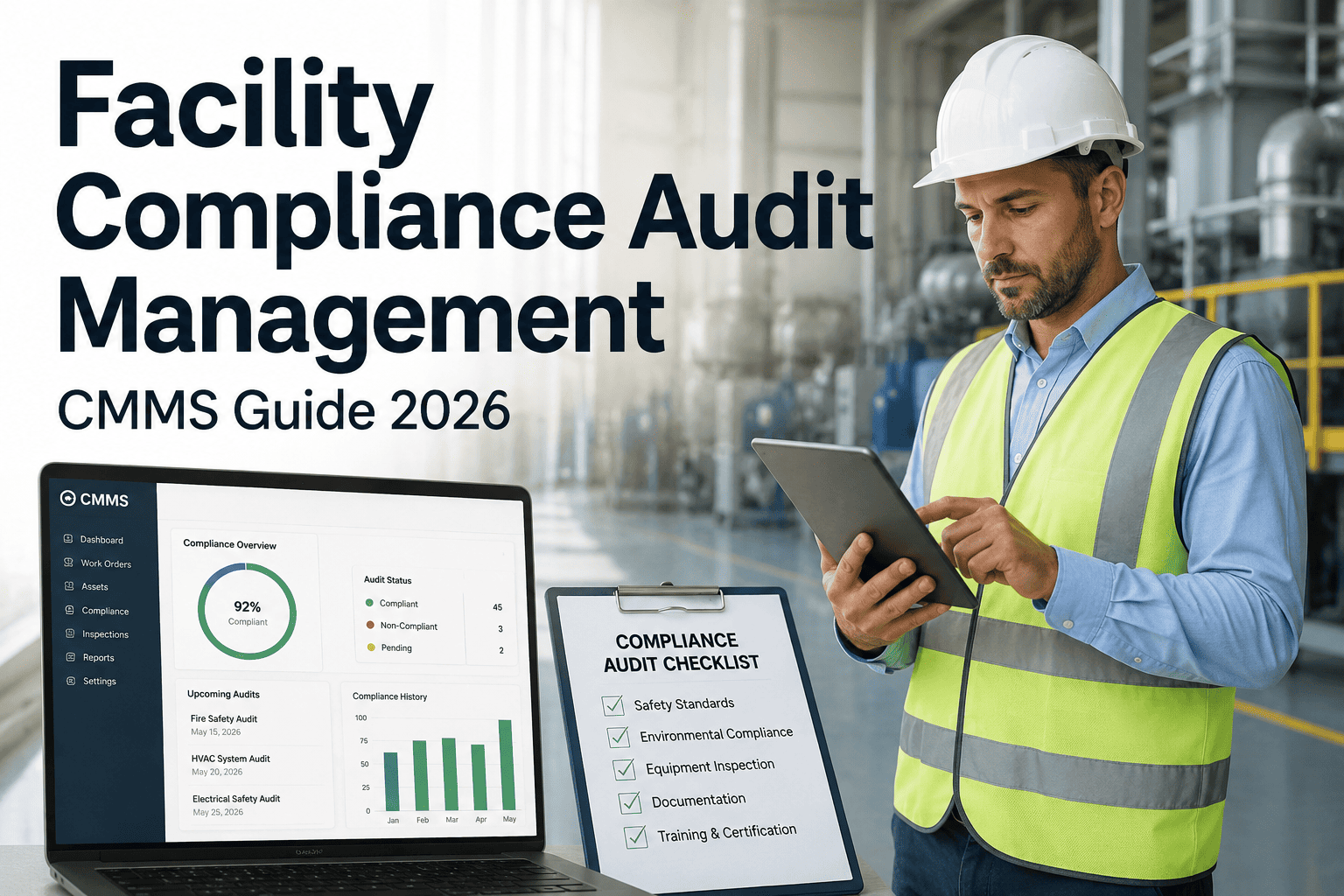
Oxmaint schedules every compliance inspection as a PM task, logs completion with technician attribution and timestamp, and generates on-demand audit export documents covering all regulatory frameworks simultaneously. No manual register search. No missed inspection deadline.
Six Compliance Frameworks Every Commercial FM Team Must Manage in 2026
Each framework has its own inspection authority, documentation format, penalty structure, and inspection interval. FM teams managing buildings across multiple jurisdictions must comply with all frameworks simultaneously. The challenge is not knowing what the requirements are. It is tracking which inspections are due, which have been completed, and which documentation an inspector will request on arrival. Oxmaint converts each framework's requirements into scheduled work orders with built-in compliance tags.
OSHA 29 CFR 1910
Enforced by: US Department of Labor
Occupational Safety and Health Act
OSHA 29 CFR 1910 General Industry standards apply to all commercial facilities with employees. Key subparts for FM teams include 1910.147 (lockout/tagout), 1910.119 (process safety management for facilities with hazardous chemicals), 1910.36 (means of egress), 1910.37 (maintenance of means of egress), and 1910.303 (electrical safety). OSHA does not require scheduled inspections on a fixed calendar. Instead, it requires documented hazard identification, corrective action programmes, and maintenance records demonstrating that known hazards are actively managed. An OSHA inspector arriving at your facility will request these records on demand.
Lockout/tagout programme with energy control procedures per machine
Hazard communication programme with current SDS register and chemical inventory
Means of egress inspection and maintenance records for exit doors, corridors, and signage
Electrical system inspection records including panel access, grounding, and arc flash labelling
Emergency action plan and documented employee training records
NFPA 25
Enforced by: AHJ and fire marshal
Inspection, Testing and Maintenance of Water-Based Fire Protection Systems
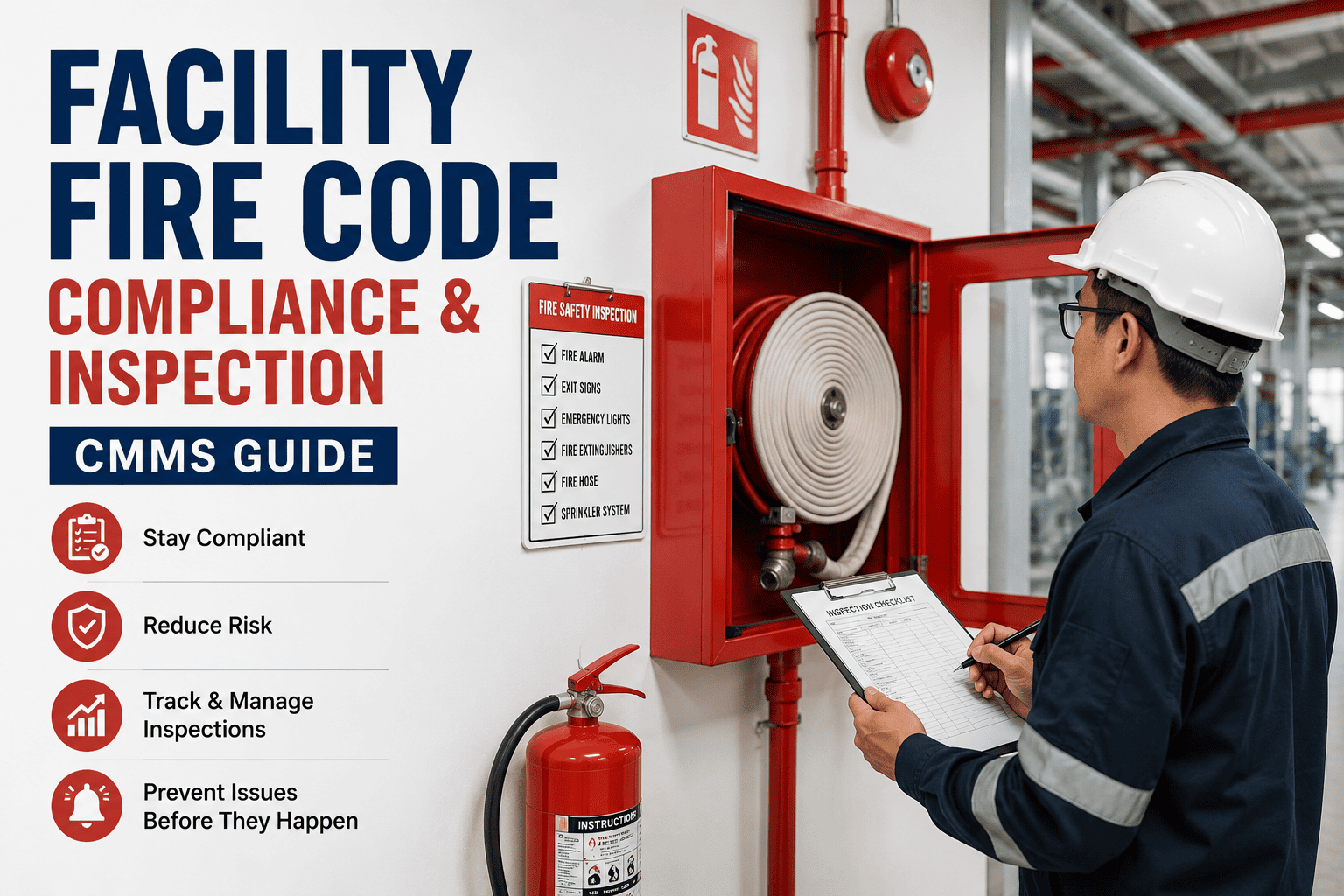
NFPA 25 defines mandatory inspection, testing, and maintenance intervals for wet pipe sprinkler systems, dry pipe systems, standpipe systems, fire pumps, and water storage tanks in commercial buildings. Quarterly inspections are required for sprinkler system control valves, gauges, and alarm devices. Annual inspections cover water flow tests, anti-freeze loop testing, and dry pipe system trip tests. Five-year tests include full internal pipe inspections and obstruction investigations. All NFPA 25 testing must be performed by a licensed contractor and documented in format acceptable to the AHJ. Non-compliance results in fire marshal citations and potential insurance voidance.
Quarterly: control valve inspection, gauge check, alarm device visual inspection
Annual: main drain test, water flow alarm test, fire pump annual test and performance curve
5-year: internal pipe inspection, obstruction investigation, sprinkler replacement where required
Documented by licensed contractor with AHJ-acceptable reporting format
Deficiency correction tracked to completion with re-inspection documentation
NFPA 72
Enforced by: AHJ and fire marshal
National Fire Alarm and Signalling Code
NFPA 72 establishes inspection, testing, and maintenance requirements for fire alarm systems, detection devices, notification appliances, and monitoring services in commercial buildings. Semi-annual inspections are required for fire alarm control panels, smoke detectors in accessible spaces, and notification appliances. Annual testing covers all detection devices, manual pull stations, audible and visible notification appliances, and emergency communication systems. Testing must be documented on NFPA 72 Form 72A or equivalent AHJ-accepted format. Detectors that fail annual testing must be cleaned or replaced and re-tested before the deficiency record can be closed.
Semi-annual: fire alarm control panel visual inspection, accessible smoke detector inspection
Annual: full functional test of all detection devices, pull stations, and notification appliances
Annual: emergency communication system test including voice evacuation and public address
5-year: battery replacement, sensitivity testing for all addressable smoke detectors
Documentation on NFPA 72 Form 72A or AHJ equivalent, retained for inspection on demand
ADA 2010 Standards
Enforced by: DOJ and private right of action
Americans with Disabilities Act Accessibility Standards
The 2010 ADA Standards for Accessible Design apply to all places of public accommodation and commercial facilities. Unlike OSHA and NFPA, ADA compliance does not prescribe fixed inspection intervals. Instead, it requires that alterations to facilities trigger path of travel upgrades to the extent that 20% of the alteration cost is allocated to accessibility. FM teams must conduct ADA accessibility audits whenever alterations are made to primary function areas, and must maintain documentation of accessible route maintenance, including elevator service records, accessible restroom fixture inspection logs, and signage and ramp gradient verification records. ADA litigation is primarily private-action driven. In 2024, over 8,200 ADA federal lawsuits were filed in the United States.
Accessible route inspection: ramps, door hardware, thresholds, and surface conditions
Accessible restroom: grab bar condition, fixture heights, turning radius clearance, and door force
Elevator service records demonstrating access continuity for vertical travel
Parking facility accessible space marking, slope, and signage verification
Signage audit: tactile characters, Braille, mounting height, and location compliance
IBC and Local Building Codes
Enforced by: Building department and AHJ
International Building Code and Local Jurisdiction Requirements
The International Building Code adopted by most US jurisdictions requires periodic re-inspection of building systems including elevators, pressure vessels, boilers, and emergency systems. Elevator inspection frequency varies by jurisdiction from annual to biennial. ASME A17.1 safety code for elevators requires annual full inspection with certificate of operation. Boilers and pressure vessels require inspection to ASME Boiler and Pressure Vessel Code by a state licensed inspector. Emergency lighting and exit signage must be tested monthly for 30-second duration and annually for 90-minute duration under IBC and NFPA 101 Life Safety Code requirements.
Elevator annual inspection per ASME A17.1 with certificate of operation posted at car
Boiler and pressure vessel inspection by state licensed inspector per jurisdiction schedule
Emergency lighting: monthly 30-second test and annual 90-minute full discharge test
Exit signage: monthly visual check and annual illumination level verification
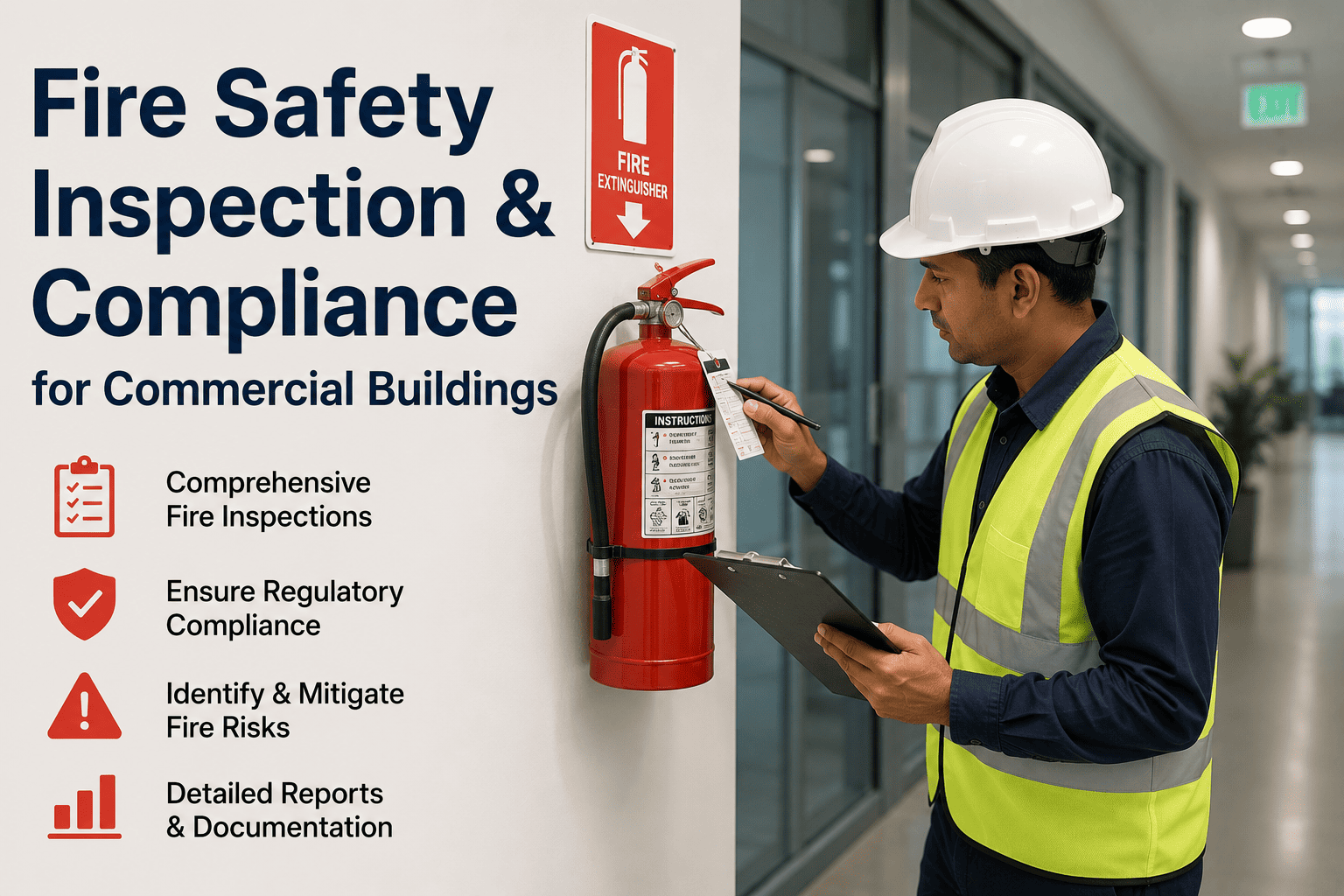
Fire extinguisher annual inspection and 6-year teardown per NFPA 10
State and Local Requirements
Enforced by: State agencies and local fire marshal
State OSHA Plans, Local Fire Codes, and Jurisdiction-Specific Obligations
22 states operate their own OSHA-approved state plans with standards at least as effective as federal OSHA. State plans including California Cal/OSHA and Washington WISHA often have more stringent requirements than federal standards. Local fire marshals enforce fire code requirements beyond NFPA minimums, including specific inspection intervals for high-rise buildings, hospitals, and assembly occupancies. NYC Local Law 11 requires periodic exterior facade inspection. NYC Local Law 97 creates compliance obligations for buildings where HVAC maintenance records affect carbon intensity calculations. FM teams managing buildings across multiple jurisdictions must track each jurisdiction's specific overlay requirements.
State plan requirements where applicable (Cal/OSHA, WISHA, etc.) above federal minimums
Local fire marshal overlay inspections for high-rise, hospital, and assembly occupancies
NYC Local Law 11 facade inspection every 5 years for buildings over 6 stories
NYC Local Law 97 HVAC maintenance records linked to carbon intensity compliance
California Title 24 energy code compliance documentation for large commercial buildings
Convert Every Compliance Obligation Into a Scheduled PM Task With Automatic Documentation
Oxmaint pre-loads OSHA, NFPA 25, NFPA 72, ADA, and IBC inspection schedules as recurring PM tasks linked to the responsible assets. Completion generates a timestamped record with technician attribution. Inspectors get an on-demand export. FM teams never search paper registers again. Book a demo to see compliance PM scheduling for your building portfolio.
Compliance Inspection Frequency Reference: What FM Teams Must Complete and When
Five Compliance Failures That Cost FM Teams the Most in 2026
Compliance failures are not random. They concentrate in five predictable patterns that reflect the structural weaknesses of paper-based and disconnected inspection tracking systems. Each pattern generates a specific financial exposure that CMMS-tracked compliance management eliminates.
01
Missed Inspection Deadlines on Fixed-Interval Compliance Tasks
NFPA 25 quarterly sprinkler valve inspections, NFPA 72 semi-annual fire alarm panel inspections, and monthly emergency lighting tests are the most frequently missed compliance obligations in commercial buildings. They miss not because FM teams are unaware of the requirement, but because fixed-interval compliance tasks are not tracked in the same system as other maintenance work. A calendar reminder or paper log does not escalate automatically when a due date passes. Oxmaint schedules every compliance inspection as a recurring PM task with an automatic overdue flag when the window closes without a completion record. An AHJ inspector arriving after a missed quarterly sprinkler valve inspection finds a compliance gap that carries both citation risk and insurance notification obligations.
02
Deficiency Closure Records Not Maintained After Corrective Action
NFPA 25 and NFPA 72 testing frequently identifies deficiencies: a sprinkler head with paint overspray requiring replacement, a smoke detector failing sensitivity testing, or a standpipe coupling that requires re-threading. The test report documents the deficiency. But without a work order linked to the deficiency and a completion record confirming corrective action, the FM team has no documented evidence that the deficiency was resolved before the next inspection cycle. An AHJ re-inspection that finds an unclosed deficiency from a prior test creates a citation for failure to correct a previously identified violation, a more serious classification than the original deficiency. Oxmaint links deficiency work orders directly to the test record, and the compliance status does not update to closed until the corrective work order is completed.
03
OSHA Lockout/Tagout Programmes Not Updated After Equipment Changes
OSHA 29 CFR 1910.147 requires that energy control procedures (lockout/tagout) be machine-specific and updated whenever equipment is modified, replaced, or reconfigured. Buildings that add HVAC equipment, replace boilers, or retrofit electrical distribution panels without updating the LOTO procedure for the affected equipment create documented OSHA violations at the asset level. OSHA 1910.147 also requires annual audits of energy control procedures, performed by an authorised employee who verifies that the procedure accurately reflects the current machine configuration. Oxmaint tracks each LOTO procedure as an asset-linked document, and the annual audit appears as a scheduled PM task linked to the machine record, triggering a review whenever the asset record logs a modification work order.
04
ADA Compliance Gaps Created by Unreported Facility Alterations
The ADA path of travel requirement is triggered by alterations to primary function areas, not by annual audit cycles. An FM team that completes a restroom renovation, lobby renovation, or tenant improvement without documenting whether the 20% path of travel accessibility upgrade obligation was assessed, and either fulfilled or formally exempted by documentation, creates an undocumented compliance gap. ADA federal lawsuits number over 8,200 per year and the majority originate from alteration-triggered access failures that were never assessed. Oxmaint flags alteration work orders affecting primary function areas for mandatory ADA path of travel review, prompting the FM team to document the accessibility assessment and upgrade disposition before the work order is closed as complete.
05
Inspection Documentation Not Available on Demand During Authority Inspections
An AHJ inspector, fire marshal, or OSHA compliance officer arriving unannounced will request documentation for completed inspections on the spot. FM teams maintaining compliance records in paper binders, scattered email threads, or contractor-held test reports cannot produce a consolidated compliance history in the time frame an inspector expects. This documentation gap is itself an OSHA violation under recordkeeping standards and creates the impression of non-compliance even when all inspections were actually completed on schedule. Oxmaint generates a complete compliance documentation export covering all inspection types, completion timestamps, technician attribution, and deficiency resolution records in under 60 seconds from any device with internet access.
Book a demo to see the compliance export.
Facility Safety Compliance Performance Benchmarks
Compliance audit preparation time saved by FM teams using CMMS compliance documentation vs paper register compilation84%
Of OSHA violations that could have been prevented by documented hazard identification and corrective action programmes96%
Reduction in missed inspection deadlines after FM teams implement CMMS compliance PM scheduling with overdue escalation78%
Reduction in deficiency recurrence rate when deficiency work orders are formally linked to the triggering test record in CMMS65%
OSHA penalty reduction achievable by demonstrating good faith and active compliance documentation programme to inspectorUp to 95%
Frequently Asked Questions: Facility Safety and Compliance for FM Teams
QHow does Oxmaint track NFPA 25 and NFPA 72 compliance inspection schedules?
Oxmaint pre-loads NFPA 25 and NFPA 72 inspection intervals as recurring PM tasks linked to each fire protection asset. When a task falls due, it appears in the FM team's work queue. Completion logs automatically with technician attribution, timestamp, and test result. Overdue tasks trigger escalation notifications before the deadline passes.
Sign up free to begin scheduling, or
book a demo to see fire compliance PM configuration.
QWhat documentation does Oxmaint generate for an OSHA inspection on demand?
Oxmaint generates a compliance export covering all inspection types: LOTO audit completions, hazard communication programme review logs, means of egress inspection records, and electrical safety maintenance records, each with technician attribution and timestamp. A single export covers the full documentation package an OSHA compliance officer would request.
Book a demo to see the OSHA documentation export, or
sign up free to start building your audit trail today.
QHow does Oxmaint handle ADA compliance obligations triggered by facility alterations?
Oxmaint flags alteration work orders in primary function areas for a mandatory ADA path of travel review step before the work order can be closed. The review outcome is documented in the work order record, creating an auditable trail of accessibility compliance assessment for every qualifying alteration.
Sign up free to configure ADA workflows, or
book a demo to see the alteration review process in Oxmaint.
QCan OSHA penalties actually be reduced by demonstrating a compliance documentation programme?
Yes. OSHA allows penalty reductions of up to 95% for good faith, prior compliance history, size of employer, and gravity of the violation. Demonstrating an active CMMS-tracked compliance programme with documented inspections, corrective actions, and employee training records is the primary evidence of good faith that supports the maximum penalty reduction.
Book a demo to see compliance documentation, or
sign up free to start today.
Schedule Every Compliance Inspection, Track Every Deficiency, and Pass Every Audit
Oxmaint converts OSHA, NFPA 25, NFPA 72, ADA, and IBC compliance obligations into scheduled PM tasks with automatic overdue escalation. Every completion generates a timestamped record. Every deficiency links to a corrective work order. Every audit produces a complete documentation export in under 60 seconds. No paper registers. No missed deadlines. No compliance surprises. Book a 30-minute demo to see compliance management configured for your building portfolio and regulatory jurisdiction.