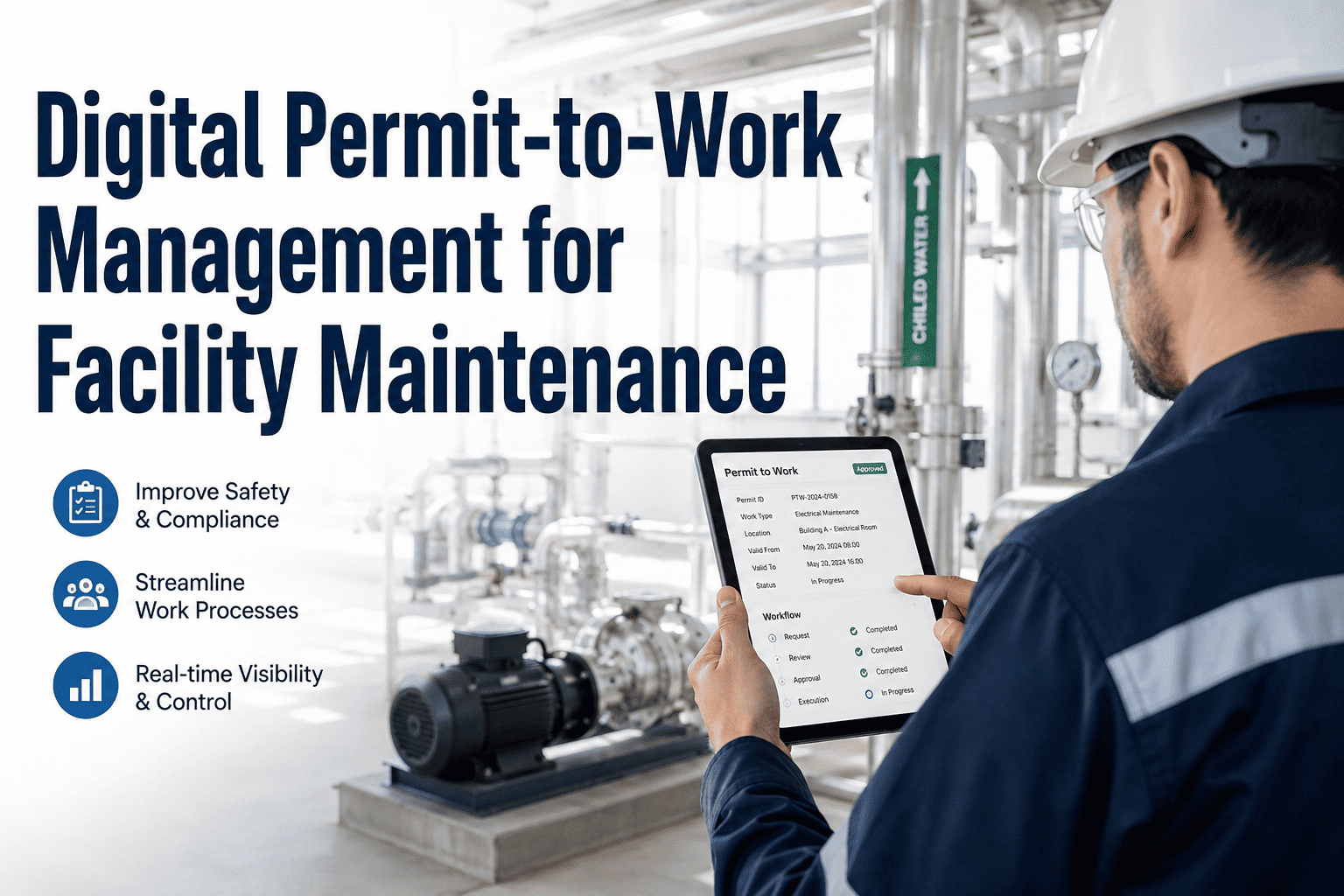
In FY2022–2023, OSHA recorded 2,532 Lockout/Tagout citations resulting in $20.7 million in penalties across 1,368 inspections — making LOTO the fifth most-cited OSHA standard for the second consecutive year. Behind every citation is a facility where high-risk work was performed without verified isolation, or where the verification existed on paper but could not be confirmed in real time by anyone managing the work. A permit-to-work system is not a stack of forms to be completed before a job starts. It is the operational control that ensures the right hazards are identified, the right controls are in place, and the right people have verified each step before a contractor picks up a tool inside your facility. The difference between a paper PTW and a digital one is the difference between a signed form and a verified, timestamped, audit-ready record that proves every step was completed in sequence — and that the permit was active during the exact window the work was performed. Book a demo to see OxMaint's digital PTW system for facility maintenance, or start free today.
Guide · Safety Operations · Compliance Tracking · Facility Management
Digital Permit-to-Work Management for Facility Maintenance
How to control hot work, confined space entry, electrical isolation, working at height, and contractor access in a single digital PTW system — with approval workflows, isolation verification, and complete audit trails.
2,532
LOTO citations — OSHA FY2022–23
$20.7M
Total penalties in 1,368 inspections
80%
Of LOTO injuries involve workers without site-specific training for that equipment
7%
Of process safety accidents cite PTW system failure as root cause (25-yr study, 600+ events)
The 5 Permit Types Every Facility Maintenance Programme Must Control
Each permit type carries a distinct hazard profile, requires different preconditions to be verified before work starts, and has a separate OSHA regulatory reference. A digital PTW system manages all five in a single platform — not five separate paper forms in five separate binders.
Hot Work
HazardIgnition of flammable vapours, gases, or combustibles near welding, cutting, grinding, or open flame
PreconditionsCombustible atmosphere test (<10% LEL); fire watch assigned; fire extinguisher staged; 35-ft clearance of combustibles
Duration limitTypically 8 hrs — re-authorisation required for continuation beyond permit window
OSHA ref29 CFR 1910.252 (welding, cutting, brazing) · NFPA 51B
Confined Space Entry
HazardOxygen deficiency, toxic atmosphere, engulfment, entrapment, or inability to self-rescue in tanks, vessels, crawl spaces, and pits
PreconditionsAtmospheric testing (O₂, CO, LEL, H₂S); ventilation established; rescue team on standby; entrants logged
Duration limitPermit expires when work is complete or at defined time limit — continuous atmospheric monitoring required while occupied
OSHA ref29 CFR 1910.146 (permit-required confined spaces)
Electrical Isolation (LOTO)
HazardUnexpected energisation of electrical equipment causing shock, arc flash, or entanglement during servicing or maintenance
PreconditionsAll energy sources identified; each source locked and tagged by the worker performing the task; zero-energy verification (LOTO try-out)
Duration limitPermit active until all workers have removed personal locks and re-energisation is verified safe
OSHA ref29 CFR 1910.147 (control of hazardous energy)
Working at Height
HazardFalls from elevated work platforms, roofs, ladders, and scaffolding — leading cause of construction and facility fatalities
PreconditionsFall protection equipment inspected; anchor points verified; exclusion zone established below work area; rescue plan documented
Duration limitPer-shift authorisation; conditions re-assessed after weather changes or work scope change
OSHA ref29 CFR 1926.502 (fall protection systems); 29 CFR 1910.28 (walking/working surfaces)
Contractor Access
HazardUnfamiliar contractors unaware of site-specific hazards, procedures, and emergency arrangements creating risk to themselves and facility occupants
PreconditionsSite induction completed; insurance and competency verified; scope of work confirmed; escort assigned for restricted areas
Duration limitPer-visit or per-project; re-induction required if >6 months since last site access or if site conditions have changed
OSHA ref29 CFR 1910.147 (multi-employer LOTO); General Duty Clause §5(a)(1) (host employer responsibility for contractor safety)
DIGITAL PTW · OXMAINT · COMPLIANCE TRACKING
One Platform. All Five Permit Types. Full Audit Trail on Every Job.
OxMaint manages hot work, confined space, LOTO, working at height, and contractor access permits in a single digital system — with mobile approval workflows, isolation verification, and exportable audit trails that satisfy OSHA inspection requests in under two minutes.
Digital vs Paper PTW — Why the Difference Is a Safety Issue, Not an IT Issue
The root cause in most LOTO and PTW-related incidents is not that workers intended to bypass the system. It is that a paper system can be bypassed under production pressure without anyone knowing until after the injury. A digital system makes bypass structurally impossible — not because it trusts workers less, but because it removes the conditions that make bypass the path of least resistance.
| Control Point |
Paper PTW |
Digital PTW (OxMaint) |
| Precondition verification |
Technician checks boxes — no independent verification that steps were completed |
Required fields with mandatory photo evidence before permit can be issued. Atmospheric test results entered — not assumed. |
| Approval chain |
Supervisor signature required — often obtained in advance or via phone without seeing conditions |
Mobile push notification to named approver. Approval timestamped at the moment it is given. Cannot be backdated. |
| Permit window enforcement |
Work continues beyond permit expiry — no automatic notification that the permit has lapsed |
Permit expiry alert to permit holder and supervisor 30 minutes before expiry. Permit status visible to all stakeholders in real time. |
| LOTO verification |
Worker signs that locks are applied — no verification that each energy source was isolated |
Each isolation point requires a photo of the physical lock in place before permit is active. Re-energisation requires individual lock removal confirmation. |
| Contractor training gate |
Site induction acknowledged on paper — no link between induction completion and permit issuance |
Permit cannot be issued to a contractor whose site induction is expired or incomplete. Training gate is enforced at the point of permit application. |
| Audit trail for OSHA |
Paper permits filed in binders — retrieval takes days, records may be incomplete or damaged |
Complete permit archive searchable by permit type, date, location, or worker. Full audit trail exported in under two minutes for any OSHA inspection request. |
Expert Review
"The case for digital permit-to-work in facility management is not primarily about efficiency — it is about the structural integrity of the safety control. A paper permit can be issued before conditions are verified because the form does not know what is happening in the field. A digital PTW system that requires a photo of the physical lock before marking an isolation step complete does not rely on trusting the worker's self-report. It requires evidence. The difference between those two approaches is the difference between a safety system that works when conditions are ideal and a safety system that works when a contractor is behind schedule and production is pushing for re-energisation. The 80% statistic on LOTO injuries involving inadequate site-specific training is particularly telling — because a digital system that prevents permit issuance until training is verified on record eliminates the most common contributing factor before the worker ever picks up a lockout device. That is not an administrative control. That is a preventive engineering control implemented through software."
Dr. Sandra Osei-Mensah, PhD, CCPE, CFIOSH
Certified Professional Ergonomist · Chartered Fellow, Institution of Occupational Safety and Health · 18 years industrial safety management and digital permit-to-work implementation in facility and heavy manufacturing environments · OSHA compliance and safety management systems specialist
Frequently Asked Questions
What OSHA standards govern permit-to-work requirements for facility maintenance?
The four primary OSHA standards for facility PTW are:
29 CFR 1910.146 — permit-required confined spaces (atmospheric testing, entrant/attendant/supervisor roles, rescue procedures);
29 CFR 1910.147 — control of hazardous energy/LOTO (energy isolation, lock application, try-out procedure, group lockout for multi-worker jobs);
29 CFR 1910.252 — welding, cutting, and brazing (hot work controls, fire watch, combustible atmosphere testing); and
29 CFR 1926.502 — fall protection for working at height. The General Duty Clause §5(a)(1) applies to contractor safety and makes the host employer responsible for providing a hazard-free workplace to all workers on site, including contractors.
Book a demo to see how OxMaint maps each OSHA standard to its permit template.
How long must facility permit-to-work records be retained?
Under OSHA 1910.146(e)(6), cancelled permits must be retained for at least 12 months to enable review of the permit programme. For facilities managed under ISO 45001 or site-specific EHS management systems, a 3-year retention period is common practice. Insurance and litigation considerations frequently require longer — facilities involved in a LOTO incident will typically need permit records going back years. OxMaint stores all permit records in the cloud with configurable retention periods and exportable archives, eliminating the risk of paper permits being lost, damaged, or simply unfindable when an OSHA inspector or legal counsel requests them.
What is the facility manager's responsibility for contractor safety under OSHA?
Under OSHA's multi-employer citation policy, a host employer (facility manager) can be cited for a hazard created by or exposed to a contractor even if the facility manager's own employees were not directly involved. The General Duty Clause §5(a)(1) requires the host employer to ensure contractors receive site-specific hazard information, that PTW preconditions are verified before contractor work begins, and that the host employer's safety procedures are enforced during contractor operations. A facility PTW system that verifies contractor induction completion, training currency, and scope-of-work approval before issuing a permit provides the documented evidence that the facility discharged its host employer duty of care.
Start free to configure contractor access permit workflows in OxMaint.
How does OxMaint handle concurrent permits and conflicting work scopes in the same facility area?
OxMaint's PTW system shows all active permits in a facility by location in real time — so a hot work permit and a confined space entry permit issued simultaneously for the same equipment bay generate a conflicting permit alert to the permit authority. The system does not automatically block conflicting permits (which may be valid in some circumstances with additional controls), but it surfaces the conflict for deliberate review by the responsible authority. This prevents the most common permit coordination failure: two crews working in the same hazardous area under separate permits, each unaware of the other's hazard exposure.
DIGITAL PTW · FACILITY MANAGEMENT · OXMAINT
A Paper Permit Proves a Form Was Filled. A Digital Permit Proves the Work Was Safe.
OxMaint's digital PTW system controls hot work, confined space entry, LOTO, working at height, and contractor access with mobile approval workflows, mandatory evidence capture, permit window alerts, and complete audit trails — giving facility managers the documentation that satisfies OSHA inspections and the real-time visibility that prevents the incidents that create them.