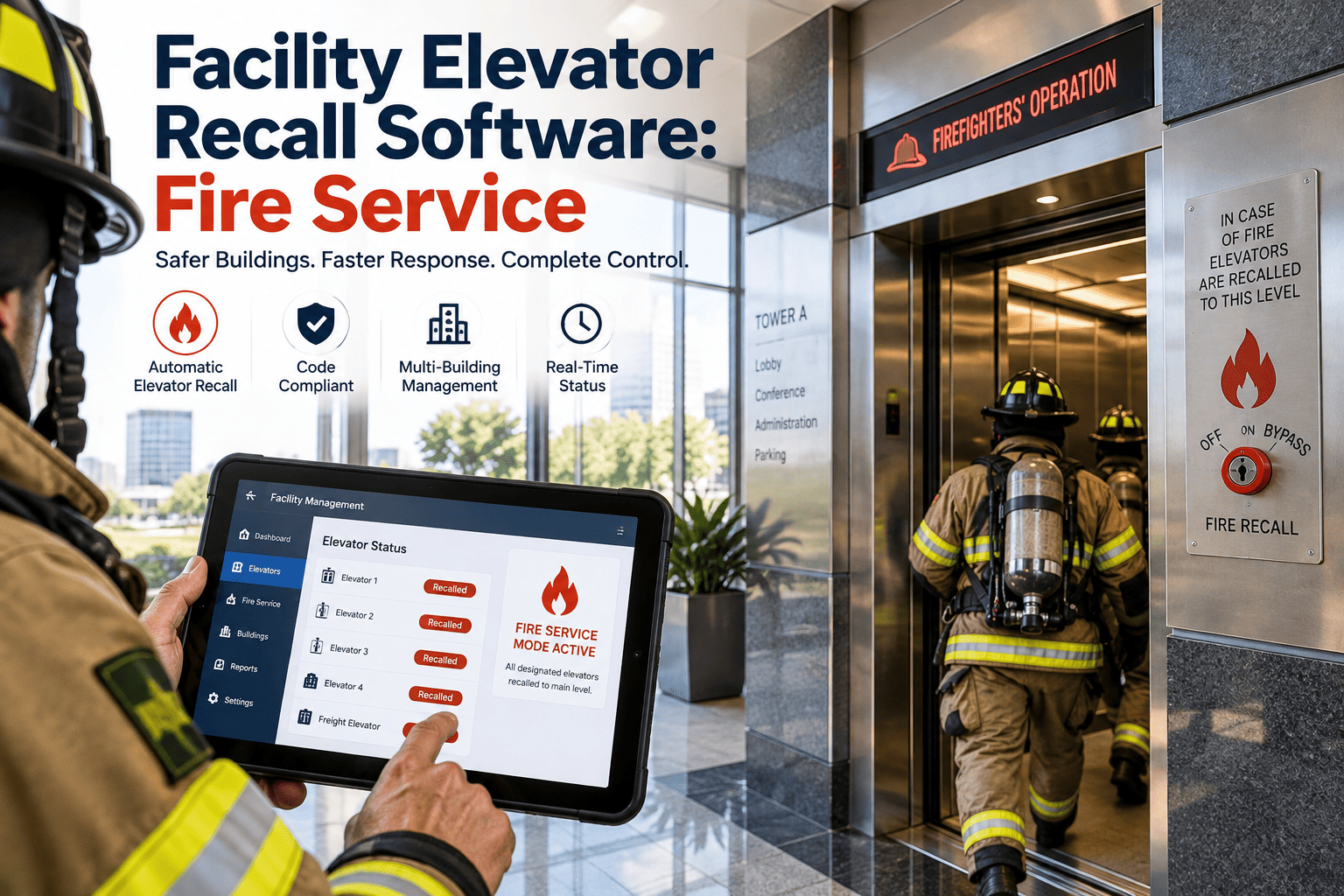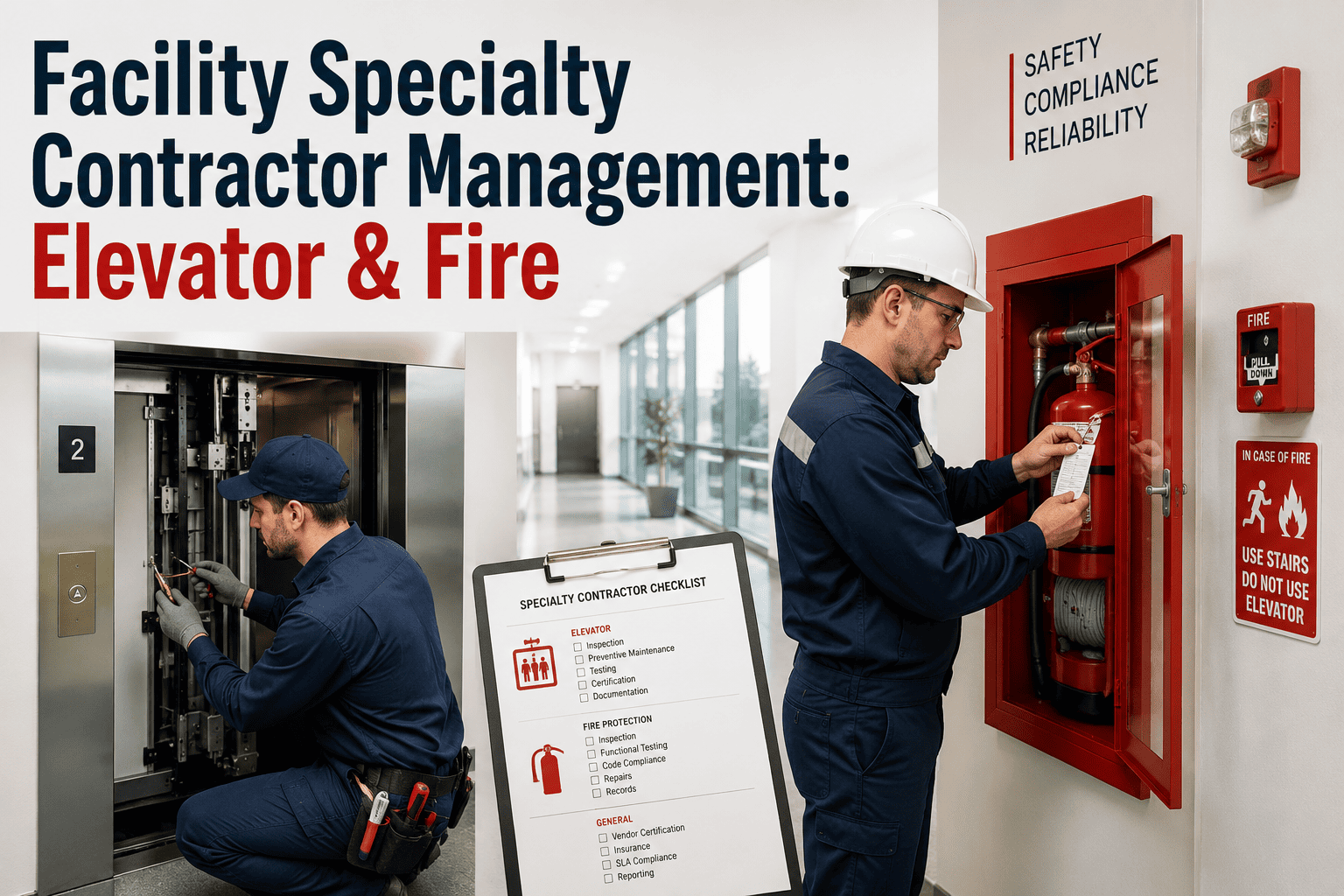
Specialty systems like elevators and fire suppression carry the highest compliance risk and the most opaque billing of any category under a facility's roof — yet most teams still track them in shared spreadsheets and three-ring binders. A single missed elevator A17.1 inspection or fire-pump churn test can trigger OSHA referrals, AHJ fines in the $5,000–$40,000 range, and insurance premium surcharges that quietly dwarf the vendor's invoice. Facility specialty contractor management consolidates every regulated-asset vendor, contract term, test record, and invoice exception into one CMMS ledger, so finance, operations, and life-safety teams work from the same source of truth. This guide breaks down how to structure elevator and fire vendor oversight, what KPIs actually predict failure, and how a Start Free Trial of a CMMS specialty module pays for itself in the first quarterly audit cycle.
Are your two highest-risk vendors being managed by two different inboxes?
Elevator contractors and fire system vendors control the assets most likely to generate a regulatory finding — and the contracts most likely to auto-renew at 6–9% above market. Centralizing them in a CMMS specialty ledger turns scattered invoices and PDF certificates into auditable, expiring-flagged, cost-benchmarked records.
Two vendor classes, one accountability gap
Elevator and fire vendors operate on different inspection cadences, different code bodies, and different billing conventions — but they share one failure mode: silent compliance drift between the technician visit and the AHJ filing.
ASME A17.1 & A17.3 category coverage
Most elevator service contracts bundle category tests but exclude modernization credits, callback thresholds, and oil-sample analysis. Without a CMMS flag, 1-year and 5-year category certificates expire unnoticed — average fine per lapsed unit: $3,200.
- Category 1 (1-yr) & Category 5 (5-yr) test logs
- Callback response SLA: 2-hr emergency / 24-hr routine
- FDA Grade-A freight units (if applicable)
- Oil analysis & rope retirement reports
NFPA 25, 72 & 20 inspection scope
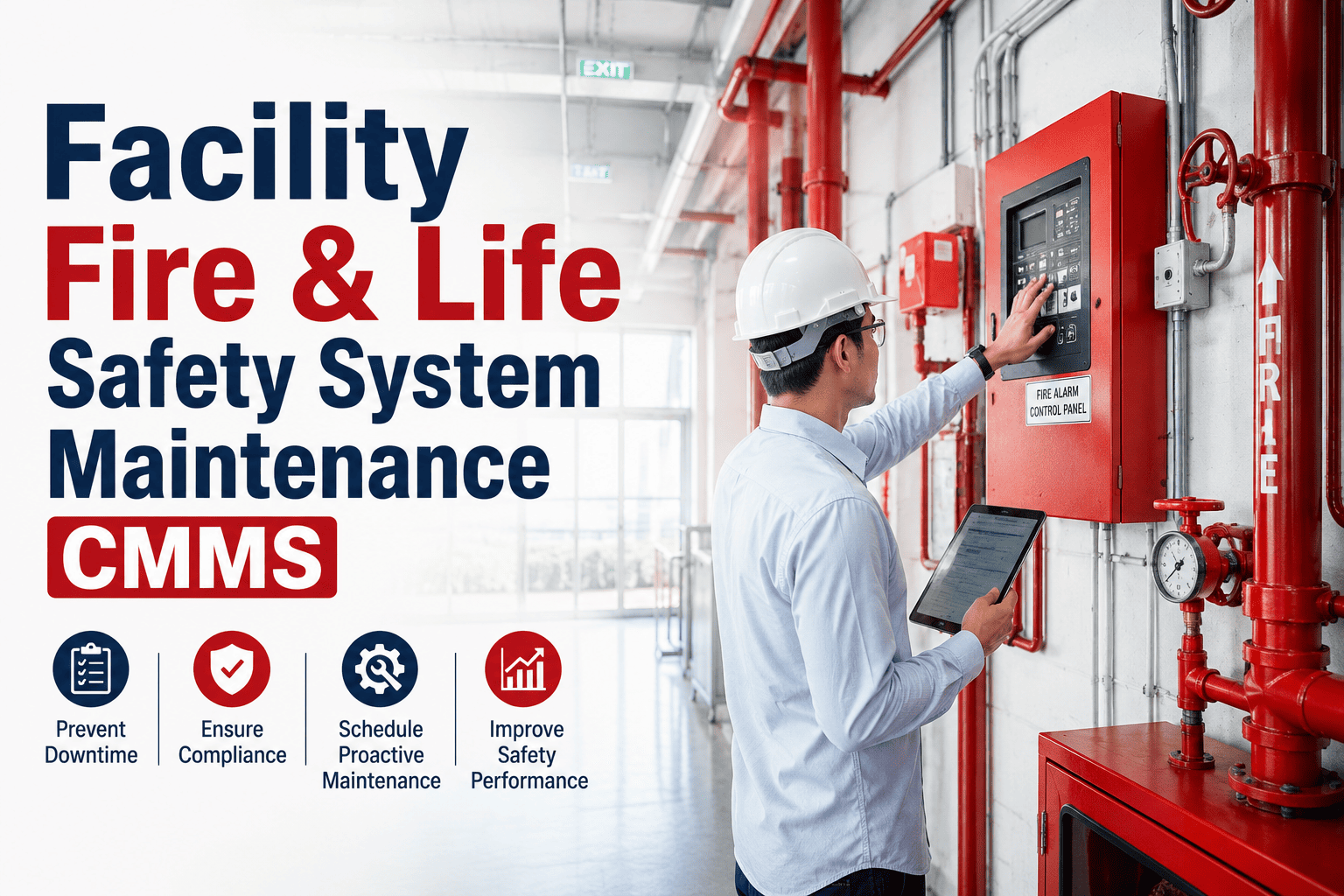
Fire vendors file test certificates that building owners never see. NFPA 25 quarterly, annual, and 5-year intervals stack — miss one churn test on a fire pump and the entire sprinkler system is technically non-compliant until retest.
- NFPA 25 quarterly & annual sprinkler inspections
- NFPA 72 fire-alarm battery & signal tests
- NFPA 20 fire-pump weekly churn (owner duty!)
- Backflow preventer annual + 5-yr internal
Worked example: A 14-building healthcare campus running 22 elevators and 18 fire zones was spending $86K/yr across two specialty vendors. After consolidating contracts in a CMMS specialty ledger, the team identified three auto-renewed elevator contracts priced 11% above the regional benchmark and two fire zones whose 5-year internal pipe obstruction tests had never been filed — exposure cleared in 41 days, saving $9,400/yr going forward.
12 fields every CMMS specialty record must hold
A regulated-asset vendor record is not a contact card — it is a living compliance file. These 12 fields are the minimum that lets an audit-ready facility answer any AHJ question in under five minutes.
Vendor license & expiration
State elevator license, NICET certification level, or fire-protection contractor registration — with auto-renewal alert at T-90 days.
Contract effective & end date
Captures the auto-renew window (typically 30–60 days before end) so finance can issue a non-renewal notice in time.
Scope & exclusion list
Exact NFPA / ASME categories covered vs. excluded — the line item most often disputed when a callback bill arrives.
Escalation clause formula
CPI-U, fixed %, or CPI cap — stored as a parseable formula so the CMMS recalculates next-year base price automatically.
SLA response tiers
Emergency / routine / callback response times with penalty credits if the vendor misses — converted to dollars per hour.
Insurance COI on file
General liability, workers' comp, and umbrella limits with expiration alerts — most facilities are underinsured on vendor COIs.
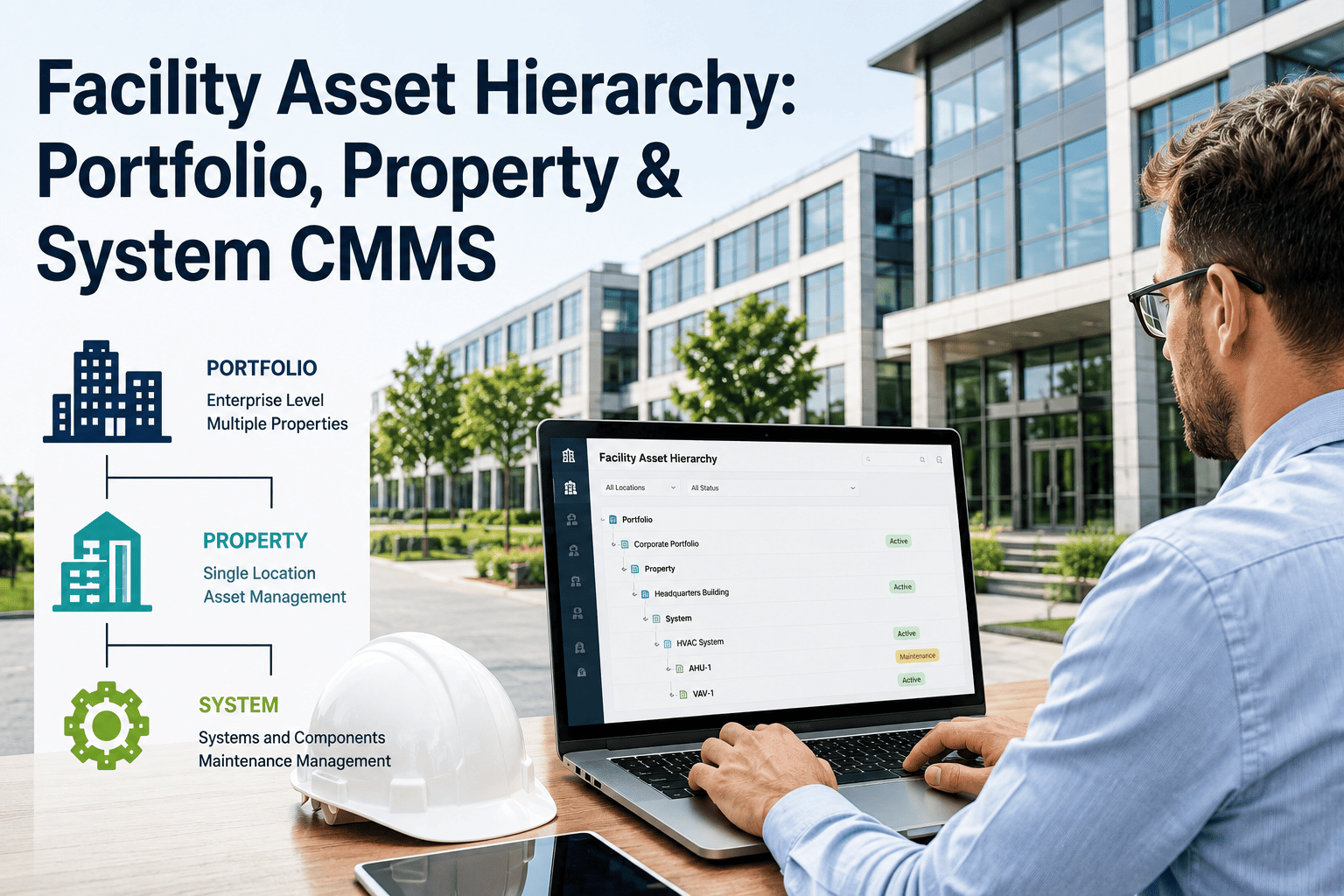
Asset-to-vendor mapping
Each elevator ID and fire zone tied to exactly one responsible vendor — eliminates "who owns the callback?" disputes.
Next inspection due date
Pulled from the code interval (quarterly / annual / 5-yr) and pushed to the CMMS work-order calendar automatically.
Test certificate archive
PDF uploads with OCR-extracted serial numbers, test dates, and pass/fail — searchable for AHJ walk-throughs.
3-year spend history
Rolling baseline for benchmarking. Vendor invoices over baseline +5% are flagged for finance review before payment.
Callback & failure log
Repeat-call rate per asset — the single best predictor of end-of-life replacement vs. continued repair spend.
AHJ jurisdiction & inspector
Named authority, last visit date, and open findings — closes the loop between vendor work and regulator sign-off.
The specialty-vendor cost-recovery formula
Facility teams rarely quantify what poor specialty-vendor management costs — because the leakage is spread across auto-renewals, SLA credits never claimed, and invoices billed above contracted scope. The formula below isolates annual recoverable spend.
Worked example: A 180-asset industrial facility spending $42K/yr on elevator and fire vendors applied the formula: ($42K × 7%) + (18 × $120) + ($9K × 12%) − $1.8K CMMS = $5,024 recoverable in year one — a 12% reduction in specialty-vendor spend without renegotiating a single contract.
Elevator & fire inspection cadence on one calendar
Staggering the two vendor classes across the year prevents Q4 audit pile-ups and lets one facility coordinator own both programs without burnout. Below is the cadence a CMMS specialty module auto-generates from the contract start date.
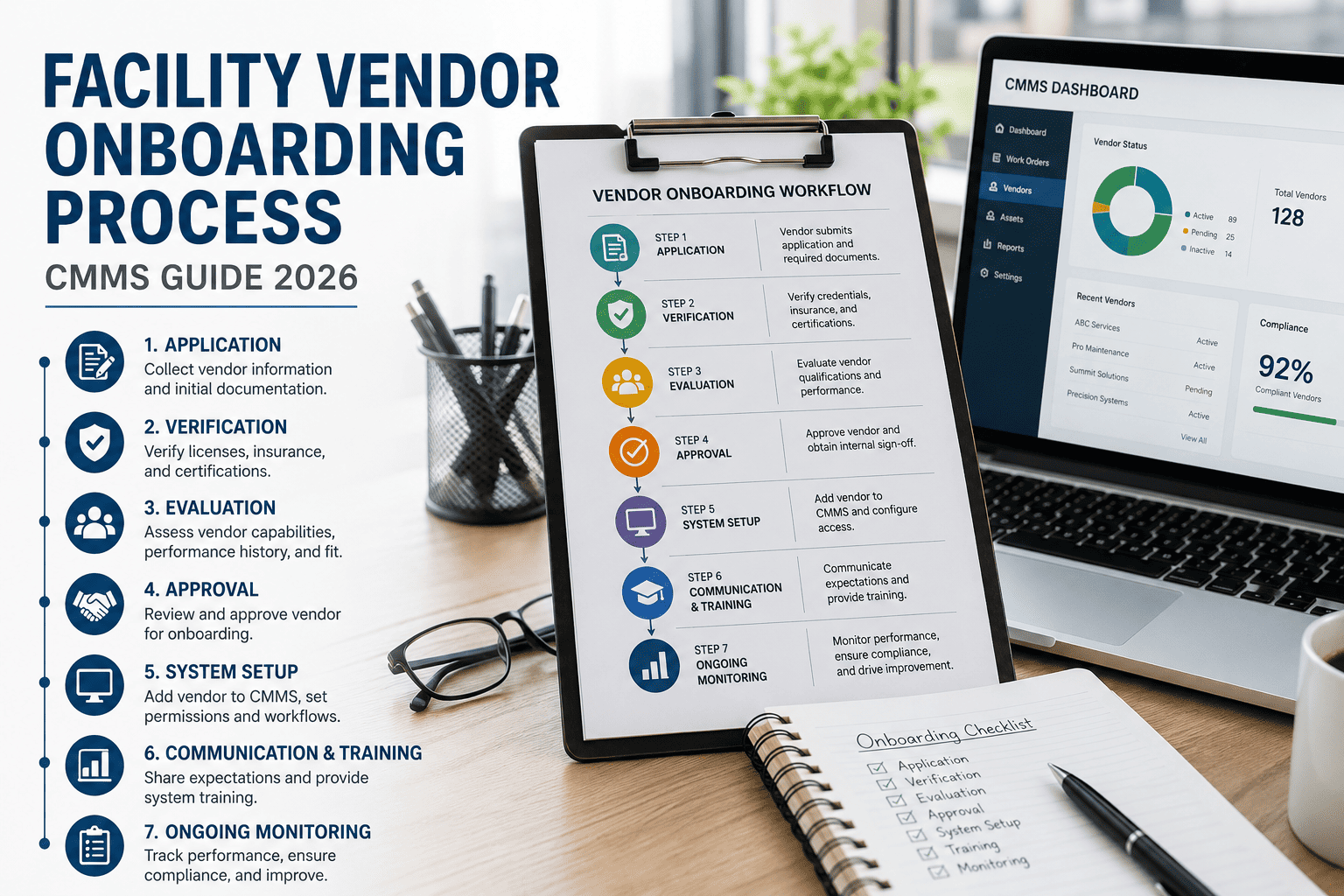
Import both vendor contracts, parse escalation clauses, upload all COIs, and set base-year spend benchmarks. CMMS generates 12-month work-order calendar.
NFPA 25 quarterly sprinkler inspection + NFPA 72 quarterly fire-alarm test. Vendor uploads signed certificates; CMMS OCR-checks serial numbers against asset register.
ASME A17.1 Category 1 annual safety test on every unit. Callback rate from the prior 6 months is reviewed against SLA — credits claimed if threshold breached.
Q3 NFPA 25 inspection, backflow preventer annual, and a self-audit of the CMMS specialty ledger. Any expired COIs or missing certs are flagged red before AHJ walk-through.
Fire annual + elevator 1-year certs filed. Auto-renewal notices for both vendor contracts hit finance at T-60 days — benchmark report attached so renewal is a decision, not a default.
What changes when elevator & fire vendors leave the spreadsheet
The gap between manual tracking and a CMMS specialty module is not administrative — it is the difference between reacting to a fine and preventing one. Below is the operational delta across six dimensions.
| Dimension | Spreadsheet / shared inbox | CMMS specialty module |
|---|---|---|
| Cert expiration visibility | Manual date columns; discovered after AHJ cites the facility. | T-90 / T-30 / T-7 auto-alerts to vendor + coordinator. |
| Invoice scope verification | AP matches PO number only; parts billed as "extra" slip through. | Line items cross-checked vs. NFPA / ASME scope field; over-bills held. |
| SLA credit recovery | Callbacks logged in email; credits rarely requested. | Every missed SLA auto-converts to a credit request to the vendor. |
| AHJ audit response time | 2–5 business days to assemble certificates from multiple sources. | Under 5 minutes — one filtered view exports the full packet. |
| Contract benchmarking | No regional rate data; renewals accepted at vendor-quoted price. | 3-year spend trend + regional benchmark attached to renewal notice. |
| Repeat-failure detection | Callback history buried in work orders; no trend analysis. | Asset callback rate flagged — triggers replace-vs-repair review. |
What facility teams recover in the first 90 days
Two short notes from teams that moved elevator and fire vendor oversight into a CMMS specialty ledger within the last year.
"We caught two elevator contracts that had auto-renewed at 9% above the regional rate for three straight years. The CMMS specialty module paid for itself before the first quarterly invoice cycle closed."
"Our last AHJ fire inspection took 4 minutes instead of 2 days. Every NFPA 25 and NFPA 72 cert was already in the system, linked to the right zone, with the vendor's signature on file. The inspector asked which software we were using."
Move both vendor classes into one CMMS ledger this quarter
Most teams recover 8–12% of specialty-vendor spend in the first audit cycle. Start a free trial and import your two highest-risk contracts in under an hour.
Five questions facility teams ask before going live
How does a CMMS specialty module differ from a generic vendor management feature?
Generic vendor modules track contacts, POs, and payment terms. A specialty module adds code-specific inspection cadences (ASME A17.1, NFPA 25/72/20), certificate archiving with OCR, SLA credit tracking, escalation-clause parsing, and AHJ audit export — the fields a regulated-asset audit actually asks for. Without those, you are managing a vendor, not managing compliance.
Can the system alert me before an elevator or fire certificate expires?
Yes. Certificates are tied to the asset and vendor record with three alert windows — T-90, T-30, and T-7 days — routed to both the facility coordinator and the vendor's service manager. The 2024 benchmark of 38% of AHJ violations citing expired certs is almost entirely preventable with this single workflow. Book a Demo to see the alert cascade in a live environment.
What does it cost to leave elevator and fire vendors in spreadsheets?
Across mid-size facilities, the recoverable loss averages 8–12% of annual specialty-vendor spend — from auto-renewals above benchmark, unclaimed SLA credits, and out-of-scope invoice leakage. For a portfolio spending $50K/yr on these two vendor classes, that is $4,000–$6,000 walking out the door every year, plus the unquantified cost of a single failed AHJ audit.
How long does it take to onboard existing elevator and fire contracts?
A typical two-vendor, 20-asset onboarding takes 45–90 minutes: upload the contracts, map assets to vendor responsibility, set the code interval per asset class, and attach the most recent test certificates. The CMMS then auto-generates the next 12 months of inspection work orders and the renewal-alert calendar.
Will this help if my AHJ inspector shows up unannounced?
That is the core use case. Every certificate, COI, inspection date, and vendor license lives in one filtered view exportable as a PDF audit packet in under five minutes. Teams that previously took 2–5 business days to assemble AHJ documentation typically cut that to a single conversation. You can try the export workflow yourself with a Start Free Trial and a sample asset register.
Your elevators and fire systems deserve more than a shared inbox
Import your two highest-risk vendor contracts today and see your full compliance calendar, spend benchmark, and cert-expiration alerts by the end of the week.
Free 14-day trial · No credit card