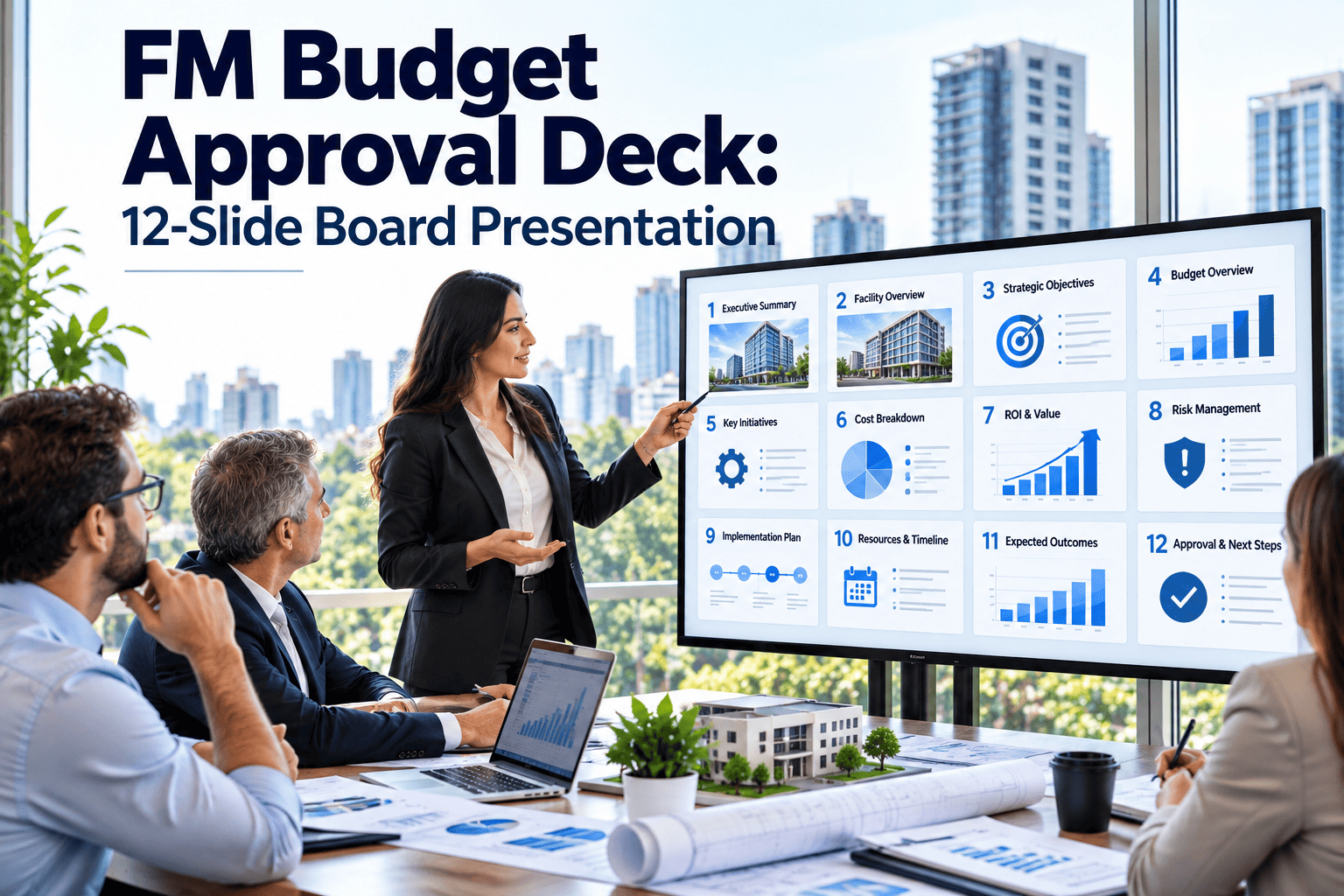
Facility budgets rarely fail because the numbers are wrong. They fail because a board sees 40 slides of line items and cannot tell what decision it is being asked to make. Directors fund stories that connect risk, plan, return, and a clear request. A tight 12-slide structure gives facility leaders that story and keeps the discussion on outcomes rather than spreadsheets. Below is the slide-by-slide outline, the data behind each slide, and how a maintenance management system supplies evidence a board will trust.
A 12-slide budget deck built around problem, plan, return, and ask
Structure your facility budget request so executives and board members can decide quickly.
Why this sequence works
Problem, slides 1 to 3
Establish why action matters before asking for money. Boards respond to exposure they can name.Plan, slides 4 to 7
Show a credible, sequenced response with owners and dates.Return, slides 8 to 10
Connect spending to outcomes and compare scenarios honestly.Ask, slides 11 and 12
State the decision needed and what happens next.What goes on each slide and where the data comes from
| Slide | Content | Evidence source |
|---|---|---|
| 1. Context | Portfolio size, age, and role in the business | Asset register, property records |
| 2. Risk exposure | Critical assets near end of life, compliance gaps | Condition data, inspection results |
| 3. Cost of waiting | Failure scenarios and likely business impact | Downtime and repair history |
| 4. Strategy | Approach in one sentence and three principles | Facility strategy |
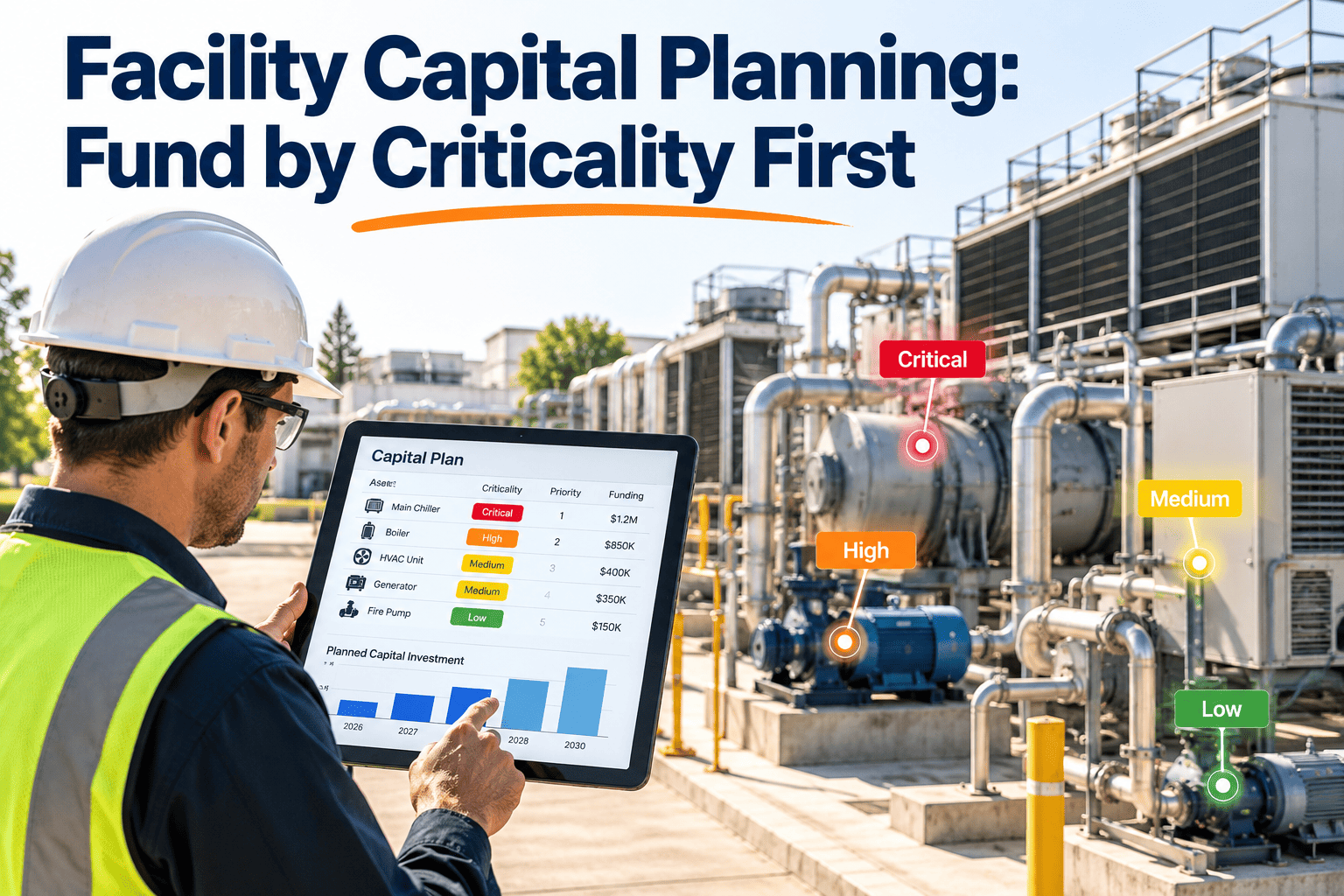
| 5. Priorities | Ranked projects by risk and value | Criticality ranking |
| 6. Timeline | Phased schedule with milestones | Project plan |
| 7. Resources | Team, contractors, and dependencies | Staffing plan |
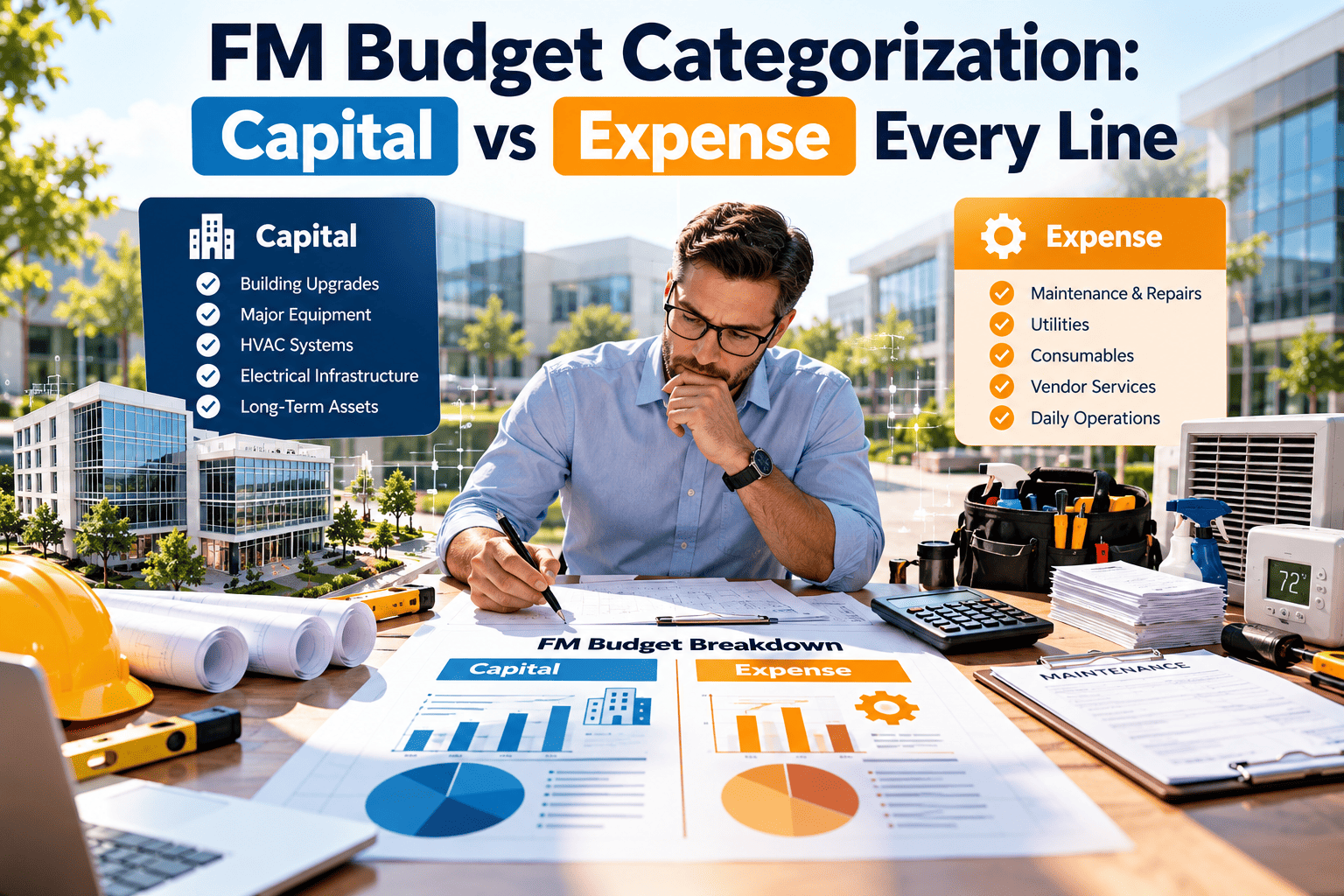
| 8. Financials | Operating and capital request by category | Budget model, actuals |
| 9. Return | Avoided cost, savings, risk reduction | Work order trends, utility data |
| 10. Scenarios | Fund in full, fund partly, defer | Financial model |
| 11. The ask | Exact amount, timing, and decision requested | Summary of slides 8 to 10 |
| 12. Next steps | Approval path and first 90 days | Implementation plan |
Back your budget deck with real maintenance data
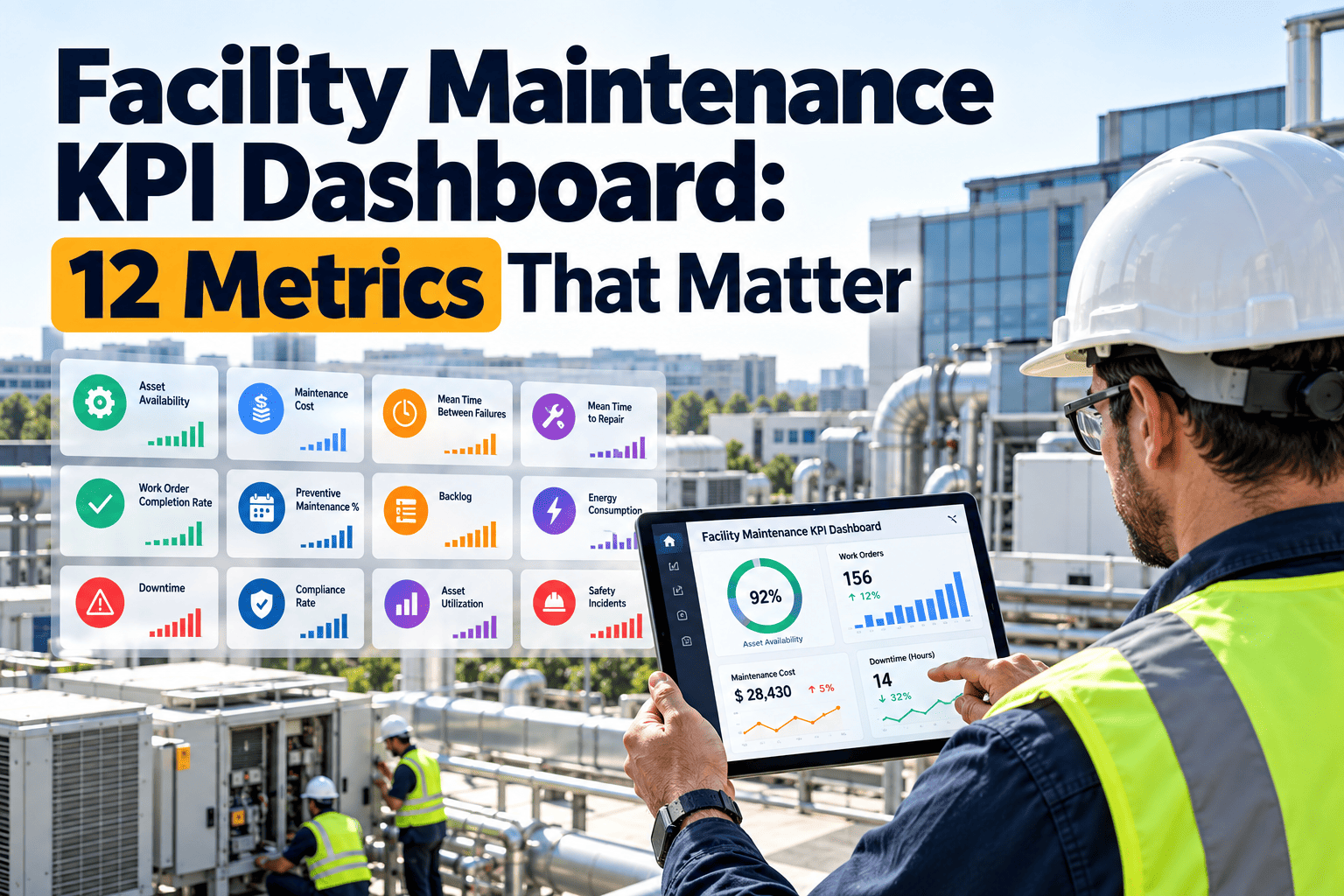
Oxmaint reports on work orders, asset history, preventive maintenance compliance, and cost by asset.
Maintenance data worth pulling before you build slides
Questions to rehearse before the meeting
What happens if we defer?
Prepare a specific scenario, such as a named asset failing and the operational consequence.Why this amount?
Show how the request was built and what was excluded.How will you prove it worked?
Name the metrics, baseline, and reporting dates.What can be phased?
Have a partial-funding option and its trade-offs ready.Keeping the deck decision-ready
Do
- Lead each slide with its conclusion
- Use one chart or table per slide
- Put detail in an appendix
- State assumptions openly
- Use consistent units and time periods
Avoid
- Technical jargon without translation
- Unsourced statistics
- Line-item spreadsheets on screen
- Hidden risks or inflated savings
- Asking without a stated decision
Budget deck questions
Is 12 slides a fixed rule?
No. It is a discipline. Add appendix slides for detail, but keep the main story short enough to decide on.
How do I quantify risk without invented numbers?
Use your own failure history, repair costs, and downtime records, and label estimates as estimates.
Should the deck include capital and operating?
Yes, shown separately, since boards often approve them through different processes.
Where does the evidence come from?
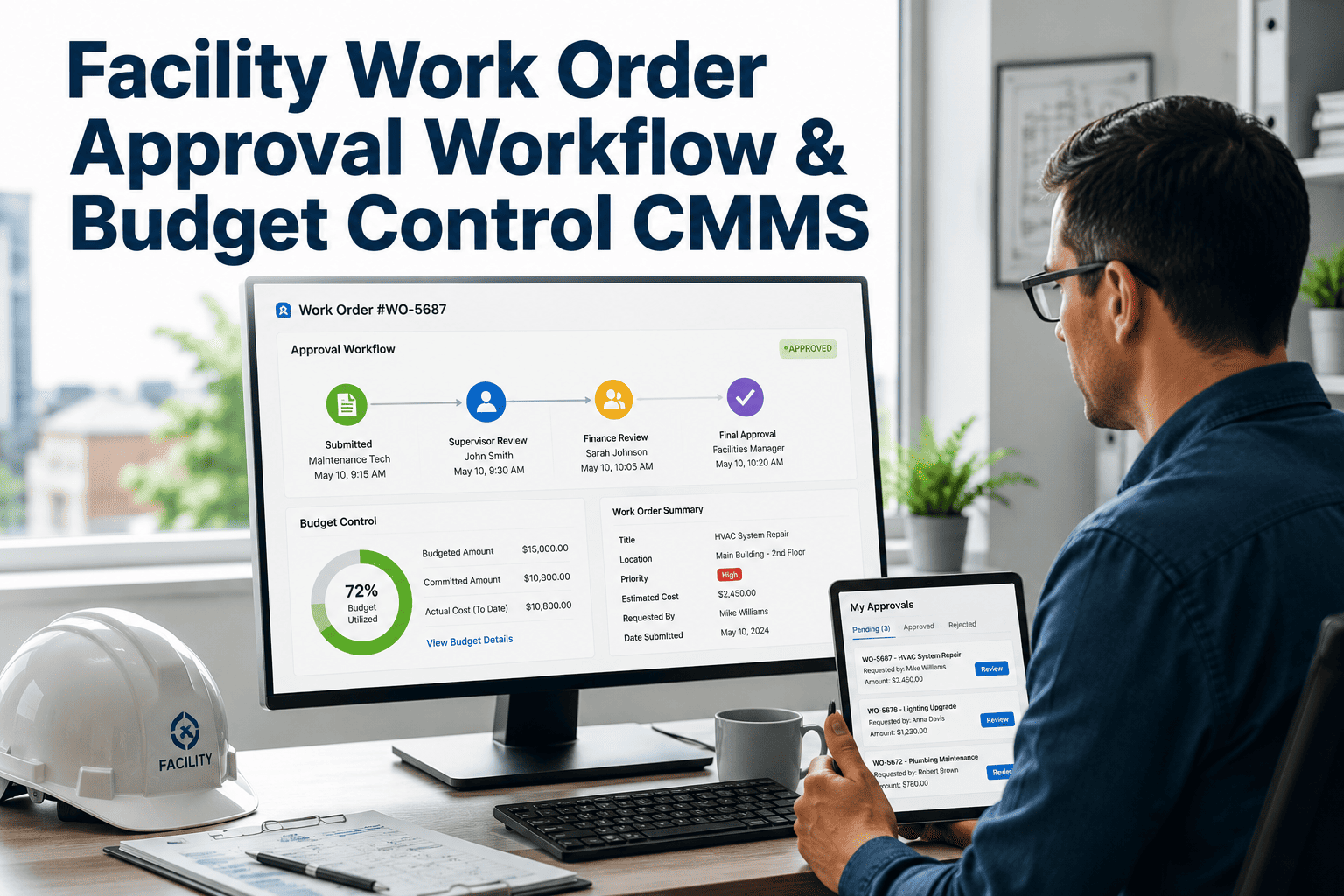
A CMMS holds work order, asset, and cost records that support each slide.
Can you help us build the data foundation?
You can book a demo to discuss reports that suit your budget cycle.
Walk into the boardroom with evidence
Build the maintenance record that makes every slide in your budget deck defensible.