FM organizational design is the structural backbone that determines whether your facility management operation scales, adapts, and performs — or stalls at its current size. The wrong facility team structure creates accountability gaps, duplicated effort, and reactive fire-fighting that drives up maintenance costs by 20–30% annually. By building an FM team structure aligned to your portfolio size and delivery model, you shift from chaos to controlled, data-driven execution. OxMaint provides the AI-powered CMMS and EAM infrastructure that supports this organizational design, giving maintenance and reliability teams the visibility needed to eliminate paper work orders and cut unplanned downtime. Start Free Trial to map your new facility management organization today.
FM ORGANIZATIONAL DESIGN
Does your FM team structure match your asset portfolio — or hold it back?
A misaligned facility management organization structure forces technicians into reactive fire-fighting, increasing downtime by up to 40%. Designing the right FM operating model aligns staffing, capabilities, and technology to your real workload.
PORTFOLIO ALIGNMENT
How to match your FM organization structure to portfolio size
Your facility management org structure should scale directly with asset count, geographic spread, and criticality. A 50-asset single-site operation needs a vastly different FM department structure than a 10,000-asset multi-site enterprise.
Tier 1: Under 500 Assets
Flat Facility Team Design
A single Facility Manager oversees 3–6 multi-skilled technicians. Responsibilities overlap, and routing is manual. Without a CMMS, preventative maintenance compliance typically hovers below 60%.
Tier 2: 500–5,000 Assets
Functional FM Team Model
The team splits into preventive, reactive, and compliance sub-groups. A Reliability Engineer is introduced. At this scale, a CMMS becomes mandatory to track work orders and avoid duplicate purchasing.
Tier 3: 5,000+ Assets
Matrix Facility Management Structure
Regional managers report to a Director of Facilities. Teams are specialized by asset class (HVAC, electrical, grounds). Predictive maintenance and advanced analytics drive the FM operating model.
STAFFING & CAPABILITIES
Building an FM staffing structure that scales
High-performing facility management teams balance technical skills, scheduling efficiency, and data literacy. Your FM staffing structure must map specific roles to specific maintenance outcomes.
The FM Staffing Efficiency Formula
Total Maintenance Hours Available ÷ (Preventive Hours + Reactive Hours + Compliance Hours) = Staffing Capacity Buffer
If your buffer is below 15%, your facility team structure is under-resourced and will default to reactive maintenance. OxMaint tracks these hours automatically to keep your buffer healthy.
| FM Role | Primary Responsibility | Target Allocation | CMMS Interaction |
|---|---|---|---|
| Facility Manager | Budget, vendor SLA, compliance auditing | 15% ops / 85% strategic | Dashboard analytics, KPI reviews |
| Maintenance Planner | Work order scheduling, parts kitting | 90% planning / 10% execution | Daily work order generation |
| Reliability Engineer | Predictive strategy, RCA, asset criticality | 70% analysis / 30% field | Condition monitoring data review |
| Maintenance Technician | Execution of PMs, CMs, and repairs | 95% execution / 5% admin | Mobile work order updates |
REAL-WORLD SCENARIO
The cost of an outdated facility management structure
Consider a 180-asset manufacturing plant spending $42K annually on emergency maintenance. Their flat facility team design had three technicians reporting directly to an overwhelmed Plant Manager with no digital tracking.
Before: Outdated Structure
- 72 hours average downtime per critical asset failure
- 30% of PMs skipped or delayed due to scheduling gaps
- Spare parts inventory tracked on spreadsheets (20% stockouts)
- No accountability chain for repeated equipment failures
After: Redesigned FM Team Model + OxMaint
- 18 hours average downtime (75% reduction via predictive routing)
- 98% PM compliance achieved through automated work orders
- Inventory stockouts reduced to 2% with CMMS min/max triggers
- Clear accountability via digital audit trails and asset history
By introducing a dedicated Maintenance Planner role and deploying OxMaint as their CMMS, the plant reduced emergency repair costs from $42K to $14K in year one — a 66% reduction directly tied to structural alignment and automated scheduling.
PLATFORM ENABLEMENT
How OxMaint powers high-performing FM team structures
Even the best facility organizational structure fails without the right technology to execute it. OxMaint bridges the gap between org design and daily operational reality.
Automated Preventive Maintenance
Map your FM staffing structure to actual workload. OxMaint auto-generates and routes work orders based on asset usage, cutting manual planning time by 85% and ensuring 98% PM compliance.
Predictive Maintenance Analytics
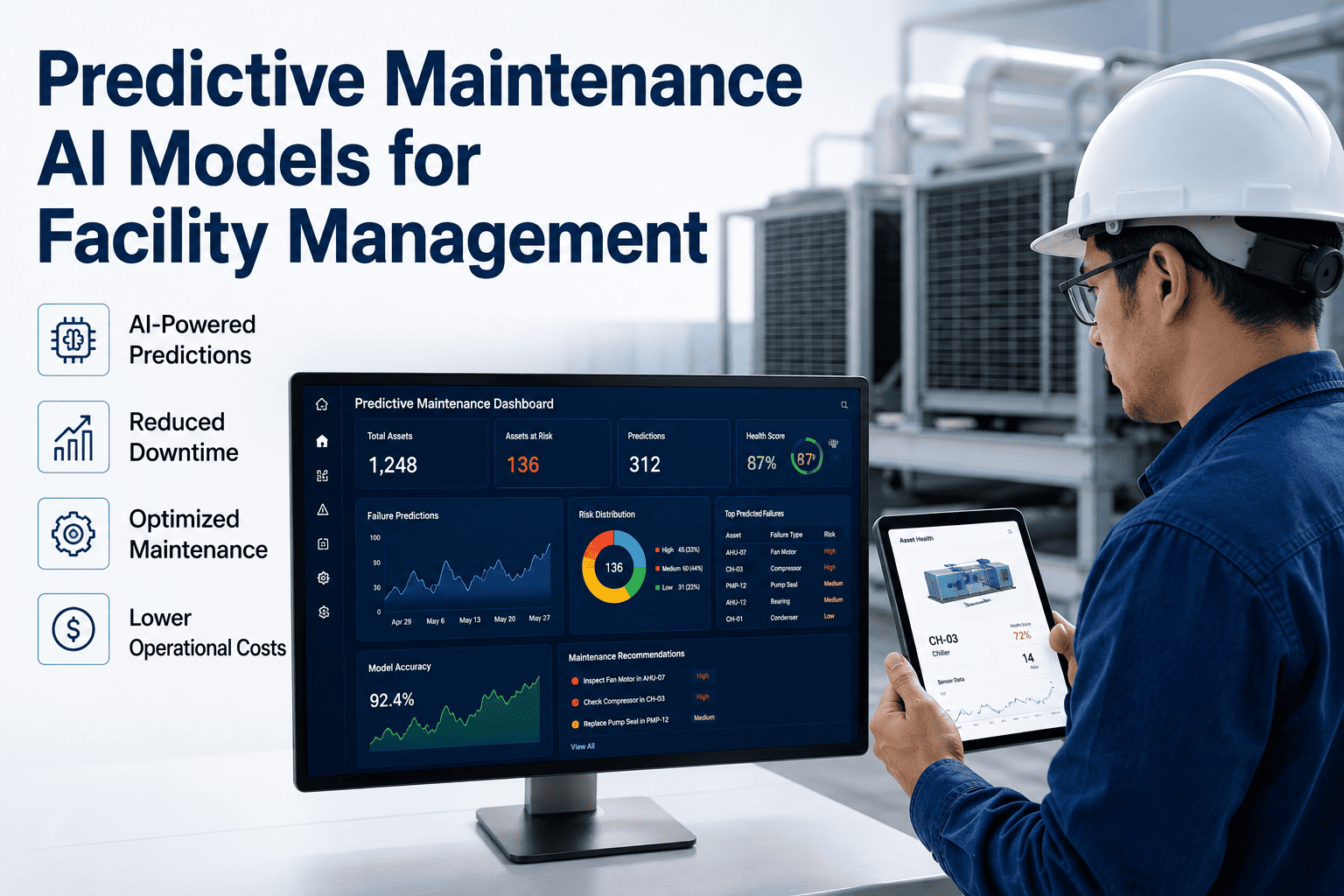
Give your Reliability Engineers the data they need. AI-driven insights predict failures 14–30 days in advance, cutting unplanned downtime by 30–50% and freeing up reactive technicians for planned work.
Enterprise Asset Tracking
Structure your assets by criticality, location, and system. Complete lifecycle tracking ensures your facility management team knows exactly what assets they own, their condition, and their maintenance history.
Spare-Parts Inventory Management
Eliminate the 20% stockout rate typical in poorly structured facility teams. Min/max reorder triggers and real-time inventory visibility ensure technicians never wait for critical parts.
Ready to redesign your facility management organization?
See how OxMaint's AI-powered CMMS enforces your new FM team structure and drives measurable ROI from day one.
FREQUENTLY ASKED QUESTIONS
FM organizational design and team structure FAQs
What is the best FM organization structure for a multi-site operation?
The best FM organization structure for multi-site operations is a matrix model. Regional Facility Managers report to a central Director of Facilities, while local technicians handle daily execution. This facility management org structure ensures standardized KPIs across sites while maintaining local responsiveness. Using a centralized CMMS like OxMaint is critical to making this model work.
How many technicians should be in a facility team structure?
A standard facility team structure maintains a ratio of 1 Maintenance Planner for every 8–12 technicians, and 1 Reliability Engineer for every 20–30 technicians. Total headcount depends on asset criticality and PM volume. If your technicians spend more than 20% of their time on reactive maintenance, your FM staffing structure is likely under-resourced.
How does a CMMS support facility management org design?
A CMMS supports facility management org design by enforcing accountability, routing work orders to the right roles automatically, and providing data to justify headcount. OxMaint eliminates manual scheduling so your Maintenance Planner can manage 12+ technicians instead of 6. You can Start Free Trial to see how automated workflows immediately clarify team roles.
What is the difference between an FM operating model and an FM org structure?
An FM org structure defines who reports to whom (hierarchy, roles, titles). An FM operating model defines how work gets done (processes, technology, service delivery methods). A high-performing facility management organization requires both: a clear hierarchy supported by standardized, CMMS-driven workflows that bridge the gap between strategy and daily execution.
How do you transition from a reactive to a proactive FM team model?
Transitioning from a reactive to a proactive FM team model requires introducing a dedicated Maintenance Planner role, segmenting technicians by asset class, and deploying a CMMS to automate preventive maintenance. Start by auditing asset criticality, then shift 60% of labor hours to scheduled PMs. OxMaint automates this transition by generating PM schedules based on usage data.
Build your high-performing FM team with OxMaint
Stop relying on paper work orders and disconnected spreadsheets. See how OxMaint brings structure, visibility, and AI-driven reliability to your facility management organization.
Free 14-day trial · No credit card