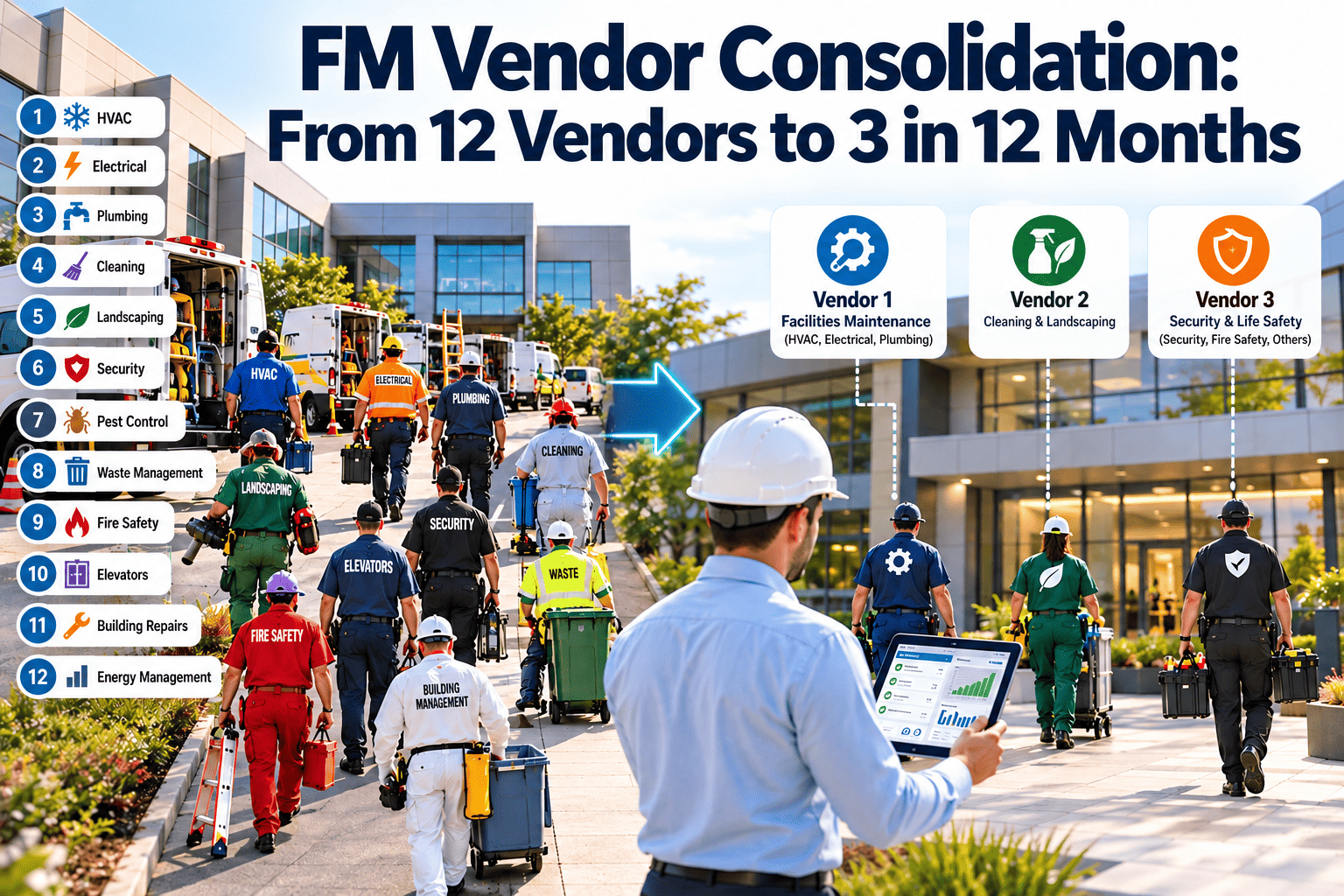
Twelve vendors can mean twelve contracts, twelve invoice formats, twelve sets of service standards, and twelve people to chase when something fails. Many facility teams reach this point gradually, one urgent need at a time. Consolidation reduces that overhead, but done badly it creates service gaps and concentration risk. This playbook covers a 12-month path from spend analysis to offboarding, and shows how a facility maintenance platform keeps vendor work visible throughout the change.
FM Vendor Consolidation: From 12 Vendors to 3 in 12 Months
Fewer vendors can mean clearer accountability, consistent service levels, and less administration. The method matters more than the target number.
The Hidden Cost of Vendor Sprawl
The invoice price is only part of what many vendors cost you.
The 12-Month Roadmap
The IAOP approach to consolidation stresses preparing thoroughly before going to market. The quarters below follow that spirit.
Baseline and strategy
- List every vendor, contract, scope, and annual spend
- Collect service history and performance records
- Group services into logical bundles
- Define goals beyond price, such as quality and risk
RFP and selection
- Write scopes and service level requirements
- Issue the RFP and hold clarification sessions
- Score responses against agreed criteria
- Negotiate and award
Transition
- Hand over asset lists, schedules, and history
- Run outgoing and incoming vendors in parallel where needed
- Walk the sites with the new teams
- Track early service closely
Stabilize and offboard
- Review SLA performance and adjust
- Close out terminated contracts and final invoices
- Recover keys, access, and documents
- Capture lessons for future sourcing
Keep Every Vendor's Work in One Record
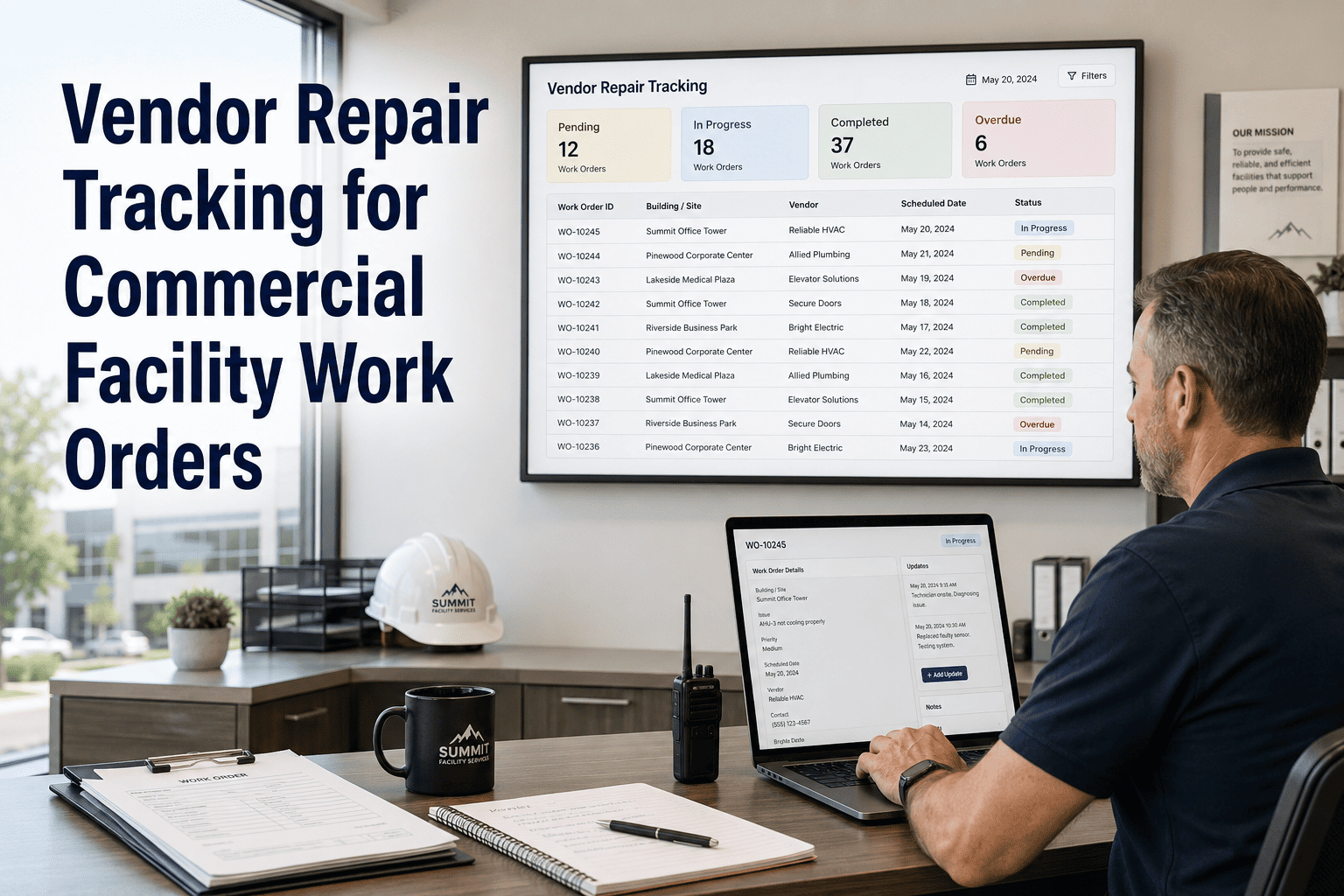
Assign vendor work orders, track response times, and keep service history in your own system. Start free or see it in action.
Spend Analysis: Start With the Facts
Consolidation decisions should come from your own data, not from assumption.
| Data to gather | Why it matters |
|---|---|
| Annual spend by vendor and service line | Shows where volume is concentrated and where it is fragmented |
| Contract terms and renewal dates | Reveals notice periods and exit costs that shape timing |
| Work order volume and type | Separates routine work from specialist or emergency work |
| Response and completion performance | Identifies vendors that earn a place in the shortlist |
| Sites and assets covered | Defines geographic and technical scope for each bundle |
| Compliance documents | Confirms licenses, insurance, and safety records are current |
Weighing Consolidation Against Its Risks
Fewer vendors reduce complexity but raise dependence. Plan for both sides.
Potential gains
- Single point of accountability per service bundle
- Consistent reporting and service levels
- Less contract and invoice administration
- Stronger negotiating position through volume
Risks to manage
- Dependence on a small number of partners
- Loss of local or specialist knowledge
- Service disruption during transition
- A partner subcontracting work you cannot see
Building SLAs That You Can Actually Measure
An SLA is useful only if both sides can verify it from records.
The Transition Checklist
Most consolidation problems surface during handover. Prepare these items before go-live.
- Asset register. Provide an up-to-date list with locations and service history.
- PM schedules. Share existing schedules so no task is lost in the change.
- Open work. Confirm who owns every open work order on the cutover date.
- Site access. Arrange keys, permits, induction, and safety briefings.
- Parts and spares. Agree who holds stock and who pays for it.
- Escalation path. Name contacts on both sides for the first 90 days.
Offboarding Outgoing Vendors Cleanly
A tidy exit protects safety, records, and goodwill.
- 1Give notice correctly. Follow contract terms and confirm in writing.
- 2Collect records. Obtain service reports, certificates, and manuals.
- 3Reconcile finances. Settle final invoices and check for open claims.
- 4Remove access. Recover keys, badges, and system logins.
- 5Record lessons. Note what worked and what to change in future contracts.
How Oxmaint Supports Vendor-Managed Work
Whether work is done by vendors or in-house, the records should live with you.
- Work orders assigned to vendors with priority, due dates, and completion notes.
- Preventive maintenance schedules held centrally, so a vendor change does not lose tasks.
- Asset history that stays with your portfolio after contracts end.
- Compliance records and inspection results kept in a retrievable form.
- Reports and dashboards comparing response and completion across vendors.
- Mobile workflows for vendor technicians to update jobs on site.
Frequently Asked Questions
Is three the right number of vendors?
Not necessarily. The right number follows your scope, sites, and risk tolerance.
Should we keep any specialist vendors?
Often yes. Niche trades may stay separate where bundling would reduce quality.
How do we avoid service gaps?
Run parallel periods, hand over open work orders, and track early performance weekly.
How do we hold vendors to SLAs?
Capture every request and completion in one record. You can sign up and test vendor work orders first.
Can we see a vendor workflow?
Yes. Book a demo to review assignment, tracking, and reporting.
Consolidate Vendors Without Losing Control
Keep assets, schedules, and service history in your own platform through every transition.